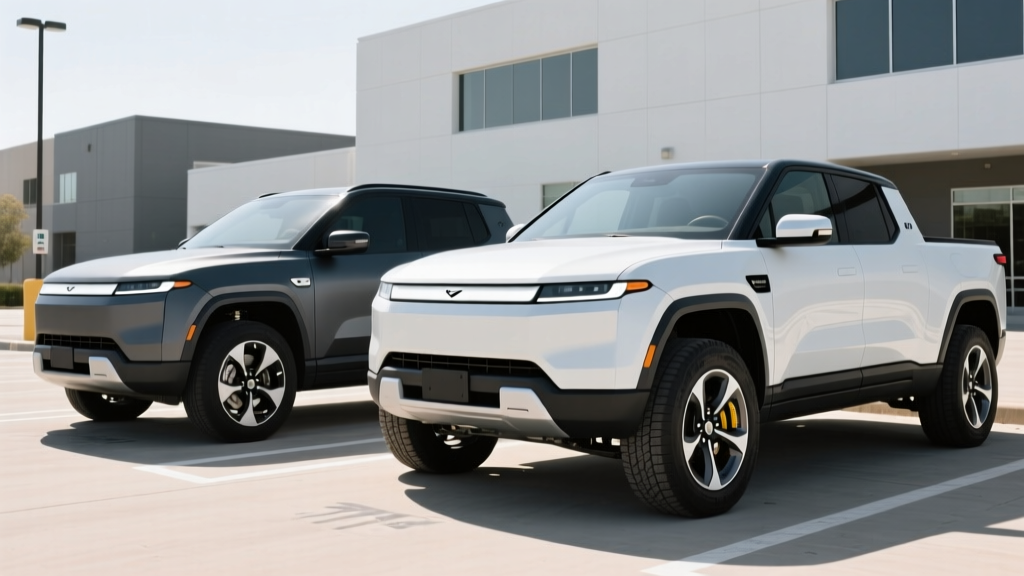
Rivian's R1T pickup and R1S SUV have carved out a unique niche in the electric vehicle market, blending serious off-road capability with daily-driver practicality. But as these vehicles age and accumulate miles, owners and prospective buyers are asking a critical question: what does rivian brake and suspension repair actually cost, and how does it compare to traditional vehicles?
This comprehensive guide examines Rivian's current lineup from a long-term ownership perspective, covering everything from EPA range and charging performance to the specific maintenance and repair considerations that affect your wallet over 5-10 years of ownership.
Real-World Range and Efficiency: Beyond the EPA Sticker
EPA Range vs. Reality
R1T Dual-Motor Max Pack: EPA 410 miles
R1S Dual-Motor Max Pack: EPA 410 miles
R1T Dual-Motor Large Pack: EPA 352 miles
R1S Dual-Motor Large Pack: EPA 352 miles
Real-world expectation: Highway driving at 70-75 mph typically yields 320-340 miles on the Max Pack, 275-295 miles on the Large Pack. Cold weather (below 32°F) reduces range by 20-30%, bringing Max Pack down to 285-325 miles in winter conditions. Towing cuts range roughly in half regardless of pack size.
Rivian's latest generation vehicles use NMC (nickel manganese cobalt) lithium-ion battery chemistry in their Large and Max battery packs, offering energy density optimized for both range and performance. The Max Pack provides 149 kWh of usable capacity, while the Large Pack offers 128 kWh usable.
Efficiency ratings land at 73 MPGe combined for the R1T Dual-Motor, translating to roughly 46 kWh per 100 miles driven. That's competitive with other large electric trucks but noticeably thirstier than smaller EVs like the Tesla Model Y (28 kWh/100mi).
| Specification | R1T Dual-Motor | R1S Dual-Motor |
|---|---|---|
| EPA Range (Max Pack) | 410 miles | 410 miles |
| Battery Capacity (usable) | 149 kWh | 149 kWh |
| Battery Chemistry | NMC | NMC |
| Horsepower | 665 hp | 665 hp |
| 0-60 mph | 4.5 seconds | 4.6 seconds |
| Drivetrain | AWD (Dual-Motor) | AWD (Dual-Motor) |
| Max Towing Capacity | 11,000 lbs | 7,700 lbs |
| Cargo Volume (R1T bed / R1S behind 2nd row) | 54 cu ft (bed) | 47 cu ft |
| Ground Clearance (max) | 14.9 inches | 14.9 inches |
Charging Performance: DC Fast and Home Level 2
Charging speed remains a crucial factor for road-trip viability, and Rivian has made significant improvements in their latest generation vehicles.
| Charging Method | Power (kW) | Time/Rate | Connector |
|---|---|---|---|
| DC Fast Charging (Max Pack) | Up to 220 kW peak | 10-80% in ~30 minutes | NACS (Tesla Supercharger compatible) |
| DC Fast Charging (Large Pack) | Up to 200 kW peak | 10-80% in ~32 minutes | NACS |
| Level 2 Home Charging | 11.5 kW (48A) | ~25 miles per hour of charging | NACS |
| Level 1 (120V outlet) | 1.4 kW | ~3 miles per hour | NACS with adapter |
The charge curve matters as much as peak speed. Rivian's battery management system tapers charging significantly above 80% state of charge to protect battery longevity. Expect the final 20% to take as long as the first 60%. For daily driving, setting charge limits to 80-90% preserves battery health and avoids the slow taper zone.
Home charging with a Level 2 wall connector (11.5 kW) fully replenishes a depleted Max Pack in roughly 13 hours—perfect for overnight charging. Most owners report waking up to a full battery every morning when charging at home, eliminating range anxiety for daily commutes.
Brake and Suspension Repair: What Owners Actually Face
The keyword driving this article—rivian brake and suspension repair—deserves detailed examination because these systems represent significant long-term ownership costs.
Brake System Considerations
Rivian's regenerative braking system does the heavy lifting in daily driving, capturing kinetic energy and feeding it back to the battery. This means the friction brakes (rotors and pads) see far less use than in gas vehicles. Many Rivian owners report original brake pads lasting 80,000-100,000+ miles under normal driving conditions.
However, when brake service is needed, costs are substantial:
- Brake pad replacement (all four corners): $800-$1,200 at a Rivian service center
- Rotor replacement (all four): $1,500-$2,200
- Complete brake job (pads + rotors): $2,300-$3,400
Independent EV shops may offer 20-30% savings, but Rivian's proprietary brake-by-wire system and integrated regen calibration make dealer service preferable for warranty coverage.
Suspension System Complexity
Rivian's air suspension system is where repair costs escalate quickly. The adaptive air suspension with hydraulic roll control provides exceptional ride quality and up to 14.9 inches of ground clearance, but it's a complex system with multiple failure points:
- Air compressor replacement: $1,800-$2,500
- Air strut (single corner): $1,200-$1,800 per strut
- Complete air suspension overhaul (all four corners): $5,000-$7,500
- Hydraulic roll control system service: $2,000-$3,500
Real-world data from early R1T owners (2022-2023 models) suggests air suspension components begin showing wear around 60,000-80,000 miles, with compressor failures being the most common issue. Off-road use accelerates wear significantly.
The good news? Rivian's 8-year/100,000-mile battery and powertrain warranty covers major suspension components if they fail due to defects. But wear items and damage from road hazards or off-road use fall outside warranty coverage.
Pricing, Tax Credits, and Total Cost of Ownership
| Model/Trim | Base MSRP | Federal Tax Credit (§30D) | Effective Price |
|---|---|---|---|
| R1T Dual-Motor Standard | $69,900 | $0 (MSRP exceeds $80,000 cap for trucks) | $69,900 |
| R1T Dual-Motor Max Pack | $84,900 | $0 (MSRP exceeds $80,000 cap) | $84,900 |
| R1S Dual-Motor Standard | $74,900 | $0 (MSRP exceeds $80,000 cap for SUVs) | $74,900 |
| R1S Dual-Motor Max Pack | $89,900 | $0 (MSRP exceeds $80,000 cap) | $89,900 |
Critical tax credit note: Under current IRS §30D rules, new electric vehicles face MSRP caps ($80,000 for SUVs/pickups, $55,000 for sedans) and buyer income limits ($300,000 joint / $150,000 single). Most Rivian configurations exceed these caps, making them ineligible for the federal credit. Always verify current eligibility on IRS.gov before purchasing.
Five-Year Ownership Cost Projection
Factoring in depreciation, electricity, insurance, and anticipated maintenance for a 2026 R1T Dual-Motor Large Pack driven 15,000 miles annually:
- Depreciation (5 years): ~$35,000-$40,000
- Electricity (home charging): ~$4,500-$5,500
- Insurance: ~$12,000-$15,000
- Maintenance/repairs: ~$3,000-$5,000 (including one brake service)
- Total 5-year cost: ~$54,500-$65,500
Compare this to a similarly capable gas truck (Ford F-150 Lariat 4WD, ~$65,000 MSRP), and the Rivian's higher upfront cost is partially offset by lower fuel and maintenance expenses—though suspension repair risk remains a wildcard.
Who Should Buy a Rivian (and Who Shouldn't)
Ideal For:
- Outdoor enthusiasts who tow boats, trailers, or campers regularly
- Families needing 3-row seating (R1S) with serious cargo capacity
- Off-road adventurers who want electric torque and 14.9" ground clearance
- Homeowners with Level 2 charging who drive 50-200 miles daily
- Buyers prioritizing build quality and over-the-air updates
Think Twice If:
- You're budget-conscious—repair costs and insurance premiums are high
- You lack home charging access (public DC charging for a 149 kWh battery is expensive)
- You plan to keep the vehicle beyond 8 years (out-of-warranty suspension repairs are costly)
- You primarily drive in urban areas without needing towing or off-road capability
- You need the $7,500 federal tax credit to justify the purchase
Competitive Comparison: Rivian vs. The Field
Against the Ford F-150 Lightning, Rivian offers superior range (410 vs. 320 miles max), more sophisticated air suspension, and better off-road capability—but at a $15,000-$20,000 price premium. The Lightning's simpler coil-spring suspension is cheaper to repair but provides a rougher ride.
Tesla's Cybertruck matches Rivian's performance and undercuts on price, but its polarizing design, stainless steel body repair complexity, and limited service network make Rivian's more conventional approach appealing to many buyers.
The GMC Hummer EV offers comparable capability and range but suffers from lower efficiency (worse MPGe) and GM's less mature EV service infrastructure.
Warranty Coverage and Service Network
Rivian provides:
- Basic vehicle warranty: 5 years / 60,000 miles
- Battery and powertrain: 8 years / 175,000 miles (industry-leading)
- Corrosion perforation: 5 years / unlimited miles
The 175,000-mile battery warranty is among the best in the industry, though it covers defects and capacity loss below 70%—not normal degradation. Rivian's service network has expanded significantly, with 45+ service centers nationwide as of 2026, plus mobile service vans for many repairs.
However, wait times for suspension and brake components can stretch 2-4 weeks for non-critical repairs, and mobile service can't handle major suspension overhauls.
Frequently Asked Questions
What is the real-world range of the Rivian R1T?
The EPA rates the R1T Dual-Motor Max Pack at 410 miles, but expect 320-340 miles in real-world highway driving at 70-75 mph. Cold weather reduces this to 285-325 miles. Towing cuts range roughly in half regardless of conditions.
How fast does the Rivian charge at home and on DC fast chargers?
DC fast charging peaks at 220 kW, delivering 10-80% in approximately 30 minutes. Home Level 2 charging at 11.5 kW adds about 25 miles per hour, fully recharging overnight in 13 hours.
Does the Rivian qualify for the federal EV tax credit?
Most Rivian configurations do not qualify for the $7,500 federal tax credit under current IRS §30D rules because they exceed the $80,000 MSRP cap for trucks and SUVs. Some base R1T models fall under the cap but are rare. Always verify eligibility on IRS.gov.
How much do brake repairs cost on a Rivian?
Complete brake service (pads and rotors, all four corners) typically costs $2,300-$3,400 at a Rivian service center. However, regenerative braking extends pad life to 80,000-100,000+ miles under normal driving.
What's the biggest long-term repair risk with Rivian?
The air suspension system is the most expensive potential failure point, with complete overhauls costing $5,000-$7,500 out of warranty. Most issues emerge around 60,000-80,000 miles, though the 8-year/175,000-mile powertrain warranty provides substantial coverage.
Is Rivian worth buying versus an F-150 Lightning?
Rivian offers better range, more sophisticated suspension, and superior off-road capability, but costs $15,000-$20,000 more upfront and has higher repair costs. The Lightning is more practical for budget-focused buyers who prioritize lower total cost of ownership.
For more detailed EV ownership data, consult EPA's fueleconomy.gov for official efficiency ratings, and review NHTSA safety ratings before purchasing.