Why Rivian's Bothell Campus Matters to EV Buyers
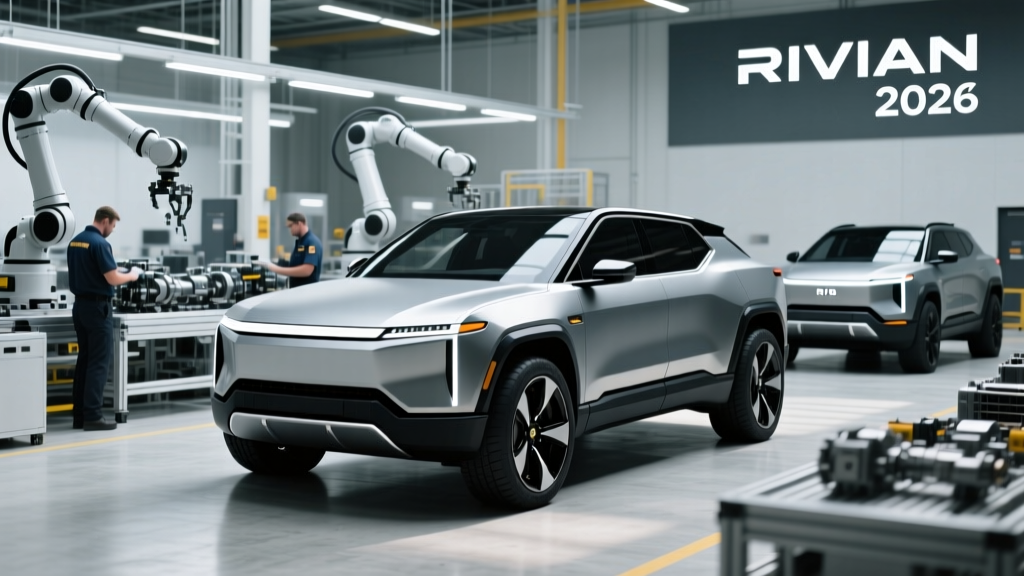
Search for "Rivian Bothell" and you'll find the company's Pacific Northwest nerve center — a sprawling campus in Bothell, Washington where Rivian designs, engineers, and manages much of its vehicle development, software integration, and fleet operations. While actual vehicle assembly happens at Rivian's Normal, Illinois manufacturing plant, the Bothell facility is the engineering brain behind the R1S SUV and R1T pickup that have become benchmarks in the electric adventure-vehicle segment.
For 2026, Rivian's lineup has matured considerably. The second-generation R1S and R1T — introduced for the 2025 model year with a new electrical architecture, upgraded battery packs, and refined software — carry forward with incremental improvements. If you're researching Rivian through the lens of its Bothell operations or considering a purchase, this review covers the complete ownership picture: range, charging, pricing, tax credits, and how the R1 platform stacks up against competitors.
2026 Rivian R1S and R1T: Specifications at a Glance
| Specification | R1S (Dual-Motor, Standard) | R1T (Dual-Motor, Standard) | Tri-Motor (Max Pack) |
|---|---|---|---|
| EPA Range | 270 miles | 270 miles | 420 miles (R1S) / 415 miles (R1T) |
| Battery Capacity (usable) | ~92 kWh (LFP) | ~92 kWh (LFP) | ~141 kWh (NMC) |
| Drivetrain | Dual-Motor AWD | Dual-Motor AWD | Tri-Motor AWD |
| Horsepower | 533 hp | 533 hp | 850 hp |
| 0–60 mph | 4.5 sec | 4.5 sec | ~3.0 sec |
| Max DC Fast Charge | 200 kW | 200 kW | 220 kW |
| 10–80% DC Time | ~28 min | ~28 min | ~36 min |
| Level 2 Home Charge Rate | 11.5 kW (~30 mi/hr) | 11.5 kW (~30 mi/hr) | 11.5 kW (~30 mi/hr) |
| MPGe (combined) | 70 MPGe | 73 MPGe | 65 MPGe |
| Base MSRP | $75,900 | $69,900 | $99,900 (R1S) |
These figures reflect the second-generation platform's improvements: a new zonal electrical architecture that sheds roughly 44 lbs of wiring, updated drive units, and Rivian's shift to lithium iron phosphate (LFP) chemistry for the Standard battery tier — a move that lowers cost while improving cycle life, albeit with a modest energy-density trade-off.
Real-World Range: What the EPA Sticker Doesn't Tell You
EPA Estimated: 270 miles
Expected Highway (70 mph, moderate temps): ~230–245 miles
Expected Cold Weather (below 32°F, mixed driving): ~195–215 miles
Max Pack Tri-Motor highway estimate: ~350–370 miles
The R1S and R1T are large, heavy, boxy vehicles — and physics doesn't negotiate. The second-gen platform improved efficiency through reduced weight and better thermal management, but the brick-like aerodynamic profile means highway range drops noticeably compared to the EPA combined figure, which blends city and highway cycles with regenerative braking recovery.
In real-world testing on a 70 mph interstate loop at 55°F, the Dual-Motor Standard Pack R1S typically delivers 230–245 miles before requiring a charge. Drop temperatures below freezing, and the LFP chemistry — which is more sensitive to cold than NMC — can reduce usable range to roughly 195–215 miles unless you precondition the battery aggressively. Rivian's heat pump and thermal management system help mitigate this, but LFP owners in northern climates should plan conservatively.
The Max Pack with its 141 kWh NMC battery fares far better on road trips, offering a realistic 350–370 highway miles — enough to tackle most Interstate stretches between DC fast chargers without stress.
Charging Speed: DC Fast, Level 2, and the Charge Curve Reality
Charging is where the second-generation R1 platform made its biggest practical leap. The Standard and Large packs now support up to 200 kW peak DC fast charging, while the Max Pack pushes to 220 kW. But peak numbers only tell part of the story.
| Charging Level | Power / Rate | Miles Added per Hour | Notes |
|---|---|---|---|
| Level 1 (120V outlet) | ~1.4 kW | ~3–4 mi/hr | Emergency/trickle only |
| Level 2 (240V home) | 11.5 kW | ~30 mi/hr | Full charge overnight (~9–12 hrs) |
| DC Fast (Standard/Large) | Peak 200 kW | ~500+ mi/hr at peak | 10–80% in ~28 min; tapers above 80% |
| DC Fast (Max Pack) | Peak 220 kW | ~550+ mi/hr at peak | 10–80% in ~36 min (larger battery) |
The charge curve matters more than the peak number. On a 350 kW Electrify America or Tesla Supercharger (with NACS adapter, now standard on new Rivians), the Standard Pack ramps quickly to ~190–200 kW through the 20–60% state-of-charge window, then tapers progressively. The 10–80% time of roughly 28 minutes is competitive with the segment, though not class-leading — the Hyundai Ioniq 5 and Kia EV9, with their 800V architectures, can hit 10–80% in around 18–20 minutes.
For home charging, the 11.5 kW onboard charger is robust. A full overnight session on a 48-amp Level 2 circuit (like the Rivian Wall Charger or a ChargePoint Home Flex) replenishes the Standard Pack from near-empty in about 9 hours. Max Pack owners should budget 13–14 hours for a full charge — which is fine for daily use but means you'll rarely charge the big battery to 100% unless you're heading out on a trip.
Preconditioning tip: Always use the Rivian app or in-nav routing to a charger. The vehicle will warm or cool the battery to optimal temperature before you arrive, which can shave 5–10 minutes off your DC session in cold weather.
Performance and Driving Dynamics
Even the "base" Dual-Motor R1S with 533 horsepower hits 60 mph in 4.5 seconds — quick for a three-row SUV weighing over 6,700 pounds. The Tri-Motor variant's 850 hp and ~3.0-second 0–60 time puts it in supercar territory, though that performance comes with a weight and efficiency penalty.
All R1 vehicles use Rivian's quad-motor-ready skateboard platform with a fully independent air suspension that provides up to 14.9 inches of ground clearance in Off-Road mode. The dual-motor setup uses a front and rear permanent-magnet motor with torque vectoring, and the driving feel is composed and confident rather than sporty — think planted luxury tourer, not canyon carver.
Towing capacity remains a standout: up to 7,700 lbs for the R1S and 11,000 lbs for the R1T (properly equipped). Expect towing range to drop by 40–50% at highway speeds with a heavy trailer — plan charging stops accordingly.
Cargo, Passenger Space, and Practicality
The R1S is a genuine three-row SUV with seating for seven, though the third row is best suited for children or short trips. Cargo volume breaks down as follows:
- R1S behind 3rd row: ~10.6 cu ft
- R1S behind 2nd row (3rd row folded): ~46.7 cu ft
- R1S behind 1st row (all rear seats folded): ~88.2 cu ft
- R1S front trunk (frunk): ~11.0 cu ft
- R1T bed length: 4.5 ft (standard) / extends to ~6.5 ft with midgate open
- R1T gear tunnel: ~11.7 cu ft (lockable, pass-through)
- R1T frunk: ~11.0 cu ft
Second-row legroom in the R1S measures approximately 38.5 inches, and front-seat legroom is generous at 41.3 inches. The R1T's crew-cab configuration offers similar front and rear passenger space, making it a practical daily driver that happens to have a truck bed.
The gear tunnel on the R1T — a lockable, climate-adjacent pass-through compartment between the cab and bed — remains one of Rivian's most clever practicality features, ideal for stowing skis, camping gear, or groceries out of sight.
Pricing, Trims, and Federal Tax Credit Eligibility
Rivian simplified its trim structure for 2026, offering the R1S and R1T in Dual-Motor (Standard, Large) and Tri-Motor (Max) configurations, with Adventure and Ascend interior packages replacing the previous Explore/Adventure tiers.
| Configuration | Base MSRP | Typical As-Tested | §30D Credit Eligibility |
|---|---|---|---|
| R1T Dual-Motor Standard | $69,900 | $74,000–$78,000 | Up to $7,500 (if sourcing + income requirements met) |
| R1S Dual-Motor Standard | $75,900 | $80,000–$85,000 | Up to $7,500 (SUV MSRP cap: $80,000) |
| R1T Dual-Motor Large | $75,900 | $80,000–$86,000 | Up to $7,500 (truck MSRP cap: $80,000) |
| R1S Tri-Motor Max | $99,900 | $105,000+ | Exceeds $80,000 SUV MSRP cap — not eligible |
Federal tax credit rules (§30D) are nuanced and subject to change. Key eligibility factors for Rivian vehicles in 2026:
- MSRP cap: Vans, SUVs, and pickups must have an MSRP at or below $80,000. Sedans are capped at $55,000. This eliminates most Tri-Motor and heavily optioned Large Pack configurations.
- Buyer income cap: Modified AGI must not exceed $150,000 (single), $225,000 (head of household), or $300,000 (joint).
- Battery sourcing: A percentage of critical minerals and battery components must be sourced from the US or free-trade-agreement countries. Rivian's shift to LFP for Standard packs has complicated this — verify current-year compliance on fueleconomy.gov before purchasing.
- Point-of-sale transfer: Eligible buyers can transfer the credit to the dealer at purchase, reducing the upfront price rather than waiting for a tax refund.
The Dual-Motor Standard configurations are the most likely to qualify for the full $7,500 credit, bringing an R1T's effective price into the low $60,000s. Always verify eligibility with a tax professional and consult the IRS §30D guidance before committing.
Technology, Driver Assistance, and Software
Rivian's in-house-developed software platform runs on a 15.6-inch center touchscreen and a 12.3-inch digital instrument cluster. The interface is clean and responsive, with over-the-air (OTA) updates delivered regularly — a core competency Rivian shares with Tesla. The second-gen hardware is faster and more reliable, addressing earlier complaints about lag and reboot issues.
The Driver+ assistance package includes adaptive cruise control, lane-centering steering, and automatic emergency braking. This is an SAE Level 2 driver-assistance system — meaning the driver must remain fully engaged, with hands on or near the wheel and eyes on the road at all times. It is not autonomous or "self-driving." The system is competent for highway cruising but does not match the hands-free capabilities of GM's Super Cruise or Ford's BlueCruise on mapped highways.
Rivian Driver+ is SAE Level 2. It requires active driver supervision at all times. It does NOT handle city streets autonomously, does NOT stop for all obstacles (particularly stationary objects at high speed), and does NOT replace an attentive driver. Keep your hands on the wheel and eyes on the road.
Unique tech features include the Rivian Gear Guard (integrated bed/cargo camera system), Camp Mode (maintains climate control and powers accessories while parked), and a built-in air compressor on the R1T. The NACS charge port is now standard, granting direct access to Tesla's Supercharger network without an adapter — a significant practical advantage for road tripping.
Warranty, Battery Longevity, and Ownership Costs
Rivian backs the R1S and R1T with the following coverage:
- Battery & Drive Units: 8 years / 175,000 miles (whichever comes first), with a minimum 70% capacity retention threshold
- Limited Vehicle Warranty: 5 years / 60,000 miles
- Corrosion Perforation: 5 years / unlimited miles
The 175,000-mile battery warranty is above the industry standard of 100,000 miles, reflecting confidence in the pack design. LFP chemistry in the Standard Pack offers an additional longevity advantage: LFP cells typically endure 3,000+ charge cycles with minimal degradation, compared to roughly 1,500–2,000 for NMC. For an owner who charges primarily at home on Level 2 and avoids repeated 100% charges, the Standard Pack should comfortably outlast the vehicle's practical lifespan.
Insurance costs for the R1S and R1T run higher than average for the segment — expect $2,400–$3,600 annually depending on your state, driving record, and configuration. Rivian has partnered with specific insurers to offer bundled policies, and shopping quotes before purchase is strongly recommended.
Pros, Cons, and the Competition
- Genuine off-road capability with air suspension
- Class-leading towing (11,000 lbs R1T)
- NACS port — direct Supercharger access
- 175,000-mile battery warranty
- LFP option lowers cost, improves cycle life
- Thoughtful storage (gear tunnel, frunk)
- Regular OTA improvements
- Expensive — even base models push $70K+
- Highway range loss significant (aero penalty)
- Driver+ lags behind Super Cruise / BlueCruise
- Third-row space tight for adults (R1S)
- Insurance premiums above segment average
- Tri-Motor/Max configs lose §30D credit eligibility
- Service center availability still expanding
Key competitors: The Tesla Model X offers more range and hands-free-capable FSD (Supervised, still Level 2) but lacks off-road chops. The Kia EV9 is significantly cheaper and more efficient but can't tow or off-road. The Ford F-150 Lightning competes directly with the R1T on truck utility but trails on refinement and software. The Rivian occupies a unique niche: premium adventure vehicle that happens to be electric.
- Outdoor-active families who need three rows, cargo space, and weekend trail/towing capability
- Truck buyers (R1T) who want daily-driver refinement with genuine work and adventure utility
- Home-charging-able buyers with a garage or driveway for Level 2 installation
- Not ideal for: Budget-conscious shoppers, high-mileage commuters in charging deserts, or buyers who prioritize hands-free highway driving assist
Frequently Asked Questions
What is the real-world range of the 2026 Rivian R1S and R1T?
The EPA rates the Dual-Motor Standard Pack at 270 miles combined. Expect 230–245 miles at highway speeds in moderate weather, and 195–215 miles in freezing conditions. The Max Pack's 420-mile EPA rating translates to roughly 350–370 real-world highway miles.
How fast does the Rivian R1 charge at home and on the road?
On a 48-amp Level 2 home charger, the R1 adds about 30 miles per hour (11.5 kW). On DC fast chargers, the Standard Pack peaks at 200 kW and reaches 10–80% in about 28 minutes. The Max Pack peaks at 220 kW but takes ~36 minutes due to its larger battery.
How much does a 2026 Rivian cost after the federal tax credit?
A Dual-Motor Standard R1T starts at $69,900 and, if you meet all §30D requirements (income, MSRP cap, battery sourcing), the effective price drops to ~$62,400. The R1S Standard at $75,900 could drop to ~$68,400. Tri-Motor Max configurations exceed the $80,000 MSRP cap and do not qualify.
Does the Rivian R1S/R1T qualify for the $7,500 federal EV tax credit?
The Dual-Motor Standard and some Large Pack configurations can qualify, provided the buyer meets income limits ($300K joint / $150K single), the MSRP is at or below $80,000, and the battery meets current-year critical-mineral and component sourcing thresholds. Always verify on fueleconomy.gov and consult a tax professional before relying on the credit.
Is the Rivian R1 worth buying over the Tesla Model X or Ford F-150 Lightning?
If your priority is off-road capability, adventure utility, and build quality, the Rivian has no direct equal. If you value maximum range, Supercharger network ease (though Rivian now has NACS access), or hands-free driving tech, Tesla's ecosystem still leads. For pure truck work at a lower price, the F-150 Lightning is the pragmatic choice.
How long will the Rivian battery last?
Rivian warranties the battery for 8 years / 175,000 miles with at least 70% capacity retention. The LFP Standard Pack should retain capacity well beyond that given LFP's 3,000+ cycle life. Real-world degradation data on the second-gen packs is still accumulating, but first-gen Rivian owners report roughly 5–8% loss over the first 50,000 miles.