Quick Verdict: Is Rivian Blue the Ultimate Adventure EV?
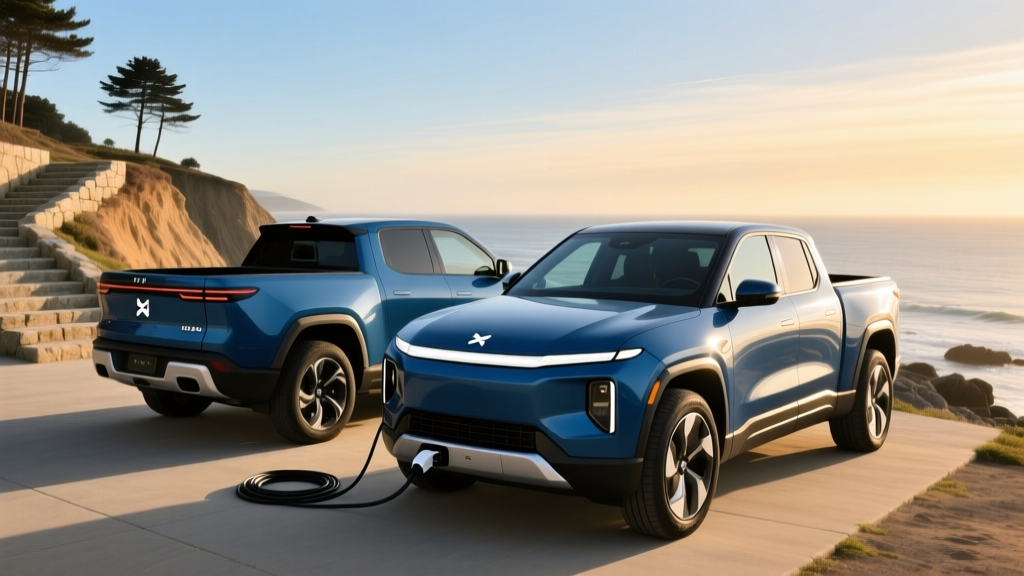
Rivian's signature launch color, Rivian Blue, remains one of the most recognizable hues on the EV market in 2026. But beyond the aesthetics, the current-generation R1S (three-row SUV) and R1T (pickup) have evolved into genuinely refined electric platforms. With the second-generation architecture introduced for the 2025 model year, Rivian moved to an 800-volt electrical system, dual-motor and tri-motor powertrains, and the massive 149 kWh Max Pack battery option — fundamentally changing the range and charging story.
This review covers the 2026 Rivian R1S and R1T equipped with the dual-motor Standard and Max battery configurations, with a focus on real-world usability for buyers eyeing the iconic Rivian Blue finish.
Range, Battery, and Efficiency: The Numbers That Matter
Rivian offers the R1S and R1T with two battery sizes for 2026. The Standard Pack uses a ~106 kWh usable NMC (nickel manganese cobalt) lithium-ion battery, while the Max Pack steps up to approximately 149 kWh usable — also NMC chemistry, optimized for energy density over cycle life. (Rivian's smaller ~92 kWh LFP-based Standard pack, introduced for base dual-motor trims, prioritizes longevity and cost but sacrifices some range.)
- R1S Dual-Motor Standard Pack: EPA 270 miles — expect ~230–250 mi highway, ~195–215 mi in sub-30°F cold
- R1S Dual-Motor Max Pack: EPA 380 miles — expect ~320–345 mi highway, ~270–295 mi in cold weather
- R1T Dual-Motor Standard Pack: EPA 270 miles — real-world highway ~225–245 mi
- R1T Dual-Motor Max Pack: EPA 380 miles — real-world highway ~315–340 mi
These vehicles are heavy (6,800–7,150 lbs) and boxy. Highway efficiency drops noticeably above 70 mph. Cold-weather range loss of 20–30% is typical for NMC packs without preconditioning. Per fueleconomy.gov, the R1S Dual-Motor Max achieves approximately 73 MPGe combined (roughly 46 kWh/100 mi).
| Spec | R1S Dual-Motor Standard | R1S Dual-Motor Max | R1T Dual-Motor Max |
|---|---|---|---|
| EPA Range | 270 mi | 380 mi | 380 mi |
| Battery (usable) | ~106 kWh (NMC) | ~149 kWh (NMC) | ~149 kWh (NMC) |
| Horsepower | 533 hp | 533 hp | 533 hp |
| 0–60 mph | 4.5 sec | 4.5 sec | 4.5 sec |
| Max DC Charge Rate | 200 kW (peak) | 220 kW (peak) | 220 kW (peak) |
| 10–80% DC Time | ~28 min | ~42 min | ~42 min |
| Level 2 Rate | 11.5 kW (~25 mi/hr) | 11.5 kW (~25 mi/hr) | 11.5 kW (~25 mi/hr) |
| Base MSRP | $79,900 | $94,900 | $84,900 |
| Efficiency | 73 MPGe / 46 kWh/100mi | 73 MPGe / 46 kWh/100mi | 70 MPGe / 48 kWh/100mi |
Charging Speed: 800V Architecture Makes a Difference
The shift to an 800-volt platform was the single most impactful upgrade in the second-generation Rivians. Here's what charging actually looks like:
| Charging Level | Power / Rate | Miles Added per Hour | Notes |
|---|---|---|---|
| Level 1 (120V) | ~1.4 kW | ~3 mi/hr | Emergency/trickle only |
| Level 2 (240V, 48A) | 11.5 kW | ~25 mi/hr | Full charge in ~13 hr (Max Pack) |
| DC Fast Charge | Up to 220 kW peak | N/A | 10–80% in ~42 min (Max); sustains ~180 kW to 50% then tapers |
Charging curve reality check: The Max Pack peaks near 220 kW at low state-of-charge (roughly 10–30%), then gradually tapers. You'll see sustained rates around 150–170 kW through the 50–70% range, dropping further above 80%. This is normal behavior for large NMC packs managed conservatively for longevity. Plan road-trip stops to charge from 10–80% rather than topping off to 100%, which is both slow and unnecessary for battery health.
Rivian uses the NACS (Tesla) connector natively on 2026 models, giving direct access to the Tesla Supercharger network — now the most extensive DC fast-charging network in North America with over 25,000 stalls.
Performance, Drivetrain, and Capability
The dual-motor AWD configuration is standard across most trims, with one motor on each axle providing true all-wheel drive. The dual-motor produces 533 horsepower and 610 lb-ft of torque, launching either vehicle to 60 mph in approximately 4.5 seconds. The available Tri-Motor configuration (R1S and R1T) bumps output to 850 hp and drops the 0–60 time to around 3.0 seconds, but adds weight and cost.
Towing capacity remains a strong suit: 7,700 lbs for the R1S and 11,000 lbs for the R1T (properly equipped). However, towing at max capacity will cut range by roughly 40–50% — a reality common to all electric trucks and SUVs. If you plan to tow frequently, the Max Pack is nearly mandatory.
Rivian's quad-motor air suspension provides adjustable ride height (up to 14.9 inches of ground clearance) and competent off-road articulation. The hydraulic roll control system replaces traditional anti-roll bars, reducing body lean without sacrificing wheel travel.
Interior Space, Cargo, and Daily Practicality
R1S (3-row SUV):
- Cargo behind 3rd row: ~21 cu ft
- Cargo behind 2nd row (3rd row folded): ~58 cu ft
- Max cargo (all rear seats folded): ~104 cu ft
- Front trunk (frunk): ~11 cu ft
- Third-row legroom: ~30.5 inches (tight for adults on long trips)
- Second-row legroom: ~38.5 inches
R1T (pickup):
- Bed length: 4.5 ft (54 inches)
- Gear Tunnel: ~11 cu ft lockable pass-through storage (unique to Rivian)
- Frunk: ~11 cu ft
- Rear-seat legroom: ~38 inches
The Gear Tunnel on the R1T remains one of the most clever storage solutions in the truck segment — ideal for camping gear, golf bags, or groceries you want to keep out of the cab and bed.
Pricing, Trims, and Federal Tax Credit Eligibility
| Model / Trim | Base MSRP | As-Tested (Typical) | Federal §30D Credit Eligible? |
|---|---|---|---|
| R1S Dual-Motor Standard | $79,900 | $83,000–$88,000 | No (MSRP exceeds $80,000 SUV cap) |
| R1S Dual-Motor Max | $94,900 | $98,000–$105,000 | No (exceeds cap) |
| R1T Dual-Motor Standard | $69,900 | $73,000–$78,000 | Potentially (under $80,000 truck cap) |
| R1T Dual-Motor Max | $84,900 | $88,000–$95,000 | No (exceeds cap) |
Tax credit reality: Under IRS §30D rules, the federal clean vehicle credit provides up to $7,500, but several constraints apply:
- MSRP cap: SUVs (including R1S) must be under $80,000; trucks (R1T) under $80,000
- Buyer income cap: AGI ≤ $300,000 (joint), $225,000 (head of household), $150,000 (single)
- Battery sourcing: Critical minerals and battery components must meet escalating domestic-content thresholds
- Point-of-sale transfer: Eligible buyers can apply the credit at purchase to reduce out-of-pocket cost
In practice, only the base R1T Dual-Motor Standard at $69,900 MSRP falls under the truck cap, and only if the buyer meets income and sourcing requirements. Most Rivian buyers will not qualify for the full federal credit. Consult a tax professional before relying on credit eligibility.
Technology, Driver Assists, and the Rivian Software Experience
Rivian runs its own vertically integrated software stack, displayed on a 15.6-inch center touchscreen and a 12.3-inch driver cluster. The interface is clean and responsive, with over-the-air (OTA) updates regularly adding features. Key tech highlights:
- Driver+ (Level 2 ADAS): Adaptive cruise control with lane-centering on divided highways. Competent but not class-leading compared to GM's Super Cruise or Ford's BlueCruise in hands-free zones. Requires active driver supervision at all times.
- Highway Assist: Automatic lane changes with turn-signal confirmation
- Phone-as-a-key: Bluetooth-based proximity unlock and start
- Camp Mode / Pet Mode: Climate control presets for stationary use
- Powered tonneau cover (R1T): Electric retractable bed cover integrated with the Gear Tunnel
Warranty, Reliability, and Ownership Costs
Rivian provides the following warranty coverage for 2026 models:
- Battery & Drive Units: 8 years / 175,000 miles (whichever comes first), with a minimum 70% capacity retention threshold
- Bumper-to-Bumper: 5 years / 60,000 miles
- Roadside Assistance: 5 years / 60,000 miles
The 175,000-mile battery warranty is among the most generous in the segment, reflecting confidence in the second-gen battery modules. Rivian also offers a service network that has expanded considerably since 2023, though coverage in rural areas still lags legacy automakers.
Insurance premiums for Rivians tend to run 15–25% higher than comparable ICE vehicles due to repair costs and parts availability. Expect annual premiums in the $2,200–$3,200 range depending on location and driving record.
Pros
- 380-mile Max Pack range eliminates most range anxiety
- NACS native — full Supercharger access
- Best-in-class off-road capability for an EV SUV/truck
- Gear Tunnel (R1T) is genuinely innovative storage
- 8-year / 175,000-mile battery warranty
- Strong OTA update cadence with real feature additions
Cons
- Most trims exceed the §30D tax credit MSRP cap
- Max Pack 10–80% charge time (~42 min) is slower than Hyundai/Kia E-GMP vehicles
- Third-row space in R1S is tight for adults
- High insurance premiums relative to segment
- Driver+ ADAS is capable but not hands-free like Super Cruise
- Service center density still limited in some regions
Who Should Buy a Rivian in Rivian Blue?
Choose the R1S Max Pack if: You need three rows for family duty, want 300+ real-world highway miles, and plan regular road trips where Supercharger access matters.
Choose the R1T Dual-Motor Standard if: You want an electric truck for daily driving and weekend adventures, want to stay under the $80K tax-credit MSRP cap, and rarely tow more than 5,000 lbs.
Choose the R1T Max Pack if: You tow regularly (boats, campers, trailers) and need every available mile of range to offset the 40–50% range penalty of towing.
Look elsewhere if: You prioritize the fastest possible DC charging (Hyundai Ioniq 5 or Kia EV9 recharge faster), need hands-free highway driving (GM Super Cruise), or want a budget-friendly EV under $50K.
Frequently Asked Questions
What is the real-world range of the Rivian R1S and R1T?
The EPA rates the Max Pack at 380 miles, but real-world highway driving at 70–75 mph yields approximately 315–345 miles in moderate temperatures. In cold weather (below 30°F), expect 270–295 miles. The Standard Pack delivers roughly 225–250 miles on the highway in fair conditions.
How fast does a Rivian charge at home and on the road?
At home on a 48-amp Level 2 charger (240V), Rivians add about 25 miles of range per hour, taking roughly 13 hours for a full Max Pack charge. On DC fast chargers, the Max Pack peaks at 220 kW and charges from 10–80% in approximately 42 minutes. The Standard Pack peaks at 200 kW with a 10–80% time around 28 minutes.
Does the Rivian qualify for the $7,500 federal EV tax credit?
Only the base R1T Dual-Motor Standard ($69,900 MSRP) falls under the $80,000 truck MSRP cap required by IRS §30D. Even then, eligibility depends on buyer income limits, battery component sourcing requirements, and other criteria. Most Rivian configurations exceed the MSRP cap and do not qualify. Always verify current rules with a tax professional.
Is the Rivian worth it vs. the Tesla Model X or Ford F-150 Lightning?
The Rivian R1S offers superior off-road capability, more distinctive design, and better interior material quality than the Model X, though the Tesla has faster Supercharger charging and a more mature hands-free driving system. Against the F-150 Lightning, the R1T is more compact, more off-road capable, and offers the Gear Tunnel, but the Lightning provides a larger bed, more rear-seat space, and a lower starting price. The Rivian suits buyers who value adventure capability and design; the Lightning suits traditional truck buyers wanting maximum utility at a lower cost.
What color is Rivian Blue, and does it cost extra?
Rivian Blue is a deep, saturated metallic blue that was the brand's hero launch color. As of 2026, it is included as a standard no-cost color option across all R1S and R1T trims. It does not carry the $1,000–$2,500 premium associated with Rivian's special-order colors like El Cap Granite or Neon Green.
How long will the Rivian battery last?
Rivian warranties the battery for 8 years / 175,000 miles with a 70% minimum capacity retention guarantee. Based on NMC chemistry degradation curves and real-world data from early 2022–2024 Rivian owners, most packs retain approximately 90–93% capacity after 50,000 miles. Full battery replacement, if ever needed outside warranty, would likely cost $18,000–$25,000 for the Max Pack based on current module pricing — though this cost is expected to decline over time.