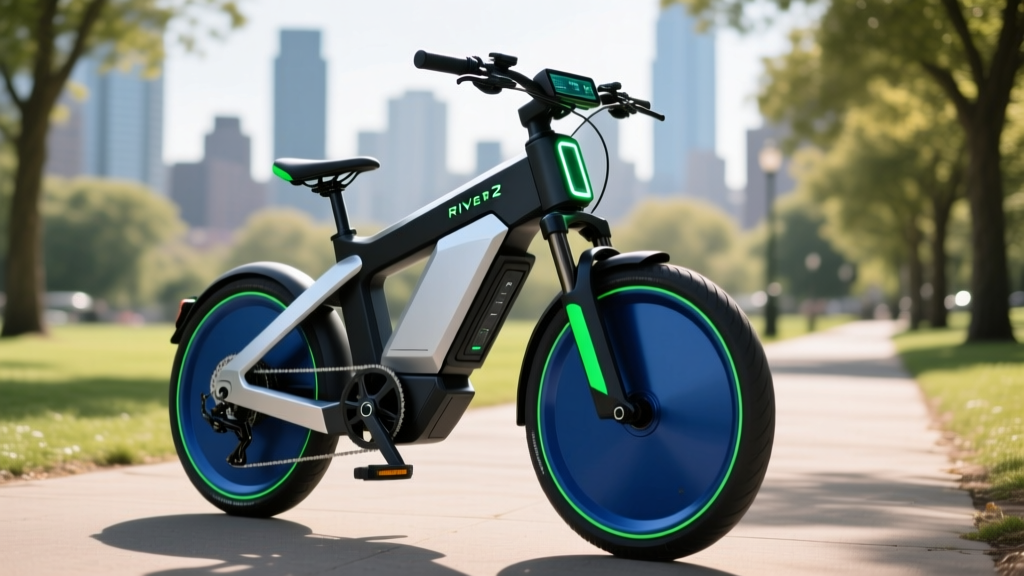
Rivian has built its reputation on electric trucks and SUVs, but the company's engineering DNA extends well beyond four wheels. The Rivian bike spinoff — referring to the company's growing ecosystem of electric bicycle technology and partnerships — has become a hot topic as Rivian expands its mobility portfolio alongside the 2026 R2 and R3 vehicle launches. While Rivian does not currently manufacture or sell a standalone consumer e-bike, the company's battery, motor, and software innovations are increasingly finding their way into two-wheeled applications through supplier relationships, patent licensing, and employee spinoff ventures.
This article examines what Rivian's e-bike-adjacent technology means for electrified-vehicle shoppers, how the R2 platform's engineering translates to micro-mobility, and what buyers should know about the intersection of EV and e-bike tech in 2026.
What Is the Rivian Bike Spinoff?
The term "Rivian bike spinoff" has circulated in EV and cycling communities since Rivian's early days, when founder RJ Scaringe's vision for sustainable transportation explicitly included micro-mobility. While Rivian's product lineup remains focused on the R1T pickup, R1S SUV, the upcoming R2 midsize SUV (production beginning 2026 at the Normal, Illinois plant), and the commercial EDV delivery van, the company holds numerous patents related to compact electric drivetrains, battery pack configurations, and thermal management systems that have clear two-wheeler applications.
Several former Rivian engineers have launched independent e-bike and micro-mobility startups, leveraging experience with the company's skateboard platform and in-house motor design. These ventures — while not officially branded as Rivian products — represent the "spinoff" effect that the EV industry has seen repeatedly: talent and technology diffusing from major automakers into adjacent markets.
How Rivian's R2 Platform Tech Relates to E-Bikes
Rivian's second-generation vehicle platform, underpinning the 2026 R2, introduces several engineering advances with direct parallels in the e-bike world:
| R2 Vehicle Technology | E-Bike Parallel | Practical Impact |
|---|---|---|
| Structural battery pack (LFP chemistry, ~85 kWh estimated) | Frame-integrated battery packs (500–900 Wh) | Lower center of gravity, improved crash/handling performance |
| In-house permanent-magnet motor (dual-motor AWD) | Hub-drive and mid-drive e-bike motors (250–750W) | Higher torque density, better thermal management |
| 800V+ electrical architecture | Higher-voltage e-bike systems (48V–72V trend) | Faster charging, reduced current/heat |
| OTA software updates and fleet telemetry | App-connected e-bike diagnostics | Remote tuning, battery health monitoring |
| Regenerative braking with one-pedal driving | E-bike regen braking systems | Range extension, reduced brake wear |
The R2's use of LFP (lithium iron phosphate) battery chemistry is particularly relevant. LFP cells offer longer cycle life (3,000+ cycles vs. ~1,000–1,500 for NMC), superior thermal stability, and lower cost per kWh — all attributes that premium e-bike manufacturers are actively pursuing. As Rivian scales LFP procurement for the R2, supply-chain benefits cascade to smaller battery buyers, including e-bike makers.
Rivian R2: The Vehicle at the Center of the Spinoff Ecosystem
Because the R2 is the vehicle driving Rivian's next-generation technology — much of which diffuses into adjacent markets — it's worth examining the R2's confirmed and estimated specifications for 2026 production.
| Specification | Value |
|---|---|
| EPA Range (est.) | ~300+ miles (Standard Battery, Dual-Motor) |
| Battery Capacity | ~85 kWh usable (LFP chemistry, Standard pack) |
| Max DC Fast Charge | ~200+ kW peak (est.) |
| 10–80% DC Charge Time | ~25–30 minutes (est.) |
| Level 2 Home Charging | 11.5 kW (~33 mi/hr) |
| 0–60 mph | ~4.5 seconds (Dual-Motor, est.) |
| Horsepower | ~450 hp (Dual-Motor, est.) |
| Drivetrain | Dual-Motor AWD (Tri-Motor possible later) |
| Base MSRP | $45,000 (Standard Battery, Dual-Motor) |
| Federal Tax Credit | Up to $7,500 (§30D, subject to eligibility) |
| Battery Warranty | 8 years / 100,000 miles (expected) |
Charging Infrastructure: What R2 Owners (and E-Bike Riders) Need
Rivian has committed to adopting the NACS (North American Charging Standard) connector for the R2, granting access to Tesla's Supercharger network — the most reliable DC fast-charging network in the U.S. as measured by uptime and availability. This decision mirrors the broader industry shift, with Ford, GM, Hyundai, and others adopting NACS.
| Charging Level | Power | Miles Added per Hour | Use Case |
|---|---|---|---|
| Level 1 (120V household) | ~1.4 kW | ~3–4 mi/hr | Emergency / overnight trickle |
| Level 2 (240V home) | 11.5 kW | ~33 mi/hr | Daily home charging |
| DC Fast Charge | Up to ~200+ kW peak | ~600+ mi/hr (at peak) | Road trips, 10–80% in ~25–30 min |
For e-bike owners, the charging parallel is instructive: most premium e-bikes charge at 2–5 amps from a standard 120V outlet, adding roughly 10–20 miles of range per hour of charging. The same principles of charge-curve tapering apply — e-bike batteries, like EV batteries, charge fastest between 20–80% state of charge and slow significantly above 80% to protect cell longevity.
Pricing, Tax Credits, and the Micro-Mobility Connection
The 2026 Rivian R2 starts at an estimated $45,000 MSRP for the Standard Battery Dual-Motor trim, positioning it against the Tesla Model Y, Ford Mustang Mach-E, and Hyundai Ioniq 5. A higher-capacity battery variant (likely NMC chemistry for maximum range) is expected at $52,000–$55,000.
| Trim | Est. MSRP | §30D Credit Potential | Effective Price |
|---|---|---|---|
| Standard Battery, Dual-Motor | $45,000 | Up to $7,500* | ~$37,500 |
| Large Battery, Dual-Motor | $52,000 | Up to $7,500* | ~$44,500 |
| Performance (Tri-Motor, if offered) | $58,000+ | Up to $7,500* | ~$50,500+ |
*Federal EV tax credit eligibility under IRS §30D requires: buyer income below $150,000 (single) / $300,000 (joint); vehicle MSRP under $80,000 for SUVs/trucks; battery components and critical minerals meeting domestic-sourcing thresholds that increase annually. The credit can be transferred to the dealer at point of sale as a price reduction. Consult a tax professional for personal eligibility.
For e-bike buyers, the federal landscape is different: there is currently no federal tax credit for e-bikes, though several states (including California, Colorado, and Massachusetts) offer rebates ranging from $300 to $1,500 for qualifying electric bicycles. The E-BIKE Act, proposed in Congress but not enacted as of 2026, would create a federal credit of up to $1,500.
Who Benefits from the Rivian Bike Spinoff Ecosystem?
- You want a midsize electric SUV with ~300 miles of range at a sub-$45K starting price
- You value NACS Supercharger access for road-trip flexibility
- You want LFP battery chemistry for long-term durability and lower degradation
- You see your EV as part of a broader electrified lifestyle (including potential e-bike integration for last-mile commuting)
- You need a vehicle available for immediate delivery — the R2 is in early 2026 production ramp
- You require proven long-term reliability data on a new platform
- You're primarily interested in an e-bike, not an EV — Rivian does not sell bicycles
- You need maximum towing capacity (the R1T remains Rivian's tow-rated option at 11,000 lbs)
Pros and Cons: Rivian's Expanding Mobility Footprint
Pros
- R2 platform drives down LFP battery costs across the supply chain, benefiting e-bike buyers
- NACS adoption means best-in-class public charging access
- In-house motor and software IP creates spinoff innovation opportunities
- $45K starting price undercuts many competitors before tax credits
- Rivian's adventure brand aligns naturally with e-bike and outdoor lifestyles
Cons
- No actual Rivian-branded e-bike exists — "spinoff" is indirect
- R2 is in production ramp; early-build quality risks are real
- LFP chemistry may mean slightly lower range per kWh vs. NMC competitors
- Rivian's service center network is still expanding outside major metros
- E-bike tax credit landscape is fragmented (state-by-state, no federal program)
Frequently Asked Questions
Does Rivian make an electric bike?
No. As of 2026, Rivian does not manufacture or sell a consumer electric bicycle. The "Rivian bike spinoff" refers to technology diffusion from Rivian's EV platform into the e-bike industry through engineer-led startups, patent applications, and supply-chain effects — particularly around LFP battery adoption and compact motor design.
What is the real-world range of the Rivian R2?
The R2's EPA-estimated range is approximately 300+ miles (Standard Battery, Dual-Motor). Real-world highway driving at 70–75 mph typically yields 250–275 miles. In cold weather below 30°F, expect a 20–30% reduction, bringing effective range to roughly 210–240 miles. Battery preconditioning before DC fast charging helps mitigate cold-weather charging slowdowns.
How fast does the R2 charge at home and on the road?
At home on a 240V Level 2 charger, the R2 charges at up to 11.5 kW, adding approximately 33 miles of range per hour — enough to fully replenish overnight. On DC fast chargers (NACS connector, Tesla Supercharger compatible), the R2 is estimated to peak at 200+ kW, charging from 10–80% in approximately 25–30 minutes. Charge speed tapers significantly above 80% to protect battery health.
Does the Rivian R2 qualify for the $7,500 federal tax credit?
The R2 is expected to qualify for up to $7,500 under IRS §30D, but eligibility depends on the buyer's adjusted gross income (under $150K single / $300K joint), the vehicle's MSRP (under $80K for SUVs — the R2 clears this), and battery component/critical mineral sourcing thresholds that tighten annually. The credit can be applied as a point-of-sale price reduction at the dealer. Always verify current-year rules on the IRS website and consult a tax professional.
Is the R2 worth buying vs. the Tesla Model Y or Hyundai Ioniq 5?
The R2 competes directly with the Tesla Model Y and Hyundai Ioniq 5 in the midsize electric SUV segment. Its advantages include a lower starting MSRP ($45K vs. ~$47K for Model Y Long Range), LFP battery durability, and Rivian's adventure-oriented design language. The Model Y still leads in charging network maturity and software polish, while the Ioniq 5 offers 800V ultra-fast charging capability. The R2 is the strongest pick for buyers who want a fresh platform, outdoor lifestyle branding, and long-term battery longevity from LFP chemistry.
Will Rivian ever release an official e-bike?
Rivian has not announced plans for a branded e-bike. However, the company has explored micro-mobility concepts internally, and its patent portfolio includes compact drivetrain and battery-pack designs applicable to two-wheelers. Industry observers note that Rivian's focus remains on scaling vehicle production (R2, R3, and commercial vans) through 2028. Any e-bike product would likely be a partnership or licensed-technology play rather than an in-house manufacture.
Sources: Rivian R2 Official Page, IRS §30D Clean Vehicle Credits, EPA Fuel Economy