From Two-Wheeled Roots to Four-Wheeled Ambition
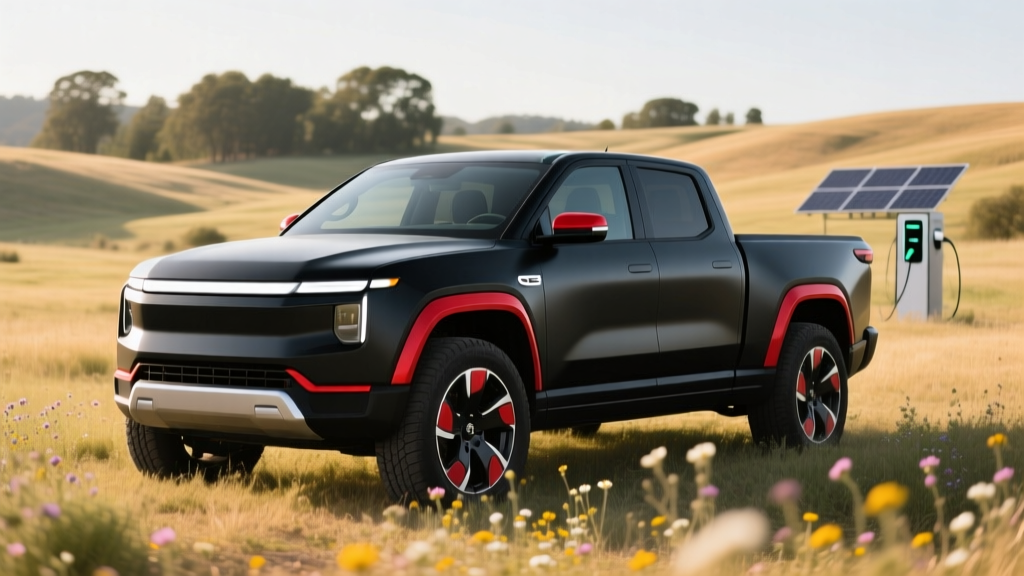
Search "Rivian bike company" and you'll find a curious origin story. Before RJ Scaringe founded Rivian Automotive in 2009, the company's earliest concepts explored electric motorcycles and human-powered mobility. That two-wheeled DNA never fully left the building: today, Rivian's R1T truck and R1S SUV are famous for their integrated Gear Tunnel, camp kitchen, and a design philosophy that treats vehicles as adventure platforms — not just transportation appliances. The "bike company" moniker stuck in enthusiast forums, a nod to Rivian's outdoor-lifestyle ethos that feels closer to Patagonia than to Detroit.
But in 2026, Rivian is firmly an EV manufacturer with two production vehicles, a growing charger network, and a second-generation platform that finally addresses the range and charging criticisms that dogged early models. Here's what buyers need to know about the R1T and R1S today.
R1T and R1S: 2026 Specs at a Glance
| Spec | R1T Dual-Motor (Standard) | R1T Tri-Motor | R1S Dual-Motor |
|---|---|---|---|
| EPA Range | 342 mi (Max Pack) | 328 mi (Max Pack) | 321 mi (Max Pack) |
| Battery (usable) | ~141 kWh (Max, NMC) | ~141 kWh (Max, NMC) | ~141 kWh (Max, NMC) |
| Horsepower | 533 hp | 850 hp | 533 hp |
| 0-60 mph | 4.5 sec | 2.9 sec | 4.7 sec |
| Drivetrain | Dual-Motor AWD | Tri-Motor AWD | Dual-Motor AWD |
| Max DC Charge Rate | 220 kW (peak) | 220 kW (peak) | 220 kW (peak) |
| 10-80% DC Time | ~30 min | ~30 min | ~30 min |
| Level 2 Rate | 11.5 kW (~25 mi/hr) | 11.5 kW (~25 mi/hr) | 11.5 kW (~25 mi/hr) |
| MPGe (combined) | 70 MPGe | 65 MPGe | 71 MPGe |
| Base MSRP | $69,900 | $99,900 | $75,900 |
| Battery Warranty | 8 yr / 175,000 mi | 8 yr / 175,000 mi | 8 yr / 175,000 mi |
Source: fueleconomy.gov, Rivian official specs. R1T Standard Pack (92 kWh) and Large Pack (109 kWh) also available at lower range/price points.
Real-World Range: What the EPA Sticker Doesn't Tell You
EPA Sticker: 342 miles (R1T Dual-Motor Max Pack)
Real-World Expectation: 280–310 miles highway at 70 mph; 240–270 miles in sub-30°F winter conditions; 320+ miles achievable in mild city/suburban driving with regen.
Rivian's boxy, truck-shaped aerodynamics penalize highway efficiency more than a sleek sedan like the Lucid Air. In independent testing, the R1T Dual-Motor averages roughly 2.2–2.4 kWh/mile at sustained highway speeds — translating to about 280 miles from the 141 kWh Max Pack before the buffer. Cold weather compounds this: battery preconditioning helps, but expect 15–25% range loss in freezing temperatures, especially if you're towing. Towing a 5,000-lb trailer can cut range nearly in half.
For daily commuting under 80 miles round-trip, even the Standard Pack (258 EPA miles) is more than sufficient and charges faster due to its smaller battery.
Charging Speed: Improved, But Not Class-Leading
| Charging Level | Power / Rate | Speed |
|---|---|---|
| Level 1 (120V) | ~1.4 kW | ~3 mi/hr |
| Level 2 (240V, 48A) | 11.5 kW | ~25 mi/hr |
| DC Fast Charge (peak) | 220 kW | 10-80% in ~30 min |
Rivian's Gen 2 platform upgraded the DC fast-charge peak from ~200 kW to 220 kW, a meaningful improvement. However, the charge curve tapers noticeably above 70% SoC, and the Max Pack's enormous 141 kWh battery means absolute charge times are longer than smaller-battery competitors. A 10-80% session takes roughly 30 minutes on a 350 kW-capable charger — adequate for road trips but not as quick as the Hyundai Ioniq 5's 18-minute 10-80% on its 800V architecture.
At home, the 11.5 kW onboard charger is a strong point: a full overnight replenishment is realistic, adding roughly 200 miles in 8 hours. Rivian also operates its own Rivian Adventure Network of DC fast chargers at trailheads and national parks — a unique perk for the adventure-oriented buyer.
Performance and Driving Dynamics
The Dual-Motor R1T delivers 533 hp and a 4.5-second 0-60 time — genuinely quick for a 7,000-lb truck. The Tri-Motor variant's 850 hp and sub-3-second sprint is supercar territory, though it's more a party trick than a daily necessity. Both use Rivian's quad-corner air suspension with adjustable ride height (up to 14.9 inches of ground clearance), making the R1T legitimately capable off-road without sacrificing on-road composure.
The R1S three-row SUV shares the same powertrain options but adds ~200 lbs, resulting in slightly slower acceleration and ~20 fewer miles of EPA range. Both vehicles feature a tank-turn-capable torque-vectoring system (Tri-Motor only) and a 10,000-lb max towing capacity (Dual-Motor) / 7,700-lb (Tri-Motor, due to performance tuning).
Pricing, Tax Credits, and Total Cost
| Trim | MSRP | Est. After §30D Credit* |
|---|---|---|
| R1T Dual-Motor Standard Pack | $69,900 | ~$62,400 |
| R1T Dual-Motor Max Pack | $83,900 | ~$76,400 |
| R1T Tri-Motor Max Pack | $99,900 | Not eligible (>$80K cap) |
| R1S Dual-Motor Standard Pack | $75,900 | ~$68,400 |
| R1S Dual-Motor Max Pack | $89,900 | ~$82,400 |
*Under IRS §30D rules for 2026: the R1T qualifies as a truck (MSRP cap $80,000); the R1S qualifies as an SUV (MSRP cap $80,000). Buyer income caps apply ($150K single / $300K joint AGI). Battery critical-mineral and component sourcing requirements must also be met. Point-of-sale transfer is available. Verify eligibility with a tax professional.
The Tri-Motor variants exceed the $80,000 MSRP cap and do not qualify for the federal credit, regardless of battery sourcing. The Standard and Large Pack Dual-Motor trims are the credit-eligible sweet spot for most buyers.
Cargo, Interior, and the "Bike Company" Lifestyle Features
This is where Rivian's adventure heritage shines:
- R1T Bed: 4.5 ft bed (short by traditional truck standards) with integrated tie-downs and a powered tonneau cover.
- Gear Tunnel: 11 cu ft lockable pass-through storage spanning the truck's width — ideal for skis, bikes, or camping gear. Available with a slide-out Camp Kitchen ($5,000 option).
- Frunk: 11 cu ft front trunk with drain plug (doubles as a cooler).
- R1S Cargo: 104.7 cu ft max (second and third rows folded); 46.7 cu ft behind the second row.
- Towing: Up to 10,000 lbs (Dual-Motor); integrated trailer brake controller standard.
Interior quality on Gen 2 models is a significant step up: vegan leather, real wood trim, a redesigned 15.6-inch center display, and a dedicated rear-seat entertainment screen. The driver-assist suite, Rivian Driver+, is a Level 2 SAE system (hands-on, eyes-on) with highway assist and automatic lane changes — competent but not as hands-off as GM's Super Cruise.
Biggest Pros and Cons
Pros
- Genuine off-road capability with air suspension and 14.9" clearance
- Gear Tunnel and adventure features unmatched by any competitor
- Strong real-world build quality on Gen 2 (2025+) models
- Over-the-air updates continuously add features
- Rivian Adventure Network chargers at national parks
- 8-year/175,000-mile battery warranty (above industry standard)
Cons
- Charging speed lags 800V competitors (Hyundai/Kia/Porsche)
- Short 4.5-ft bed limits traditional truck utility
- Tri-Motor trims ineligible for federal tax credit
- Efficiency drops sharply when towing (range halved)
- Service center network still limited in rural areas
- High starting price vs. Ford F-150 Lightning or Chevy Silverado EV
Who Should Buy a Rivian in 2026?
Buy the R1T if: You want a lifestyle-adventure truck for weekend camping, biking, skiing, or light towing — and you value unique storage solutions over maximum bed length. The Dual-Motor Standard or Large Pack offers the best value with tax-credit eligibility.
Buy the R1S if: You need three rows for family duty but refuse to drive a minivan. It's one of the only three-row electric SUVs with real off-road chops.
Look elsewhere if: You need a work truck with an 8-ft bed (Ford F-150 Lightning or Silverado EV), you prioritize the fastest possible DC charging (Ioniq 5, EV6, or Taycan), or your budget is under $60,000 (consider the upcoming Rivian R2, expected 2026-2027 at ~$45,000).
Frequently Asked Questions
Why do people call Rivian a "bike company"?
It's an affectionate nickname from Rivian's early days exploring electric motorcycle concepts and its current adventure-lifestyle branding. The Gear Tunnel, camp kitchen, and partnerships with outdoor brands reinforce the image. Rivian has never actually manufactured bicycles or motorcycles for sale.
What is the real-world range of the R1T?
Expect 280–310 highway miles (Max Pack) in mild weather, dropping to 240–270 in freezing temperatures. The Standard Pack (258 EPA) yields roughly 210–230 real-world highway miles.
Does the Rivian R1T qualify for the $7,500 federal tax credit?
The Dual-Motor trims under the $80,000 MSRP cap qualify, subject to buyer income limits and battery-sourcing requirements. The Tri-Motor ($99,900+) does not qualify. Always verify current-year rules at IRS.gov.
How does Rivian compare to the Ford F-150 Lightning?
The Lightning offers a longer bed (5.5 or 6.5 ft), Pro Power Onboard, and a lower starting price (~$55,000). The R1T counters with superior off-road capability, the Gear Tunnel, more premium interior, and a longer battery warranty. Choose Lightning for work; choose R1T for adventure.
Is Rivian's Driver+ system self-driving?
No. Rivian Driver+ is an SAE Level 2 driver-assist system requiring active driver supervision (hands on wheel, eyes on road). It is not autonomous. Only Level 4 services like Waymo operate without a driver.