Rivian Autonomy+ at a Glance: What You Need to Know
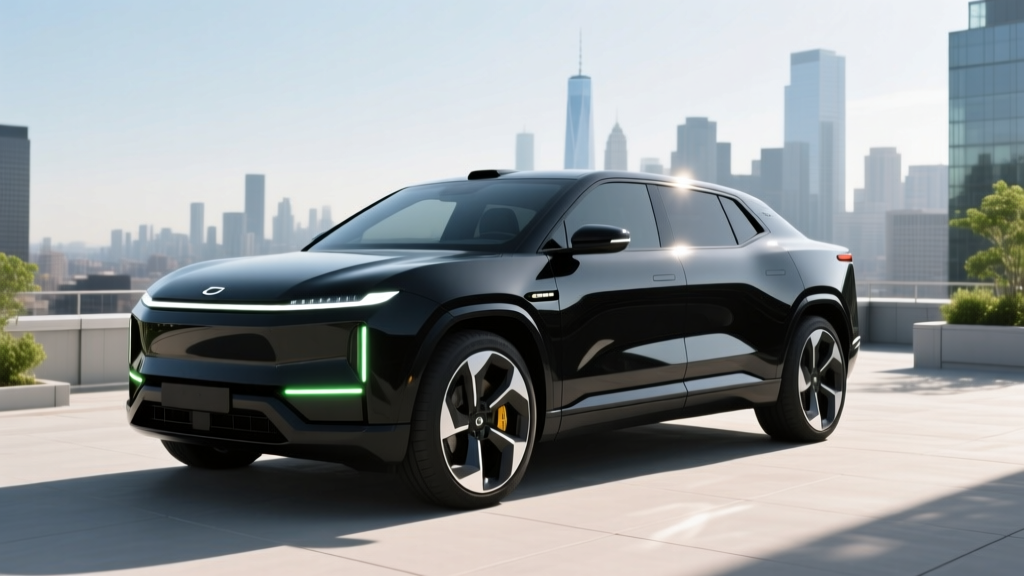
Rivian's Autonomy+ is not a standalone vehicle — it is the brand's premium driver-assistance and ADAS (advanced driver-assistance system) package, bundled across the updated 2026 R1S SUV and R1T pickup. Built on Rivian's second-generation platform, Autonomy+ leverages a suite of cameras, radar, and proprietary neural-network processing to deliver hands-on-highway assistance, automated parking, and conditional hands-free driving on mapped highways. This review covers the 2026 R1S Dual-Motor (the volume seller) equipped with Autonomy+, evaluating the full ownership picture: real-world range, charging speed, battery chemistry, pricing, and whether the tech justifies its cost.
EPA Range, Battery Chemistry, and Real-World Expectations
The 2026 R1S Dual-Motor with the Max Pack battery carries an EPA-estimated 410 miles of range — among the highest of any production electric SUV. The Standard Pack (LFP chemistry) delivers an EPA-estimated 270 miles, while the Large Pack (NMC) lands at 352 miles. Here is how that translates beyond the sticker.
EPA estimate (Max Pack): 410 miles
Highway driving at 75 mph: expect ~320–340 miles
Cold weather (below 32°F): expect ~280–310 miles (30–35% reduction typical for NMC packs)
City/regenerative driving: can match or slightly exceed EPA, ~400–420 miles
The Max Pack uses NMC (nickel manganese cobalt) chemistry for maximum energy density. The Standard Pack uses LFP (lithium iron phosphate), which sacrifices range for lower cost, longer cycle life, and a recommended 100% daily charge state.
| Spec | Standard Pack | Large Pack | Max Pack |
|---|---|---|---|
| Battery Chemistry | LFP | NMC | NMC |
| Usable Capacity | ~95 kWh | ~128 kWh | ~149 kWh |
| EPA Range | 270 mi | 352 mi | 410 mi |
| Efficiency | 2.0 kWh/mi | 2.1 kWh/mi | 2.1 kWh/mi |
| MPGe (Combined) | 169 MPGe | 161 MPGe | 161 MPGe |
| 0–60 mph | 4.5 sec | 4.5 sec | 4.5 sec |
| Horsepower | 533 hp | 533 hp | 533 hp |
| Drivetrain | AWD (Dual-Motor) | AWD (Dual-Motor) | AWD (Dual-Motor) |
| Towing Capacity | 7,700 lbs | 7,700 lbs | 7,700 lbs |
Charging Speed: DC Fast Charge and Home Level 2
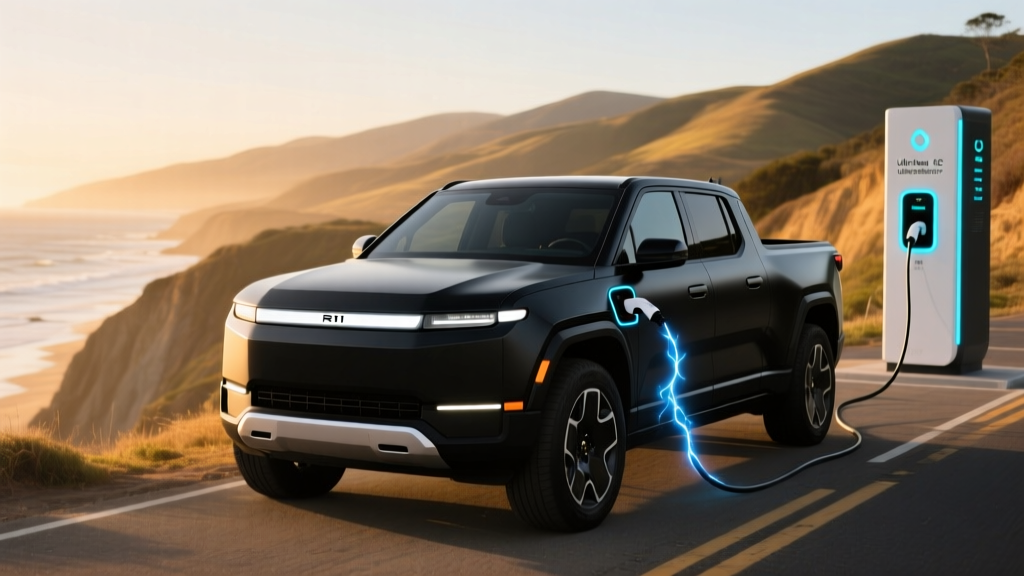
Rivian's Gen 2 platform supports a peak DC fast-charge rate of 220 kW on the Max Pack (Large Pack peaks at ~200 kW; Standard Pack at ~180 kW). On a 350 kW-capable Electrify America or EVgo station, the Max Pack can add roughly 140 miles of range in 15 minutes under optimal conditions — meaning the battery has been preconditioned via the navigation system's automatic thermal management.
| Charging Level | Power | Rate / Time | Notes |
|---|---|---|---|
| Level 1 (120V) | ~1.4 kW | ~3 mi/hr | Emergency trickle only |
| Level 2 (240V, 48A) | 11.5 kW | ~25 mi/hr | Home Wall Charger; full charge ~16 hrs (Max) |
| Level 2 (240V, 60A) | 14.4 kW | ~32 mi/hr | Requires 80A circuit; ~13 hrs (Max) |
| DC Fast Charge | 220 kW peak | 10–80% in ~30 min | Sustains ~180 kW to 50%, tapers sharply above 80% |
Charging curve reality: Like most NMC packs, the R1S Max Pack does not sustain its 220 kW peak for long. Expect peak rates between 10–35% state of charge (SoC), tapering to ~150 kW by 50%, ~90 kW by 70%, and dropping below 50 kW above 85%. Planning road-trip stops to 80% — not 100% — saves significant time. The LFP Standard Pack tolerates regular 100% charging without degradation concerns, but its smaller capacity means more frequent stops on long trips.
At home, the Rivian Wall Connector delivers up to 11.5 kW on a 60-amp circuit (48A continuous), adding about 25 miles of range per hour. Most owners charging overnight from 20% to 80% will fully replenish in 8–10 hours. A NACS (Tesla-style) charge port is now standard on all 2026 Rivians, granting native access to Tesla Supercharger V3/V4 stalls via Rivian's integrated navigation.
Autonomy+ Technology: Capabilities and Limitations
Autonomy+ is Rivian's top-tier driver-assist tier, building on the base Driver Assist+ suite. It requires a hardware package introduced on 2025-and-newer Gen 2 vehicles (11 cameras, 5 radar units, and a dedicated AI compute module). Key capabilities include:
- Highway Assist with conditional hands-free: On pre-mapped divided highways, the system permits hands-off-wheel operation with a driver-monitoring camera ensuring eye attention. This mirrors Ford BlueCruise 1.4 and GM Super Cruise in concept.
- Automatic lane changes: Initiated by turn signal or suggested by the system when a slower vehicle is ahead.
- Automated parking assist: Parallel and perpendicular parking with no driver input beyond confirmation.
- Traffic-light and stop-sign recognition: Visual alerts and optional automatic deceleration.
- Over-the-air (OTA) updates: Continuous improvement to perception models, delivered wirelessly.
- It does not drive autonomously in city traffic or unmapped roads without full driver supervision.
- Hands-free mode is geofenced to approved highway segments — not all interstates are covered.
- Performance degrades in heavy rain, snow, or construction zones with altered lane markings.
- The driver is legally responsible for the vehicle at all times (SAE Level 2).
- It cannot navigate roundabouts, parking garages, or driveways autonomously.
In real-world use, Autonomy+ performs comparably to BlueCruise on straight interstate stretches — confident lane centering, smooth speed modulation, and reliable hands-off operation on covered routes. Where it falls short is in complex merges and work zones, where the system may disengage with a 5-second warning. Rivian's coverage map continues to expand via OTA updates, but as of early 2026, rural interstates in the Mountain West and parts of the Southeast remain unmapped for hands-free operation.
Pricing, Trim Levels, and Federal Tax Credit Eligibility
The 2026 Rivian R1S Dual-Motor starts at $75,900 (Standard Pack). The Autonomy+ package adds $5,500 and requires at minimum the Large Pack configuration. A realistically equipped R1S Large Pack with Autonomy+ lands near $91,400 before incentives. The Max Pack with Autonomy+ and the Adventure trim pushes the as-tested price to approximately $103,000.
| Configuration | MSRP | §30D Credit | Effective Price |
|---|---|---|---|
| Dual-Motor Standard Pack | $75,900 | Up to $7,500* | ~$68,400 |
| Dual-Motor Large Pack + Autonomy+ | $91,400 | Up to $7,500* | ~$83,900 |
| Dual-Motor Max Pack + Autonomy+ Adventure | $103,000 | Up to $7,500* | ~$95,500 |
-
Federal §30D Tax Credit Requirements (2026):
- MSRP cap: SUVs/pickups must not exceed $80,000 MSRP — the Standard Pack qualifies; Large/Max Pack configurations with Autonomy+ exceed the cap and do NOT qualify for the new-vehicle credit.
- Buyer income cap: AGI must not exceed $150,000 (single) / $300,000 (joint).
- Battery sourcing: Critical minerals and battery components must meet phased-in domestic/free-trade sourcing thresholds (increasing annually per IRS §30D rules).
- Point-of-sale transfer: Eligible buyers can apply the credit as an immediate rebate at the dealer, reducing out-of-pocket cost.
- Used-vehicle credit (§25E): A separate credit of up to $4,000 applies to qualifying used EVs priced under $25,000 — not applicable to new R1S purchases.
Critical pricing note: The $80,000 MSRP cap for SUVs means only the base R1S Standard Pack (Dual-Motor, no Autonomy+) qualifies for the full $7,500 federal credit. Any configuration with Autonomy+ exceeds the cap. Buyers seeking the credit should verify the exact build price against the cap and consult a tax professional. Rivian's website includes a credit-eligibility estimator during the configuration process.
Cargo, Passenger Space, and Daily Practicality
The R1S seats up to seven passengers (with the optional third row) and offers substantial cargo volume:
- Behind third row: 10.6 cu ft
- Behind second row (third row folded): 46.7 cu ft
- Maximum (all rear rows folded): 88.2 cu ft
- Front trunk (frunk): 11.0 cu ft — lockable, weatherproof, ideal for charging cables or groceries
- Second-row legroom: 39.5 inches
- Third-row legroom: 30.4 inches (suitable for children only on longer trips)
The R1S's flat floor, thanks to the skateboard battery platform, provides a low load height and no transmission tunnel intrusion. The gear tunnel on the R1T pickup (a separate 11.0 cu ft pass-through behind the cab) is not available on the SUV but the R1S compensates with a deeper under-floor rear cargo area.
Warranty, Ownership Costs, and Battery Longevity
Rivian provides competitive warranty coverage for the EV segment:
- Battery pack: 8 years / 175,000 miles (retains ≥70% capacity)
- Powertrain (motors, inverters): 8 years / 175,000 miles
- Bumper-to-bumper: 5 years / 60,000 miles
- Corrosion perforation: 12 years / unlimited miles
The 175,000-mile battery warranty exceeds the federal minimum (8 years/100,000 miles) and is among the longest in the segment, rivaling Hyundai's 10-year/100,000-mile coverage on the Ioniq 5. Rivian's NMC packs have shown modest degradation in early fleet data — typically 5–8% capacity loss over the first 60,000 miles — though long-term data on the Gen 2 platform is still accumulating.
Insurance costs run higher than comparable ICE SUVs. Expect annual premiums of $2,400–$3,200 for a well-equipped R1S depending on your state, driving record, and coverage level. Rivian offers its own insurance product in select states, which can be competitive for low-mileage drivers.
Who Should Buy the R1S with Autonomy+?
- You regularly drive 200+ miles on mapped interstates and want hands-free highway assist.
- You need three-row seating with genuine off-road capability (8.9 inches ground clearance, wading to 36 inches).
- You tow a boat or camper (7,700 lbs capacity) and need the torque of a dual-motor AWD system.
- You value OTA software updates that continuously improve vehicle functionality.
- Your budget is under $75,000 — the Tesla Model Y or Hyundai Ioniq 5 offer better value without Autonomy+.
- You primarily drive in dense urban areas where Autonomy+'s highway-focused features go unused.
- You need a mature service-center network — Rivian's service footprint is growing but still spotty in rural areas.
- Tax-credit eligibility is critical — most Autonomy+ configurations exceed the $80K MSRP cap.
Pros and Cons
- Class-leading 410-mile EPA range (Max Pack)
- Native NACS port — direct Supercharger access
- 8-yr/175,000-mi battery warranty
- Genuine off-road capability with air suspension
- 11 cu ft frunk + 88 cu ft max cargo
- Continuous OTA feature additions
- Autonomy+ pushes most trims above $80K MSRP cap (loses §30D credit)
- Hands-free coverage map still incomplete in rural areas
- 220 kW peak DC charging trails Hyundai/Kia's 350 kW capability
- Third-row space is tight for adults
- Service center availability outside major metros
- Insurance premiums above segment average
Frequently Asked Questions
What is the real-world range of the R1S with Autonomy+?
With the Max Pack (410 miles EPA), expect approximately 320–340 miles at highway speeds (70–75 mph), and 280–310 miles in freezing temperatures. The Autonomy+ system itself adds negligible energy draw — the main range variables are speed, temperature, and terrain. If you opt for the Large Pack (352 EPA), highway reality is closer to 275–290 miles.
How fast does the R1S charge on DC fast chargers and at home?
Peak DC fast-charge rate is 220 kW (Max Pack), delivering a 10–80% charge in approximately 30 minutes on a 350 kW-capable station. At home on a 48-amp Level 2 charger (11.5 kW), the Max Pack takes about 16 hours from empty to full, but typical overnight top-ups from 30–80% complete in 7–8 hours. The native NACS port means you can use Tesla Superchargers without an adapter.
Does the R1S with Autonomy+ qualify for the $7,500 federal EV tax credit?
Only the base Standard Pack Dual-Motor at $75,900 MSRP qualifies, as the IRS §30D rules cap SUV eligibility at $80,000 MSRP. Adding Autonomy+ ($5,500) or choosing the Large/Max Pack pushes the vehicle above this threshold. Buyer income limits ($150K single / $300K joint) and battery-sourcing requirements also apply. Consult a tax professional for your specific situation.
Is Autonomy+ worth the $5,500 cost?
If your commute includes 50+ miles of mapped interstate daily, the hands-free highway assist meaningfully reduces fatigue — comparable to BlueCruise or Super Cruise in comfort. If you primarily drive on surface streets, rural roads, or in cities, the base Driver Assist+ (included on all trims) provides adequate adaptive cruise and lane centering without the premium. Autonomy+ is a lifestyle upgrade, not a necessity.
How does the R1S compare to the Tesla Model X or BMW iX?
The R1S offers more off-road capability, a larger frunk, and a longer battery warranty than the Model X, though Tesla's Supercharger network reliability and Autopilot coverage remain advantages. The BMW iX is more refined on pavement and charges faster (up to 200 kW with better sustained curves) but lacks any off-road pretension and has less cargo volume. For adventure-oriented families who tow, the R1S occupies a unique niche.
Can Autonomy+ be added to an older Rivian?
No. Autonomy+ requires the Gen 2 hardware suite (11 cameras, 5 radars, upgraded compute module) introduced on 2025 model-year vehicles. First-generation R1S/R1T vehicles (2022–2024) cannot be retrofitted. They retain the original Driver Assist+ system, which receives OTA updates but cannot achieve hands-free highway operation.