Quick Verdict: Rivian's Autonomy Stack in Context
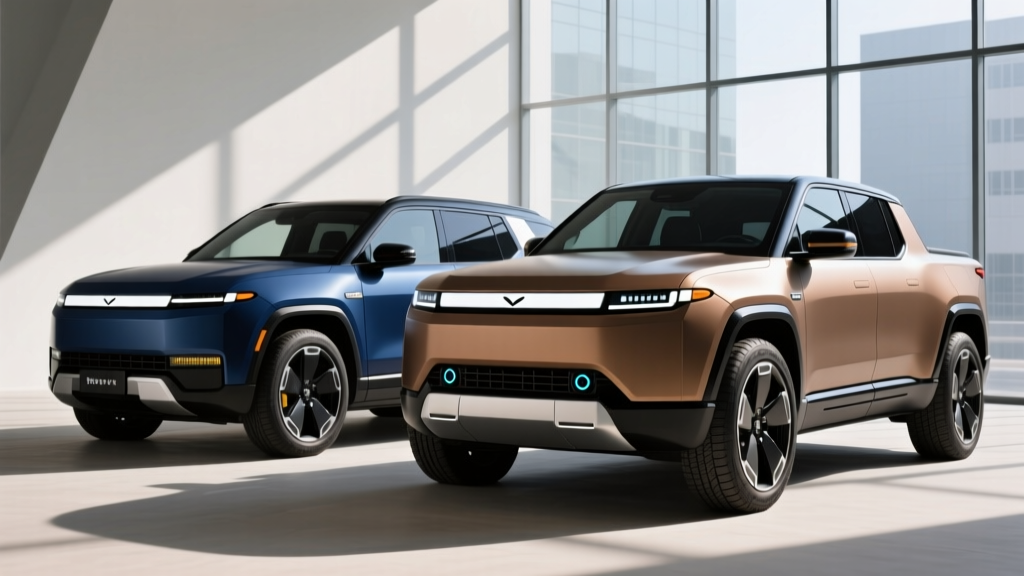
Rivian's in-house autonomy platform—branded internally as the company's Driver+ and autonomy stack—represents a deliberate bet on vertical integration over third-party ADAS suppliers. Unlike competitors leaning on Mobileye or NVIDIA turnkey solutions, Rivian designs its perception, prediction, and planning software in-house, running on custom compute hardware. For 2026, the platform powers highway assist, automated lane changes, and conditional hands-off driving on mapped divided highways in the R1T (truck) and R1S (SUV).
The cost question is twofold: what does the autonomy platform add to the vehicle price, and what does it actually deliver? As of 2026, Rivian bundles its most advanced driver-assistance features within its software subscription model, adding roughly $70–$99/month depending on tier, or available as a one-time purchase at vehicle configuration. This review breaks down the real numbers—range, charging, performance, pricing, and what the autonomy platform genuinely costs you over ownership.
Spec Table: 2026 Rivian R1T Dual-Motor AWD (Max Pack)
| Attribute | Value |
|---|---|
| EPA Range | 420 miles (Max Pack) / 352 miles (Large Pack) |
| Battery Capacity | ~149 kWh usable (Max Pack, NMC); ~112 kWh (Large Pack, NMC) |
| Peak DC Fast Charge | 220 kW (Max Pack) / 200 kW (Large Pack) |
| 10–80% Charge Time | ~28 minutes (Max Pack) / ~22 minutes (Large Pack) |
| Level 2 Home Charging | 11.5 kW (up to ~30 miles/hr at 48A) |
| 0–60 mph | 4.5 seconds (Dual-Motor) |
| Horsepower | 533 hp (Dual-Motor) / 665 hp (Tri-Motor) |
| Drivetrain | AWD (dual-motor); AWD (tri-motor with torque vectoring) |
| Efficiency | 73 MPGe combined / 46 kWh/100 mi |
| Towing Capacity | 11,000 lbs |
| Base MSRP (Dual-Motor Large) | $74,800 |
| As-Tested (Tri-Motor Max + Autonomy) | ~$104,000 |
| Battery/Powertrain Warranty | 8 years / 175,000 miles |
Range, Efficiency, and the Real-World Reality
EPA Sticker: 420 miles (Max Pack) / 352 miles (Large Pack)
Real-World Expectation: Plan for ~340–370 miles highway at 70 mph in moderate weather. In cold conditions (below 30°F), expect a 15–25% reduction—roughly 280–320 miles for the Max Pack. City driving with regenerative braking recovers efficiency, often exceeding the EPA combined figure.
Rivian's NMC chemistry delivers strong energy density but is more temperature-sensitive than LFP. The Max Pack's ~149 kWh usable capacity is among the largest in any consumer EV, which partly explains the truck's weight (~7,100 lbs curb) and its 46 kWh/100 mi efficiency—worse than a Tesla Model Y (~26 kWh/100 mi) but competitive with the Ford F-150 Lightning Extended Range (~48 kWh/100 mi).
For context on how these figures compare to EPA-certified data, see fueleconomy.gov's R1T listing.
Charging: DC Fast and Home Level 2 Speeds
| Charging Level | Power / Rate | Practical Output |
|---|---|---|
| DC Fast Charge (Max Pack) | Peak 220 kW | 10–80% in ~28 min; tapers sharply above 85% |
| DC Fast Charge (Large Pack) | Peak 200 kW | 10–80% in ~22 min; tapers above 80% |
| Level 2 (Home, 48A / 240V) | 11.5 kW | ~30 miles of range per hour; full charge ~12–14 hrs |
| Level 1 (120V standard outlet) | ~1.4 kW | ~3–4 miles per hour; emergency/trickle only |
| NACS Adapter (Tesla Supercharger) | Up to 250 kW at V3 stalls | Compatible via included J3400/NACS adapter (2024+) |
Rivian's charge curve is front-loaded: the Max Pack sustains near-peak speeds to roughly 40–50% SoC before tapering. This is typical of large NMC packs with conservative thermal management. For road trips, preconditioning via the navigation system warms the battery for faster DC charging—skip this step and you'll see 20–30% slower peak rates in cold weather.
At home, a 48A Level 2 charger on a 60A circuit is the practical minimum for daily use. Installation typically costs $800–$2,500 depending on panel capacity and run length.
Performance and Drivetrain
The Dual-Motor AWD R1T delivers 533 hp and a 4.5-second 0–60 mph time—brisk for a 7,100-lb truck. The Tri-Motor variant bumps output to 665 hp and drops the 0–60 to approximately 3.9 seconds, with torque vectoring on the rear axle improving cornering composure. Rivian's single-speed reduction gear means no shift lag; acceleration is linear and immediate.
Off-road, the R1T's air suspension provides up to 14.9 inches of ground clearance, and the quad-motor configuration (available on select trims) enables true tank turns. Towing maxes out at 11,000 lbs, though real-world range while towing drops dramatically—expect roughly 50–60% of rated range at highway speeds with a loaded trailer.
The Autonomy Platform: What It Costs, What It Does
Rivian's autonomy platform encompasses its full ADAS stack, from basic lane-keeping to the advanced Driver+ highway assist. Here's how the cost breaks down as of 2026:
- Base ADAS (included): Automatic emergency braking, lane-keeping assist, adaptive cruise control, blind-spot monitoring, rear cross-traffic alert. These are bundled at no extra cost on all trims.
- Driver+ (subscription or purchase): Adds hands-off highway driving on mapped divided highways, automated lane changes, and enhanced navigation-linked speed adjustment. Available as a ~$70/month subscription or a one-time purchase at vehicle configuration (historically priced around $5,000–$7,500, though Rivian has adjusted packaging).
- Future autonomy tiers: Rivian has signaled conditional hands-off capability on additional road types, but these remain in testing and are not commercially available. Any future Level 3 or Level 4 functionality would require regulatory approval and additional hardware validation.
SAE Automation Level: Rivian's Driver+ is a Level 2 driver-assistance system. The driver must remain attentive, keep eyes on the road (monitored via cabin camera), and be prepared to take over at any time. This is not "self-driving" in the Level 4 sense—only fully driverless robotaxi services like Waymo operate at Level 4 today.
Over a 5-year ownership period at the subscription tier, Driver+ costs approximately $4,200. Compared to Tesla's FSD (Supervised) one-time purchase of ~$8,000 or BMW's $600–$1,000 Highway Assistant package, Rivian's model sits in the middle—more flexible via subscription, but cumulative cost adds up for long-term owners.
Interior, Tech, and Cargo
The R1T seats five with generous rear legroom (~38.5 inches). The 15.6-inch center touchscreen runs Rivian's custom OS—responsive, with native navigation, Spotify, and over-the-air update capability. A dedicated gear tunnel behind the cab provides 11.7 cubic feet of lockable, pass-through storage. The bed offers 54.1 cubic feet, and the front trunk (frunk) adds 11.1 cubic feet.
The R1S (three-row SUV variant) offers similar tech with seating for seven and up to 104.7 cubic feet of total cargo volume with all seats folded.
Pricing, Tax Credits, and Total Cost
| Trim | MSRP | §30D Credit Eligibility | Effective Price (if eligible) |
|---|---|---|---|
| R1T Dual-Motor (Large Pack) | $74,800 | Subject to MSRP cap ($80K trucks), income limits, sourcing rules | Varies—see IRS guidance |
| R1T Dual-Motor (Max Pack) | $87,800 | Exceeds $80K truck cap for new-vehicle credit | Full MSRP (no new credit) |
| R1T Tri-Motor (Max Pack) | $99,800 | Exceeds $80K truck cap | Full MSRP (no new credit) |
| R1S Dual-Motor (Large Pack) | $79,800 | Subject to $80K SUV cap, income, sourcing | Varies |
The federal §30D tax credit for new EVs imposes an MSRP cap of $80,000 for trucks and SUVs. This means the R1T Dual-Motor Large Pack may qualify if the buyer meets income thresholds ($150K single / $300K joint AGI) and the vehicle satisfies battery component and critical mineral sourcing requirements. However, Max Pack and Tri-Motor configurations exceed the cap and do not qualify for the new-vehicle credit.
For current-year eligibility rules, always verify against IRS §30D guidance. Point-of-sale transfer is available if eligible, reducing the purchase price at the dealer rather than waiting for a tax refund.
Who Should Buy the R1T/R1S?
Choose the R1T/R1S if:
- You need genuine truck capability (11,000-lb towing, off-road clearance) with electric drivetrain benefits
- You want 350+ miles of range without switching to a commercial-grade EV
- You value over-the-air software updates and a vertically integrated ADAS stack
- Your budget accommodates a $75K–$100K+ vehicle and you have home charging access
Look elsewhere if:
- You need the lowest cost per mile of range (Tesla Model Y or Hyundai Ioniq 5 are more efficient)
- You prioritize full self-driving capability today (no consumer vehicle offers this)
- You lack home charging access and your area has limited DC fast-charger density
- You need a third row and maximum cargo volume (R1S works, but a Rivian R2 or larger SUV may suit better when available)
Pros and Cons
Pros
- Class-leading range with Max Pack (420 mi EPA)
- Strong DC fast-charge speeds with NACS compatibility
- Excellent off-road capability and ground clearance
- Gear tunnel storage is uniquely practical
- OTA updates continuously improve software and ADAS
- 8-year/175,000-mile battery warranty exceeds industry standard
Cons
- Heavy vehicle reduces efficiency vs. lighter EVs
- Max Pack and Tri-Motor trims exceed §30D MSRP cap
- Driver+ subscription adds long-term cost vs. one-time purchase models
- Towing significantly cuts range (50–60% loss)
- Service center network still expanding in rural areas
- Autonomy platform is Level 2 only—no hands-off city driving
Competitor Comparison
| Attribute | Rivian R1T (Dual-Motor Max) | Ford F-150 Lightning (Ext. Range) | Tesla Cybertruck (AWD) |
|---|---|---|---|
| EPA Range | 420 mi | 320 mi | 340 mi |
| Peak DC Charge | 220 kW | 150 kW | 250 kW |
| 0–60 mph | 4.5 sec | 3.8 sec | 4.1 sec |
| Towing | 11,000 lbs | 10,000 lbs | 11,000 lbs |
| Base MSRP | $87,800 | $76,995 | $79,990 |
| ADAS Level | Level 2 (Driver+) | Level 2 (BlueCruise) | Level 2 (Autopilot/FSD Supervised) |
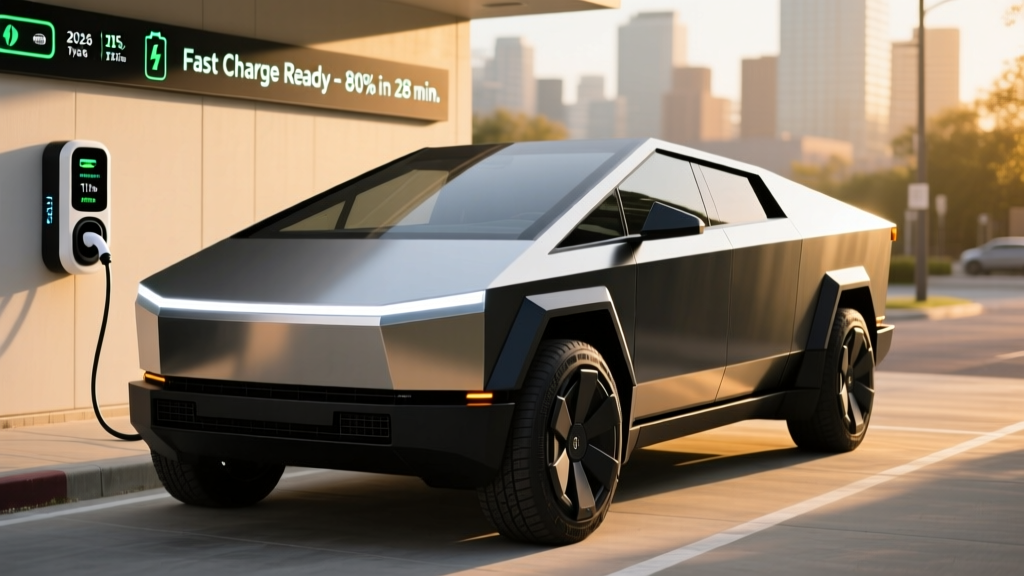
The R1T wins on range and off-road versatility. The F-150 Lightning offers a lower entry price and broader dealer service network. The Cybertruck charges fastest and undercuts on price, though its polarizing design and stainless-steel exoskeleton aren't universally practical.
FAQ
What is the real-world range of the Rivian R1T?
The EPA rates the Max Pack at 420 miles, but real-world highway driving at 70 mph typically yields 340–370 miles. Cold weather (below 30°F) can reduce this by 15–25%, so plan for 280–320 miles in winter conditions.
How fast does the R1T charge at home and on DC fast chargers?
On a 48A Level 2 home charger, the R1T adds roughly 30 miles of range per hour, with a full charge taking 12–14 hours. On DC fast chargers, the Max Pack peaks at 220 kW, reaching 10–80% in approximately 28 minutes before tapering.
Does the Rivian R1T qualify for the federal EV tax credit?
It depends on the trim. The Dual-Motor Large Pack ($74,800) falls under the $80,000 truck MSRP cap and may qualify if the buyer meets income limits and the vehicle satisfies battery sourcing rules. Max Pack and Tri-Motor trims exceed the cap and are ineligible for the new-vehicle §30D credit. Always verify current rules at irs.gov.
What does Rivian's autonomy platform cost over time?
Base ADAS features (AEB, lane-keeping, adaptive cruise) are included at no extra cost. The Driver+ highway assist feature is available as a ~$70/month subscription or a one-time purchase at configuration. Over 5 years, the subscription model costs roughly $4,200.
Is the Rivian R1T worth buying vs. the F-150 Lightning or Cybertruck?
If you prioritize maximum range, off-road capability, and a vertically integrated software stack, the R1T is compelling. If budget and dealer service network are top concerns, the F-150 Lightning may be more practical. The Cybertruck offers faster charging and a lower price, but its design and build quality remain divisive.
What is the battery warranty on the Rivian R1T?
Rivian covers the battery and powertrain for 8 years or 175,000 miles, whichever comes first, with a capacity retention threshold typically set at 70% of original capacity. This exceeds the industry-standard 8-year/100,000-mile warranty.