Why Atlanta Is a Rivian Hotspot in 2026
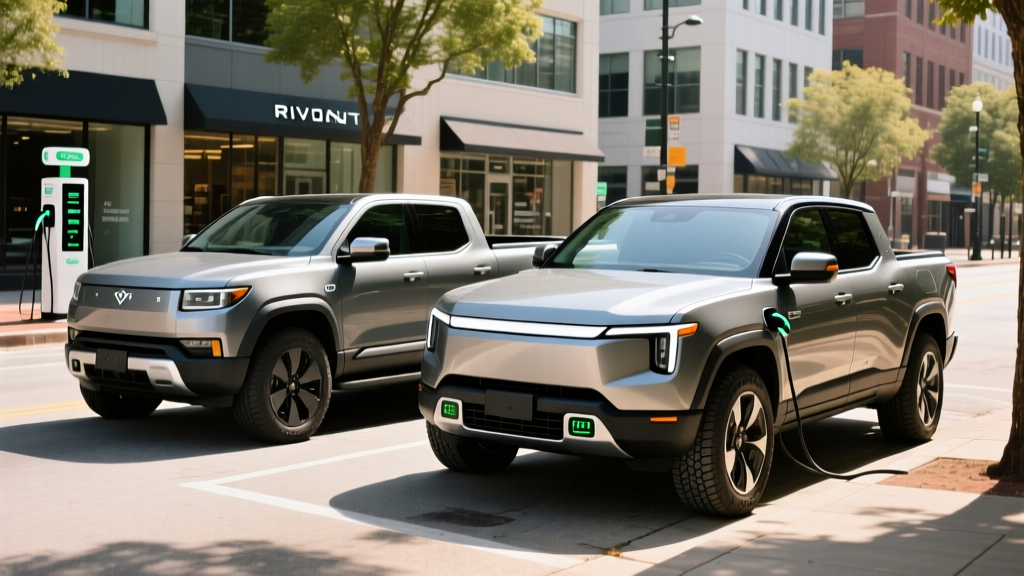
Atlanta has quietly become one of the densest Rivian markets in the Southeast. The reason is practical: a long commute culture (I-75, I-85, GA-400), expanding public DC fast-charging corridors along I-16 to Savannah and I-20 to Birmingham, and a housing stock where Level 2 home charging is achievable for most single-family homeowners. If you're researching Rivian Atlanta ownership — whether you're eyeing the R1T pickup or the three-row R1S SUV — this guide covers the exact numbers that matter: real-world range on Georgia highways, charging speeds from Buckhead to the North Georgia mountains, and what the 2026 federal tax credit actually looks like at the point of sale.
2026 Rivian R1T & R1S: Core Specs at a Glance
| Spec | R1T Dual-Motor (Standard) | R1S Tri-Motor (Max) |
|---|---|---|
| EPA Range | ~270 mi (Standard Pack) | ~410 mi (Max Pack) |
| Battery Usable Capacity | ~95 kWh (NMC) | ~149 kWh (NMC, 2170 cells) |
| Chemistry | NMC (nickel manganese cobalt) | NMC (2170 cylindrical) |
| Drivetrain | Dual-Motor AWD | Tri-Motor AWD |
| Horsepower | 533 hp | 850 hp |
| 0–60 mph | ~4.5 sec | ~2.9 sec |
| Max DC Fast Charge | ~200 kW peak | ~220 kW peak |
| 10–80% DC Time | ~28 min (ideal curve) | ~38 min (larger pack) |
| Level 2 Home Charge | 11.5 kW (~20 mi/hr) | 11.5 kW (~25 mi/hr) |
| MPGe (Combined) | ~73 MPGe | ~70 MPGe |
| EPA Efficiency | ~48 kWh/100 mi | ~50 kWh/100 mi |
| Towing (max) | 11,000 lb | 9,000 lb (R1S) |
| Cargo (R1T bed / R1S behind 3rd) | ~54 cu ft (bed w/ tonneau) | ~10.4 cu ft (R1S 3rd up) |
| Warranty (Battery/Powertrain) | 8 yr / 175,000 mi | 8 yr / 175,000 mi |
| Base MSRP (2026) | ~$69,900 (R1T Dual) | ~$99,000 (R1S Tri Max) |
Sources: fueleconomy.gov, Rivian official spec sheets. Figures reflect current 2026 model-year data; trims and packs vary.
Real-World Range: What Atlanta Drivers Actually See
EPA sticker: ~270 miles. Real-world expectation on I-75 at 75 mph in 85°F Georgia summer heat with A/C: ~230–245 miles. In January cold snaps (low 30s), expect a 10–15% reduction, dropping effective range to ~210–230 miles on highway loops. City/regen-heavy driving around Decatur or Midtown can push closer to EPA or slightly above.
Atlanta's terrain is modest, but sustained 70–80 mph highway speeds on I-285 and GA-400 are where large, heavy EVs like the R1T and R1S consume energy fastest. Aerodynamic drag squares with speed — a brick-shaped pickup at 80 mph uses dramatically more kWh/mile than at 65 mph. If your typical commute is 30–40 miles round trip with city surface streets, you'll easily squeeze 4–5 days between charges. Road-trippers heading to the Blue Ridge or Savannah should plan around the Max Pack or a mid-route DC stop.
The Tri-Motor Max Pack's ~410-mile EPA rating is one of the highest of any production EV sold in the U.S. Real-world highway: expect ~340–360 miles in temperate weather, which comfortably covers Atlanta-to-Savannah (248 mi) or Atlanta-to-Charlotte (244 mi) without a charge stop.
Charging in Atlanta: Home, Public, and Corridor Coverage
Home charging is where 80%+ of Rivian miles get added. Most Rivian owners in Atlanta install a 48-amp Level 2 wall connector on a 60-amp dedicated circuit. At 11.5 kW, the R1T Standard Pack refills from 20% to 80% overnight in roughly 6–7 hours — more than enough for daily use.
| Level | Power (kW) | Miles of Range Added per Hour | Typical Use Case |
|---|---|---|---|
| Level 1 (120V household) | ~1.4 kW | ~3 mi/hr | Emergency / trickle top-off |
| Level 2 (240V, 48A home) | 11.5 kW | ~20–25 mi/hr | Daily overnight charging |
| DC Fast (350 kW station) | ~200–220 kW peak | ~140 mi in 10 min (peak) | Road trips, corridor travel |
Home Installation Cost in Metro Atlanta
Expect to pay $1,200–$2,800 for a straightforward Level 2 install if your panel has spare capacity and the run from panel to garage is under 40 feet. Older Atlanta homes (pre-1990s, 100-amp service) may require a panel upgrade ($2,000–$4,000 additional). Always get a quote from a licensed electrician — Rivian's Wall Connector retails around $500–$700, and third-party units like ChargePoint Home Flex or Emporia Level 2 work identically well with the J3400/NACS inlet on 2026 Rivians.
Public DC Fast Charging: Rivian Waypoints & the Supercharger Network
As of 2026, Rivian owners have access to two networks: Rivian's own Waypoint chargers (strategically placed near national parks and adventure corridors, including sites near the Great Smoky Mountains and along I-16) and the Tesla Supercharger network via NACS compatibility. The 2026 R1T and R1S ship with a native NACS charge port, eliminating the need for a CCS-to-NACS adapter that earlier owners required.
In metro Atlanta, Electrify America, EVgo, and Tesla Superchargers blanket the perimeter (I-285), with 350 kW-capable stalls at Lenox Square, Perimeter Mall, and along I-85 toward Greenville, SC. At a 350 kW stall, the R1T Dual-Motor peaks around 200 kW and sustains ~150 kW through 60% SoC before tapering — a 10–80% session takes roughly 28 minutes under ideal thermal conditions. Precondition the battery via the Rivian app en route to the charger; skipping this can add 5–8 minutes to your stop in cold weather.
Pricing, Trims, and the 2026 Federal Tax Credit
| Model / Trim | Base MSRP | §30D Credit (Max) | Effective Price (if eligible) |
|---|---|---|---|
| R1T Dual-Motor Standard | ~$69,900 | $0 (exceeds $80K pickup cap*) | ~$69,900 |
| R1S Dual-Motor Standard | ~$75,900 | Up to $7,500 | ~$68,400 |
| R1S Tri-Motor Max | ~$99,000 | $0 (exceeds $80K SUV cap) | ~$99,000 |
*Critical caveat: Under IRS §30D rules, the MSRP cap for vans, SUVs, and pickups is $80,000. The R1T is classified as a pickup, capping eligibility at $80K MSRP — meaning the base R1T Dual-Motor at ~$69,900 does clear the MSRP cap and can qualify, while optioned-up builds may not. The R1S SUV faces the same $80K cap. Always verify the exact MSRP of your build configuration.
Beyond MSRP, §30D eligibility in 2026 requires:
- Buyer income caps: AGI ≤ $150,000 (single), $225,000 (head of household), $300,000 (joint)
- Battery component sourcing: Increasing percentages of battery components and critical minerals must be manufactured or assembled in North America or FTA-partner countries. Rivian's Normal, IL plant sources domestically, but specific pack configurations may or may not clear the threshold — confirm on IRS.gov for your exact VIN.
- Point-of-sale transfer: The credit can be applied at the dealer (Rivian direct-sales) to reduce your cash outlay at delivery, rather than waiting for a tax refund.
Who Should Buy a Rivian in Atlanta — And Who Shouldn't
Best for:
- Active families who need the R1S's three rows (seating for 7) plus genuine off-road capability for North Georgia trails or trips to the Okefenokee.
- R1T buyers who want a daily-drivable pickup that can tow a boat to Lake Lanier (11,000-lb rating) and still park in a Virginia-Highland driveway.
- Owners with home charging access who want to eliminate gas-station stops entirely.
Think twice if:
- You live in an Atlanta condo or apartment without Level 2 access. Public charging is viable but adds weekly time cost (~30–40 min per DC session).
- You regularly tow heavy loads over 200+ miles. Towing a 7,000-lb trailer cuts range roughly in half — plan for stops every 100–120 miles.
- Budget is tight. Even the base R1T pushes $70K before options; insurance in Georgia runs $200–$300/month for these vehicles.
Standout Tech & Notable Drawbacks
Rivian's software stack is one of the most refined in the EV space. The 15.6-inch center display is responsive, the phone-as-key system is reliable, and over-the-air updates have consistently added features (camp mode, pet mode, improved route planning) without the beta-test feel of some competitors. The Driver+ ADAS suite is SAE Level 2 — meaning it provides hands-on highway assist and adaptive cruise, but requires active driver supervision. It is not "self-driving," and Rivian is transparent about this.
The gear tunnel (R1T) remains a genuinely unique storage solution — a lockable, pass-through compartment behind the cab that swallows ski bags, fishing rods, or a week's worth of groceries. The R1S's front trunk (frunk) offers ~11 cu ft of sealed, drainable storage — useful for muddy gear or tailgate ice.
Drawbacks: The second-row seats in the R1S don't fold completely flat, which limits cargo flexibility versus a Tesla Model X or Rivian's own R1T with the bed. The panoramic glass roof, while beautiful, can let in significant Georgia summer heat — the powered shade is essentially mandatory. And service center density in Atlanta, while improved since 2023, still means some warranty work requires scheduling weeks out or a mobile-ranger visit.
Pros & Cons
Pros
- Class-leading real-world range (Max Pack, ~340+ mi highway)
- Native NACS in 2026 — full Supercharger access, no adapter
- Genuine off-road capability (ground clearance up to 14.4 in)
- 11,000-lb tow rating (R1T) with integrated trailer brake controller
- 8-year / 175,000-mile battery warranty — among the longest
- OTA updates that add real features, not just bug fixes
Cons
- High starting price — most builds push past $80K, complicating tax credit
- Towing drastically reduces range (plan for ~50% of EPA when loaded)
- Service center wait times in Atlanta can stretch 2–4 weeks
- Large footprint — tight for some intown Atlanta garages and parking decks
- No Apple CarPlay / Android Auto (Rivian's native system only)
Frequently Asked Questions
What is the real-world range of a Rivian R1T in Atlanta?
For the 2026 R1T Dual-Motor Standard Pack (~270 mi EPA), expect ~230–245 miles on Georgia highways at 75 mph in summer, and ~210–230 miles in winter cold. The Max Pack R1S can deliver 340–360 miles highway in temperate conditions.
How fast does a Rivian charge at home and on the road?
On a 48-amp Level 2 home charger, the R1T adds ~20 miles of range per hour (full overnight charge). On a 350 kW DC fast charger, the Dual-Motor peaks at ~200 kW and reaches 10–80% in approximately 28 minutes. The larger Max Pack takes ~38 minutes for the same session.
Does the Rivian R1T or R1S qualify for the $7,500 federal tax credit in 2026?
It depends on your exact build MSRP and income. The §30D credit caps MSRP at $80,000 for SUVs and pickups. A base R1S Dual-Motor at ~$75,900 can qualify if your AGI is within limits ($300K joint / $150K single). Higher trims exceed the cap. Battery-sourcing rules also apply — verify on IRS.gov or with a tax professional.
Is Rivian worth it vs. the Ford F-150 Lightning or Tesla Model X?
The F-150 Lightning is cheaper (~$55K base) and qualifies more easily for the tax credit, but offers less range and a less refined software experience. The Model X offers falcon-wing doors and Supercharger-native access, but is pricier and has had inconsistent build quality. The Rivian wins on adventure capability, ground clearance, and the gear tunnel — but costs more and has a smaller service footprint.
Can I charge a Rivian at Tesla Superchargers in Atlanta?
Yes. The 2026 R1T and R1S ship with a native NACS (Tesla-standard) charge port, giving direct access to Tesla Superchargers without an adapter. Metro Atlanta has dense Supercharger coverage at Lenox, Perimeter, Kennesaw, and along I-85.
How much does home Level 2 charging installation cost in Atlanta?
A standard 48-amp Level 2 install on an existing 200-amp panel typically runs $1,200–$2,800 in metro Atlanta (equipment + electrician + permit). Older homes with 100-amp service may need a panel upgrade adding $2,000–$4,000.