The Electric Ambulance Question: Why Fleets Are Looking at Rivian
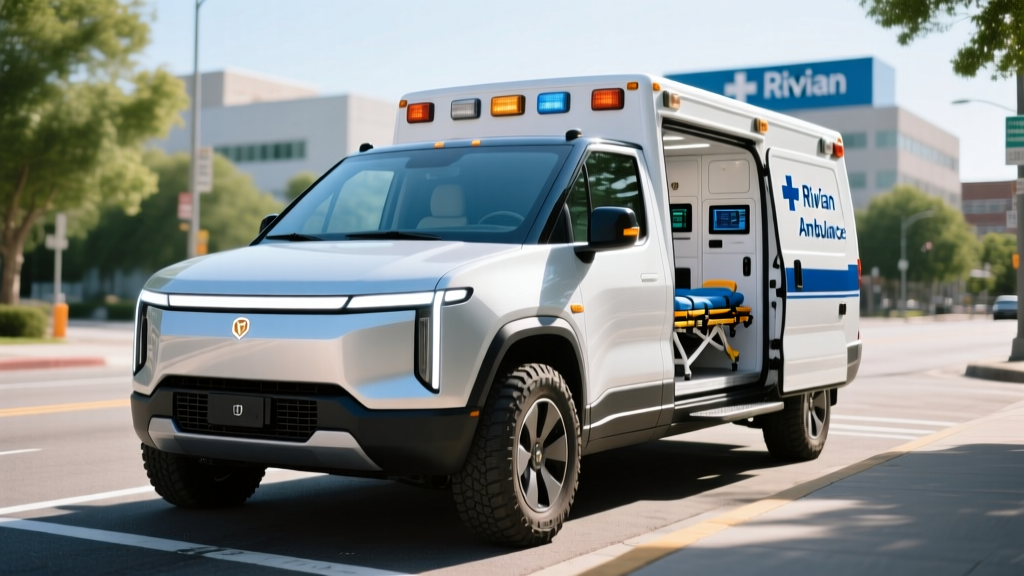
When the Federal Emergency Management Agency awarded a $6.5 million grant in 2024 to the City of Portland, Oregon, to build the nation's first fully electric ambulance fleet based on the Rivian EDV (Electric Delivery Van), it shifted the conversation from "can an EV handle emergency medical services?" to "when will more cities follow?" The Rivian ambulance concept is no longer theoretical — it's being upfitted by Braun Northwest and put into active 911 service. But EMS operations demand brutal duty cycles: long idling at hospitals, rapid response acceleration, heavy medical equipment payloads, and 24/7 availability regardless of weather. This review examines the Rivian EDV platform's specs, real-world range expectations, charging logistics, and whether the economics actually work for fleet buyers considering an electric ambulance conversion.
Platform Specs: Rivian EDV by the Numbers
The Rivian EDV comes in three body configurations, and ambulance upfitters typically work with the largest variant to accommodate patient compartments. Here are the core platform figures relevant to EMS conversion:
| Specification | EDV-700 (Standard) | EDV-900 (Ambulance Preferred) |
|---|---|---|
| Battery Capacity | ~89 kWh usable (NMC lithium-ion) | ~149 kWh usable (NMC lithium-ion) |
| EPA Estimated Range | ~150 miles | ~161 miles (unladen) |
| Drivetrain | Single-motor FWD | Single-motor FWD |
| Horsepower | ~205 hp | ~205 hp |
| 0-60 mph (estimated) | ~8.5 sec | ~9.0 sec (loaded) |
| Max DC Fast Charge | ~115 kW peak | ~150 kW peak |
| Level 2 Charge Rate | ~11.5 kW (AC) | ~11.5 kW (AC) |
| Cargo Volume | ~420 cu ft | ~550 cu ft |
| Payload Capacity | ~2,500 lbs | ~3,200 lbs |
| Efficiency | ~1.8 kWh/mi | ~2.1 kWh/mi (ambulance upfit est.) |
Rivian uses NMC (nickel manganese cobalt) chemistry in the EDV battery packs, prioritizing energy density to maximize range within the van's floor-mounted pack. For fleet operators, NMC offers higher range per charge cycle compared to LFP (lithium iron phosphate), though LFP would theoretically offer longer cycle life. Rivian has not announced an LFP variant for the commercial van line as of early 2026.
Real-World Range: What EMS Dispatchers Actually Need to Know
For urban 911 systems with response zones under 15 miles across, this range is operationally viable — most ambulance calls involve 5-12 mile round trips, and a standard 12-hour shift covers 60-90 miles of driving. The Portland pilot program specifically targeted high-density urban response areas where daily mileage stays within the EDV-900's envelope. Rural EMS providers covering 40+ mile transports, however, will find the range insufficient without mid-shift DC fast charging, which introduces its own complications (see Charging section below).
One factor working in the ambulance's favor: regenerative braking. Urban stop-and-go driving recovers significant energy, and the EDV's single-motor FWD setup captures braking energy that a diesel ambulance wastes as heat. Fleet telematics from early deployments suggest city-center efficiency around 1.9-2.3 kWh/mile, which aligns with the estimated range figures above.
Charging Speed and Fleet Infrastructure
| Charging Level | Power (kW) | Miles Added/Hour | Time to Full (est.) | EMS Use Case |
|---|---|---|---|---|
| Level 1 (120V) | ~1.4 kW | ~0.7 mi/hr | Not practical | Emergency trickle only |
| Level 2 (240V, 48A) | ~11.5 kW | ~5.5 mi/hr | ~14 hours | Overnight depot charging |
| DC Fast (150 kW peak) | 150 kW (tapers above 80%) | ~70 mi/hr (10-80%) | 10-80% in ~45 min | Mid-shift opportunity charging |
The charging reality for an electric ambulance fleet is the single biggest operational constraint. Here's the math fleet managers need: at Level 2, the EDV-900 gains roughly 5.5 miles of range per hour. A full overnight charge (12 hours at the depot) restores approximately 66 miles — not a full battery. To fully recharge a depleted 149 kWh pack at 11.5 kW takes roughly 13-14 hours. This means depot charging infrastructure must be sized for 1:1 vehicle-to-charger ratios with 48-amp or higher Level 2 units on dedicated 60-amp circuits.
DC fast charging at 150 kW peak can add roughly 60-80 miles of range in a 30-minute window, but the charge curve tapers significantly above 80% state of charge. For ambulance operations, opportunity charging at hospital loading docks or fire stations equipped with DC chargers is viable for extending range during long shifts, but it requires infrastructure investment that most municipalities haven't budgeted for. The Portland FEMA grant specifically funded depot and destination charger installation alongside the vehicles themselves — a model other cities will likely need to replicate.
One technical note: kW is the rate of energy flow (like water pressure in a hose), while kWh is total energy stored (like the size of the tank). The EDV-900's 149 kWh battery holds enough energy for roughly 161 EPA-rated miles, and the 150 kW DC fast charger can push energy into that battery at a rate that adds ~70 miles per hour during the 10-80% charging window.
Pricing, Tax Credits, and Fleet Economics
The Rivian EDV is not sold through consumer dealerships — it's a commercial-fleet product with pricing negotiated through fleet sales agreements. Based on public procurement filings and the Portland FEMA grant documentation, here's what fleet buyers can expect:
| Cost Component | Estimated Amount | Notes |
|---|---|---|
| EDV-900 Base Platform | $70,000 - $80,000 | Fleet volume pricing varies |
| Ambulance Upfit (Braun Northwest) | $120,000 - $180,000 | Patient compartment, medical systems |
| Total Ambulance Cost (est.) | $190,000 - $260,000 | Comparable diesel Type I: $200K-$280K |
| Commercial Clean Vehicle Credit (§45W) | Up to $40,000 | For fleets; see IRS guidelines |
| Net Cost After Credit | $150,000 - $220,000 | Depends on upfit complexity |
Important tax-credit distinction: fleet buyers do not qualify for the consumer §30D credit ($7,500). Instead, commercial fleets access the §45W Commercial Clean Vehicle Credit, which provides up to $40,000 for qualifying commercial EVs over 14,000 lbs GVWR. The EDV-900 ambulance upfit typically exceeds this weight threshold, making it eligible for the maximum $40,000 credit, subject to IRS sourcing and domestic-content requirements that continue to tighten through 2026. Fleet procurement officers should consult a tax professional and review current IRS guidance before projecting credit eligibility into multi-year purchasing plans.
The total cost of ownership equation favors electric in high-utilization urban fleets: diesel fuel at $3.80/gallon and 8 mpg costs roughly $0.48/mile, while electricity at $0.14/kWh and 2.1 kWh/mile costs roughly $0.29/mile. Over a 5-year, 120,000-mile ambulance lifecycle, fuel savings alone can reach $22,000-$28,000 per vehicle, partially offsetting the higher upfront cost. Maintenance savings from eliminating diesel particulate filters, DEF fluid, oil changes, and transmission service add another $8,000-$15,000 over the vehicle's life.
Ambulance-Specific Tech and Operational Features
The Rivian EDV platform brings several features that translate well to EMS use, along with some notable gaps:
Advantages for EMS
- Zero tailpipe emissions at hospital loading docks and residential scenes — no diesel exhaust exposure for crews and patients
- Quiet operation reduces neighborhood noise complaints during nighttime responses (sirens still required, of course)
- Instant torque for rapid intersection clearing and highway merging under emergency response conditions
- Large battery as auxiliary power — the 149 kWh pack can power medical equipment (monitors, suction, lights) for hours without running the drivetrain, replacing diesel idle time
- Lower center of gravity from floor-mounted battery pack improves stability vs. top-heavy diesel ambulance conversions
- Regenerative braking reduces brake wear significantly in stop-heavy urban driving — brake pad replacement intervals extend from 30K to 80K+ miles
- Over-the-air software updates allow fleet-wide feature improvements without shop visits
Drawbacks and Risks
- Range limitation — 100-130 real-world miles rules out rural and long-distance transport calls without mid-route charging
- Charge time vs. refuel time — a diesel ambulance refuels in 8 minutes; the EDV needs 45+ minutes for meaningful DC fast charge
- Cold-weather range loss of 15-25% in northern climates compresses already-tight range margins
- Depot charging infrastructure requires significant electrical upgrades — many existing ambulance stations lack 480V three-phase power for DC fast chargers
- Single-motor FWD may struggle with traction on snow/ice-covered roads compared to AWD diesel platforms
- Upfit complexity — the patient compartment builder must integrate with Rivian's electrical architecture, adding engineering cost
- Limited service network — Rivian's commercial service footprint is still expanding; downtime risk is higher in regions without a Rivian service center
The EDV's driver-assistance suite includes adaptive cruise control, lane-keeping assist, and automatic emergency braking — all SAE Level 2 features requiring an attentive driver at all times. For EMS operations, these systems help reduce driver fatigue during long shifts but are not a substitute for emergency-vehicle operator training. The system does not handle emergency-light-and-sirens driving scenarios, where operators must make split-second decisions that exceed Level 2 capabilities.
How the Rivian Ambulance Compares to Alternatives
The electric ambulance space is still nascent, but fleet buyers have a few comparison points:
- Lightning Electric / Ford E-Transit ambulance conversions — shorter range (~126 miles EPA for the E-Transit), lower battery capacity (68 kWh), but wider Ford commercial service network. Upfit ecosystem is more mature.
- Diesel Mercedes-Benz Sprinter / Ford E-Series ambulances — the incumbent standard. 400+ mile range, 8-minute refueling, established upfitter relationships, but higher fuel and maintenance costs, and increasing municipal zero-emission fleet mandates.
- BrightDrop Zevo 600 — GM's commercial van platform, announced ambulance partnerships, but availability and upfit integration remain in earlier stages than Rivian's Portland deployment.
The Rivian EDV's combination of a large battery (149 kWh), purpose-built commercial architecture, and an active FEMA-funded deployment gives it the most real-world validation of any electric ambulance platform as of 2026. The key question for fleet buyers is whether their operational profile fits within the range envelope.
Warranty and Long-Term Battery Durability
Rivian's commercial vehicle warranty for the EDV includes:
- Battery pack: 8 years / 100,000 miles (whichever comes first), with a capacity-retention threshold of 70% — if the pack degrades below 70% of original capacity within the warranty period, Rivian covers repair or replacement.
- Powertrain (motor, inverter, reduction gear): 8 years / 100,000 miles.
- Bumper-to-bumper (base vehicle): 5 years / 60,000 miles.
- Ambulance upfit warranty: Handled separately by the upfitter (e.g., Braun Northwest), typically 2-5 years on patient compartment systems.
For fleet buyers running 24/7 ambulance operations, 100,000 miles can be reached in 3-4 years. Extended warranty options and fleet maintenance agreements should be negotiated as part of the procurement contract. NMC battery chemistry typically retains 80-85% capacity after 1,000 full charge cycles, which translates to roughly 150,000 miles in the EDV-900 — beyond the warranty period but within a typical ambulance's 7-10 year service life.
Frequently Asked Questions
What is the real-world range of the Rivian EDV ambulance?
The EDV-900 platform has an EPA-estimated range of approximately 161 miles unladen. With a full ambulance upfit adding 2,000-4,000 lbs of medical equipment, expect 100-130 miles in typical urban EMS operations. Cold weather (below 32°F) can reduce this to 80-110 miles. This range suits urban 911 systems with response zones under 15 miles across but is insufficient for rural transport calls without mid-route charging.
How fast does the Rivian ambulance charge?
At a DC fast charger (150 kW peak), the EDV-900 charges from 10-80% in approximately 45 minutes, adding roughly 60-80 miles of range. At Level 2 (11.5 kW, 240V), it gains about 5.5 miles per hour, requiring 13-14 hours for a full charge — suitable for overnight depot charging. Level 1 (120V) charging is not practical for fleet operations at roughly 0.7 miles per hour.
How much does a Rivian ambulance cost after tax credits?
Total cost (EDV-900 platform plus ambulance upfit) ranges from approximately $190,000 to $260,000. The §45W Commercial Clean Vehicle Credit can provide up to $40,000 back for qualifying fleets, bringing the net cost to roughly $150,000-$220,000. Eligibility depends on vehicle weight (GVWR over 14,000 lbs), battery sourcing requirements, and IRS rules current at time of purchase. Consult a tax professional for your fleet's specific situation.
Does the Rivian ambulance qualify for the federal EV tax credit?
Not the consumer §30D credit — fleet purchases use the §45W Commercial Clean Vehicle Credit instead. This provides up to $40,000 for vehicles over 14,000 lbs GVWR (which a fully upfitted EDV-900 ambulance typically exceeds). Eligibility requires meeting IRS battery component and critical mineral sourcing thresholds that continue to tighten. Government fleets (city, county, fire district) and private EMS companies both qualify for §45W, subject to current-year IRS guidelines.
Is the Rivian ambulance worth buying vs. a diesel ambulance?
For urban 911 fleets with daily mileage under 120 miles, depot charging capability, and municipal zero-emission mandates, the Rivian EDV ambulance offers lower operating costs ($0.29/mi electricity vs. $0.48/mi diesel) and significant maintenance savings. Over a 5-year lifecycle, fuel and maintenance savings of $30,000-$43,000 help offset the higher upfront cost. For rural services, long-distance transport operations, or fleets without depot charging infrastructure, diesel ambulances remain the more practical choice in 2026.
Who is the Rivian ambulance best suited for?
The Rivian EDV ambulance is best suited for urban and suburban 911 fire departments, municipal EMS agencies, and private ambulance companies operating in dense metro areas with predictable daily mileage under 120 miles, access to overnight depot charging, and either existing or funded charging infrastructure. Cities with zero-emission fleet mandates (Portland, Seattle, New York, Los Angeles) will find the strongest alignment between policy requirements and the EDV's operational capabilities.
Sources: EPA fueleconomy.gov for commercial vehicle efficiency data, IRS.gov for §45W Commercial Clean Vehicle Credit rules, FEMA grant documentation for Portland electric ambulance pilot program specifications. Fleet pricing based on public procurement filings and may vary by volume, region, and upfit configuration. All range and charging estimates are based on manufacturer specifications and early deployment data; individual results will vary based on driving conditions, payload, weather, and charging infrastructure.