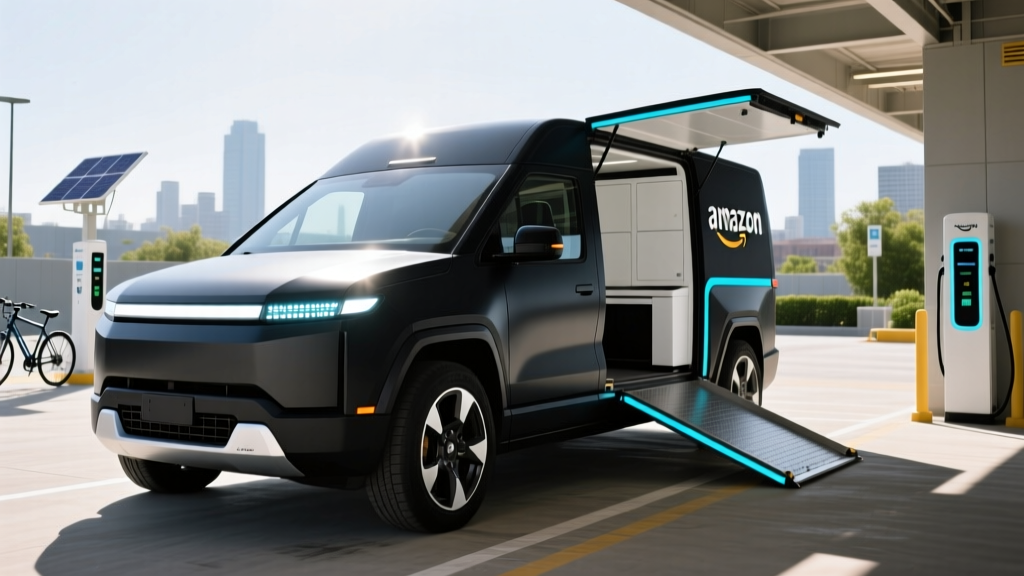
If you've spotted a boxy, blue-and-smile electric delivery van rolling through your neighborhood and wondered whether you could buy one, you're not alone. Searches for a Rivian Amazon van for sale have surged as the Electric Delivery Van (EDV) becomes a fixture on last-mile routes across North America. But before you call a dealer, here's the reality: the EDV is built exclusively for fleet operators under Rivian's commercial division, and Amazon holds an exclusivity window that has shaped availability since 2022. In 2026, that landscape is finally shifting — Rivian is expanding sales to qualified commercial fleets beyond Amazon, though private-party and consumer purchases remain effectively impossible.
This review breaks down everything we know about the Rivian EDV's engineering, range, charging, and economics from a fleet-buyer perspective — the audience that can actually put one in their depot.
Rivian EDV Quick Specs: What Fleet Buyers Need to Know
| Specification | Value |
|---|---|
| EPA Estimated Range | ~150 miles (EDV-700) |
| Battery Capacity | ~135 kWh usable (LFP chemistry) |
| Max DC Fast Charge | 150 kW (peak) |
| 10–80% DC Charge Time | ~45 minutes |
| Level 2 AC Charge Rate | ~19.2 kW (~30 miles/hr) |
| Drivetrain | Single-motor RWD (dual-motor AWD available) |
| Horsepower | ~275 hp (single-motor RWD) |
| 0–60 mph | ~8.0 seconds (estimated, unloaded) |
| Cargo Volume (EDV-700) | ~660 cu ft |
| Payload Capacity | ~2,500 lbs (EDV-700) |
| Battery/Powertrain Warranty | 8 years / 100,000 miles |
| Base MSRP (Fleet) | Estimated $85,000–$100,000 (varies by config) |
Rivian offers the EDV in multiple wheelbase configurations — the EDV-500 (compact), EDV-700 (mid-size), and EDV-900 (large) — each with different cargo volumes and battery options. The EDV-700 is the most common configuration seen on Amazon routes and represents the bulk of current production.
Real-World Range: The 150-Mile Sticker vs. Delivery Route Reality
The LFP (lithium iron phosphate) battery chemistry in the EDV is a deliberate choice for fleet duty. LFP sacrifices some energy density compared to NMC (nickel manganese cobalt) but gains significant advantages in cycle life — typically 3,000+ full cycles before meaningful degradation — and thermal stability. For a delivery van that charges daily and operates in stop-and-go patterns, LFP's longevity directly translates to lower total cost of ownership over a 10-year fleet lifecycle.
One nuance fleet operators should understand: LFP batteries can be charged to 100% state of charge daily without the degradation concerns that apply to NMC packs. Rivian's fleet management software allows depot managers to set charge targets optimized for route length, but the option to charge fully every night is a genuine operational advantage for LFP-equipped EDVs.
Charging Speed: Depot Level 2 vs. DC Fast Charging
Charging infrastructure is the make-or-break factor for electric fleet adoption, and the EDV is designed around depot-based overnight charging with DC fast charging as a midday supplement for longer routes.
| Charging Level | Power (kW) | Miles Added per Hour | Typical Use Case |
|---|---|---|---|
| Level 1 (120V) | ~1.4 kW | ~2 mi/hr | Emergency/trickle only |
| Level 2 (240V, depot) | 19.2 kW | ~30 mi/hr | Overnight depot charging (primary) |
| DC Fast Charge | 150 kW (peak) | ~150+ mi/hr (peak) | Midday top-up, route extension |
At 19.2 kW on a Level 2 depot charger, a fully depleted EDV-700 reaches 100% in roughly 7–8 hours — perfectly suited for overnight turnaround. Fleet operators typically install multiple 19.2 kW wall connectors or pedestal chargers at their depot, often with load-management software to stagger charging across vehicles and avoid demand-charge spikes from the utility.
On DC fast charging, the EDV peaks at 150 kW, though sustained rates taper significantly above 80% state of charge. The 10–80% charge takes approximately 45 minutes. This is slower than passenger EVs built on 800V architectures (which can hit 250–350 kW), but the EDV's LFP pack and 400V electrical system prioritize cycle life and cost over peak charge speed. For most delivery routes under 120 miles, midday DC charging isn't needed — the van returns to the depot, plugs in, and is ready by morning.
Fleet buyers should note that the EDV uses a CCS1 connector for DC fast charging. If your depot is near Electrify America or other CCS-compatible public networks, midday top-ups are feasible, though dedicated depot charging remains the economic sweet spot.
Performance and Drivetrain: Built for Routes, Not Racetracks
The EDV isn't engineered for 0–60 bragging rights. The single-motor rear-wheel-drive configuration produces approximately 275 horsepower, delivering a 0–60 mph time around 8.0 seconds when unloaded. Load the cargo area to its ~2,500-pound payload capacity, and that figure stretches considerably. The dual-motor AWD variant — available for operators in snow-belt regions — adds traction and slightly more power but reduces range by roughly 10–15 miles due to the additional drivetrain weight and mechanical losses.
Where the EDV genuinely impresses is low-speed maneuverability. The turning radius is remarkably tight for a vehicle of its size, a direct result of Rivian's skateboard-style platform packaging the motor and suspension components compactly. Delivery drivers consistently report that the EDV is easier to navigate through tight urban streets and loading docks than the gasoline-powered Sprinter or Transit vans it replaces.
Regenerative braking is aggressive and well-calibrated for stop-and-go delivery routes. Drivers can operate in a quasi-one-pedal mode that recovers significant energy during the hundreds of daily stops on a typical last-mile route, directly contributing to the real-world range exceeding highway estimates in urban duty cycles.
Technology, Safety, and Driver Experience
The EDV's cabin is spartan by passenger-EV standards but thoughtfully designed for commercial use. The driver gets a 12-inch touchscreen running Rivian's commercial fleet software, which integrates route optimization, battery state-of-charge monitoring, and depot communication tools. There's no Apple CarPlay or Android Auto — this is a purpose-built work interface.
Driver assistance features include:
- Adaptive cruise control with stop-and-go for highway segments
- Lane-keeping assist (SAE Level 2 — driver must remain engaged at all times)
- Automatic emergency braking with pedestrian and cyclist detection
- 360-degree camera system critical for urban maneuvering in a large van
- Blind-spot monitoring with extended coverage for the van's length
One standout feature is the EDV's integrated delivery workflow software. The van communicates with depot management systems, tracks package scan data, and can optimize route sequencing based on remaining battery charge and delivery windows. Amazon's version of this system is deeply proprietary; fleet operators purchasing EDVs outside the Amazon ecosystem receive Rivian's standard commercial fleet platform, which offers similar functionality but requires integration with the buyer's existing logistics software.
Notable drawbacks include the absence of a driver's seat height adjustment on early production models (addressed in later builds), limited cabin climate control granularity compared to passenger Rivians, and a ride quality that is firm when unloaded — a common trade-off in commercial vans tuned for payload.
Pricing, Tax Credits, and Total Fleet Cost
Pricing the EDV is more complex than a consumer EV because Rivian sells directly to fleet operators through negotiated contracts rather than traditional MSRP sticker pricing. Based on fleet purchase reports and industry estimates, the EDV-700 configuration falls in the $85,000–$100,000 range before incentives, depending on battery size, drivetrain, and upfitting options.
| Requirement | EDV Status (2026) |
|---|---|
| Vehicle Classification | Commercial van — qualifies under §45W (commercial clean vehicle credit) rather than §30D (consumer credit) |
| Maximum Credit (§45W) | Up to $40,000 for vehicles over 14,000 lbs GVWR; up to $7,500 for lighter configurations |
| Battery Sourcing | Must meet critical minerals and battery component requirements per IRS guidelines |
| MSRP Cap | §30D caps do not apply to §45W commercial credits |
| Buyer Income Cap | No income cap under §45W (applies to business entities, not individual taxpayers) |
| Point-of-Sale Transfer | Available — credit can be transferred to the dealer/seller at purchase |
This is a critical distinction for anyone researching a Rivian Amazon van for sale: the EDV, when purchased by a business entity for commercial use, falls under IRC §45W (Commercial Clean Vehicle Credit), not the consumer §30D credit. The §45W credit can be substantially more valuable — up to $40,000 for heavy-duty configurations — but eligibility depends on battery sourcing requirements and the vehicle's gross vehicle weight rating (GVWR). Fleet buyers should consult a tax professional familiar with commercial EV incentives, as the interaction between §45W, §179 expensing, and bonus depreciation can dramatically alter the effective purchase price.
On total cost of ownership, the EDV's economics are compelling for high-mileage fleet operators. Electricity costs for charging average $0.12–$0.18 per kWh at commercial rates, translating to roughly $0.04–$0.06 per mile in energy cost — compared to $0.18–$0.25 per mile for a gasoline-powered cargo van averaging 14 MPG at $3.50/gallon. Over 150,000 miles of fleet service, the energy savings alone can reach $18,000–$28,000 per vehicle, before factoring in reduced maintenance (no oil changes, fewer brake replacements due to regen, no transmission service).
Can You Actually Buy a Rivian Amazon Van?
Here's the direct answer most searchers need: you cannot buy a used Rivian Amazon EDV as a private consumer in 2026. Amazon's order agreement with Rivian included an exclusivity clause that restricted sales to other companies through 2023, and while that exclusivity has since expired, the practical reality is more nuanced.
Rivian's commercial van division now accepts orders from qualified fleet operators — delivery companies, logistics providers, municipal fleets, and large commercial enterprises. However, production capacity remains constrained, order backlogs stretch 12–18 months, and Rivian vets buyers to ensure they have the depot charging infrastructure and operational profile to support the vehicle.
For individual consumers hoping to convert an EDV into a campervan or personal hauler, the path is effectively closed. Rivian does not sell the EDV through consumer channels, and Amazon's fleet vehicles are not being decommissioned or resold in meaningful numbers. If you encounter a listing for a "Rivian Amazon van for sale" on a classifieds site, treat it with extreme skepticism — it is almost certainly a scam or a misidentified vehicle.
The closest consumer alternative is Rivian's upcoming medium-duty commercial platform, which the company has signaled may eventually offer smaller configurations suitable for owner-operator businesses. As of 2026, however, that vehicle remains in development and has not entered production.
How the EDV Compares to Electric Van Competitors
The commercial electric van market has matured considerably, and the EDV faces genuine competition:
- Ford E-Transit: Lower starting price (~$55,000), widely available, but limited to 126 miles of EPA range. Better for shorter urban routes with established depot charging.
- Mercedes-Benz eSprinter: Up to 200+ miles of range (with the larger battery option), premium pricing (~$75,000+), and strong dealer support for fleet service.
- BrightDrop Zevo 600: GM's commercial van offers ~250 miles of range and is gaining adoption with FedEx and other large fleets, though production volumes remain limited.
The EDV's competitive advantage lies in its purpose-built design (most competitors are electrified versions of existing gas vans), its LFP battery longevity, and the operational data Rivian has accumulated from millions of Amazon delivery miles. Its disadvantage is availability — you simply cannot walk into a dealership and drive one home today.
Pros
- Purpose-built EV platform — not a gas van conversion
- LFP battery offers 3,000+ cycle life with daily 100% charging
- Tight turning radius and excellent urban maneuverability
- Integrated fleet management and route optimization software
- Aggressive regen braking recovers energy on stop-heavy routes
- §45W commercial credit can offset up to $40,000
Cons
- Not available for private consumer purchase
- 12–18 month order backlog for qualified fleet buyers
- 150-mile range limits use to last-mile/urban routes
- 150 kW DC charging is slower than 800V competitors
- Firm, uncomfortable ride when unloaded
- Cabin tech is functional but not refined
Frequently Asked Questions
What is the real-world range of the Rivian EDV?
The EPA-estimated range is approximately 150 miles for the EDV-700. In urban delivery use with frequent stops and regenerative braking, operators report 130–160 miles. Highway driving at sustained speeds drops range to 110–120 miles, and cold weather (below 30°F) can reduce range by 20–30%.
How fast does the Rivian Amazon van charge?
On a Level 2 depot charger at 19.2 kW, the EDV adds roughly 30 miles of range per hour, reaching a full charge overnight in 7–8 hours. On a DC fast charger, it peaks at 150 kW and charges from 10–80% in approximately 45 minutes.
How much does a Rivian EDV cost after tax credits?
The estimated base price is $85,000–$100,000 before incentives. Under the §45W commercial clean vehicle credit, eligible fleet buyers may receive up to $40,000 depending on GVWR and battery sourcing compliance, potentially bringing the effective cost to $45,000–$60,000. Consult a tax professional for your specific situation, as rules change and depend on vehicle configuration.
Can I buy a Rivian Amazon delivery van for personal use?
No. As of 2026, Rivian sells the EDV exclusively to qualified commercial fleet operators. Private consumer purchases are not available, and used EDVs from Amazon's fleet are not entering the resale market in any meaningful volume.
Does the Rivian EDV qualify for the $7,500 federal EV tax credit?
The consumer §30D credit (up to $7,500) does not apply to commercial fleet purchases. Instead, the EDV may qualify for the §45W Commercial Clean Vehicle Credit, which offers up to $7,500 for vehicles under 14,000 lbs GVWR or up to $40,000 for heavier configurations. Eligibility depends on battery sourcing requirements per IRS rules.
What battery does the Rivian EDV use, and how long will it last?
The EDV uses an LFP (lithium iron phosphate) battery pack of approximately 135 kWh usable capacity. LFP chemistry is rated for 3,000+ full charge cycles before significant degradation, which translates to 450,000+ miles of service in typical delivery use. Rivian backs the battery and powertrain with an 8-year / 100,000-mile warranty.
Is the Rivian EDV better than the Ford E-Transit?
It depends on your route profile. The EDV offers more range (~150 vs. 126 miles EPA), a purpose-built EV platform, and superior battery cycle life thanks to LFP chemistry. The E-Transit costs significantly less (~$55,000 vs. $85,000+), has broader dealer support, and is easier to order. For high-mileage urban routes with depot charging, the EDV's higher upfront cost pays back through lower per-mile operating costs and battery longevity. For shorter routes or budget-constrained fleets, the E-Transit may be the pragmatic choice.