Quick Verdict: Should You Lease the 2026 Rivian R1S or R1T?
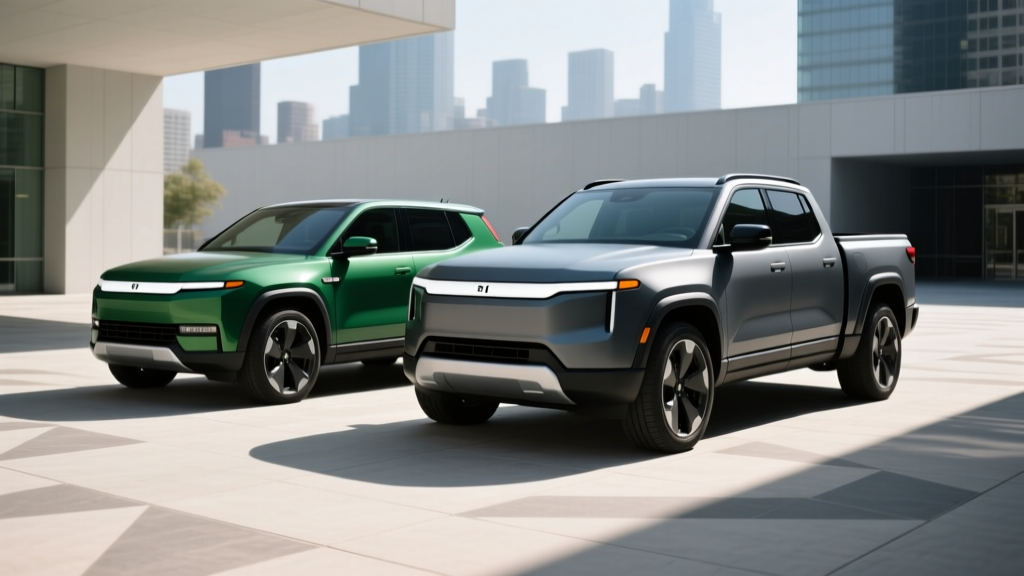
The 2026 Rivian R1S (three-row SUV) and R1T (pickup) remain the most capable adventure-oriented EVs on the market, combining genuine off-road hardware with sub-4-second 0-60 performance and class-leading software. For the 2026 model year, Rivian has refined its second-generation dual-motor and tri-motor powertrains, improved battery thermal management, and expanded NACS native charging compatibility — making the platform more mature than its early-production predecessors.
Leasing is the path most buyers take: it shields you from depreciation risk on a $75,000+ vehicle, sidesteps the §30D federal tax credit's battery-sourcing hurdles (the lessor claims the credit and can pass it through as a capitalized-cost reduction), and lets you upgrade when solid-state or next-gen platforms arrive. If you drive under 15,000 miles/year, have home Level 2 charging, and want a full-size electric adventure rig without long-term commitment, a 2026 R1S or R1T lease is arguably the smartest way into one.
2026 R1S & R1T Specifications at a Glance
| Spec | R1S Dual-Motor (Standard Pack) | R1S Tri-Motor (Max Pack) | R1T Dual-Motor (Standard Pack) | R1T Tri-Motor (Max Pack) |
|---|---|---|---|---|
| EPA Range | 270 mi | 410 mi | 270 mi | 420 mi |
| Battery (usable) | ~92 kWh (LFP) | ~141 kWh (NMC) | ~92 kWh (LFP) | ~141 kWh (NMC) |
| Horsepower | 533 hp | 850 hp | 533 hp | 850 hp |
| 0-60 mph | 4.5 sec | 2.9 sec | 4.5 sec | 3.0 sec |
| Drivetrain | AWD (dual-motor) | AWD (tri-motor) | AWD (dual-motor) | AWD (tri-motor) |
| Max DC Charge Rate | 200 kW | 240 kW | 200 kW | 240 kW |
| 10-80% DCFC Time | ~28 min | ~24 min | ~28 min | ~24 min |
| Level 2 Rate | 11.5 kW (~25 mi/hr) | 11.5 kW (~25 mi/hr) | 11.5 kW (~25 mi/hr) | 11.5 kW (~25 mi/hr) |
| MPGe (combined) | 73 MPGe | 70 MPGe | 73 MPGe | 70 MPGe |
| Efficiency | 46 kWh/100mi | 48 kWh/100mi | 46 kWh/100mi | 48 kWh/100mi |
| Max Towing | 7,700 lbs | 7,700 lbs | 11,000 lbs | 11,000 lbs |
| Base MSRP | $75,900 | $100,900 | $69,900 | $94,900 |
Real-World Range: What to Actually Expect
Rivian's second-generation battery pack uses a more advanced heat pump and liquid thermal management system than the 2022-2023 launch vehicles, which meaningfully reduces cold-weather range loss compared to early R1 models. However, physics is physics: a 410-mile Max Pack R1T driven at highway speed in 20°F weather with the cabin heater running will realistically deliver around 280-300 miles before you need to find a charger. For road-trip planning, budget 300 miles as a comfortable Max Pack range and 200 miles for the Standard Pack.
The LFP chemistry in the Standard Pack trades energy density for longevity and allows routine charging to 100% without accelerated degradation — a practical advantage for daily commuters who want full range available every morning. The NMC Max Pack should be charged to 80-90% for daily use and reserved at 100% for long trips.
Charging Speed: DC Fast, Level 2, and Home Setup
For 2026, all R1S and R1T models ship with a native NACS (Tesla-style) charge port, eliminating the need for a CCS adapter when using Tesla Superchargers. Rivian owners gained access to the Supercharger network in 2024, and by 2026 the integration is seamless — the vehicle's navigation system routes through Superchargers and preconditions the battery automatically.
| Charge Level | Power | Miles Added per Hour | Notes |
|---|---|---|---|
| Level 1 (120V household) | ~1.4 kW | ~3 mi/hr | Emergency/trickle only; 100+ hr for full charge |
| Level 2 (240V / 48A home) | 11.5 kW | ~25 mi/hr | Full charge overnight (~10-12 hr); recommended daily |
| DC Fast (Standard Pack) | Peak 200 kW | ~140 mi in 15 min | 10-80% in ~28 min; tapers above 80% |
| DC Fast (Max Pack) | Peak 240 kW | ~160 mi in 15 min | 10-80% in ~24 min; sustained rate is strong to ~60% |
Charging-curve reality check: The Max Pack's peak 240 kW is sustained only between roughly 10-40% state of charge. From 40-60%, expect ~190 kW. From 60-80%, it drops to ~120 kW. Above 80%, charging slows sharply to protect the battery — expect 80-100% to take nearly as long as 10-80%. On road trips, the optimal strategy is to charge from 10-80% and drive on, rather than topping off to 100%.
For home charging, Rivian recommends a Wall Connector or equivalent hardwired Level 2 station on a 60-amp circuit (delivering 48 amps continuous to the vehicle). Installation typically costs $800-$2,500 depending on panel proximity and whether a service upgrade is needed. A full overnight charge on Level 2 adds roughly 25 miles per hour of charging — sufficient for any daily commute and enough to replenish a Standard Pack overnight.
Lease Pricing, Trims, and the Federal Tax Credit
Leasing an R1S or R1T in 2026 is popular precisely because of the §30D tax credit mechanics. Under IRS rules, the lessor (the financing entity) claims the $7,500 federal credit — not you. Many lessors pass this through as a capitalized-cost reduction, effectively lowering your monthly payment. This bypasses the buyer-side income caps and battery-sourcing requirements that have complicated direct purchases.
| Model / Trim | Base MSRP | Est. Monthly Lease | Due at Signing | Tax Credit Pass-Through |
|---|---|---|---|---|
| R1T Dual-Motor Standard | $69,900 | $850-$950 | $4,000-$6,000 | ~$7,500 cap reduction |
| R1T Dual-Motor Large | $77,400 | $950-$1,100 | $4,500-$6,500 | ~$7,500 cap reduction |
| R1T Tri-Motor Max | $94,900 | $1,200-$1,400 | $6,000-$8,000 | ~$7,500 cap reduction |
| R1S Dual-Motor Standard | $75,900 | $900-$1,050 | $4,500-$6,500 | ~$7,500 cap reduction |
| R1S Tri-Motor Max | $100,900 | $1,300-$1,500 | $6,500-$8,500 | ~$7,500 cap reduction |
Key tax-credit caveats for direct buyers (not leasing): If you purchase rather than lease, the §30D credit requires the vehicle's MSRP to be under $80,000 for SUVs/pickups (R1S qualifies; R1T qualifies at lower trims), your modified adjusted gross income must not exceed $300,000 (joint) / $150,000 (single), and the battery must meet critical-mineral and component-sourcing thresholds that shift annually. (Source: IRS §30D guidelines) When you lease, these restrictions largely don't apply to you — the leasing company handles it.
Lease terms vary by provider. Rivian Financial Services offers direct leases, but third-party lessors (banks, credit unions) sometimes offer better money factors. Always compare the total lease cost (monthly × term + due at signing + disposition fee) across multiple sources. Negotiate the capitalized cost just as you would a purchase price — dealer-installed accessories, paint upgrades, and the Adventure Package all affect the number.
Performance, Cargo, and Daily Livability
The dual-motor R1S and R1T deliver 533 horsepower and hit 0-60 mph in 4.5 seconds — genuinely quick for vehicles this size. The tri-motor variants are absurdly fast at 850 hp and sub-3-second 0-60 times, rivaling sports cars while towing 7,700-11,000 pounds. All models feature Rivian's quad-motor-ready architecture, adaptive air suspension with 6.5 inches of travel adjustment, and a wading depth of over 3 feet.
R1S cargo and passenger space: The three-row R1S seats up to seven. Third-row legroom is 30.4 inches (usable for children or short trips; tight for adults). Cargo volume is 11.3 cu ft behind the third row, 46.7 cu ft behind the second row, and 88.2 cu ft with both rear rows folded. The front trunk (frunk) adds 11.1 cu ft — a massive advantage over ICE SUVs.
R1T cargo and bed: The R1T's 4.5-foot bed is shorter than a full-size pickup's but includes the innovative Gear Tunnel — a 11.6 cu ft pass-through compartment behind the rear seats accessible from both sides. Combined with the 11.1 cu ft frunk, total enclosed cargo capacity reaches 36.9 cu ft. The bed itself handles 1,764 lbs of payload.
Both vehicles feature Rivian's latest infotainment system running on a 15.6-inch center touchscreen with wireless Apple CarPlay and Android Auto, a digital driver cluster, and the Rivian app for remote preconditioning, charging management, and vehicle location. The camp kitchen accessory (available for the R1T) remains a standout lifestyle feature.
Driver Assistance: What Rivian's System Can and Cannot Do
Rivian's Driver+ is competitive with systems like Ford BlueCruise and GM Super Cruise for highway lane-keeping and adaptive cruise, but it does not yet offer hands-free operation on mapped highways the way those competitors do. The system is reliable and predictable, with clear escalation alerts if your attention lapses. Expect continued over-the-air improvements, but do not expect Level 3 or Level 4 capability in the 2026 model year.
Battery Warranty and Long-Term Ownership
Rivian covers the battery pack and drive units with an 8-year / 175,000-mile warranty (whichever comes first), guaranteeing the battery will retain at least 70% of its original capacity during that period. This is among the most generous thresholds in the industry — most competitors guarantee 70% retention at 100,000 miles.
The vehicle limited warranty is 5 years / 60,000 miles. For lease holders on a typical 36-month term, the powertrain and battery are fully covered for the entire lease duration and well beyond. If you plan to purchase at lease-end, the remaining warranty coverage is a meaningful safety net.
Battery degradation data from early R1 owners (2022-2024 models) suggests approximately 5-8% capacity loss over the first 60,000 miles, which is within industry norms for NMC packs. The LFP Standard Pack is expected to show slower degradation due to LFP's inherently longer cycle life, though long-term data on Rivian's specific LFP cells is still accumulating.
Who Should Lease the 2026 R1S or R1T?
- You need three rows for family hauling (school runs, carpools, road trips with kids)
- You want SUV cargo flexibility with the frunk bonus
- You value the highest ground clearance and wading depth in a family vehicle
- Max Pack range (410 mi EPA) covers your typical road trips without excessive charging stops
- You need a truck bed for gear, lumber, bikes, or towing (11,000-lb capacity)
- The Gear Tunnel appeals for outdoor/adventure storage
- You prefer a slightly lower starting price ($69,900 vs. $75,900)
- You tow a boat, camper, or trailer regularly
- Your daily commute is under 150 miles round-trip and you charge at home nightly
- You want a lower lease payment and don't road-trip frequently
- You prefer charging to 100% daily without degradation concerns
- You regularly drive 250+ miles between charging opportunities
- You tow frequently (towing cuts range by 30-50%)
- You live in a cold climate where winter range loss is significant
Pros, Cons, and How It Stacks Up
- Class-leading off-road capability with air suspension and 14.9" ground clearance
- Sub-4.5-second 0-60 across all trims; tri-motor is supercar-quick
- Native NACS port with full Supercharger access (no adapter)
- Over-the-air updates continuously improve the vehicle
- Generous 8-yr/175,000-mi battery warranty
- Frunk + Gear Tunnel (R1T) provide unmatched enclosed storage
- Lease structure bypasses §30D buyer-side restrictions
- High starting price — $69,900-$100,900+ before options
- Real-world highway range 15-20% below EPA, especially in cold
- R1S third row is tight for adults on long drives
- R1T bed is only 4.5 feet — shorter than most midsize pickups
- Insurance premiums run 20-35% higher than comparable ICE vehicles
- Service center network still expanding; some regions have long wait times
- Driver+ is solid but not hands-free like BlueCruise or Super Cruise
Versus key competitors: The Tesla Model X offers more range and Supercharger-native access at a similar price but lacks genuine off-road capability and the R1S's build quality. The Ford F-150 Lightning is cheaper and has a larger bed but can't match the R1T's performance or ground clearance. The GMC Hummer EV is similarly capable off-road but costs more, weighs more, and is less efficient. The R1S and R1T occupy a unique niche as the best all-around adventure EVs — if that's your use case, there's no direct substitute.
Frequently Asked Questions
Does the 2026 Rivian R1S or R1T qualify for the $7,500 federal tax credit?
When you lease, the lessor claims the credit and typically passes it through as a cap-cost reduction, lowering your monthly payment. You don't need to meet the §30D income caps ($300K joint / $150K single) or battery-sourcing requirements personally. If you buy instead, eligibility depends on MSRP (must be under $80,000 for SUVs/pickups), your income, and the battery's critical-mineral sourcing — which changes annually. Check the IRS clean vehicle credit page for current rules.
What is the real-world range of the 2026 R1S and R1T?
The EPA rates the Standard Pack at 270 miles and the Max Pack at 410-420 miles. Real-world mixed driving at highway speeds with climate control yields approximately 230-250 miles (Standard) and 340-370 miles (Max). Cold weather (below freezing) reduces range by an additional 20-30%. Plan road trips around 200 miles (Standard) or 300 miles (Max) for a comfortable buffer.
How fast does the R1S/R1T charge at home and on the road?
At home on a Level 2 (240V, 48A) charger, both vehicles accept 11.5 kW and add about 25 miles of range per hour — enough for a full overnight charge. On DC fast chargers, the Standard Pack peaks at 200 kW (10-80% in ~28 minutes) and the Max Pack peaks at 240 kW (10-80% in ~24 minutes). Both use the native NACS connector for seamless Tesla Supercharger access.
Is it better to lease or buy a 2026 Rivian?
Leasing is generally the smarter financial move for most buyers: it bypasses the §30D tax credit's buyer-side restrictions, protects you from depreciation on a rapidly evolving EV segment, and keeps you under the full battery warranty period. Buying makes sense if you drive over 15,000 miles/year (lease mileage penalties add up), plan to keep the vehicle 7+ years, or want to customize it extensively.
How much does it cost to charge a Rivian at home vs. public chargers?
At the US average residential electricity rate of ~$0.16/kWh, fully charging a 92 kWh Standard Pack costs about $14.72, and the 141 kWh Max Pack costs about $22.56. Public DC fast charging averages $0.35-$0.50/kWh, making a Max Pack fill-up $49-$71. Home charging is dramatically cheaper — budget $50-$80/month for electricity if you drive 1,000 miles/month and charge primarily at home.
What are the biggest drawbacks of the R1S and R1T?
The R1S's third row is cramped for adults, the R1T's 4.5-foot bed is shorter than traditional pickups, insurance costs run 20-35% higher than ICE equivalents, real-world range falls 15-20% below EPA estimates at highway speed, and Rivian's service center network is still growing. The Driver+ assist system is solid but doesn't offer hands-free highway driving like some competitors.