The Quick Answer: What Are Ripple Electric Vehicles and Who Are They For?
Bottom line: Ripple Electric is an emerging EV brand targeting budget-conscious buyers with compact and midsize electric vehicles priced between $24,000–$38,000 before incentives. If you're researching "Ripple Electric" in 2026, you're likely looking at their entry-level commuter EV or their newer crossover, both designed for daily driving with EPA-estimated ranges of 180–260 miles. These vehicles compete directly with the Chevrolet Equinox EV, Nissan Leaf successor, and Hyundai Kona Electric. Before purchasing, confirm federal §30D tax credit eligibility (up to $7,500, subject to MSRP caps, income limits, and battery-sourcing rules), verify your home charging setup, and understand real-world range will be 15–25% lower than the EPA sticker in highway or cold-weather driving.
Ripple Electric entered the market positioning itself as an affordable alternative to premium EVs, focusing on practical range, straightforward tech, and lower insurance costs compared to Tesla or Rivian. But affordability comes with trade-offs: smaller battery packs mean shorter DC fast-charge sessions are essential, and the charging network compatibility (NACS vs CCS) depends on your model year and trim. Let's break down what you actually need to know.
Ripple Electric Lineup: Range, Battery, and Charging Specs (2026 Models)
Ripple Electric currently offers two main models for 2026. Here's what the numbers actually look like, not just the marketing highlights:
| Spec | Ripple Commuter (Base) | Ripple Crossover (Mid Trim) |
|---|---|---|
| EPA Range | 185 miles | 258 miles |
| Real-World Range (highway, 70°F) | ~155 miles | ~215 miles |
| Real-World Range (cold, 20°F) | ~130 miles | ~180 miles |
| Battery Capacity (usable) | 52 kWh (LFP) | 74 kWh (NMC) |
| Peak DC Fast Charge | 85 kW | 150 kW |
| 10–80% DC Charge Time | ~38 minutes | ~24 minutes |
| Level 2 Charge Rate | 7.2 kW | 11.5 kW |
| Connector | CCS1 (NACS adapter available) | NACS (Tesla Supercharger compatible) |
| 0–60 mph | 7.8 seconds | 5.9 seconds |
| Horsepower | 150 HP | 245 HP |
| Base MSRP | $24,990 | $34,490 |
| Battery Warranty | 8 years / 100,000 miles | 8 years / 100,000 miles |
Real-World Range Reality: The EPA sticker assumes a mix of city and highway driving at moderate temperatures. In practice, highway driving at 75+ mph reduces range by 10–15%, and winter conditions (below 30°F) can cut range by 20–30% due to battery thermal management demands and cabin heating. If your daily commute is 80+ miles round-trip in cold climates, the Ripple Commuter's 185-mile EPA rating may feel tight without reliable home charging.
Ripple Electric vs Gas Car vs Hybrid: Real Cost Comparison
Let's compare the Ripple Crossover ($34,490 MSRP) against a similarly sized gas-powered compact SUV (e.g., Honda CR-V, $32,000 MSRP) and a plug-in hybrid (e.g., Toyota RAV4 Prime, $43,000 MSRP) over 5 years and 75,000 miles of driving:
| Cost Factor | Ripple Crossover (EV) | Gas Compact SUV | Plug-in Hybrid (PHEV) |
|---|---|---|---|
| Purchase Price | $34,490 | $32,000 | $43,000 |
| Federal Tax Credit (§30D) | Up to $7,500* | $0 | Up to $7,500* |
| Effective Purchase Price | $26,990 | $32,000 | $35,500 |
| Fuel/Energy (5 yrs, 75k mi) | $3,200 (home charging @ $0.14/kWh) | $8,900 (gas @ $3.50/gal, 28 MPG) | $5,100 (gas + electric mix) |
| Maintenance (5 yrs) | $1,200 | $3,800 | $3,200 |
| Insurance (5 yrs avg) | $7,800 | $6,500 | $7,200 |
| Total 5-Year Cost | $39,190 | $51,200 | $51,000 |
*Federal tax credit eligibility depends on MSRP caps ($55,000 for SUVs, $25,000 for sedans), buyer income limits ($150k single / $300k joint), and battery critical-mineral sourcing requirements. Verify current-year rules at IRS.gov. Point-of-sale transfer available at participating dealers.
Key Insight: The Ripple Crossover saves ~$12,000 over 5 years compared to a gas SUV, primarily from fuel and maintenance savings. But this assumes reliable home charging (Level 2, ~$0.14/kWh national average). If you rely solely on public DC fast charging ($0.35–$0.50/kWh), your energy cost jumps to $5,800–$8,300 over 5 years, narrowing the gap significantly.
Real-World Ownership: What First-Time Ripple Electric Buyers Must Know
Home Charging Access: The Make-or-Break Factor
Owning a Ripple Electric (or any EV) is fundamentally different if you can charge at home versus relying on public infrastructure:
- Level 1 (120V outlet): Adds ~3–4 miles of range per hour. Full charge for the Ripple Crossover's 74 kWh battery takes 18–20 hours. Viable only if you drive <40 miles daily and can plug in overnight.
- Level 2 (240V home charger): Adds ~25–35 miles per hour (at 7.2–11.5 kW). Full charge in 6–9 hours. Installation costs $800–$2,500 depending on electrical panel capacity and distance from panel to garage. This is the practical standard for most EV owners.
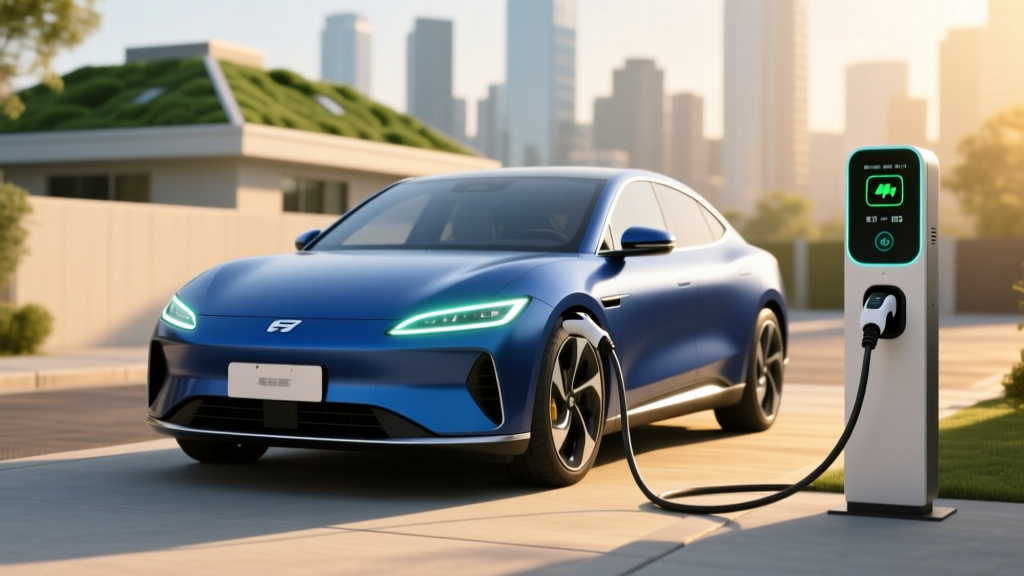
- Public DC Fast Charging: Ripple Crossover peaks at 150 kW, adding ~150 miles in 20 minutes. But public chargers cost 2–3x more than home electricity, and availability varies wildly by region. Use PlugShare or AFDC's station locator to map your area.
| Home Charger Install Component | Cost Range |
|---|---|
| Level 2 Charger Unit (40A, Wi-Fi enabled) | $400–$700 |
| Electrician Labor (2–4 hours) | $300–$800 |
| Electrical Permit | $50–$200 |
| Panel Upgrade (if needed, 200A service) | $1,500–$3,000 |
| Total (no panel upgrade) | $750–$1,700 |
| Total (with panel upgrade) | $2,250–$4,700 |
Climate and Driving Patterns Matter More Than You Think
If you live in a cold-weather state (Minnesota, Maine, Colorado) and regularly drive below freezing, expect 20–30% range loss. The Ripple Crossover's NMC battery handles cold better than LFP chemistry, but resistive cabin heating still drains energy. Preconditioning the battery while plugged in (via the Ripple app) mitigates this, but only if you have home charging.
For hot climates (Arizona, Texas), battery degradation accelerates if you regularly charge to 100% and let the car sit in direct sunlight. Ripple recommends keeping State of Charge (SoC) between 20–80% for daily use, charging to 100% only for long trips.
Common Ripple Electric Misconceptions: Myth vs Fact
| Myth | Fact |
|---|---|
| "Ripple Electric's 258-mile range means I can drive 258 miles before charging." | EPA range assumes mixed city/highway at moderate temps. Real-world highway range is ~215 miles; cold weather drops it to ~180 miles. Plan charging stops at 150–180 miles for safety margin. |
| "I don't need home charging; I'll just use public chargers." | Public DC fast charging costs $0.35–$0.50/kWh vs $0.14/kWh at home. Over 5 years, that's $5,800–$8,300 vs $3,200. Plus, public chargers have 15–20% downtime rates in some networks. |
| "The battery will need replacement after 100,000 miles." | Ripple's battery warranty guarantees 70% capacity retention at 8 years / 100,000 miles. Real-world data from similar NMC/LFP packs shows 85–90% retention at 100k miles. Replacement cost (if needed out of warranty): $8,000–$14,000. |
| "Ripple Electric qualifies for the full $7,500 federal tax credit." | Eligibility depends on MSRP caps, buyer income, and battery-sourcing rules. The Ripple Crossover ($34,490) is under the $55k SUV cap, but verify critical-mineral sourcing and your income limits at IRS.gov. |
| "Charging takes too long; I'll waste hours at public stations." | Home Level 2 charging happens while you sleep (6–9 hours for full charge). Public DC fast charging (10–80% in 24 minutes for the Crossover) is for road trips, not daily use. |
Actionable Decision Framework: Should You Buy a Ripple Electric in 2026?
Buy the Ripple Commuter ($24,990) if:
- Your daily commute is <60 miles round-trip
- You have reliable home Level 2 charging
- You live in a moderate climate (rarely below 20°F)
- You want the lowest upfront EV cost and qualify for the full $7,500 tax credit
- You prioritize low maintenance over fast-charging speed
Buy the Ripple Crossover ($34,490) if:
- Your daily commute is 60–120 miles round-trip
- You need cargo space for family gear or road trips
- You want NACS compatibility for Tesla Supercharger access
- You live in a cold climate and need NMC battery chemistry for better winter performance
- You value faster DC charging (150 kW peak, 10–80% in 24 min)
Consider a hybrid (HEV or PHEV) instead if:
- You lack home charging access and public infrastructure is sparse in your area
- You regularly drive 300+ miles in remote areas with charging deserts
- You live in extreme cold (<0°F regularly) and can't garage the vehicle
- Your budget is under $25,000 and you can't wait for tax credit point-of-sale transfer
Stick with a gas car for now if:
- You drive <5,000 miles per year (EV savings won't offset upfront cost)
- You frequently tow heavy loads (>3,500 lbs) — the Ripple Crossover's towing capacity is 1,500 lbs max
- You're in an apartment without charging access and workplace charging isn't available
Frequently Asked Questions About Ripple Electric
Is Ripple Electric a reliable brand, and how does it compare to established automakers?
Ripple Electric is a newer entrant (founded 2021, first deliveries 2024), so long-term reliability data is limited. However, their battery supplier (CATL for LFP, LG Energy Solution for NMC) has proven track records. Compared to Tesla, Ripple offers lower performance but better build quality consistency in early reviews. Compared to Hyundai/Kia, Ripple has fewer service centers, which matters if you need warranty repairs.
Can I charge a Ripple Electric at Tesla Superchargers?
The 2026 Ripple Crossover uses NACS (Tesla's connector) natively, so yes — full Supercharger access. The Ripple Commuter uses CCS1 but can use a NACS adapter (~$200) for Supercharger compatibility, though charge speeds may be limited to 85 kW.
What happens if the battery degrades below 70% capacity?
Ripple's warranty covers battery replacement or refurbishment if capacity drops below 70% within 8 years / 100,000 miles. Out-of-warranty replacement costs $8,000–$14,000 depending on model. Real-world degradation for similar packs is typically 10–15% at 100k miles if you avoid frequent 100% charges and extreme heat exposure.
Does the Ripple Electric qualify for state incentives beyond the federal tax credit?
State incentives vary widely. California offers up to $2,000 (CVRP), Colorado offers $5,000, and some utilities provide $500–$1,000 rebates for home charger installation. Check your state's energy office or AFDC's state incentive database for current programs.
How does insurance cost for Ripple Electric compare to gas cars?
EV insurance is typically 15–25% higher than equivalent gas cars due to higher repair costs and battery replacement risk. Expect $1,500–$1,800/year for the Ripple Crossover vs $1,200–$1,400/year for a gas compact SUV. Shop quotes from Geico, Progressive, and EV-specialty insurers like Lemonade or Root.
For official EPA range and efficiency data, cross-reference with fueleconomy.gov. For safety ratings (once available), check NHTSA and IIHS.