The Quick Answer
As of 2026, Uber and Lyft are requiring or strongly incentivizing drivers to transition to electric vehicles, with Uber targeting 100% zero-emission rides on its platform by 2030 and Lyft enforcing a similar 2030 deadline. For buyers considering an EV for ride-hailing work, the math works if you have reliable home Level 2 charging, drive 150+ miles daily, and select a model with at least 250 miles of EPA range. The Chevrolet Equinox EV (starting at $33,600) and Hyundai Ioniq 5 (starting at $42,600) lead the pack for total cost of ownership. Federal tax credits under IRS §30D can reduce purchase price by up to $7,500, but income caps, MSRP limits, and battery-sourcing rules apply. The real differentiator is not the sticker price — it's the charging infrastructure you can access.
What Ride-Hailing Companies Electric Fleet Commitments 2026 Actually Require
Uber's "Zero Emissions" program, launched in 2020, has evolved from voluntary incentives to firmer mandates in key markets. By 2026, drivers in cities like London, Amsterdam, and several US metro areas face reduced platform access for internal combustion vehicles during peak hours. Lyft's commitment mirrors this timeline, with its 2030 deadline for 100% electric rides now backed by partnerships with Hertz (offering EV rentals) and charging networks like EVgo and ChargePoint.
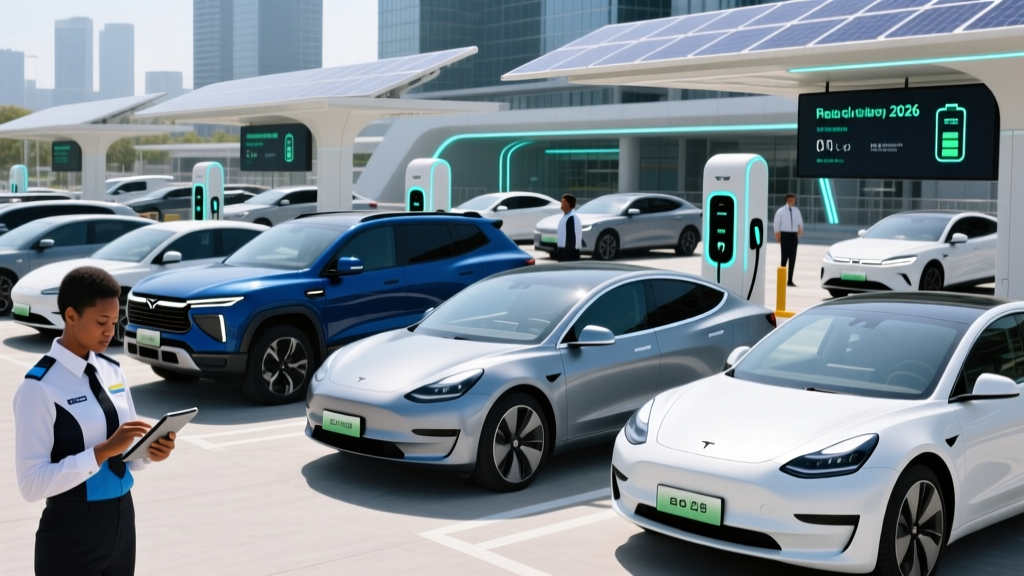
These commitments aren't just corporate pledges — they're reshaping vehicle demand. Fleet operators purchasing 50+ vehicles at a time are driving bulk orders for models like the Tesla Model Y, Ford Mustang Mach-E, and Hyundai Ioniq 5. This increased demand has improved dealer inventory for these models and, in some cases, unlocked fleet-purchase discounts that individual buyers can now access through certified pre-owned channels.
EV vs Gas: The Real Cost Comparison for Ride-Hailing Drivers
The economics of EV ownership for ride-hailing work hinge on daily mileage, local electricity rates, and fuel prices. Here's a data-driven comparison using a driver covering 200 miles per day, 6 days a week (62,400 miles annually):
| Cost Category | 2026 Chevy Equinox EV (2RS AWD) | 2026 Toyota Camry (Gas, LE) |
|---|---|---|
| MSRP (before incentives) | $38,900 | $29,500 |
| Federal §30D Tax Credit | Up to $7,500* | $0 |
| Effective Purchase Price | $31,400 | $29,500 |
| Energy/Fuel Cost per Mile | $0.04 (home L2 at $0.13/kWh) | $0.14 (32 MPG at $3.80/gal) |
| Annual Energy/Fuel (62,400 mi) | $2,496 | $8,736 |
| Maintenance (annual) | $400 | $1,800 |
| 5-Year Energy + Maintenance | $14,480 | $52,680 |
| 5-Year Total Cost of Ownership | $45,880 | $82,180 |
*§30D credit eligibility requires buyer income under $150K (single) or $300K (joint), vehicle MSRP under $55K (sedan) or $80K (SUV/truck), and compliance with battery critical-mineral and North American assembly rules. Verify current-year rules at IRS.gov.
The $36,300 five-year savings is substantial, but it assumes consistent access to affordable home charging. Drivers who rely exclusively on public DC fast charging at $0.40-$0.50/kWh will see their per-mile cost rise to $0.12-$0.15, narrowing the gap significantly.
Which EVs Meet Ride-Hailing Fleet Requirements in 2026?
Not every EV qualifies for Uber or Lyft's comfort-tier requirements, and not every model handles the 200+ mile daily grind well. Here's what the top contenders deliver:
| Model | EPA Range | Battery (kWh) | Peak DC Charge (kW) | 10-80% Time | Starting MSRP |
|---|---|---|---|---|---|
| Chevy Equinox EV 2RS AWD | 319 mi | 85 kWh (NMC) | 150 kW | ~28 min | $38,900 |
| Hyundai Ioniq 5 SE AWD | 290 mi | 77.4 kWh (NMC) | 240 kW | ~18 min | $47,600 |
| Tesla Model Y Long Range | 320 mi | 75 kWh (NMC) | 250 kW | ~22 min | $44,990 |
| Ford Mustang Mach-E Select | 250 mi | 72 kWh (NMC) | 150 kW | ~32 min | $42,995 |
| Kia EV6 Wind AWD | 282 mi | 77.4 kWh (NMC) | 240 kW | ~18 min | $48,600 |
For ride-hailing, the Hyundai Ioniq 5 and Kia EV6 stand out because their 800V architecture allows sustained 240 kW DC charging — critical when you need a 10-80% top-up during a 20-minute lunch break rather than a 35-minute sit. The Equinox EV wins on purchase price but charges slower, making it better suited for drivers who can charge overnight at home and only need one mid-day top-up.
Real-world range caveat: EPA figures assume mixed driving at moderate temperatures. Expect 20-30% range loss on highway-heavy routes at 70+ mph, and 25-40% loss in sub-30°F winter conditions. A 319-mile EPA Equinox EV may deliver 200-220 miles in a cold-weather highway shift.
The Charging Infrastructure Reality Check
Ride-hailing companies' electric fleet commitments in 2026 sound ambitious, but they shift the burden of charging access squarely onto the driver. Here's what you need to know:
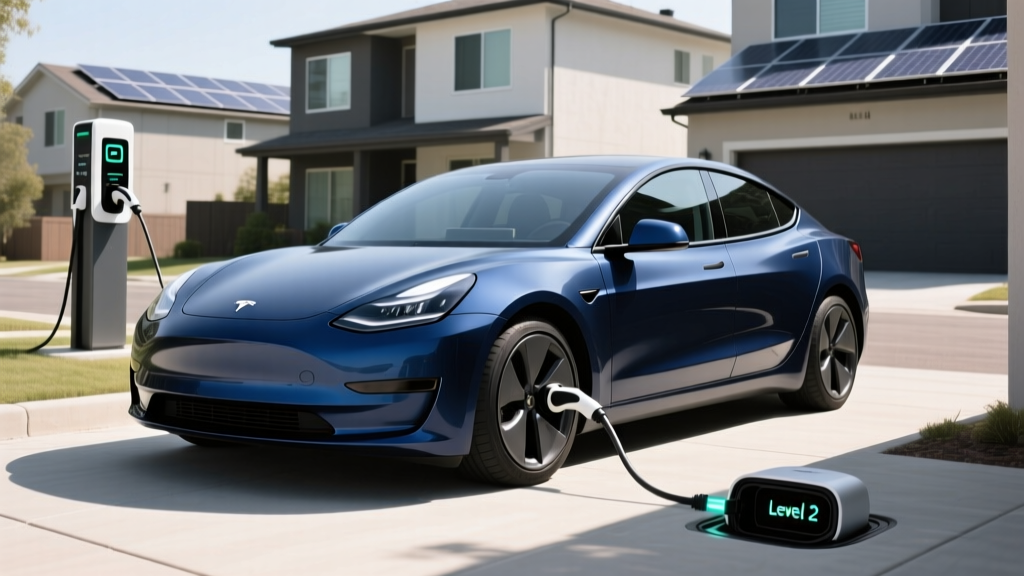
Home Level 2 charging is nearly mandatory. A 48-amp Level 2 home charger (like the ChargePoint Home Flex or Emporia V2) adds roughly 30-35 miles of range per hour of charging. A full overnight charge (8-10 hours) replenishes 250-300 miles — enough for most daily shifts. Installation typically costs $800-$2,500 depending on whether your electrical panel needs an upgrade to 200A service.
Public DC fast charging is expensive and time-consuming. At Electrify America or EVgo stations, expect to pay $0.40-$0.55/kWh. A 60 kWh top-up (roughly 200 miles) costs $24-$33 and takes 25-40 minutes depending on the vehicle's charge curve. That's $120-$165 per week in charging costs for a full-time driver — still less than gas, but it erodes the EV advantage.
Charging deserts remain real. Rural and suburban drivers outside major metro areas may find DC fast chargers sparse. Check PlugShare or your vehicle's built-in route planner before committing. If the nearest reliable 150+ kW charger is more than 20 miles from your primary driving area, an EV for ride-hailing may not be practical yet.
Common Misconceptions About EVs for Ride-Hailing Work
| Myth | Fact |
|---|---|
| "EV batteries won't last 100,000+ miles of ride-hailing use." | Modern NMC and LFP batteries are warrantied for 8 years/100,000 miles (10 years/150,000 in California and CARB states) to retain at least 70% capacity. Real-world data from early Tesla Model 3 fleet drivers shows ~10-12% degradation at 150,000 miles with proper charging habits (avoiding daily 100% charges). |
| "You can't drive an EV in winter — range drops too much." | Range does drop 25-40% in sub-freezing temperatures, but vehicles with heat pumps (Ioniq 5, Model Y, EV6) lose less than those with resistive heaters. Preconditioning the battery while plugged in recovers significant range. Cold weather is a planning challenge, not a dealbreaker. |
| "Public charging is unreliable and always broken." | Network uptime varies: Tesla Superchargers average 99%+ uptime, while Electrify America and EVgo hover around 85-90% per J.D. Power studies. Plan backup charging options and use apps like PlugShare to check real-time station status. |
| "Insurance for EVs is prohibitively expensive." | EV insurance premiums run 15-25% higher than comparable gas cars due to higher repair costs, but the gap has narrowed. Geico, Progressive, and State Farm now offer competitive EV-specific policies. Get quotes before purchasing — the difference is typically $100-$200/year, not thousands. |
Decision Framework: Should You Buy an EV for Ride-Hailing in 2026?
Choose an EV for ride-hailing IF:
- You have home Level 2 charging access (garage or driveway with a 240V/50A circuit). This is the single biggest predictor of EV satisfaction for high-mileage drivers.
- You drive 150-250 miles per day and can complete most shifts on a single overnight charge, with at most one 20-minute DC fast-charge break.
- You live in a metro area with reliable DC fast-charging infrastructure (at least 3 stations within 10 miles of your primary driving zone, with 150+ kW capability).
- You qualify for the §30D federal tax credit (income under caps, vehicle meets MSRP and sourcing rules), reducing effective purchase price by up to $7,500.
- You plan to keep the vehicle 4+ years, allowing the fuel and maintenance savings to offset the higher upfront cost.
Stick with a hybrid or gas vehicle IF:
- You lack home charging access and would rely entirely on public charging. The cost and time penalties make EV ownership impractical for ride-hailing economics.
- You regularly drive in extreme cold (sub-20°F) and your daily mileage exceeds 250 miles. Range loss compounds into shift-ending anxiety.
- You drive in a charging desert — rural areas or smaller cities with fewer than 2 reliable DC fast-charging stations nearby.
- You need to maximize short-term cash flow and can't absorb a $31,000+ upfront vehicle cost, even with tax credits. A used Toyota Camry Hybrid at $22,000 may be the smarter financial play for the next 2-3 years.
What First-Time EV Buyers for Ride-Hailing Should Know
If you've never owned an EV and are considering one for Uber or Lyft driving, these practical insights will save you from costly mistakes:
Understand kW vs. kWh. This is the most common confusion point. kW (kilowatts) measures charging power — how fast energy flows into the battery. kWh (kilowatt-hours) measures battery capacity — how much energy the battery holds. A 77 kWh battery charged at 150 kW will theoretically fill in about 30 minutes, but real-world charge curves slow the rate above 80% state of charge.
Don't chase peak charge speed — look at the charge curve. A vehicle advertising "250 kW peak charging" may only sustain that rate from 10-30% state of charge, then taper sharply. The Hyundai Ioniq 5's 800V system sustains high rates longer than most competitors, which is why its 10-80% time (18 minutes) beats vehicles with similar peak ratings.
Preconditioning matters. Most modern EVs can warm the battery before you arrive at a DC fast charger (via navigation routing). This unlocks faster charging speeds, especially in cold weather. Skipping preconditioning can add 10-15 minutes to your charge session.
Battery degradation is manageable. Avoid charging to 100% daily (set your charge limit to 80-90% for regular use). Avoid letting the battery sit at 0% for extended periods. DC fast charging does accelerate degradation slightly, but modern thermal management systems have minimized this effect. Expect 8-12% capacity loss over 150,000 miles — enough to reduce a 300-mile EV to ~265 miles of range.
Check ride-hailing platform requirements. Uber's Comfort and Uber Black categories have specific vehicle age, size, and feature requirements. Not every EV qualifies. Verify your model is on the approved list for your city before purchasing.
Frequently Asked Questions
Do Uber and Lyft pay drivers more for using electric vehicles?
Both platforms have offered temporary incentive programs — Uber's "Zero Emissions" bonus paid $1 per ride (up to $20/week) in select cities through 2024, and Lyft offered similar bonuses through its Green Mode. As of 2026, these bonuses have largely been replaced by reduced platform commission rates for EV drivers in certain markets. Check your local driver app for current programs, as they vary significantly by city.
Can I use a Tesla for Uber and Lyft in 2026?
Yes. Tesla's Model 3 and Model Y are approved for UberX, Uber Comfort, Lyft, and Lyft XL (Model Y). Tesla's NACS charging connector is now the North American standard, and adapters for CCS stations are widely available. Tesla's Supercharger network remains the most reliable public charging option, with 99%+ uptime nationally.
What happens if my EV battery degrades below 70% capacity?
Federal law requires EV battery warranties of at least 8 years/100,000 miles (10 years/150,000 miles in California and states that follow CARB standards) with a capacity retention threshold, typically 70%. If your battery falls below this threshold within the warranty period, the manufacturer must repair or replace it at no cost. Out-of-warranty battery replacements for the Equinox EV or Ioniq 5 currently range from $8,000-$14,000 depending on the pack.
Is a plug-in hybrid (PHEV) a better choice than a full EV for ride-hailing?
For most drivers, no. PHEVs like the Toyota RAV4 Prime (42 miles electric-only range) offer flexibility but can't match the per-mile cost savings of a full EV. You'll still spend $4,000-$6,000 annually on gas once the battery depletes, plus you carry the maintenance burden of both an electric and gas powertrain. PHEVs make sense only if you lack home charging and can't rely on public DC infrastructure.
How do I find out if I qualify for the $7,500 federal EV tax credit?
The §30D Clean Vehicle Credit has multiple requirements: your modified adjusted gross income must be under $150,000 (single filer) or $300,000 (joint), the vehicle MSRP must be under $55,000 (cars) or $80,000 (SUVs/trucks), and the battery must meet critical-mineral and North American assembly thresholds that tighten annually. Starting in 2024, the credit can be transferred to the dealer at point of sale, reducing your purchase price directly. Verify your specific eligibility with a tax professional and check current rules at IRS.gov.
Ride-hailing companies' electric fleet commitments in 2026 represent a genuine shift in the industry, but the transition is only as practical as your charging access and daily driving patterns allow. The savings are real — $36,000+ over five years for a high-mileage driver — but they require upfront investment in home charging infrastructure and careful model selection. If the math works for your situation, an EV isn't just a compliance checkbox for Uber or Lyft; it's a significantly more profitable tool for your business.