Quick Answer: Is REVA Electric Still Available in the US?
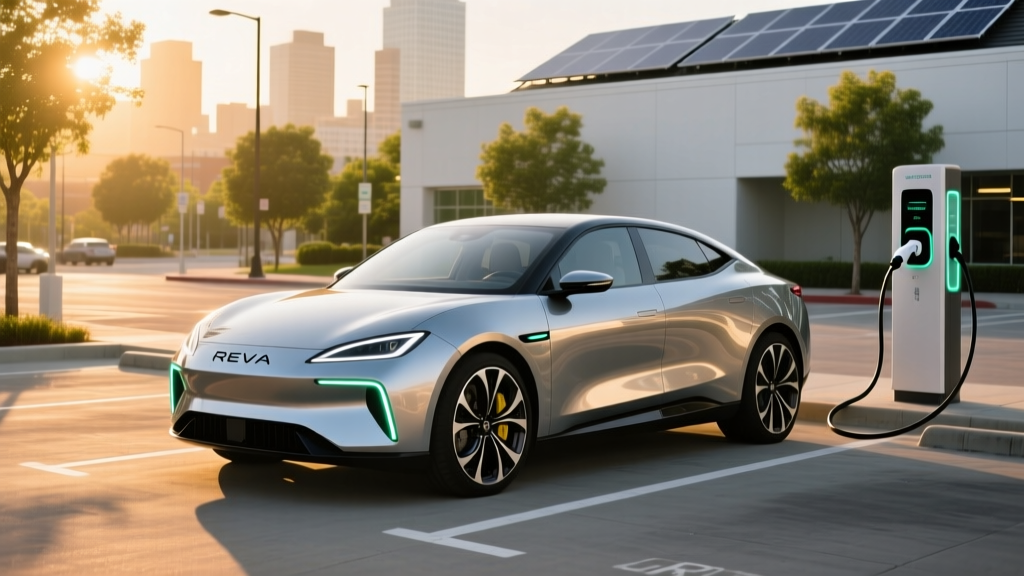
REVA Electric, the pioneering Indian EV brand behind the original REVAi/G-Wiz microcar, no longer sells vehicles under the REVA name. The company was acquired by Mahindra & Mahindra in 2010 and rebranded as Mahindra Electric. As of 2026, Mahindra has not entered the US passenger EV market. If you're searching for a REVA Electric car in the United States, you won't find one for sale new — and the used REVAi (sold briefly as the G-Wiz around 2008–2011) is a lead-acid-battery microcar with roughly 40–50 miles of real-world range that does not meet modern US safety or emissions certification standards. For US buyers interested in Mahindra's current EV lineup (the XUV400 and BE.05), availability remains limited to India and select international markets.
The REVA Story: From Bangalore Microcar to Mahindra Electric
REVA Electric Car Company, founded in 2001 in Bangalore, India, was one of the world's earliest mass-produced electric vehicle manufacturers. Its flagship product, the REVAi (marketed in the UK and Europe as the G-Wiz), was a two-door, two-seat microcar powered by eight 6-volt lead-acid batteries wired in series for a 48V system. Later variants used lithium-ion cells, extending range modestly.
Key historical specs of the REVAi/G-Wiz:
- Battery: 8 × 6V lead-acid (later 48V Li-ion in the REVA L-ion variant)
- Usable energy: ~9.6 kWh (lead-acid), ~11 kWh (Li-ion)
- Claimed range: 50 miles (lead-acid), 75 miles (Li-ion, NEDC cycle)
- Real-world range: 30–40 miles (lead-acid), 50–60 miles (Li-ion)
- Top speed: ~50 mph
- Charging: Standard 230V household outlet, 6–8 hours full charge
- Price (UK, circa 2008): ~£10,000 (~$15,000 USD equivalent)
The REVAi was never officially sold in the United States. A handful were imported under low-speed vehicle or show-and-display exemptions, but it never achieved Federal Motor Vehicle Safety Standards (FMVSS) certification. In 2010, Mahindra & Mahindra acquired a majority stake, eventually absorbing the brand entirely and renaming it Mahindra Electric Mobility.
Mahindra's Current EV Lineup (And Why It Matters for US Buyers)
Mahindra Electric now produces modern, competitive EVs for the Indian and European markets. Understanding their current lineup helps contextualize what a REVA successor would look like — and whether any future Mahindra EV might reach US shores.
| Model | Battery (kWh) | Range (WLTP) | Peak DC Charge | 0–60 mph (est.) | Market |
|---|---|---|---|---|---|
| Mahindra XUV400 | 39.4 kWh (NMC) | ~289 mi (WLTP) | 50 kW | ~8.3 sec | India |
| Mahindra BE.05 (announced) | 60–80 kWh (NMC) | ~280–340 mi (WLTP est.) | 175 kW | ~5.5 sec (AWD est.) | India/Europe (2026–2027) |
| Mahindra BE.07 (announced) | 60–80 kWh (NMC) | ~310–370 mi (WLTP est.) | 175 kW | ~5.0 sec (AWD est.) | India/Europe (2026–2027) |
Important note on range figures: WLTP (Worldwide Harmonised Light Vehicle Test Procedure) tends to overstate range by 15–25% compared to the US EPA cycle. A WLTP-rated 289-mile XUV400 would likely achieve roughly 220–240 miles under EPA testing methodology. Real-world highway driving at 70+ mph in cold weather would reduce that further — expect 170–200 miles in winter highway conditions.
Mahindra's new INGLO platform (underpinning the BE series) uses CTP (cell-to-pack) blade-style NMC batteries supplied by Farasis Energy, with 800V architecture enabling the 175 kW peak charge rate. However, these vehicles are not EPA-certified and there is no announced US launch timeline. For American buyers researching "REVA Electric" out of brand curiosity or nostalgia, the practical takeaway is clear: no Mahindra/REVA EV is currently purchasable in the US.
If You're Considering a Used REVAi/G-Wiz: The Honest Assessment
On the rare occasion a REVAi surfaces on the used market (typically imported to the UK, occasionally re-imported), here's what ownership actually looks like compared to a modern budget EV.
| Metric | Used REVAi (Lead-Acid) | 2026 Nissan LEAF S (40 kWh) | 2026 Chevy Bolt EV (65 kWh) |
|---|---|---|---|
| EPA Range | Not EPA-rated (~35 mi real) | 212 mi | 259 mi |
| Battery Chemistry | Lead-acid (flooded) | NMC | NMC |
| Battery Warranty | None (expired) | 8 yr / 100,000 mi | 8 yr / 100,000 mi |
| DC Fast Charge | Not available | 50 kW (CHAdeMO) | 55 kW (CCS) |
| Level 2 Charge Time | 6–8 hr (120V only) | ~8 hr (6.6 kW) | ~9.5 hr (11.5 kW) |
| Top Speed | ~50 mph | 95 mph (limited) | 93 mph (limited) |
| Safety (crash test) | Not tested / no airbags | IIHS Good (select tests) | NHTSA 5-star overall |
| Federal Tax Credit (§30D) | Not eligible | Not eligible (Nissan) | Up to $7,500 (verify sourcing) |
| Used Price (est.) | $3,000–$6,000 | $18,000–$22,000 | $22,000–$28,000 |
The lead-acid batteries in an original REVAi have a cycle life of roughly 300–500 deep cycles before capacity drops below 80%. At 35 miles per cycle, that's 10,500–17,500 miles of usable life before a full battery replacement — which costs approximately $2,000–$3,000 in 2026 for a custom lead-acid pack. Lithium-ion retrofits exist in the aftermarket but are not manufacturer-supported and can cost $4,000–$6,000 installed.
Real-World EV Ownership Costs: What First-Time Buyers Need
If your REVA Electric search is actually a gateway to exploring EV ownership broadly, here's a concrete cost comparison using current 2026 data for a typical US buyer.
| Cost Category (5-Year / 75,000 mi) | 2026 Chevy Bolt EV | 2026 Toyota Corolla Hybrid | 2026 Honda Civic (Gas) |
|---|---|---|---|
| Purchase Price (base MSRP) | $28,200 | $23,500 | $24,700 |
| Federal Tax Credit (§30D) | Up to −$7,500* | Not eligible | Not eligible |
| Effective Purchase Price | ~$20,700 | $23,500 | $24,700 |
| Fuel/Energy (75,000 mi) | $2,850 (home L2, $0.14/kWh avg) | $5,100 (52 MPG, $3.55/gal) | $7,950 (33 MPG, $3.55/gal) |
| Maintenance | ~$1,800 | ~$2,600 | ~$3,200 |
| Insurance (avg annual × 5) | ~$9,500 | ~$7,200 | ~$7,800 |
| 5-Year Total Cost | ~$34,850 | ~$38,400 | ~$43,650 |
| Cost Per Mile | $0.46 | $0.51 | $0.58 |
*§30D eligibility depends on MSRP caps (≤$55,000 sedans), buyer income limits ($150K single / $300K joint), and battery critical-mineral sourcing requirements. Verify current-year rules at irs.gov. Point-of-sale transfer is available through registered dealers.
The EV's advantage widens further if you have access to workplace charging, solar-powered home charging (effectively $0.04–$0.08/kWh), or time-of-use utility rates that push overnight charging costs below $0.10/kWh. At $0.08/kWh, the Bolt's 75,000-mile energy cost drops to roughly $1,630 — a $6,320 savings over the gas Civic.
However, EV insurance premiums run 15–30% higher on average than comparable gas vehicles, driven by higher repair costs for battery and structural damage. This partially offsets fuel savings and should be factored into any purchase decision. Get quotes from at least three insurers before committing.
Common EV Misconceptions — Fact-Checked
| Myth | Fact |
|---|---|
| "EV batteries need replacing every few years." | Modern NMC and LFP packs retain 85–92% capacity after 100,000 miles. EPA data and long-term fleet studies show median degradation of ~2.3% per year. Most are warranted 8 yr/100,000 mi at ≥70% capacity. |
| "EVs are worse in cold weather." | Range drops 20–35% in sub-freezing temps (real, measurable). But a 259-mile Bolt still delivers ~170–200 miles at 20°F — adequate for most daily driving. Preconditioning while plugged in recovers significant range. Gas cars also lose efficiency in cold (12–22% MPG drop per fueleconomy.gov). |
| "Home charging requires a $5,000 electrical upgrade." | A Level 2 (240V, 32–48 amp) home charger installation averages $800–$2,000 if your panel has capacity. A 200-amp panel upgrade adds $1,500–$3,500 but is only needed in ~20–30% of older homes. Many utilities offer rebates of $200–$500. |
| "Charging takes too long for road trips." | Modern EVs at 150–250 kW DC chargers add 150–250 miles in 15–20 minutes (10–80% SoC). A 300-mile road trip requires one 20-minute stop — comparable to a gas fill-up plus rest break. |
| "Any old EV is a good deal used." | Legacy EVs like the REVAi, early Nissan LEAF (24 kWh, passive air cooling), and BMW i3 (60 Ah) suffer accelerated degradation and lack DC fast charging. Always check battery State of Health (SoH) before buying used. A $3,000 REVAi with degraded lead-acid cells is a $6,000 liability. |
Decision Framework: Which Electrified Vehicle Fits Your Situation?
If-Then EV Buying Guide
- IF you have home charging access (garage/driveway with 240V outlet potential) AND your daily commute is under 60 miles → THEN a battery EV (BEV) with 220+ miles EPA range is your best value. Consider the Chevy Bolt, Hyundai Kona Electric, or Tesla Model 3.
- IF you lack reliable home charging (apartment, street parking) AND public DC chargers are more than 15 minutes away → THEN a hybrid (HEV) or plug-in hybrid (PHEV) is more practical. The Toyota Prius (57 MPG combined) or Toyota RAV4 PHEV (42 mi electric + 38 MPG gas) eliminate range anxiety entirely.
- IF you regularly drive 300+ miles in a single day (road trips, rural routes) AND live in a region with sparse DC charging infrastructure → THEN consider a PHEV as a bridge vehicle, or wait for 2027–2028 models with 350+ mile range and 350 kW charging.
- IF you're drawn to the REVA name for its low-cost, city-car concept → THEN look at the 2026 Nissan LEAF S ($28,140, 212 mi EPA) or a used Chevy Bolt ($18,000–$22,000). Both deliver genuine highway capability, modern safety, and DC fast charging — everything the REVAi could not.
- IF you want a Mahindra EV specifically → THEN monitor Mahindra's global announcements, but do not delay a purchase waiting for US availability. No US launch has been confirmed as of 2026.
What First-Time EV Buyers Must Know Before Signing
Whether you arrived here searching for REVA Electric or are simply EV-curious, these are the non-negotiable checkpoints before purchasing any electric vehicle in 2026:
- Verify home charging feasibility. A licensed electrician should confirm your panel's spare capacity before you buy. A 40-amp Level 2 circuit (9.6 kW) charges most EVs overnight and costs $800–$2,000 installed in typical homes.
- Check §30D tax credit eligibility. The credit is not universal. Income caps ($150K single, $225K head of household, $300K joint), MSRP limits ($55K cars, $80K SUVs/trucks), and battery sourcing requirements all apply. Use the IRS clean vehicle credit page and the DOE's fueleconomy.gov tax credit lookup before assuming you qualify.
- Understand kW vs kWh. kWh (kilowatt-hours) measures battery capacity — how much energy is stored. kW (kilowatts) measures charge rate — how fast energy flows. A 65 kWh battery charging at 55 kW takes roughly 70 minutes from 10–80% (accounting for taper). Never confuse the two when evaluating specs.
- Factor in insurance early. Get quotes before purchase. EV premiums average $1,800–$2,400/year vs $1,400–$1,900 for comparable gas cars. Geico, Progressive, and State Farm all offer EV-specific policies.
- Test cold-weather range expectations. If you live north of the 37th parallel, plan for 25–35% winter range loss. A 259-mile EPA rating becomes ~170–195 miles at 15°F with cabin heat running. Preconditioning while plugged in mitigates this significantly.
- Confirm DC charging compatibility. NACS (Tesla's connector, now adopted by Ford, GM, Rivian, Hyundai, and others) is becoming the US standard. CCS1 remains on most 2024–2026 non-Tesla models. CHAdeMO (Nissan LEAF) is being phased out. Your connector determines which public networks you can use.
Is REVA Electric the same company as Mahindra Electric?
Yes. REVA Electric Car Company was acquired by Mahindra & Mahindra in 2010 and fully rebranded as Mahindra Electric Mobility. The REVA name is retired. Mahindra now produces the XUV400 and upcoming BE series EVs on its INGLO platform.
Can I buy a Mahindra EV in the United States in 2026?
No. Mahindra has not announced any US market entry for its passenger EVs. The XUV400 and BE series are sold in India, with limited European availability expected in 2026–2027. There is no EPA-certified Mahindra EV available in the US.
Was the REVAi/G-Wiz ever street-legal in the US?
Not broadly. The REVAi was never FMVSS-certified for US sale. A small number were imported under low-speed vehicle exemptions or show-and-display provisions, but these cannot be registered for normal road use in most states. It lacked airbags, ABS, and crash-test certification.
What's the closest modern equivalent to a REVA-style affordable city EV?
The 2026 Nissan LEAF S (212 mi EPA, $28,140) and the used Chevy Bolt EV ($18,000–$22,000, 259 mi EPA) are the most affordable new and used EVs on the US market. Both offer modern safety, DC fast charging, and battery warranties — capabilities the REVAi never had.
How much does it cost to charge an EV at home vs. buying gas?
At the US average residential electricity rate of ~$0.14/kWh, charging a 65 kWh battery from 10–80% costs roughly $6.40 for ~180 miles of range — equivalent to $0.036/mile. A gas car averaging 30 MPG at $3.55/gallon costs $0.118/mile. Home EV charging is approximately 3× cheaper per mile than gasoline.