The Short Answer on the REVA Electric Car
The REVA electric car — originally built by India's Reva Electric Car Company and later rebranded as the Mahindra e2o after Mahindra acquired a controlling stake in 2010 — was a compact, low-speed urban EV sold primarily in India and the UK between 2001 and roughly 2017. It offered 50–75 miles of real-world range on a lead-acid or early lithium-ion battery, topped out around 50 mph, and charged from a standard household outlet. The REVA/e2o is discontinued and not sold new in 2026. If you are researching it today, you are likely looking at the used market in India or the UK, or you are exploring modern micro-EVs and city commuters that have replaced it. Below, we break down the REVA's original specs, real ownership costs, and the modern alternatives that now fill its niche.
What Was the REVA Electric Car?
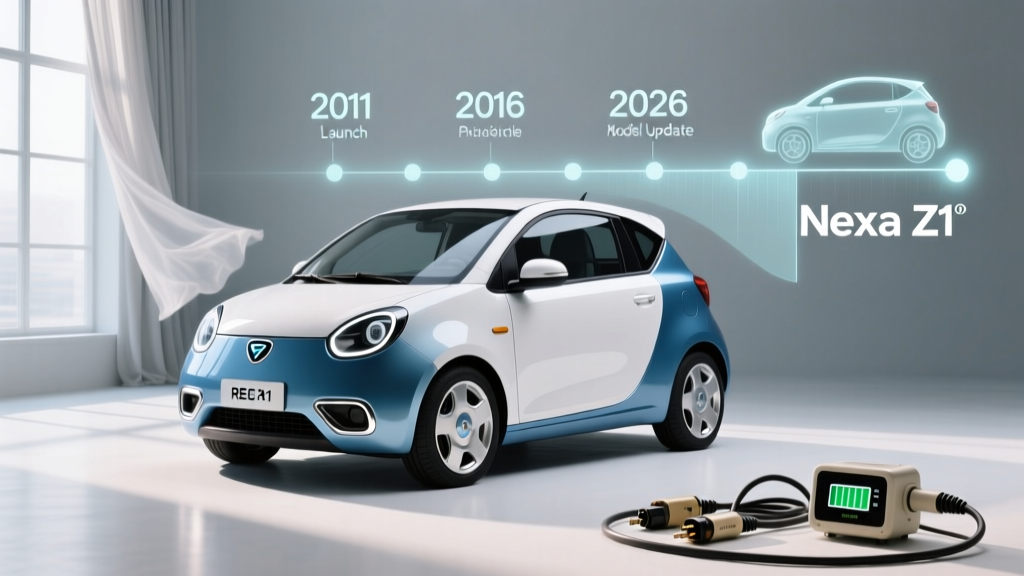
The REVA (short for "Revolutionary Electric Vehicle Alternative") debuted in 2001 as one of the world's earliest mass-produced electric city cars. Manufactured in Bangalore by the Reva Electric Car Company — a joint venture between India's Maini Group and California-based AEV LLC — it was exported to over 26 countries under names like the G-Wiz (UK) and REVAi.
In 2010, Mahindra & Mahindra acquired a 55.2% stake, and the vehicle was re-engineered into the Mahindra e2o (2013–2017), which featured a lithium-ion battery, improved range, and a more conventional hatchback design. A slightly larger variant, the e2o Plus, launched in 2016 with four doors and a claimed 110 km (68 mi) range under India's Modified Indian Driving Cycle.
Mahindra discontinued the e2o line around 2017–2019 as India's safety and crash-test regulations tightened and the company shifted EV strategy toward the eVerito sedan and, eventually, the XUV400 and BE.05 electric SUVs.
REVA / Mahindra e2o: Original Specs and Real-World Performance
| Specification | REVAi (Lead-Acid, ~2008) | Mahindra e2o (Li-ion, ~2014) | e2o Plus (~2016) |
|---|---|---|---|
| Battery Chemistry | Lead-Acid, ~9.6 kWh | Lithium-Ion (NMC), 10.08 kWh | Lithium-Ion, 11.0 kWh |
| Claimed Range | ~80 km (50 mi) | ~100 km (62 mi) | ~110 km (68 mi) |
| Real-World Range (Mixed) | 40–55 km (25–34 mi) | 60–80 km (37–50 mi) | 70–90 km (43–56 mi) |
| Top Speed | ~70 km/h (43 mph) | ~81 km/h (50 mph) | ~85 km/h (53 mph) |
| Motor Power | ~13 kW (17 hp) | ~19 kW (25 hp) | ~30 kW (40 hp) |
| Charging (0–100%) | ~8 hours (230V, ~1.5 kW) | ~5 hours (230V, ~2.5 kW) | ~6 hours (230V, ~2.5 kW) |
| DC Fast Charging | None | None | Optional (90 min) |
| Seats | 2+2 (tight) | 2+2 | 4 (full) |
| Original Price (India) | ~₹2.5 lakh (~$3,000 at the time) | ~₹6–7 lakh (~$9,000–$10,500) | ~₹7–8 lakh (~$10,500–$12,000) |
Real-world caveat: Like all small-battery EVs, range dropped significantly with air-conditioning use, steep grades, or temperatures below 10°C (50°F). Lead-acid REVA models suffered especially severe degradation — losing 30–40% of range within 2–3 years unless batteries were replaced (a ₹50,000–₹80,000 / $600–$950 expense every ~500–800 cycles). The lithium-ion e2o models fared better but still exhibited typical NMC degradation of roughly 15–20% over 5 years.
Cost of Ownership: REVA vs. a Modern Gas City Car
Let's compare what it actually cost to own and run a Mahindra e2o (the most capable REVA variant) versus a typical petrol-powered city car in India — a Maruti Suzuki Swift, which is the benchmark urban runabout.
| Cost Factor | Mahindra e2o (Used, ~2015) | Maruti Swift Petrol (2024–2026) |
|---|---|---|
| Purchase Price (Used/New) | ₹2–3 lakh used ($2,400–$3,600) | ₹6–8 lakh new ($7,200–$9,600) |
| Energy Cost per km | ₹0.50–0.80/km (home charging at ₹8/kWh) | ₹4.50–5.50/km (petrol at ₹105/L, 22 km/L) |
| Annual Fuel/Energy (10,000 km) | ₹5,000–8,000 ($60–$96) | ₹45,000–55,000 ($540–$660) |
| Maintenance (Annual) | ₹3,000–5,000 (minimal) | ₹8,000–12,000 |
| Battery Replacement (One-Time) | ₹1.5–2.5 lakh ($1,800–$3,000) if needed | N/A |
| Insurance (Annual) | ₹5,000–8,000 | ₹10,000–15,000 |
| 5-Year Total (Excl. Purchase) | ₹65,000–1,15,000 ($780–$1,380) | ₹3,15,000–4,10,000 ($3,780–$4,920) |
The per-kilometer energy savings are dramatic — roughly 85% cheaper to "fuel" the e2o. But the battery-replacement risk is the elephant in the room: if the lithium-ion pack fails or degrades below usable capacity, the replacement cost can exceed the vehicle's residual value. This is a common trap for buyers of discontinued EVs with small production runs — parts availability is limited, and aftermarket battery solutions are scarce.
Common Misconceptions About the REVA Electric Car
| Myth | Fact |
|---|---|
| "The REVA was a golf cart, not a real car." | It was homologated as a heavy quadricycle in Europe (L7e category) and as a passenger vehicle in India. It had a steel space frame, crumple zones, and met applicable crash standards of its era — though it would not meet 2026 safety norms. |
| "It had 100 km of range." | That was the claimed figure under ideal test conditions. Real-world range with A/C, passengers, and stop-and-go traffic was typically 60–80 km for the lithium-ion e2o. Lead-acid REVAs managed 40–55 km. |
| "You can still buy a new REVA or e2o." | Production ended around 2017–2019. Only used units are available, and Mahindra no longer officially supports the e2o with new battery packs or warranty service. |
| "It qualified for EV tax credits." | The REVA/e2o was never sold in the US market and was never eligible for the IRS §30D federal tax credit. It also predated India's FAME-II subsidy scheme. |
| "Charging it was free." | Home electricity is not free. At ₹8/kWh (India's average residential rate), a full 10 kWh charge cost ₹80 — far less than petrol, but not zero. |
What Replaced the REVA? Modern Micro-EVs and City Commuters
If the REVA's niche was "affordable, short-range urban electric transport," several vehicles have filled that gap far more capably by 2026:
| Vehicle | Market | Battery (kWh) | Real-World Range | Top Speed | Approx. Price |
|---|---|---|---|---|---|
| Tata Tiago.ev | India | 24 kWh (LFP) | 200–230 km (124–143 mi) | 120 km/h (75 mph) | ₹8.69 lakh (~$10,400) |
| MG Comet EV | India | 16.7 kWh (LFP) | 150–180 km (93–112 mi) | 100 km/h (62 mph) | ₹6.99 lakh (~$8,400) |
| Citroën Ami | Europe/UK | 5.5 kWh (NMC) | 55–65 km (34–40 mi) | 45 km/h (28 mph) | €8,000 (~$8,700) |
| Wuling Hongguang Mini EV | China | 9.3–26.7 kWh | 80–200 km (50–124 mi) | 100 km/h (62 mph) | ¥32,800–¥70,000 (~$4,500–$9,600) |
| Mahindra XUV400 | India | 34.5–39.4 kWh (NMC) | 300–350 km (186–217 mi) | 150 km/h (93 mph) | ₹15.49 lakh (~$18,600) |
The Tata Tiago.ev is the spiritual successor for Indian buyers: it offers 4x the range, modern safety features (dual airbags, ABS, ESC), DC fast-charging capability (50 kW, 10–80% in ~57 minutes), and an LFP battery that tolerates daily 100% charging with minimal degradation. The MG Comet fills the ultra-compact city-car role the REVA once occupied, with a more refined interior and smartphone connectivity.
For UK buyers who remember the G-Wiz, the Citroën Ami is the closest modern analog — a quadricycle-class micro-EV with similar urban-only intent but vastly better build quality and a sealed, maintenance-free lithium pack.
Should You Buy a Used REVA/e2o in 2026?
Honestly? Almost certainly not. Here is a practical decision framework:
Decision Framework: Is a Used REVA/e2o Right for You?
- Choose the REVA/e2o ONLY if: you are an EV hobbyist or collector in India/UK who wants a piece of EV history, you have access to a trusted technician familiar with Mahindra e2o battery management systems, your daily driving is under 40 km (25 mi), you have a covered home-charging spot, and you accept that a battery failure means a ₹1.5–2.5 lakh out-of-pocket cost with no warranty safety net.
- Choose a Tata Tiago.ev or MG Comet instead if: you need a daily-driver city EV with warranty coverage, modern safety, smartphone integration, dealer service support, and 3–4x the range. Even on the used market, a 2023 Tiago.ev (₹6–7 lakh used) offers dramatically better value than a 2015 e2o.
- Choose a plug-in hybrid (PHEV) if: you lack reliable home charging, you regularly drive more than 100 km/day, or you need highway capability. A used Toyota Prius PHEV or MG Hector Plus PHEV eliminates range anxiety while still cutting fuel costs 40–60% on short electric-only commutes.
Real-World Ownership Considerations for Any Small-Battery EV
Whether you are eyeing a used e2o or a modern micro-EV, these factors determine whether ownership is practical or frustrating:
Home charging access is non-negotiable for micro-EVs. A 10–17 kWh battery on a 2.5 kW Level 1/Level 2 home outlet recharges fully overnight (5–7 hours). But if you rely solely on public charging, the economics collapse — public AC charging in India costs ₹18–25/kWh, and in the UK, public AC costs £0.30–0.50/kWh. That erases most of the cost advantage over petrol. According to data from fueleconomy.gov, home charging is typically 3–5x cheaper per mile than public DC fast charging.
Cold weather slashes range by 20–40%. Small batteries have less thermal mass, and most micro-EVs (including the e2o) lack heat-pump HVAC systems. In UK winters or northern Indian hill stations, expect your 80 km e2o range to drop to 50–60 km. Modern LFP-equipped EVs like the Tiago.ev handle cold somewhat better due to active thermal management, but the physics of lithium-ion at low temperatures remains a constraint.
Insurance can be disproportionately expensive. Discontinued vehicles with scarce parts often carry higher comprehensive insurance premiums because insurers factor in total-loss risk. Get a quote before purchasing any used, out-of-production EV.
Safety standards have moved on. The e2o was not crash-tested by Global NCAP under modern protocols. By comparison, the Tata Tiago.ev scored 4 stars in Global NCAP testing. If safety matters to you — and it should — the REVA generation is a step behind.
Frequently Asked Questions
Is the REVA electric car still being manufactured?
No. Production of the REVA/e2o line ended around 2017–2019. Mahindra & Mahindra shifted its EV strategy to larger, more mainstream vehicles like the XUV400 and the upcoming BE.05/BE.07 electric SUVs. Only used units remain available, primarily in India and the UK.
How much does a used Mahindra e2o cost in 2026?
Used e2o prices in India typically range from ₹1.5–3.5 lakh ($1,800–$4,200), depending on model year, battery condition, and mileage. In the UK, used G-Wiz/e2o examples are rare and sell for £2,000–£4,500. The critical variable is battery health — always request a State of Health (SoH) reading before purchasing.
Can I replace the e2o battery with a modern LFP pack?
Technically, yes — third-party battery shops in India have done custom LFP retrofits. However, this requires a compatible BMS (battery management system), proper cell balancing, and safety certification. Costs range from ₹1.5–3 lakh ($1,800–$3,600), which often exceeds the vehicle's value. There is no factory-supported upgrade path.
Was the REVA/G-Wiz ever sold in the United States?
The REVA was briefly imported to the US in the early 2000s under the name "REVA" but was classified as a Neighborhood Electric Vehicle (NEV) / Low-Speed Vehicle due to its sub-25 mph capability in early variants. It never achieved meaningful US market penetration and was never eligible for federal EV tax credits. The US market for micro-EVs essentially collapsed after 2010 when affordable, full-capability EVs like the Nissan Leaf and Chevrolet Volt arrived.
What is the best modern alternative to the REVA for city driving?
For Indian buyers: the Tata Tiago.ev (₹8.69 lakh, 200+ km real range, LFP battery, DC fast charging, 4-star safety) is the most capable direct successor. For budget buyers: the MG Comet EV (₹6.99 lakh, 150+ km range, compact footprint). For UK/European buyers: the Citroën Ami or Renault Twizy fill the ultra-compact quadricycle niche, while the Dacia Spring (€18,000, 220 km WLTP) is the cheapest full-featured city EV.
Does buying a used EV like the e2o qualify for any tax incentives?
In the US, the IRS offers a used clean vehicle credit of up to $4,000 (30% of sale price, capped at $4,000) for qualifying pre-owned EVs — but the vehicle must be on the IRS eligible list, sold through a dealer, and the buyer must meet income caps ($75,000 single / $150,000 joint). The REVA/e2o was never US-certified and does not qualify. In India, the FAME-II subsidy applied only to new EV purchases and has been largely superseded by state-level policies as of 2025–2026. Always consult a tax professional before relying on incentive eligibility.