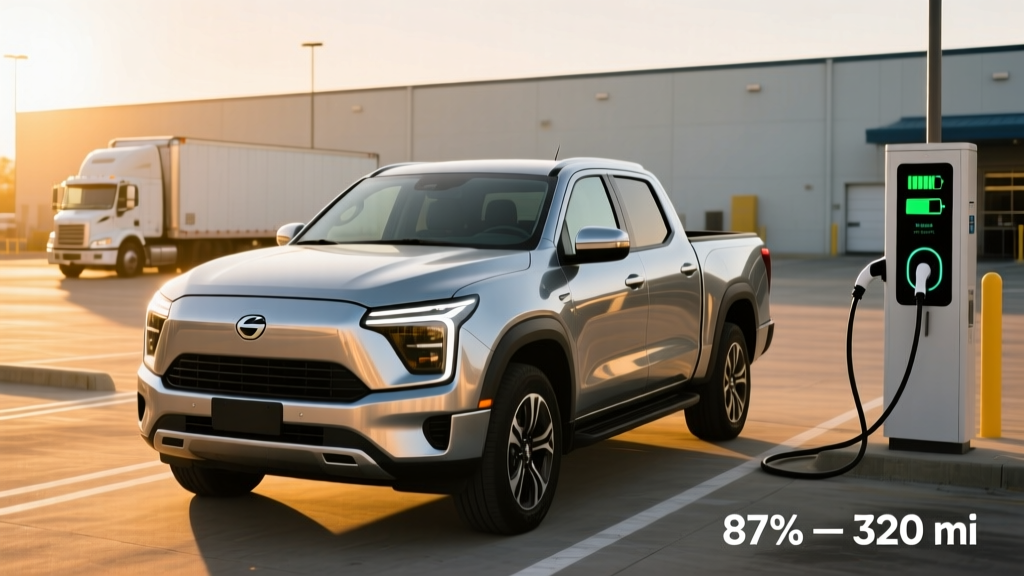
If you're considering a rented electric car — whether that's a traditional lease, a subscription service, or a short-term rental — the short answer is: leasing an EV in 2026 often makes more financial sense than buying, primarily because of how the federal tax credit flows through to lessees. When you lease an EV, the automaker (the legal owner) claims the §30D or §45W commercial clean vehicle credit and typically passes a portion or all of that savings to you as a reduced monthly payment. This sidesteps the buyer-side income caps, MSRP caps, and battery-sourcing requirements that disqualify many purchasers. Combined with lower maintenance costs and stable electricity rates, a rented electric car can deliver predictable monthly transportation costs that undercut comparable gas vehicles — but only if your driving pattern and charging access align with EV ownership realities.
Quick Answer: Should You Rent (Lease) an EV?
Yes, if: you have access to Level 2 home or workplace charging, drive under 1,000 miles/month, want the latest battery tech without long-term commitment, and don't qualify for the $7,500 buyer credit due to income or sourcing rules.
No, if: you rely solely on public DC fast charging (adds $120–$200/month vs. home charging), regularly drive 400+ miles in a single day, or live in an area with sparse charging infrastructure.
How EV Leasing Works in 2026 — and Why It's Different
When people search for a "rented electric car," they're usually referring to one of three arrangements, and the economics differ sharply among them:
- Traditional lease (36 months): You commit to a fixed term, typically 10,000–15,000 miles/year. The leasing company (usually the automaker's financial arm) owns the vehicle and claims any applicable commercial clean vehicle credit under IRS §45W. Monthly payments on popular models like the Hyundai Ioniq 5 or Tesla Model Y have dropped into the $299–$449 range with $2,000–$3,500 down in 2026.
- EV subscription services (month-to-month): Companies like Sixt+, Hertz, or manufacturer programs (BMW Access, Volvo Care) offer flexible terms from $599–$1,200/month that bundle insurance, maintenance, and sometimes charging credits. Higher monthly cost, but zero commitment.
- Short-term rental (daily/weekly): Think Turo, Hertz, or Enterprise EV rentals at $60–$150/day. Best for trying an EV before committing or for occasional use — not a cost-effective long-term strategy.
The critical advantage of a traditional lease is the tax credit pass-through. Under current IRS rules, the commercial clean vehicle credit (up to $7,500 for light-duty EVs) is claimed by the lessor, not the lessee. The lessor is not subject to the same buyer income caps ($150K single / $300K joint for purchase credits), MSRP limits ($55K cars / $80K SUVs and trucks), or critical-mineral sourcing requirements. Most major automakers factor this credit into the lease's capitalized cost, effectively reducing your monthly payment by $150–$220/month over a 36-month term.
Rented Electric Car vs. Gas Car: The Real Cost Breakdown
Numbers matter more than narratives. Here's how a typical rented electric car stacks up against a comparable gas vehicle over a 36-month lease term, using a 2026 Hyundai Ioniq 5 SEL (EV) versus a 2026 Toyota RAV4 LE (gas) as representative examples:
| Cost Category | 2026 Ioniq 5 SEL (Lease) | 2026 RAV4 LE (Lease) |
|---|---|---|
| Monthly Payment | $379/mo | $349/mo |
| Due at Signing | $2,999 | $2,499 |
| Fuel / Energy (36 mo, 36K mi) | $1,620 (home L2, $0.15/kWh) | $4,536 (28 MPG avg, $3.50/gal) |
| Maintenance (36 mo) | $180 (tire rotation, cabin filter) | $720 (oil changes, filters, brakes) |
| Insurance (avg, 36 mo) | $5,400 ($150/mo) | $4,500 ($125/mo) |
| Total 36-Month Cost | $23,795 | $20,294 |
| Cost Per Mile | $0.66 | $0.56 |
Note: EV insurance premiums run 15–25% higher than comparable gas vehicles, per industry data. Energy costs assume 85% home Level 2 charging at national average residential rates; public DC fast charging at $0.35–$0.55/kWh would increase EV fuel costs to approximately $2,800–$3,600 over 36 months. Gas costs based on EPA combined MPG and national average fuel prices.
The EV lease costs roughly $3,500 more over three years in this scenario, but that gap narrows — or reverses — depending on three variables: your electricity rate, your local gas prices, and whether your utility offers off-peak EV charging discounts (common in California, Texas, and the Northeast, where overnight rates can drop to $0.06–$0.09/kWh).
What a First-Time EV Renter Needs to Know Before Signing
Leasing an EV introduces considerations that don't apply to gas-car leases. Here are the non-negotiable factors to evaluate before you commit:
Charging Access Is Everything
The single biggest determinant of EV satisfaction is whether you can charge at home or work. A Level 2 home charger (240V, 7.7–11.5 kW) adds 25–44 miles of range per hour of charging — enough to fully replenish any EV overnight. Without it, you're dependent on public DC fast charging or slow Level 1 (120V) outlets that add only 3–5 miles per hour.
Home Level 2 installation costs range from $500 (simple outlet near your panel) to $2,500+ (panel upgrade required for older homes with 100-amp service). If you're renting your home or live in an apartment without charging access, factor in public charging costs and time — and reconsider whether a rented electric car fits your situation.
Real-World Range vs. EPA Sticker
EPA range estimates are calculated under controlled conditions. In practice, expect:
- Highway driving (70+ mph): 10–15% range reduction vs. EPA combined estimate
- Cold weather (below 30°F): 20–35% range reduction, depending on whether the vehicle has a heat pump
- DC fast charging taper: Charging from 80–100% takes nearly as long as 10–80%, so plan to charge to 80% on road trips
A 2026 Ioniq 5 with its 84 kWh (usable) battery and EPA-rated 305-mile range will realistically deliver 250–270 miles on a highway road trip in moderate weather, and as low as 200 miles in sub-freezing temperatures without preconditioning. Plan your expectations around these numbers, not the sticker.
Lease Mileage Limits and Overages
Most EV leases come with 10,000 or 12,000 miles per year. Exceeding that limit costs $0.20–$0.30 per extra mile at lease-end. If you commute 40+ miles daily or take frequent road trips, negotiate a 15,000-mile/year lease upfront (adds $20–$40/month) or consider purchasing instead.
EV vs. Gas vs. Hybrid: Which Rented Vehicle Fits Your Life?
| Factor | BEV (Full Electric) | PHEV (Plug-In Hybrid) | HEV (Standard Hybrid) |
|---|---|---|---|
| Best For | Home chargers, daily commutes <80 mi | No home charger, mixed city/highway | High mileage, no charging access |
| Monthly Energy Cost (1K mi) | $45–$55 (home L2) | $35–$65 (mix of electric + gas) | $115–$130 (gas only) |
| Lease Availability | Widely available, credit pass-through | Limited models (Toyota RAV4 Prime, Jeep Wrangler 4xe) | Widely available, smaller credits |
| Range Flexibility | 250–350 mi, requires route planning | 30–45 mi electric + 400+ mi gas | 450–600 mi, gas stations everywhere |
| Maintenance (annual) | $60–$120 | $200–$400 | $300–$500 |
If you have reliable Level 2 charging and your daily driving stays under 80 miles (covering 90%+ of American commutes), a rented electric car delivers the lowest per-mile operating cost and the smoothest driving experience. If charging access is uncertain or you frequently drive 300+ miles in a day, a PHEV like the Toyota RAV4 Prime (42 miles electric-only, 38 MPG combined on gas) provides a pragmatic middle ground.
Common Misconceptions About Renting an EV
| Myth | Fact |
|---|---|
| "You can't get the tax credit if you lease." | The leasing company claims the commercial clean vehicle credit (§45W) and typically passes savings through as a lower monthly payment — often called a "lease cash" or "lease bonus" on manufacturer deal sheets. |
| "EV batteries need replacing during the lease." | Modern LFP and NMC batteries degrade approximately 1–2% per year. Over a 36-month lease, expect 3–6% capacity loss — imperceptible in daily driving. Federal warranty mandates require 8 years / 100,000 miles minimum battery coverage. |
| "Public charging is always expensive and unreliable." | Public DC fast charging costs $0.35–$0.55/kWh (roughly $12–$18 for 100 miles), and network reliability has improved significantly. Tesla's Supercharger network averages 99.5% uptime; Electrify America and ChargePoint have expanded NACS compatibility. But home charging remains 3–5x cheaper per mile. |
| "EVs are slow to charge on road trips." | Modern EVs with 800V architectures (Ioniq 5/6, Kia EV6/EV9, Lucid Air) can charge from 10–80% in 18–22 minutes at 350 kW chargers. That's a restroom-and-coffee stop, not a meal. |
| "Leasing means I have nothing at the end." | True — you don't build equity. But you also avoid battery-degradation risk, technology obsolescence, and the hassle of selling a used EV. In a rapidly evolving market, trading up every 3 years has real value. |
Your Decision Framework: Should You Rent an Electric Car?
Step 1 — Charging: Can you install or access a Level 2 charger at home or work?
→ Yes: Continue to Step 2.
→ No: Consider a PHEV or wait until charging access is available. Public-only charging adds $80–$150/month and significant time cost.
Step 2 — Daily Miles: Is your typical daily driving under 100 miles (round trip)?
→ Yes: Any modern EV with 250+ miles EPA range covers your needs with margin. Continue to Step 3.
→ No: Ensure the EV you choose has 300+ miles EPA range and fast DC charging (150+ kW peak), or consider a PHEV for flexibility.
Step 3 — Climate: Do you live where winter temperatures regularly drop below 25°F?
→ Yes: Choose an EV with a heat pump (standard on most 2026 Hyundai/Kia/Tesla models) and plan for 20–30% winter range loss. A vehicle with 300+ EPA miles becomes important.
→ No: Range loss is minimal; a 250-mile EPA vehicle is sufficient for most drivers.
Step 4 — Budget: Can you absorb a $2,000–$3,500 drive-off and $350–$500/month (including insurance and energy)?
→ Yes: A rented electric car is a strong choice. Target leases with the §45W credit factored in — check manufacturer websites for "lease cash" or "bonus cash" offers.
→ No: Consider a used EV (eligible for the $4,000 §25E used clean vehicle credit) or a fuel-efficient hybrid as a lower-cost entry point.
Step 5 — Mileage: Will you drive fewer than 12,000–15,000 miles per year?
→ Yes: Standard lease terms work. Negotiate 12K or 15K miles/year based on your actual use.
→ No: Lease overage fees ($0.20–$0.30/mile) can erase your savings. Either negotiate a high-mileage lease or purchase instead.
FAQ: Rented Electric Car Questions Answered
Can I charge a rented or leased EV at home?
Yes — and you should. Home Level 2 charging (240V) is the most convenient and cheapest way to fuel an EV. You'll need a dedicated 40–60 amp circuit installed by a licensed electrician, typically costing $500–$2,500 depending on your panel capacity and wiring distance. Check with your utility for EV-specific rebates; many cover $200–$500 of installation costs or offer discounted overnight electricity rates.
What happens if the EV battery degrades during my lease?
Battery degradation over a typical 36-month lease is minimal — generally 3–6% capacity loss based on long-term fleet data from sources like Recurrent Auto. You won't notice this in daily driving. If the battery drops below 70% of original capacity (rare under normal use), it's covered under the manufacturer's 8-year/100,000-mile federal warranty. At lease-end, you return the car and walk away — battery risk stays with the lessor.
How does the EV tax credit work on a leased vehicle?
When you lease, the leasing company (automaker's finance arm) is the legal owner and claims the commercial clean vehicle credit (§45W) — up to $7,500 for qualifying EVs. Unlike the buyer-side §30D credit, §45W has no buyer income caps, no MSRP caps, and different battery-sourcing rules. Most automakers pass this credit through as a capitalized-cost reduction, lowering your monthly payment by roughly $150–$220/month. Always verify the lease offer includes this "lease cash" or "lease bonus" before signing.
Is it cheaper to rent or buy an EV?
Leasing is typically cheaper on a monthly basis ($30–$80/month less than a financed purchase of the same vehicle) and avoids long-term depreciation and battery risk. Buying makes sense if you plan to keep the vehicle 6+ years, drive well over 15,000 miles/year, or qualify for the full $7,500 buyer credit — which can make purchasing more economical over the long term. For most drivers who want the latest technology and predictable costs, leasing wins in 2026.
What if I need to take a long road trip in my leased EV?
Plan ahead using apps like A Better Routeplanner or PlugShare to identify DC fast chargers along your route. Modern EVs with 150–350 kW peak charging capability can add 150–250 miles of range in 18–25 minutes. For trips exceeding the vehicle's real-world range, budget 20–30 minutes of charging every 2–3 hours. If you take more than 4–5 long road trips per year, consider whether the added charging time and public charging costs (at $0.35–$0.55/kWh, roughly double the home rate) justify an EV lease, or if a PHEV offers better flexibility.