You've driven a rental Tesla — maybe a Model 3 from Hertz, a Model Y snagged on Turo, or a loaner from a friend. The instant torque hooked you, the minimalist cabin intrigued you, and now you're asking the obvious question: should I just buy one?
Renting a Tesla is the best free test drive in the auto industry. But ownership changes the calculus entirely. Charging logistics, battery degradation, insurance premiums, and total cost of ownership all enter the picture. This review uses the 2026 Tesla Model 3 Long Range AWD — the most common rental Tesla variant and the most popular purchase choice — to help you decide whether to transition from renter to owner.
2026 Tesla Model 3 Long Range: At-a-Glance Specs
| Spec | 2026 Model 3 Long Range AWD |
|---|---|
| EPA Range | 341 miles |
| Battery (usable) | ~79 kWh, NMC (Nickel Manganese Cobalt) |
| Peak DC Fast Charge | 250 kW (Supercharger V3/V4) |
| 10–80% DC Charge Time | ~27 minutes |
| Level 2 Home Charge Rate | 11.5 kW (~44 mi/hr) |
| 0–60 mph | 4.2 seconds |
| Horsepower | 346 hp (dual-motor) |
| Drivetrain | AWD (dual-motor) |
| Efficiency | 132 MPGe combined / 25 kWh/100 mi |
| Cargo Volume | 23 cu ft trunk + rear frunk |
| Rear Legroom | 35.3 inches |
| Battery Warranty | 8 years / 120,000 miles |
| Base MSRP | $47,740 |
For reference, the EPA's fueleconomy.gov lists the Model 3 Long Range at 132 MPGe combined, making it one of the most efficient EVs in its class. That efficiency is a Tesla hallmark — fewer kWh burned per mile means lower charging costs and longer real-world range.
Real-World Range: What the EPA Sticker Doesn't Tell You
Real-World Highway (70–80 mph): ~280–300 miles
Real-World City / Mixed: ~310–330 miles
Cold Weather (below 32°F): ~240–270 miles (20–30% reduction)
Notes: The Model 3's heat pump helps mitigate winter range loss compared to older EVs without one. However, sustained highway driving above 75 mph and cold temperatures remain the two biggest range killers for any EV.
If your rental Tesla experience was mostly city driving in mild weather, you likely saw range close to the EPA number. Push it to 80 mph on an interstate in January, and you'll watch that range meter drop noticeably faster. This isn't a Tesla flaw — it's EV physics. Aerodynamic drag increases with the square of speed, and cold batteries hold less energy.
For most commuters covering 40–80 miles daily, even the worst-case winter range is more than adequate. The range anxiety threshold really only matters for road trips, where the Model 3's Supercharger network access becomes its killer advantage.
Charging Speed: Home and DC Fast Charging Breakdown
| Charging Level | Power | Speed (Miles Added/Hour) | Typical Use Case |
|---|---|---|---|
| Level 1 (120V outlet) | ~1.4 kW | ~5 mi/hr | Emergency / overnight trickle |
| Level 2 (240V, 48A) | 11.5 kW | ~44 mi/hr | Home daily charging |
| DC Fast (Tesla Supercharger V3) | 250 kW peak | ~175 mi in 15 min | Road trips |
| DC Fast (CCS adapter, non-Tesla) | ~150–175 kW typical | ~120 mi in 15 min | Electrify America, EVgo, etc. |
Understanding kW vs kWh: kW (kilowatts) is the rate of charge — think of it as water flow speed. kWh (kilowatt-hours) is the battery capacity — the size of the tank. A 250 kW charger fills a 79 kWh battery quickly, but only during the peak portion of the charge curve.
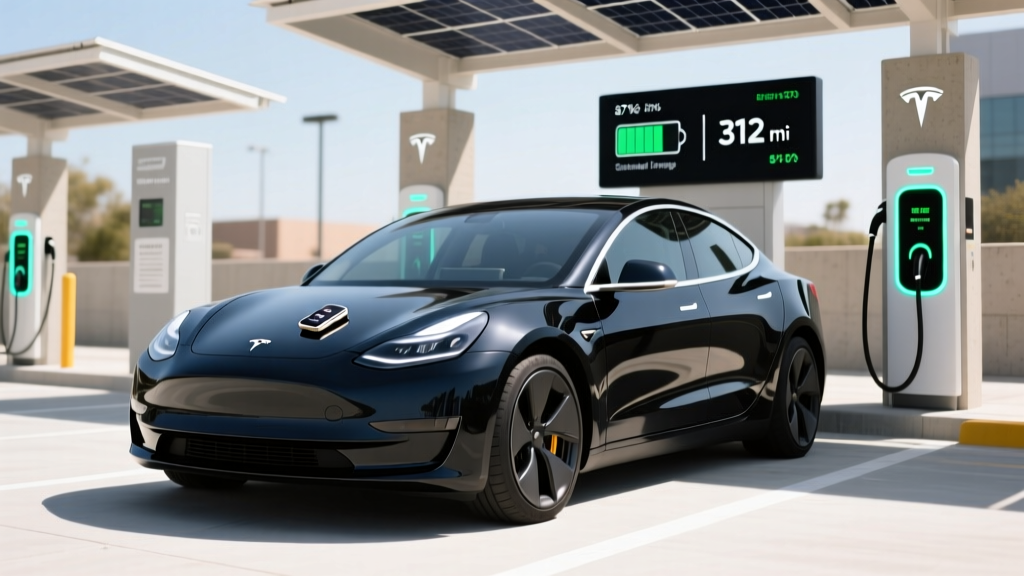
Here's the charging-curve reality that rental drivers rarely experience: the Model 3 Long Range peaks at 250 kW only between roughly 10–30% state of charge. Above 50%, it tapers to ~100 kW, and above 80% it drops further to protect the battery. That's why the 10–80% time of ~27 minutes is the meaningful metric — not the peak kW number Tesla advertises.
At home on a Level 2 wall connector (11.5 kW), a full charge from 10% takes about 7 hours. Plug in when you get home, and you'll wake up to a full battery every morning. This is the ownership experience that rental drivers miss entirely — you start each day with 300+ miles of range without visiting a gas station or charger.
Home installation cost: Expect $800–$2,500 for a professional Level 2 installation if your electrical panel has capacity. Older homes may need a panel upgrade ($1,500–$3,000 additional). Always get a quote from a licensed electrician before committing.
Performance and Driving Dynamics
The dual-motor AWD Model 3 Long Range puts down 346 horsepower and hits 0–60 mph in 4.2 seconds. That's sports-sedan quick, and the instant electric torque makes it feel even faster in real-world driving. There's no transmission lag, no turbo spool-up — just immediate, linear acceleration.
Handling is sharp thanks to the low center of gravity (battery pack mounted in the floor) and well-tuned suspension on the refreshed "Highland" platform. The steering is precise but notably heavy compared to competitors like the Hyundai Ioniq 6. Road noise is improved over pre-2024 models but still noticeable at highway speeds on coarse pavement.
The regenerative braking system enables one-pedal driving in most situations, though Tesla removed the adjustable regen setting several years ago. You get one level of regen — it's strong, and most owners adapt within a day or two.
Pricing, Trims, and Federal Tax Credit Eligibility
| Trim | MSRP | Est. After §30D Credit* |
|---|---|---|
| Model 3 RWD (Standard Range) | $38,990 | $31,490 |
| Model 3 Long Range AWD | $47,740 | $40,240 |
| Model 3 Performance | $54,990 | $47,490 |
*Federal tax credit estimates shown for illustration. Actual eligibility depends on your specific situation.
The IRS §30D clean vehicle credit offers up to $7,500 for qualifying new EVs. However, eligibility is not automatic. Here's the checklist:
- MSRP Cap: Sedans must be under $55,000 — all Model 3 trims qualify.
- Buyer Income Cap: Modified AGI must not exceed $150,000 (single), $225,000 (head of household), or $300,000 (joint filers).
- Battery Sourcing: Critical minerals and battery components must meet escalating domestic/free-trade-partner thresholds. Tesla's supply chain has largely complied, but verify current-year status at purchase.
- Point-of-Sale Transfer: As of 2024+, you can transfer the credit to the dealer for an immediate price reduction rather than waiting to claim it on your tax return.
- VIN Registration: The dealer must report the sale and VIN to the IRS at the time of purchase.
Critical caveat: Tax credit rules shift frequently. Battery-sourcing requirements tighten annually. Always confirm eligibility with your tax professional and check the latest IRS guidance before signing a purchase agreement.
Interior, Tech, and Cargo Practicality
The Model 3's cabin is polarizing by design. There are no physical buttons, no instrument cluster, and no traditional stalks (turn signals are on the steering wheel in the refreshed model). Everything routes through the 15.4-inch center touchscreen — climate, mirrors, glovebox, speedometer.
What works: The infotainment system is genuinely the best in the EV market. Navigation with live Supercharger routing, over-the-air updates that add features monthly, a superb 17-speaker audio system, and seamless phone integration. Tesla's app ecosystem (games, streaming, Sentry Mode dashcam) sets the standard.
What frustrates: The lack of a speedometer directly in your sightline takes adjustment. Wiper controls on the touchscreen are a real safety compromise. And rear-seat passengers get limited storage — no seatback pockets, minimal door storage, and the center console is small.
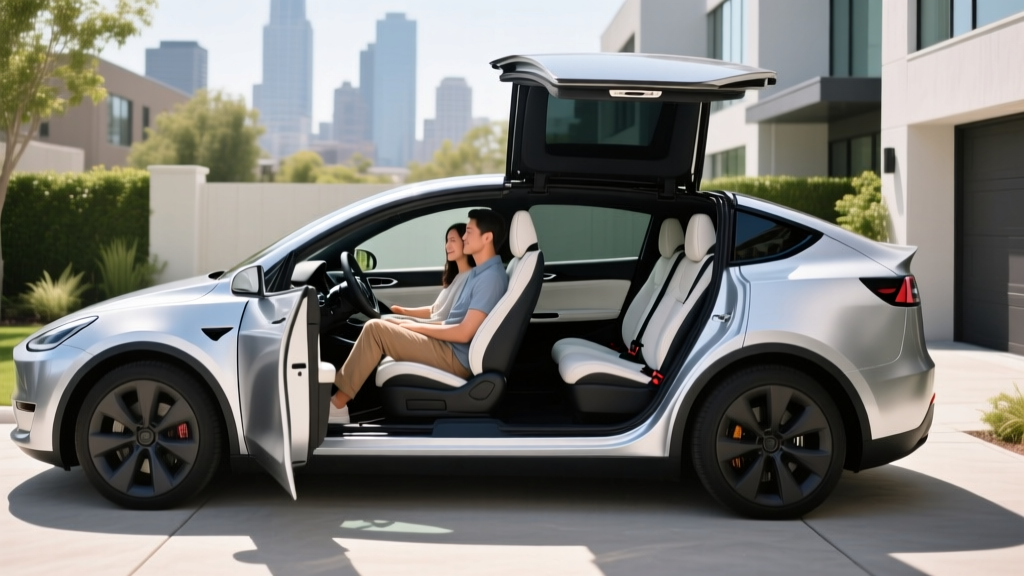
Cargo space is 23 cubic feet in the trunk (a deep, wide opening) plus a front trunk (frunk) large enough for a charging cable bag and small groceries. That's less than a Model Y (76 cu ft behind the second row) but comparable to a BMW 3 Series trunk. For a family of four on a week-long road trip, you'll pack light or buy a roof box.
Autopilot, FSD, and Driver Assistance
Tesla Autopilot and Full Self-Driving (Supervised) are Level 2 driver-assistance systems. The driver must remain fully engaged, hands on or near the wheel, and eyes on the road at all times. These systems are NOT self-driving. Only Level 4 services like Waymo operate without a human driver.
Every Model 3 comes with basic Autopilot: adaptive cruise control and lane-centering on highways. It's competent and reduces fatigue on long drives. The optional FSD (Supervised) package ($8,000 one-time or $99/month in 2026) adds automated city-street navigation, traffic light/stop sign recognition, and automatic lane changes.
FSD has improved substantially but still requires active supervision. It occasionally hesitates at complex intersections, misreads construction zones, or makes unexpected lane decisions. Think of it as an attentive co-pilot, not a replacement driver. For most buyers, the included Autopilot is sufficient.
Warranty, Battery Longevity, and Ownership Costs
Tesla covers the Model 3's battery and drive units for 8 years or 120,000 miles (whichever comes first) with a guarantee of at least 70% capacity retention. The limited vehicle warranty is 4 years / 50,000 miles.
Real-world battery degradation data from Tesla's fleet shows most Model 3 NMC batteries retain roughly 88–92% capacity at 100,000 miles. That translates to losing about 25–40 miles of range over six to eight years of typical driving. Not catastrophic, and well within the warranty threshold.
Ownership cost advantages vs. rental:
- Home charging at $0.13/kWh national average = ~$0.033/mile vs. $0.12–$0.15/mile at public DC fast chargers
- No oil changes, no transmission fluid, no spark plugs — EV maintenance is minimal (cabin air filter, wiper fluid, tire rotations)
- Brake pad life extends dramatically with regen braking (many owners report 80,000+ miles on original pads)
Ownership cost realities to budget for:
- Insurance: Model 3 premiums average 15–25% higher than comparable gas sedans (source: industry averages)
- Tire wear: EVs are heavier and deliver instant torque — expect tire replacement every 30,000–40,000 miles
- Depreciation: Tesla prices have fluctuated; resale values are less predictable than Toyota or Honda
Rental Tesla vs. Buying: The Decision Framework
- You have access to home Level 2 charging (garage or driveway with 240V capability)
- You drive 15,000+ miles/year (fuel savings offset the purchase premium)
- You qualify for the $7,500 federal credit and possibly state incentives
- You want the Supercharger network for road trips without rental logistics
- You value OTA updates and long-term software improvements
- You lack home charging access and rely on public infrastructure
- You drive fewer than 8,000 miles/year (savings won't offset ownership costs)
- You prefer swapping vehicles frequently without depreciation risk
- You live in an apartment without charging options and workplace charging isn't available
Model 3 vs. Key Competitors
The Model 3 Long Range doesn't exist in a vacuum. Here's how it stacks up against its most common cross-shopped rivals:
| Tesla Model 3 LR | Hyundai Ioniq 6 SEL | BMW i4 eDrive40 | |
|---|---|---|---|
| EPA Range | 341 mi | 361 mi | 307 mi |
| DC Fast Charge (peak) | 250 kW | 235 kW | 205 kW |
| 0–60 mph | 4.2 sec | 5.1 sec | 5.5 sec |
| Base MSRP | $47,740 | $42,715 | $57,900 |
| Charging Network | Supercharger (native) | NACS adapter needed | NACS adapter needed |
| Rear Seat Space | Adequate | Tight (coupe roofline) | Comfortable |
The Ioniq 6 offers more EPA range at a lower price but sacrifices rear headroom and lacks native Supercharger access (a NACS adapter is available). The BMW i4 is more luxurious and has a traditional cockpit layout, but costs significantly more and charges slower. The Model 3's combination of range, performance, Supercharger access, and tech remains difficult to beat at this price point.
Pros and Cons
- 341-mile EPA range covers most road trips with a single charge stop
- Supercharger network remains the most reliable DC fast-charging ecosystem
- Class-leading efficiency (25 kWh/100 mi) keeps charging costs low
- Instant 346 hp and 4.2-second 0–60 in a practical sedan
- Best-in-class infotainment and OTA update cadence
- Qualifies for up to $7,500 federal tax credit (all trims under MSRP cap)
- Touchscreen-only controls require adjustment and can distract while driving
- Rear seat is tighter than midsize competitors; limited storage
- Insurance premiums run 15–25% above comparable gas sedans
- No physical turn-signal stalk in refreshed model (steering-wheel buttons)
- NMC battery degrades slightly faster than LFP chemistry over 10+ years
- Road noise still noticeable at highway speeds on rough pavement
Frequently Asked Questions
What is the real-world range of a Tesla Model 3 Long Range?
The EPA rates it at 341 miles, but real-world highway driving at 70–80 mph typically yields 280–300 miles. In cold weather below freezing, expect 240–270 miles. City and mixed driving in mild conditions can approach or even slightly exceed the EPA estimate thanks to regenerative braking.
How fast does the Model 3 charge at home and on road trips?
At home on a Level 2 (240V/48A) charger, it adds about 44 miles of range per hour — a full overnight charge is routine. On Tesla Superchargers, it peaks at 250 kW and charges from 10–80% in approximately 27 minutes. Non-Tesla DC chargers via the included NACS-to-CCS adapter typically deliver 150–175 kW.
Does the Tesla Model 3 qualify for the federal EV tax credit?
Yes — all 2026 Model 3 trims fall under the $55,000 sedan MSRP cap. However, you must also meet income limits ($150K single / $300K joint) and the vehicle's battery must satisfy current-year critical-mineral and component-sourcing requirements. The credit can be transferred to the dealer at point of sale for an instant price reduction. Always verify with your tax professional and check the IRS clean vehicle credit page for the latest rules.
Is buying a Tesla Model 3 worth it compared to renting one?
If you have home charging access and drive more than ~12,000 miles per year, ownership typically saves money over repeated rentals — especially after the $7,500 tax credit. Home charging costs roughly $0.03–$0.04 per mile versus $0.12–$0.15 per mile at public DC chargers. Renting still makes sense if you lack home charging, drive very few miles, or prefer vehicle flexibility.
How long will the Tesla Model 3 battery last?
Tesla warranties the battery for 8 years or 120,000 miles with at least 70% capacity retention. Fleet data suggests most NMC batteries retain 88–92% capacity at 100,000 miles. Many Model 3s from 2018–2020 still have their original batteries with modest degradation. A full battery replacement (rare) currently costs $12,000–$16,000 out of warranty.
What's the biggest difference between a rental Tesla and owning one?
Home charging is the transformation. Rental drivers experience Tesla through the lens of public charging — planning stops, waiting 20–30 minutes, dealing with broken stalls. Owners plug in at home nightly and wake up to a full battery every morning. The car becomes more convenient than a gas vehicle, not less. That shift in daily experience is something a rental can never fully demonstrate.