The Quick Answer: Renault Zoe Electric in 2026
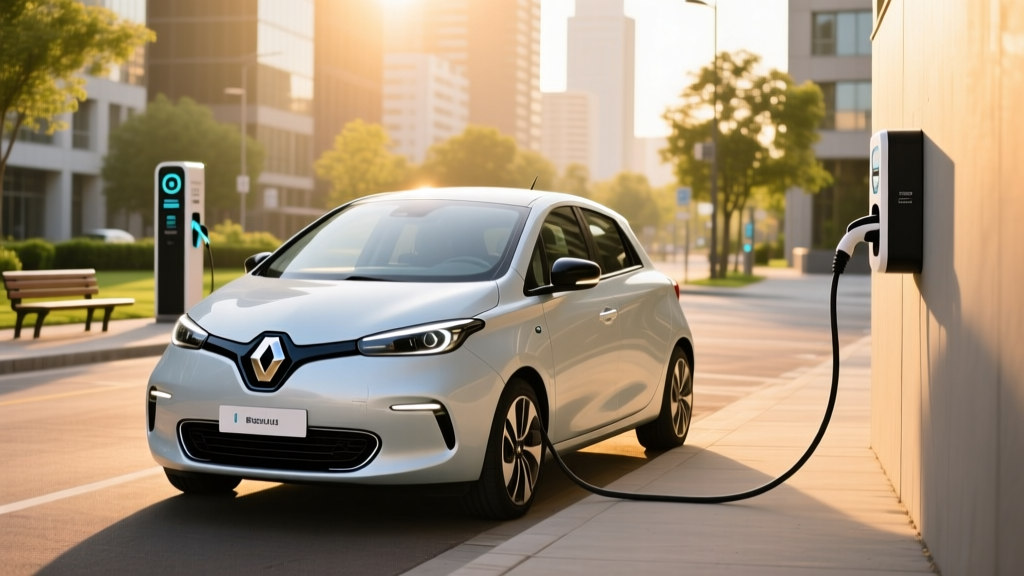
The Renault Zoe electric remains one of Europe's most affordable compact EVs, offering up to 245 miles of WLTP range (expect ~190-210 miles real-world) from its 52 kWh battery. Starting around €32,000 (~$35,000 USD equivalent), it undercuts rivals like the VW ID.3 and Peugeot e-208. However, its 50 kW DC fast charging is slow by 2026 standards (10-80% in ~55 minutes), and it's not sold in the US market. For European urban drivers with home charging, it's a strong value pick. For road-trippers or those without home charging, consider alternatives.
Real-World Range: What the WLTP Sticker Doesn't Tell You
The Renault Zoe electric uses a 52 kWh (usable) lithium-ion NMC battery pack paired with a 100 kW (134 hp) electric motor. Renault officially rates the Zoe E-Tech at 245 miles (395 km) under the WLTP test cycle. But as any experienced EV owner knows, test-cycle numbers rarely translate directly to real-world driving.
Here's what to actually expect:
- Mild weather, city driving: 220-240 miles (regenerative braking helps)
- Highway cruising at 70 mph: 170-190 miles (aerodynamic drag dominates)
- Cold weather (below 32°F/0°C): 140-170 miles (battery chemistry and cabin heating)
- Combined mixed driving: 190-210 miles typical
The Zoe lacks a heat pump on base trims, which means cabin heating draws directly from the traction battery in winter. This is a significant efficiency penalty compared to rivals like the Nissan Leaf or ID.3 that include heat pump technology. If you live in a cold climate, budget for 30-40% range loss in winter months.
Charging Speed: The Zoe's Weakest Link
Charging infrastructure compatibility and speed define modern EV ownership. The Renault Zoe electric supports:
| Charging Level | Power (kW) | Time | Miles Added/Hour |
|---|---|---|---|
| Level 1 (120V household) | 2.3 kW | ~24 hours (0-100%) | ~7-8 mi/hr |
| Level 2 (240V home/public) | 22 kW (3-phase) | ~3 hours (0-100%) | ~50-60 mi/hr |
| DC Fast Charging (CCS2) | 50 kW peak | ~55 min (10-80%) | ~120 mi/hr (peak) |
The 50 kW DC fast charging capability is where the Zoe falls behind in 2026. Competitors like the Hyundai Kona Electric (100+ kW), MG4 (140 kW), and even the aging Nissan Leaf (100 kW on e+ trims) charge significantly faster. On a long road trip, you'll spend nearly an hour at each DC fast charger, while newer EVs complete 10-80% charges in 18-25 minutes.
The Zoe's 22 kW AC charging is a bright spot for European owners with access to 3-phase power (common in many EU countries). This allows full charges in about 3 hours at public AC chargers or home wallboxes with 3-phase supply. In the UK and regions with single-phase 7 kW home chargers, expect 7-8 hour charge times.
EV vs Gas Comparison: The True Cost Picture
How does the Renault Zoe electric stack up against a comparable gas-powered supermini like the Renault Clio or Ford Fiesta? Let's break down the numbers over 5 years of ownership (assuming 10,000 miles/year):
| Cost Category | Renault Zoe Electric | Renault Clio (Gas) |
|---|---|---|
| Purchase Price (base) | €32,000 | €20,000 |
| Fuel/Energy (5 years) | €2,500 (home charging) | €7,500 (€1.80/L avg) |
| Maintenance (5 years) | €800 | €2,200 |
| Insurance (5 years avg) | €4,500 | €3,800 |
| Government Incentives | -€5,000 (varies by country) | €0 |
| 5-Year Total | €34,800 | €33,500 |
The Zoe costs slightly more over 5 years when purchased new, primarily due to the higher upfront price. However, the gap narrows significantly if you have access to cheap overnight home electricity (€0.10-0.15/kWh) or qualify for local incentives. Many EU countries offer purchase subsidies ranging from €3,000-€7,000, which can tip the math in the Zoe's favor.
Where the Zoe wins decisively: daily operating costs. At €0.15/kWh, charging the 52 kWh battery costs about €7.80 for 200+ miles. The Clio at 45 MPG and €1.80/L fuel costs €18-20 for the same distance. For high-mileage urban drivers, the Zoe pays back its premium in 3-4 years.
Ownership Realities: What First-Time EV Buyers Must Know
Home Charging Access is Non-Negotiable
The Renault Zoe electric makes financial sense primarily if you can charge at home. Without home charging, you're dependent on public infrastructure where electricity costs 2-3x more (€0.30-0.50/kWh at DC fast chargers). That erases most fuel savings and adds inconvenience.
For home charging installation:
- Standard 7 kW single-phase wallbox: €500-800 (equipment) + €300-600 (installation)
- 22 kW 3-phase wallbox (if your home has 3-phase supply): €800-1,200 + €500-1,000 installation
- Electrical panel upgrade (if needed): €1,000-2,500
Battery Degradation: The Long-Term Question
Renault warranties the Zoe's battery for 8 years/100,000 miles, guaranteeing at least 70% capacity retention. Real-world data from early Zoe owners (2013-2018 models) shows typical degradation of 10-15% over 5-7 years, which is acceptable but not class-leading.
The Zoe uses NMC (nickel manganese cobalt) chemistry, which offers good energy density but is more susceptible to calendar aging than LFP (lithium iron phosphate) batteries found in some competitors. Best practices to maximize battery life:
- Avoid routinely charging to 100% (set limit to 80-90% for daily use)
- Don't leave the car at very low SoC (below 10%) for extended periods
- Minimize DC fast charging when possible (use AC charging for daily needs)
- Precondition the battery in cold weather before fast charging
Driving Patterns That Make (or Break) the Zoe
The Renault Zoe electric excels for:
- Urban and suburban commuting (30-80 miles daily)
- Drivers with predictable routes and home charging
- Second-car households (paired with a gas car for long trips)
- City dwellers in mild climates
The Zoe is a poor fit for:
- Frequent long-distance travel (slow 50 kW charging)
- Drivers without home or workplace charging access
- Cold-climate regions without garage parking
- Those needing to tow (Zoe is not rated for towing)
Common Misconceptions vs Facts
| Myth | Reality |
|---|---|
| "The Zoe only goes 100 miles" | Older 22/41 kWh models had limited range, but the current 52 kWh Zoe achieves 190-210 miles real-world |
| "EV batteries need replacing every few years" | Zoe batteries are warrantied for 8 years/100k miles and typically last 10-15 years with 10-20% degradation |
| "You can't drive an EV in winter" | The Zoe works in winter but loses 30-40% range. Preconditioning and a heat pump (on higher trims) help |
| "Charging takes too long" | Home charging happens overnight while you sleep. Only road trips require planning around 55-min DC charges |
| "EVs are more expensive to insure" | Zoe insurance is 10-20% higher than gas equivalents, not the 2-3x myth. Shop multiple insurers |
Decision Framework: Should You Buy the Renault Zoe Electric?
Buy the Zoe if:
- You have home charging and drive under 150 miles/day
- Your budget is under €35,000 and you want a new EV (not used)
- You live in a mild climate or have garage parking
- Most driving is urban/suburban with occasional 100-mile trips
- You qualify for local EV purchase incentives
Consider alternatives if:
- You frequently drive 200+ miles in a day (look at Kona Electric, MG4, ID.3)
- You lack home charging (PHEV or hybrid may be better)
- You live in a cold climate without garage parking (heat pump-equipped EVs preferred)
- You need fast road-trip charging (50 kW is slow for 2026)
- You need cargo space for families (Zoe's trunk is 11.7 cu ft, smaller than crossovers)
Alternatives to Consider
If the Zoe's limitations don't fit your needs, these competitors offer different trade-offs:
- MG4 EV: €28,000-35,000, 220-280 mile range, 140 kW DC charging, more cargo space
- Hyundai Kona Electric: €35,000-42,000, 250-300 mile range, 100+ kW charging, better cold-weather performance
- VW ID.3: €38,000-45,000, 260-340 mile range, 100-135 kW charging, more interior space
- Used Tesla Model 3: €25,000-32,000 (2019-2021), 250-320 mile range, 170-250 kW Supercharger access
FAQ: Renault Zoe Electric Questions Answered
Is the Renault Zoe sold in the United States?
No. Renault does not sell vehicles in the US market. The Zoe is available in Europe, the UK, and select international markets. US buyers should consider the Chevrolet Bolt EV, Nissan Leaf, or Hyundai Kona Electric as alternatives in the compact EV segment.
What's the real-world range of the Zoe in winter?
Expect 140-170 miles in freezing temperatures (below 32°F/0°C), a 30-40% reduction from the 190-210 mile mild-weather range. This is due to battery chemistry limitations and energy used for cabin heating. Higher trims with heat pumps perform better.
How long does it take to charge the Zoe at home?
With a 7 kW single-phase home charger: 7-8 hours (0-100%). With 22 kW 3-phase power: ~3 hours. Most owners charge overnight and wake up to a full battery daily.
Does the Zoe qualify for EV tax credits?
In the US: Not applicable (not sold there). In EU countries: Varies by nation. France offers up to €5,000-7,000 purchase subsidies, Germany previously offered up to €9,000 (program ended 2023), UK offers £0 purchase grant but reduced company car tax. Check your local government's current incentive programs.
Can I fast-charge the Zoe on road trips?
Yes, but slowly. The Zoe's 50 kW DC fast charging means 10-80% takes about 55 minutes. Plan longer breaks than you would with a 150+ kW-capable EV. Use apps like PlugShare or A Better Routeplanner to find compatible CCS2 chargers along your route.
What's the maintenance cost compared to a gas car?
Significantly lower. The Zoe has no oil changes, spark plugs, timing belts, or exhaust system. Expect €150-200/year for cabin air filter, brake fluid, and tire rotation. Total 5-year maintenance: ~€800 vs €2,200+ for a comparable gas car.