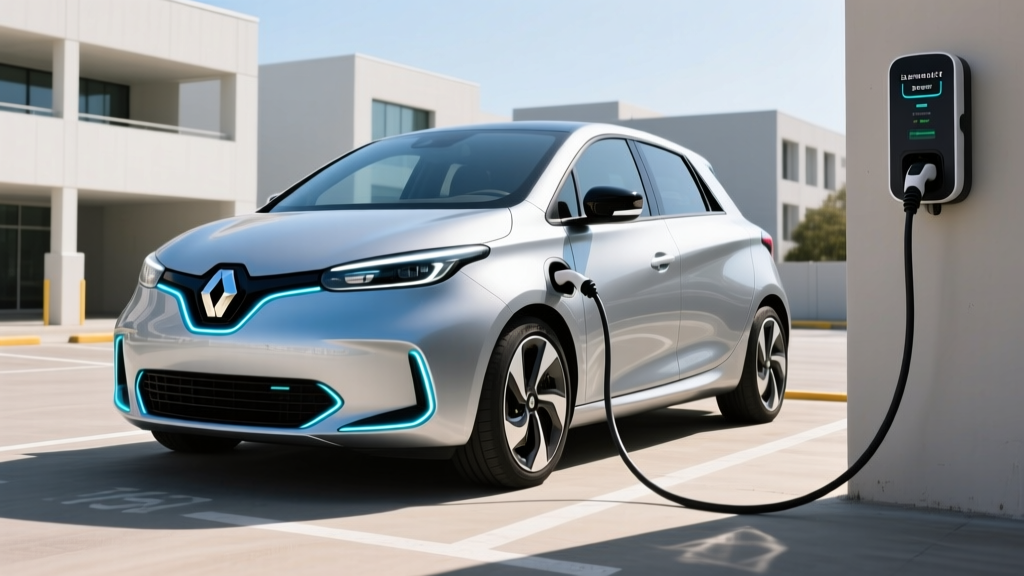
If you're researching the Renault Zoe electric car, the core question is simple: does a compact EV with modest fast-charging capability still make financial and practical sense in 2026? The short answer is yes — but only under specific conditions. The Zoe (equipped with a 52 kWh usable battery and a WLTP-rated range of approximately 245 miles / 395 km) excels as a city commuter and suburban runabout, particularly for European buyers with home Level 2 charging access. However, its 50 kW DC fast-charging ceiling means road trips require patience, and its availability remains limited to select markets outside Europe. Below, we break down the exact numbers you need to make a decision.
Quick Verdict: Who Should Buy the Renault Zoe?
Buy it if: You drive under 50 miles daily, have reliable home Level 2 charging, live in a mild-to-moderate climate, and want a low-cost, compact EV with proven battery longevity.
Skip it if: You regularly drive over 150 miles in a single trip, rely exclusively on public DC fast charging, or live in a region with harsh winters where range loss exceeds 30%.
Range, Battery, and Real-World Efficiency
The current-generation Renault Zoe (R135 motor variant) uses a 52 kWh usable lithium-ion battery pack with NMC (nickel-manganese-cobalt) chemistry. Renault quotes a WLTP range of 245 miles (395 km). For US-based readers accustomed to EPA figures, expect an EPA-equivalent estimate of roughly 210–220 miles, though the Zoe is not officially EPA-rated as it is not sold in the United States.
Real-World Range Expectations
WLTP Sticker: 245 mi (395 km)
Real-world mixed driving: ~195–215 mi (315–345 km)
Highway-only (70 mph / 113 km/h): ~160–175 mi (260–280 km)
Cold weather (below 32°F / 0°C): ~140–160 mi (225–260 km) due to cabin heating demand and reduced battery efficiency. The Zoe does not include a heat pump as standard on all trims — verify before purchasing.
Efficiency hovers around 16–17 kWh per 100 km (roughly 3.8–4.0 miles per kWh) in mixed driving, which is competitive for the subcompact EV segment. Regenerative braking is modest — the Zoe offers a B-mode for stronger regen but does not deliver true one-pedal driving to a full stop like some rivals.
Charging Speeds: Where the Zoe Shows Its Age
Charging is where the Renault Zoe electric car reveals its most significant limitation in 2026. While many modern compact EVs accept 100–150 kW on DC fast chargers, the Zoe caps at 50 kW DC — a figure that was acceptable at its launch but now trails competitors.
| Charging Level | Power (kW) | Time (10–80%) | Miles Added per Hour |
|---|---|---|---|
| Level 1 (120V household) | ~2.3 kW | ~22+ hours | ~8–9 mi/hr |
| Level 2 (240V, 7.4 kW wallbox) | 7.4 kW | ~5.5 hours | ~28 mi/hr |
| Level 2 (240V, 22 kW — Zoe supports 22 kW AC) | 22 kW | ~2 hours | ~75 mi/hr |
| DC Fast Charge (CCS2) | 50 kW (peak) | ~55–65 min | ~100 mi/hr (peak only) |
The Zoe's standout feature is its 22 kW AC onboard charger — rare in the compact segment and extremely useful if you have access to high-power AC public chargers or a three-phase home supply. On standard single-phase 7.4 kW Level 2, a full charge takes roughly 7–8 hours.
On DC fast charging, the 50 kW peak is not sustained. Expect the charge curve to taper significantly above 60% state of charge (SoC). A 10–80% session typically takes 55–65 minutes, which is slow by 2026 standards — a Hyundai Kona Electric or MG4 can accomplish the same in 18–25 minutes at higher-power chargers.
EV vs Gas vs Hybrid: Cost Comparison
To evaluate whether the Renault Zoe makes financial sense, we compared it against a comparable gasoline subcompact (e.g., Renault Clio 1.0 TCe) and a compact hybrid (e.g., Toyota Yaris Hybrid). All figures assume 12,000 miles (19,300 km) driven annually, European energy and fuel prices as of early 2026, and a 5-year ownership horizon.
| Cost Factor | Renault Zoe (EV) | Renault Clio (Gas) | Toyota Yaris (HEV) |
|---|---|---|---|
| Approx. Purchase Price | €32,000 (~$34,500) | €22,000 (~$23,800) | €25,500 (~$27,500) |
| Annual Fuel/Energy Cost | €480 (home charging at €0.22/kWh) | €1,680 (gas at €1.75/L, 45 MPG) | €1,120 (gas at €1.75/L, 65 MPG) |
| 5-Year Fuel/Energy Total | €2,400 | €8,400 | €5,600 |
| Annual Maintenance | ~€200 | ~€550 | ~€450 |
| 5-Year Maintenance Total | €1,000 | €2,750 | €2,250 |
| 5-Year Total Cost of Ownership (purchase + fuel + maint.) | ~€35,400 | ~€33,150 | ~€33,350 |
The Zoe's higher purchase price is partially offset by dramatically lower energy and maintenance costs. Over five years, the Zoe saves roughly €6,000 in fuel compared to the Clio and €3,200 compared to the Yaris Hybrid. However, the total cost of ownership remains slightly higher due to the upfront premium — unless local incentives (purchase subsidies, registration tax exemptions, or company-car tax benefits) apply. In countries like France, Norway, or the Netherlands, these incentives can reduce the Zoe's effective purchase price by €3,000–€7,000, making it the cheapest option overall.
Note: US buyers — the Zoe is not available in the US market and does not qualify for the federal §30D tax credit. Check IRS §30D guidelines for eligible vehicles.
Insurance, Depreciation, and Hidden Costs
Insurance premiums for the Zoe tend to be moderate — typically 5–15% higher than an equivalent gasoline subcompact, depending on the market and driver profile. This is less punitive than some higher-performance EVs. Depreciation has historically been a concern, particularly for early Zoe models that used a battery-leasing model (where the battery was rented separately). For 2026 models with outright battery ownership, depreciation is more in line with segment norms — expect roughly 45–55% value retention after three years, depending on mileage and condition.
One hidden cost to budget for: if you don't already have a home Level 2 wallbox, installation typically runs €800–€1,500 ($865–$1,620), including a 7.4 kW unit and professional electrical work. This is a one-time expense that pays for itself within 1–2 years through fuel savings.
Common Misconceptions About the Renault Zoe
| Myth | Fact |
|---|---|
| "The Zoe's battery won't last." | Roland Berger and Renault data show Zoe batteries retaining 90%+ capacity after 100,000 km (62,000 mi) in fleet use. The battery carries an 8-year/160,000 km warranty with a 70% capacity retention guarantee. |
| "You can't take it on road trips." | You can — but a 200-mile trip requires one 45–60 minute DC charge stop. The Zoe's 50 kW DC cap makes it less practical for frequent long-distance driving than 100+ kW rivals. |
| "It's too slow for highway merging." | The R135 motor delivers 135 hp (100 kW) and 245 Nm of torque. 0–62 mph takes 9.5 seconds — adequate for highway use, though not brisk. |
| "Public charging is unreliable." | This varies heavily by region. In Western Europe, networks like Ionity, Shell Recharge, and Fastned are highly reliable. The Zoe's CCS2 connector is the European standard. |
| "Cold weather makes it unusable." | Range drops 25–35% in sub-freezing conditions, bringing real-world range to ~140–160 miles. This is manageable for city driving but requires planning for longer commutes. Preconditioning while plugged in mitigates some loss. |
Battery Longevity and Warranty
The Zoe's 52 kWh NMC battery pack is one of the most road-tested in the EV industry, with over a decade of fleet and consumer data behind it. Renault provides an 8-year or 160,000 km (100,000 mile) warranty guaranteeing at least 70% state of health (SoH). Independent fleet studies and data from battery analytics firms show typical Zoe batteries losing 8–12% capacity over the first 100,000 km — well within the warranty threshold.
For buyers considering a used Zoe, always request a battery health diagnostic (available at Renault dealerships or via third-party OBD tools). A Zoe with 85%+ SoH at 60,000 km is a strong indicator of healthy long-term prospects. Avoid any unit below 75% SoH unless priced accordingly and still under warranty.
Decision Framework: Is the Renault Zoe Right for You?
If-Then Buying Guide
- If you commute under 40 miles round-trip and charge at home → The Zoe is an excellent, low-running-cost choice. You'll rarely need DC fast charging.
- If you need a second car for errands and school runs → Strong fit. The 22 kW AC charging means quick top-ups at shopping-center chargers.
- If you take monthly road trips over 150 miles → Consider a faster-charging rival like the MG4 (140 kW DC), VW ID.3 (100+ kW DC), or Hyundai Kona Electric (100 kW DC).
- If you lack home or workplace charging → The Zoe's slow DC charging makes public-charging-only ownership frustrating. Prioritize a vehicle with 100+ kW DC capability.
- If you live in a cold climate with harsh winters → Budget for 30%+ range loss. Ensure the trim you choose includes a heat pump (available on higher trims) to reduce cabin-heating energy draw.
- If you're buying for a company fleet → The Zoe's low energy cost, proven reliability, and favorable benefit-in-kind tax treatment in many European countries make it a strong fleet candidate.
Frequently Asked Questions
Is the Renault Zoe still available in 2026?
Yes. Renault continues to sell the Zoe in European and select international markets. However, Renault has been gradually shifting focus to the newer Renault 5 E-Tech, which offers more modern charging speeds. The Zoe remains in the lineup as an affordable entry point. It has never been sold in the US or Canadian markets.
How much does it cost to charge a Renault Zoe at home?
At a European average electricity rate of €0.22/kWh, a full 52 kWh charge costs approximately €11.44 ($12.35) and delivers roughly 195 real-world miles. That equates to about €0.059 per kilometer or $0.095 per mile — roughly one-quarter the per-mile cost of a gasoline subcompact.
Does the Renault Zoe support fast charging?
Yes, but at a maximum of 50 kW DC — slow by 2026 standards. A 10–80% DC charge takes approximately 55–65 minutes. The Zoe's real advantage is its 22 kW AC onboard charger, which is faster than most competitors on AC power.
What is the real-world range of the Renault Zoe?
Expect 195–215 miles in mixed driving, 160–175 miles on the highway, and 140–160 miles in cold weather. The WLTP sticker reads 245 miles, but real-world conditions — especially high speeds and low temperatures — reduce this noticeably.
How does the Zoe compare to the MG4 or VW ID.3?
The MG4 (starting ~€30,000) offers 140 kW DC fast charging, a larger battery option (77 kWh), and more interior space. The VW ID.3 (~€37,000) delivers 100+ kW DC charging and a more modern platform. The Zoe's advantages are its lower base price in some markets, the 22 kW AC charger, and a decade of proven reliability data. If fast DC charging matters to you, the MG4 or ID.3 are stronger choices.
What should a first-time EV buyer know before purchasing the Zoe?
Three things: (1) Install a home Level 2 charger before delivery — it's essential for convenient ownership. (2) Understand that kW is power (how fast you charge) and kWh is energy (how much the battery holds) — the Zoe has a 52 kWh battery and charges at up to 50 kW DC or 22 kW AC. (3) Plan for real-world range, not the sticker number — budget 20–30% below WLTP for daily planning.