Renault Megane E-Tech Electric Hatchback Review: Efficiency, Interior, and Real-World Range
The transition to electric mobility has forced legacy automakers to completely reimagine their most iconic nameplates. The Renault Megane, historically a staple of the European compact hatchback segment, has been reborn as the Megane E-Tech Electric. Built on the dedicated CMF-EV (Common Module Family-Electric Vehicle) platform, this vehicle represents a massive leap forward in design, efficiency, and digital integration. In this comprehensive review, we dissect the Megane E-Tech Electric hatchback, focusing on its real-world efficiency, cutting-edge interior technology, driving dynamics, and overall value proposition.
As the electric vehicle market becomes increasingly crowded, standing out requires more than just a battery and an electric motor. It demands a cohesive package that balances everyday usability with advanced software. Whether you are cross-shopping the best electric hatchbacks on the market or simply curious about Renault's flagship EV, this deep dive will provide the insights you need. From its unique electrically excited synchronous motor to its Google-powered infotainment suite, the Megane E-Tech is a compelling contender in the family EV space.
Vehicle Overview and Platform Architecture
The Megane E-Tech Electric marks a definitive departure from the subcompact Zoe, stepping into the highly competitive C-segment hatchback arena. Utilizing the CMF-EV platform, co-developed within the Alliance, Renault has managed to package a large battery into a relatively compact footprint. The vehicle measures approximately 4.2 meters in length, making it slightly shorter than many of its rivals, yet its wheelbase stretches to 2.69 meters. This pushed-out wheelbase maximizes interior cabin space while keeping the overall exterior dimensions manageable for urban driving.
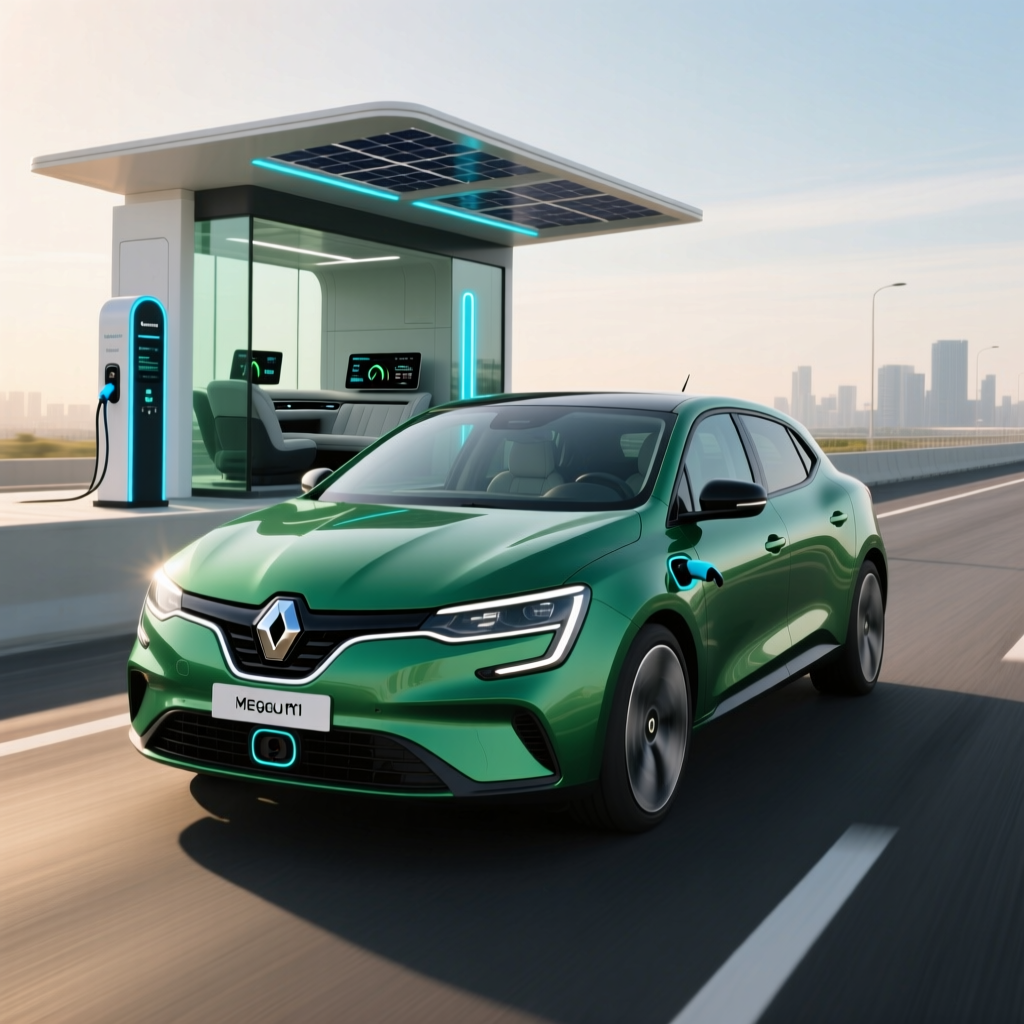
Visually, the Megane E-Tech is striking. It features flush door handles, a sleek roofline, and thin, signature LED lighting that gives it a futuristic yet approachable aesthetic. Under the skin, Renault made a fascinating engineering choice: instead of a permanent magnet synchronous motor, the Megane E-Tech utilizes an Electrically Excited Synchronous Motor (EESM). This design eliminates the need for rare earth metals, reducing environmental impact and supply chain vulnerabilities, while still delivering robust performance and efficiency.
Real-World Range and Efficiency
Range anxiety remains a primary concern for EV adopters, and the Megane E-Tech addresses this with two distinct battery configurations: the EV40 (40 kWh usable capacity) and the EV60 (60 kWh usable capacity). The EV60 is the volume seller and the focus of our efficiency analysis. Official WLTP testing authorities rate the 60 kWh model at up to 280 miles (450 km) on a single charge. However, as many enthusiasts know, WLTP figures can be optimistic compared to real-world highway driving or North American EPA standards.
While the vehicle is primarily rated under the WLTP cycle, independent testing platforms provide EPA-equivalent estimates, placing the 60 kWh model at approximately 230 to 245 miles of real-world combined driving. You can verify these adjusted figures and track seasonal variance via independent EV testing databases. In temperate conditions, the Megane E-Tech achieves an impressive efficiency rating of roughly 2.8 to 3.0 miles per kWh (approx. 16-17 kWh/100km). This high level of efficiency is attributed to the vehicle's aerodynamic profile, lightweight construction (the EV60 weighs just over 1,600 kg), and an advanced liquid-cooled thermal management system.
During colder months, the standard heat pump plays a critical role. By scavenging waste heat from the electric motor and power electronics, the heat pump reduces the energy drawn from the main battery for cabin heating. Independent winter tests show that the Megane E-Tech retains roughly 80% of its rated range in freezing conditions, outperforming several rivals that lack sophisticated thermal management. For a deeper understanding of how weather impacts your daily commute, consult our comprehensive EV charging guides and range preservation tips.
Charging Speed and Infrastructure
A long range is only half the equation; the speed at which you can replenish that range dictates the vehicle's viability for road trips. The Megane E-Tech EV60 supports DC fast charging at a peak rate of 130 kW via a CCS2 connector. While this is not the absolute fastest in the segment—some 800V architecture vehicles can charge at over 250 kW—the Megane's charging curve is remarkably stable.
In real-world testing, the Megane E-Tech can charge from 10% to 80% in approximately 37 minutes under optimal conditions. The battery management system does an excellent job of preventing severe tapering until the state of charge exceeds 85%. This means you spend less time waiting at the charger and more time on the road. For AC charging, Renault offers a highly versatile onboard charger. The base models support 7.4 kW single-phase charging, but higher trims can be equipped with a 22 kW three-phase AC charger. This is a massive advantage for drivers who have access to 22 kW public AC pillars or three-phase home wallboxes, allowing a full 0-100% charge in just over three hours.
Furthermore, the vehicle's navigation system, powered by Google Maps, automatically preconditions the battery when a DC fast charger is selected as your destination. This ensures the battery is at the optimal temperature for maximum charging speed upon arrival. To see how the Megane stacks up against its peers in charging infrastructure compatibility, explore our detailed EV comparisons.
Interior Design and OpenR Link Technology
If the exterior is a sleek evolution, the interior of the Megane E-Tech is a revolutionary leap. Renault has completely overhauled the cabin experience, centering it around the OpenR Link infotainment system. This system is built on Android Automotive OS, meaning it natively integrates Google Maps, Google Assistant, and the Google Play Store. The hardware features a stunning 12.3-inch digital instrument cluster for the driver and a massive 12-inch portrait-oriented touchscreen for the central console.
The user interface is arguably the best in the mainstream EV segment. Google Maps provides native EV routing, automatically factoring in elevation, traffic, and battery state of charge to suggest optimal charging stops. The voice recognition via Google Assistant is flawless, allowing drivers to adjust climate controls, find charging stations, or dictate messages without taking their eyes off the road. For those who prefer smartphone mirroring, wireless Apple CarPlay and Android Auto are fully supported.
Beyond the technology, the interior materials reflect a strong commitment to sustainability. Renault has utilized recycled PET plastics for the upholstery, and the dashboard features a unique textile finish made from recycled materials that feels premium and soft to the touch. There is no traditional leather; instead, buyers can opt for high-quality vegan leather alternatives. Ambient lighting, which changes color based on the time of day and the selected Multi-Sense driving mode, adds a layer of sophistication to the cabin.
Space utilization is excellent. Thanks to the dedicated EV platform, the floor is flat, and rear legroom is generous for a vehicle of this footprint. The trunk offers 440 liters of cargo space, which is highly competitive, and an additional 44 liters of underfloor storage is available for charging cables. The absence of a front trunk (frunk) is a minor omission, but the rear cargo area's practical shape more than makes up for it.
Driving Dynamics and Performance
The Megane E-Tech is offered with two power outputs: a 130 hp (96 kW) version paired with the 40 kWh battery, and a 220 hp (160 kW) version paired with the 60 kWh battery. The 220 hp variant is the one that truly transforms the hatchback into a hot-hatch rival. It delivers 300 Nm of instant torque, propelling the car from 0 to 62 mph (100 km/h) in just 7.4 seconds. The power delivery is linear, smooth, and entirely free of the torque steer that plagues some high-powered front-wheel-drive EVs.
Ride quality is where the CMF-EV platform shines. The suspension setup—MacPherson struts up front and a torsion beam at the rear—is tuned brilliantly for European roads. It absorbs sharp bumps and potholes with a maturity that belies the vehicle's price point. The battery pack is mounted incredibly low and thin (just 110mm thick), which lowers the center of gravity and drastically reduces body roll in corners. The steering is precise and well-weighted, inspiring confidence on winding backroads.
Renault has also implemented an innovative regenerative braking system called e-SMART. Instead of a traditional one-pedal driving toggle, the driver uses paddle shifters behind the steering wheel to adjust the level of regenerative braking on the fly, from level 0 (coasting) to level 4 (aggressive deceleration). Level 4 provides near one-pedal driving capabilities in city traffic, while level 0 is perfect for highway coasting to maximize efficiency. Noise, Vibration, and Harshness (NVH) levels are exceptionally low, aided by acoustic laminated glass and specialized foam inside the tires to reduce road roar.
Ownership Costs and Value Proposition
When evaluating the total cost of ownership, the Megane E-Tech presents a compelling financial case. Electric vehicles generally require less maintenance than internal combustion engine (ICE) vehicles, and the Megane is no exception. With fewer moving parts, no oil changes, and regenerative braking that extends the life of the physical brake pads, routine servicing costs are minimal.
Renault backs the high-voltage battery with an 8-year or 100,000-mile warranty, guaranteeing that it will retain at least 70% of its original capacity. This provides long-term peace of mind for second-hand buyers and original owners alike. Insurance groups are competitive within the EV segment, though as with all EVs, premiums can be slightly higher than equivalent ICE models due to specialized repair requirements.
Depreciation is another critical factor. Historically, EVs have suffered from steep depreciation curves, but the Megane E-Tech's strong brand recognition, desirable tech suite, and proven battery reliability help it hold its value better than some of its niche competitors. To calculate your specific savings based on local electricity rates and fuel prices, utilize our interactive ownership cost calculator.
Pros and Cons
To summarize our findings, here are the primary advantages and disadvantages of the Renault Megane E-Tech Electric hatchback.
Pros
- Class-leading Android Automotive infotainment system with native Google integration.
- Highly efficient powertrain with excellent real-world range retention in cold weather.
- Premium, sustainable interior materials and exceptional cabin quietness.
- Agile handling and a comfortable, well-damped ride quality.
- Availability of a 22 kW three-phase AC onboard charger.
Cons
- DC fast charging peak of 130 kW is slower than some 800V rivals.
- No front trunk (frunk) for storing charging cables.
- Rear visibility is slightly compromised by the thick C-pillars and small rear window.
- The base 40 kWh model lacks the performance and range needed for frequent road trippers.
Key Specifications Comparison
Below is a comparison table detailing the core specifications of the two primary battery configurations available for the Megane E-Tech.
| Specification | EV40 (40 kWh) | EV60 (60 kWh) |
|---|---|---|
| Usable Battery Capacity | 40 kWh | 60 kWh |
| Motor Power | 130 hp (96 kW) | 220 hp (160 kW) |
| Torque | 225 Nm | 300 Nm |
| 0-62 mph (100 km/h) | 10.0 seconds | 7.4 seconds |
| WLTP Range | 186 miles (300 km) | 280 miles (450 km) |
| Max DC Charging Speed | 85 kW | 130 kW |
| Max AC Charging Speed | 7.4 kW (22 kW optional) | 7.4 kW (22 kW optional) |
| Curb Weight | ~1,535 kg | ~1,636 kg |
Frequently Asked Questions
Does the Renault Megane E-Tech support Vehicle-to-Load (V2L)?
Yes, the Megane E-Tech is equipped with Vehicle-to-Load (V2L) capabilities on select higher-tier trims. This feature allows you to use the car's high-voltage battery to power external electrical devices, such as laptops, camping equipment, or even small home appliances during a power outage, via a standard AC outlet adapter connected to the charging port.
How does the Megane E-Tech compare to the Volkswagen ID.3?
The Megane E-Tech and the VW ID.3 are direct rivals, but they appeal to slightly different priorities. The Megane E-Tech offers a more premium interior, superior infotainment software via Android Automotive, and a more engaging driving experience. The ID.3, however, offers a slightly more spacious rear cabin and a tighter turning circle. For a side-by-side breakdown, check our detailed EV comparisons.
Is the battery liquid-cooled or air-cooled?
Unlike its predecessor, the Zoe, which relied on air cooling, the Megane E-Tech features a state-of-the-art liquid-cooled battery thermal management system. This ensures optimal battery health, allows for faster and more consistent DC charging speeds, and significantly improves efficiency and range during extreme hot or cold weather conditions.
What is the real-world highway range of the 60 kWh model?
While the official WLTP rating is 280 miles, real-world highway driving at sustained speeds of 70 mph (110 km/h) will yield approximately 210 to 230 miles, depending on ambient temperature, wind resistance, and elevation changes. This makes it highly capable for intercity travel, especially when paired with its 130 kW fast-charging capability.
Can I install a home wallbox for the Megane E-Tech?
Absolutely. Renault partners with various energy providers to offer home wallbox installations. If you opt for the 22 kW onboard charger variant, installing a compatible three-phase wallbox will allow you to charge the 60 kWh battery from empty to full in roughly three hours, making daily top-ups incredibly convenient and cost-effective.
For more insights into the rapidly evolving EV market, including maintenance tips, battery degradation studies, and the latest model releases, continue exploring the expert guides at Auto Edge View.