Quick Answer: The Renault 5 E-Tech is a compact retro-styled EV offered in Europe and select global markets with two battery options: a 40 kWh pack (approximately 186 miles WLTP / ~150 miles real-world) and a 52 kWh pack (up to 249 miles WLTP / ~200 miles real-world). Pricing in Europe starts around €25,000 (~$27,000 USD) for the base Urban Range model and climbs to approximately €30,000–€33,000 (~$32,000–$35,500) for the longer-range Comfort Range trims. The Renault 5 E-Tech is not sold in the United States, so US buyers cannot purchase it new, claim the §30D federal tax credit on it, or register it through standard channels. This guide covers the vehicle's specs, real-world ownership economics, and what it signals for the global subcompact EV segment — useful context if you're cross-shopping imported models, relocating, or tracking the affordable EV market.
What Is the Renault 5 E-Tech Electric?
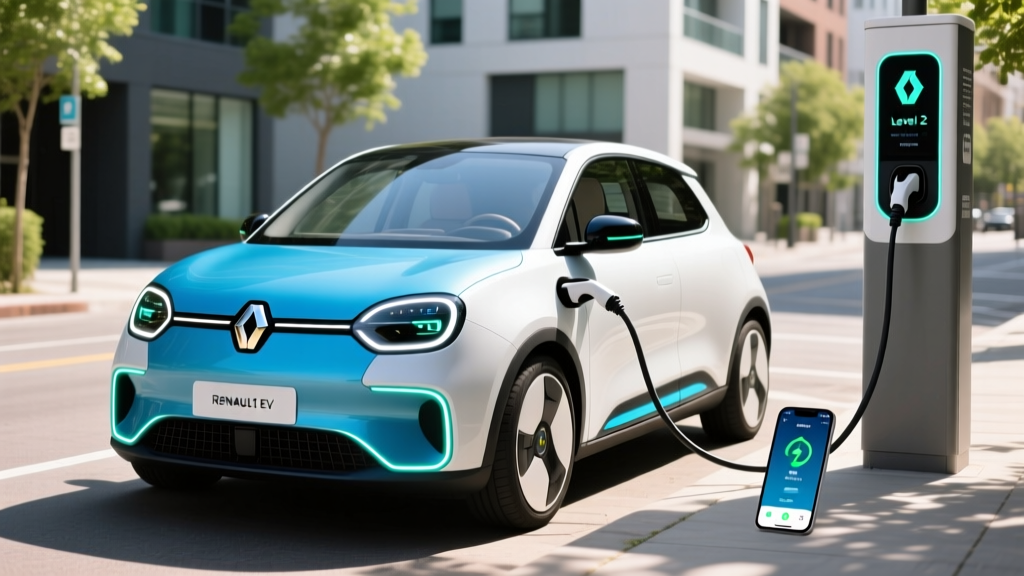
The Renault 5 E-Tech is a B-segment (subcompact) battery electric vehicle built on Renault's AmpR Small platform, which also underpins the Nissan Leaf successor and other Alliance models. It replaces the discontinued Renault Zoe as Renault's volume EV play for European urban and suburban buyers. The design leans heavily on nostalgia — sharp creases, pixel-LED headlights, and a silhouette that directly recalls the original R5 of the 1970s and '80s — but the powertrain is thoroughly modern.
Renault launched the 5 E-Tech in European markets in late 2024, with broader rollout through 2025 and into the 2026 model year. It competes directly with the Fiat 500e, Peugeot e-208, Citroën ë-C3, and the Volkswagen ID.2all (announced). For buyers outside Europe, the car is significant as a benchmark: it demonstrates what a sub-$30,000 (converted) EV looks like when a legacy automaker commits to affordability — a price point still elusive in the US market.
Specs at a Glance: Battery, Range, and Charging
Renault offers the 5 E-Tech with two battery configurations. The smaller pack targets city commuters; the larger one suits mixed suburban/highway driving. Here's what the numbers actually look like when you separate sticker claims from real-world physics.
| Spec | Urban Range (40 kWh) | Comfort Range (52 kWh) |
|---|---|---|
| Battery Chemistry | LFP (Lithium Iron Phosphate) | NMC (Nickel Manganese Cobalt) |
| Usable Capacity | ~40 kWh | ~52 kWh |
| WLTP Range | ~186 mi (300 km) | ~249 mi (400 km) |
| Estimated Real-World Range | ~140–155 mi | ~190–210 mi |
| Cold-Weather Range (32°F / 0°C) | ~115–130 mi | ~155–175 mi |
| Motor Output | 95 kW (~127 hp) | 110 kW (~148 hp) |
| 0–62 mph (0–100 km/h) | ~8.5 sec | ~7.9 sec |
| Peak DC Fast Charge | 80 kW | 100 kW |
| 10–80% DC Charge Time | ~30 min | ~30 min |
| AC Level 2 Charging | 11 kW (3-phase) | 11 kW (3-phase) |
| V2L / Bidirectional | No | V2L available (select trims) |
| Base Price (Europe) | ~€25,000 | ~€30,000–€33,000 |
Understanding WLTP vs. Real-World Range
The WLTP (Worldwide Harmonised Light Vehicle Test Procedure) standard used in Europe tends to overstate range compared to the US EPA standard — typically by 10–20%. A 249-mile WLTP figure roughly translates to what the EPA might rate at 210–220 miles. But beyond the testing cycle, real-world conditions matter far more:
- Highway driving at 75 mph: Expect a 15–20% reduction from WLTP. Aerodynamic drag dominates at speed, and the R5's boxy retro shape doesn't help.
- Cold weather (below freezing): Battery chemistry slows, cabin heating draws 2–5 kW continuously, and range drops 20–30%. The LFP pack in the Urban Range model is particularly susceptible to cold-weather loss because LFP cells have higher internal resistance at low temperatures.
- City driving with regen: This is the R5's best-case scenario. Stop-and-go traffic maximizes regenerative braking, and lower speeds reduce drag. You may approach or even exceed WLTP figures in mild-weather urban use.
Charging Curve Reality
Renault quotes a peak DC charge rate of 80 kW (40 kWh) and 100 kW (52 kWh). Peak, however, is not sustained. In practice, the 52 kWh NMC pack will hold near 100 kW from roughly 10% to 45% state of charge (SoC), then taper to ~65 kW through 65%, and drop further to ~35 kW above 80%. This tapering protects cell longevity but means the final 20% takes nearly as long as the first 50%. If you're on a road trip, plan your stops around 10–80% charges — don't wait for 100%.
On a European 3-phase 11 kW AC connection (common at public destination chargers and some homes), a full 0–100% charge takes approximately 5 hours for the 40 kWh pack and 6.5 hours for the 52 kWh pack. Most European homes with single-phase power will see Level 2 speeds closer to 7.4 kW, extending those times proportionally.
Renault 5 EV vs. Gas and Hybrid Alternatives: Cost Breakdown
For European buyers — or anyone benchmarking global EV affordability — the economic case for the R5 E-Tech hinges on fuel savings, maintenance reduction, and local incentives. Here's a five-year cost comparison against a comparable gas-powered supermini (e.g., Renault Clio or Ford Fiesta equivalent) and a mild hybrid alternative.
| Cost Category (5 Years / 60,000 mi) | Renault 5 E-Tech (52 kWh) | Gas Supermini (35 MPG) | Mild Hybrid (50 MPG) |
|---|---|---|---|
| Purchase Price (before incentives) | ~€31,000 ($33,400) | ~€22,000 ($23,700) | ~€25,000 ($26,900) |
| Fuel / Energy Cost | ~€2,400 (home charging, €0.25/kWh avg) | ~€8,200 (€1.70/L petrol avg) | ~€5,700 |
| Maintenance | ~€600 (cabin filter, brake fluid, tires) | ~€2,800 (oil, filters, belts, brakes) | ~€2,200 |
| Insurance (avg) | ~€3,500 | ~€2,800 | ~€3,000 |
| Estimated Incentives | -€4,000 to -€7,000 (country-dependent) | €0 | €0 |
| 5-Year Total Cost | ~€33,500–€37,500 | ~€35,800 | ~€35,900 |
The math is clear: with a generous purchase incentive (France's ecological bonus was up to €4,000 in 2025 for qualifying buyers, and some countries offer more), the R5 E-Tech reaches cost parity with a gas supermini within five years. Without incentives, the higher purchase price takes 7–9 years to recoup through fuel and maintenance savings alone. IEA Global EV Outlook data consistently shows that purchase subsidies remain the single largest factor in EV adoption economics for subcompact vehicles.
What About US Buyers?
The Renault 5 E-Tech is not available in the US, and Renault has no current plans to re-enter the American passenger car market. However, the pricing benchmark matters. The closest US-market equivalent in spirit — a subcompact EV under $35,000 — would be the Nissan Leaf (discontinued after 2025 model year) or the upcoming next-generation Chevrolet Bolt. The US Department of Energy's EV comparison tools show that even at US electricity rates averaging $0.16/kWh, a 52 kWh EV charged at home costs roughly $0.04–$0.05 per mile to fuel versus $0.12–$0.14 per mile for a 30 MPG gas car at $3.50/gallon.
Real-World Ownership: What First-Time EV Buyers Should Know
If you're evaluating the Renault 5 E-Tech (or any subcompact EV), these practical ownership factors will determine whether the experience is seamless or frustrating.
Home Charging Access Is Non-Negotiable for Most Owners
Over 80% of EV charging happens at home, according to J.D. Power EV Charging Studies. If you have a garage or driveway where you can install a Level 2 wallbox (7.4–11 kW), the R5 E-Tech will fully replenish overnight. Without home charging, you're relying on public infrastructure — and a 30-minute DC fast charge every two or three days adds up in both time and cost. Public DC charging in Europe averages €0.40–€0.60/kWh, roughly doubling your per-mile energy cost compared to home charging.
Battery Chemistry: LFP vs. NMC Trade-Offs
The 40 kWh Urban Range model uses LFP (lithium iron phosphate) chemistry, while the 52 kWh Comfort Range uses NMC. Here's why that matters:
- LFP advantages: Longer cycle life (3,000+ full cycles before significant degradation), no cobalt (more ethical and stable supply chain), lower cost, safer thermal profile (extremely resistant to thermal runaway). You can charge LFP to 100% daily without accelerating degradation.
- LFP disadvantages: Lower energy density (heavier pack for the same kWh), worse cold-weather performance (20–30% range loss vs. 15–25% for NMC), less precise state-of-charge estimation (BMS calibration requires periodic full charges).
- NMC advantages: Higher energy density, better cold-weather performance, more accurate SoC readouts.
- NMC disadvantages: Shorter cycle life (~1,500–2,000 cycles), contains cobalt, recommended to charge to 80% for daily use to prolong lifespan.
For a city commuter in a mild climate (Mediterranean, southern US, coastal Australia), the LFP Urban Range model is arguably the smarter long-term buy — lower cost, longer battery life, and 150 real-world miles is plenty for daily errands with a weekly top-up. For colder climates or regular highway driving, the NMC Comfort Range is the practical choice.
Insurance, Depreciation, and the Hidden Costs
EV insurance premiums run 15–25% higher than equivalent gas cars across most European markets, driven by higher repair costs (battery pack damage totals the vehicle), specialized labor, and parts scarcity for newer models. Budget €700–€900/year for R5 E-Tech insurance, depending on your driving record and country.
Depreciation is the wild card. Early Renault Zoe models depreciated heavily (50–60% over three years) partly because battery leasing schemes confused resale values. Renault has moved to outright battery ownership with the R5 E-Tech, and the retro design appeal may support stronger residuals — but subcompact EVs generally depreciate faster than premium models. Expect 40–50% depreciation over three years, comparable to gas superminis.
Common Misconceptions About the Renault 5 EV
| Myth | Fact |
|---|---|
| "It can't handle road trips." | The 52 kWh model covers ~200 real-world miles and charges 10–80% in ~30 minutes on DC. A 400-mile trip requires one planned stop — inconvenient compared to gas, but entirely feasible. |
| "The battery will need expensive replacement." | Renault warranties the traction battery for 8 years / 160,000 km (~100,000 mi) against degradation below 70% capacity. LFP packs are projected to last 15+ years in typical use. Renault's battery longevity data from Zoe fleets shows most packs retain 85%+ capacity at 100,000 miles. |
| "It qualifies for the US $7,500 tax credit." | The Renault 5 E-Tech is not sold in the US and does not qualify for the IRS §30D Clean Vehicle Credit. The credit applies only to new EVs purchased and primarily used in the United States, subject to MSRP caps, buyer income limits, and battery-sourcing requirements. |
| "Small EVs are unsafe." | The R5 E-Tech includes standard ADAS features (automatic emergency braking, lane-keeping assist, traffic sign recognition). While it hasn't been crash-tested by Euro NCAP as of early 2026, the AmpR Small platform is engineered to current EU safety standards. Size alone doesn't determine crash safety — structural engineering and restraint systems do. |
| "LFP batteries are inferior." | LFP is the dominant chemistry in global EV sales as of 2025 (over 40% market share, led by BYD and Tesla's standard-range models). It trades energy density for longevity, safety, and cost — a rational trade-off for urban EVs. |
Decision Framework: Is the Renault 5 E-Tech Right for You?
Choose the Renault 5 E-Tech (Urban Range, 40 kWh LFP) if:
- You live in a European market where it's sold and qualify for local EV purchase incentives
- Your daily commute is under 60 miles round-trip
- You have reliable home charging (garage or driveway with wallbox access)
- You live in a mild climate where cold-weather range loss is manageable
- You prioritize low running costs and long battery life over maximum range
- Budget target: under €27,000 after incentives
Choose the Renault 5 E-Tech (Comfort Range, 52 kWh NMC) if:
- You regularly drive 80–120 miles per day or take occasional 200+ mile trips
- You experience cold winters (below 40°F / 5°C regularly)
- You want faster DC charging (100 kW peak) for public charging convenience
- You value the option of V2L (vehicle-to-load) for powering devices from the car
- Budget target: €30,000–€33,000 before incentives
Look elsewhere if:
- You live in the United States (not available; consider the Chevrolet Bolt, Hyundai Kona Electric, or Nissan Leaf alternatives)
- You lack home charging access and your area has sparse public DC infrastructure
- You need a family vehicle with rear-seat space for adults or large cargo (the R5 is strictly a B-segment subcompact)
- You regularly tow — the R5 E-Tech is not rated for towing
- You need 300+ miles of range for frequent long-distance driving without stops
What the Renault 5 EV Signals for the Global Market
The R5 E-Tech's significance extends beyond its own spec sheet. At a starting price around €25,000, it's one of the first legacy-automaker EVs to approach the price of a comparable gas supermini without relying on battery-leasing gimmicks. This is the price point that analysts have long identified as the EV adoption tipping point — the moment when an electric car costs the same upfront as its combustion rival, making the lower running costs pure savings rather than a payback calculation.
For US buyers watching from the sidelines, the R5 E-Tech illustrates what's possible when an automaker designs an EV from the ground up for affordability rather than adapting a premium platform downward. The AmpR Small platform's modularity, the dual-chemistry battery strategy (LFP for cost, NMC for range), and the focus on right-sized batteries (40–52 kWh rather than 80+ kWh packs that add weight and cost) represent a pragmatic approach that the US market desperately needs. The question isn't whether this formula works — early European sales data suggests strong demand — but when a comparable offering will arrive stateside.
Frequently Asked Questions
Can I buy the Renault 5 E-Tech in the United States?
No. Renault does not sell passenger vehicles in the US market, and the 5 E-Tech is not homologated for US sale. There are no current plans for a US launch. American buyers seeking a similar subcompact EV should look at the Chevrolet Bolt (next-generation expected), Hyundai Kona Electric, or the used Nissan Leaf market.
What is the real-world range of the Renault 5 EV?
The 40 kWh Urban Range model delivers approximately 140–155 miles in mixed real-world driving, dropping to 115–130 miles in cold weather. The 52 kWh Comfort Range model achieves roughly 190–210 miles in mild conditions and 155–175 miles in winter. Highway-only driving at 75 mph reduces these figures by an additional 10–15%.
How long does it take to charge the Renault 5 E-Tech?
On a DC fast charger, both battery variants charge from 10–80% in approximately 30 minutes (80 kW peak for the 40 kWh, 100 kW peak for the 52 kWh). On an 11 kW AC Level 2 wallbox, a full 0–100% charge takes about 5 hours (40 kWh) or 6.5 hours (52 kWh). On a standard household outlet (2.3 kW), expect 17–22 hours for a full charge — viable only for overnight top-ups.
Does the Renault 5 E-Tech qualify for any tax credits?
In Europe, incentive eligibility varies by country. France's ecological bonus (up to €4,000 in 2025 for income-qualifying buyers), Germany's now-expired Umweltbonus, and various regional incentives apply depending on your location. The vehicle does not qualify for the US IRS §30D federal tax credit, as it is not sold in the United States. Always verify current incentive rules with your national or local transport authority, as these programs change frequently.
How long will the Renault 5 EV battery last?
Renault warranties the traction battery for 8 years or 160,000 km (~100,000 miles), whichever comes first, against capacity dropping below 70%. Real-world data from Renault Zoe fleets (which used earlier NMC packs) shows most batteries retaining 85%+ capacity at 100,000 miles. The LFP pack in the Urban Range model is expected to outlast the vehicle itself, with projected cycle life exceeding 3,000 full charge cycles — equivalent to over 450,000 miles of driving.
Is the Renault 5 E-Tech good for cold climates?
It's adequate but not class-leading in cold weather. Expect 20–30% range reduction below freezing, with the LFP-equipped Urban Range model hit harder than the NMC Comfort Range. The R5 E-Tech includes a heat pump on most trims, which reduces cabin-heating energy draw by roughly 30–40% compared to resistive heating — a meaningful efficiency gain in winter. Preconditioning the battery while plugged in (via the Renault app) before driving helps preserve range and enables faster DC charging in cold conditions.
What ADAS features does the Renault 5 E-Tech include?
Standard driver-assistance features include automatic emergency braking with pedestrian and cyclist detection, lane-keeping assist, traffic sign recognition, and driver attention monitoring. Available features on higher trims include adaptive cruise control with stop-and-go, blind-spot monitoring, and a 360-degree camera. All of these are SAE Level 1–2 systems — the driver must remain fully engaged and responsible for vehicle control at all times. This is not a self-driving vehicle.