Quick Answer: Should You Buy the Renault 5 Electric?
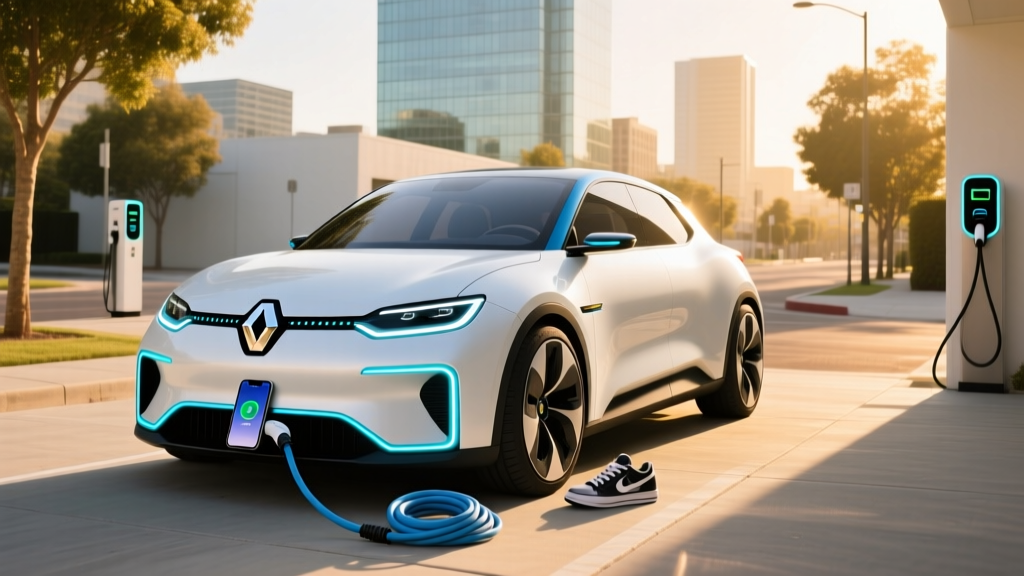
The Renault 5 Electric (also badged Renault 5 E-Tech) is a compact retro-styled EV built on Renault's AmpR Small platform. It offers a 40 kWh or 52 kWh LFP battery, up to approximately 248 miles of WLTP range (roughly 210 miles EPA-equivalent), and DC fast charging up to 100 kW. However, the Renault 5 Electric is not sold in the United States and there is no announced plan for a US launch. American buyers looking for a similar retro-styled compact EV should consider alternatives like the Hyundai Ioniq 5, Mini Cooper SE, or the Fiat 500e (available in limited US markets). If you are a European-based reader or considering a grey-market import, this guide covers the full ownership picture.
Renault 5 Electric: Specs at a Glance
| Specification | Urban Range (40 kWh) | Comfort / Iconic (52 kWh) |
|---|---|---|
| Battery Capacity (usable) | 40 kWh (LFP) | 52 kWh (NMC) |
| WLTP Range | ~186 mi (300 km) | ~248 mi (400 km) |
| Estimated EPA-Equivalent Range | ~155–165 mi | ~205–215 mi |
| Motor Output | 95 kW (127 hp) | 110 kW (148 hp) |
| 0–62 mph (0–100 km/h) | ~9.0 sec | ~7.9 sec |
| DC Fast Charge (peak) | 80 kW | 100 kW |
| 10–80% DC Charge Time | ~28 min | ~30 min |
| AC Level 2 Charge (11 kW) | ~4.5 hr (0–100%) | ~5.5 hr (0–100%) |
| Length / Wheelbase | 154.3 in / 101.6 in | |
| Cargo Volume | ~11.3 cu ft (321 L) | |
| Starting Price (Europe) | ~€25,000 | ~€29,000–€33,000 |
| US Availability | Not sold — no US launch announced | |
Real-World Range vs. WLTP Sticker
WLTP testing tends to overstate range relative to US EPA standards by roughly 15–20%. The 52 kWh model's 248-mile WLTP figure translates to approximately 205–215 EPA-equivalent miles. In real-world highway driving at 70 mph, expect closer to 175–190 miles in moderate temperatures. In cold weather (below 32°F / 0°C), LFP and NMC batteries alike lose 20–30% of usable range, meaning the 52 kWh variant could deliver as few as 140–155 miles on a winter highway trip. The 40 kWh LFP model is best treated as a 120–140 mile real-world car in cold conditions.
Battery Chemistry: LFP vs. NMC in the Renault 5
Renault made a notable engineering decision: the smaller 40 kWh pack uses lithium iron phosphate (LFP) chemistry, while the larger 52 kWh pack uses nickel manganese cobalt (NMC). This has practical ownership implications.
| Factor | LFP (40 kWh) | NMC (52 kWh) |
|---|---|---|
| Energy Density | Lower — heavier per kWh | Higher — more range in same footprint |
| Cycle Life | 3,000+ cycles to 80% SoH | 1,500–2,000 cycles to 80% SoH |
| Cold-Weather Performance | Weaker — more range loss below freezing | Better low-temp discharge characteristics |
| Charging to 100% Regularly | Safe — LFP tolerates full SoC well | Not recommended daily — accelerates degradation |
| Cobalt / Ethical Sourcing | Cobalt-free | Contains cobalt |
| Cost | Lower per kWh | Higher per kWh |
What this means for ownership: If you plan to keep the car 8–10+ years and charge to 100% regularly, the 40 kWh LFP model may actually degrade more slowly. But if you need maximum range for longer commutes or highway stretches, the 52 kWh NMC model is the pragmatic pick — just follow the 80% daily charge recommendation to preserve battery health.
Charging Speed and the Curve Reality
The Renault 5 Electric's peak DC fast-charge rate is 100 kW on the 52 kWh model and 80 kW on the 40 kWh variant. These figures represent the peak of the charge curve, not a sustained rate. Here is what actually happens at a DC fast charger:
- 10–30% SoC: The 52 kWh model sustains near its 100 kW peak, adding roughly 5–6 miles of range per minute.
- 30–60% SoC: Charge rate tapers to approximately 65–80 kW as battery temperature rises.
- 60–80% SoC: Further taper to 40–55 kW. This is where the 10–80% time of ~30 minutes comes from — the last 20% takes nearly as long as the first 50%.
- Above 80% SoC: Charge rate drops below 25 kW. Charging from 80–100% on DC can add another 25–35 minutes. Plan accordingly on road trips.
On a Level 2 home charger at 11 kW (the car's onboard charger maximum), a full 0–100% charge takes roughly 5.5 hours for the 52 kWh battery. This is ample for overnight charging. A standard 120V household outlet (Level 1, ~1.4 kW) would require approximately 37 hours for a full charge — functional for topping up but impractical as a primary strategy.
For European-market Renault 5 owners, the car uses a CCS2 connector (the European standard). US-market EVs use CCS1 or NACS, another reason this vehicle cannot simply be imported and charged without adapter complications.
How the Renault 5 Electric Compares to Gas and Hybrid Alternatives
Even though the Renault 5 isn't available stateside, comparing its European pricing and running costs to similar-size gas and hybrid vehicles illustrates the EV value proposition in the subcompact segment.
| Metric | Renault 5 Electric (52 kWh) | Renault Clio E-Tech (HEV) | Renault Clio 1.0 TCe (Gas) |
|---|---|---|---|
| Starting Price (Europe) | ~€29,000 | ~€24,500 | ~€20,000 |
| Fuel / Energy Cost per 100 km | ~€3.50–€5.50 (home charging) | ~€7.00–€8.50 | ~€9.50–€11.00 |
| Combined Efficiency | ~15 kWh/100 km | ~4.3 L/100 km (55 mpg) | ~5.5 L/100 km (43 mpg) |
| Annual "Fuel" Cost (15,000 km) | ~€525–€825 | ~€1,050–€1,275 | ~€1,425–€1,650 |
| Maintenance (annual avg.) | ~€200–€350 | ~€400–€600 | ~€450–€700 |
| CO₂ Tailpipe Emissions | Zero | ~98 g/km | ~125 g/km |
| Estimated 5-Year Fuel Savings vs. Gas | ~€3,800–€4,800 | — | |
The takeaway: The Renault 5 Electric costs roughly €4,000–€9,000 more upfront than a gas or hybrid Clio, but saves €600–€900 annually in fuel and maintenance. The break-even point is typically 4–7 years depending on electricity rates, mileage, and whether local purchase incentives apply. European buyers may also qualify for country-specific EV subsidies (France's bonus écologique, Germany's former Umweltbonus, etc.) that narrow the gap.
Real-World Ownership: What First-Time EV Buyers Must Know
Whether you're evaluating the Renault 5 Electric from abroad or using it as a benchmark for US-available compact EVs, these ownership realities apply broadly:
Home Charging Access Is the Deciding Factor
EV ownership is dramatically cheaper and more convenient when you can charge at home. A Level 2 home charger installation typically costs $500–$2,500 depending on panel capacity and wiring distance. If you live in an apartment without charging access, public DC fast charging costs roughly 2–3× more per mile than home charging and adds 30+ minutes to your routine several times a week. The Renault 5's modest 100 kW peak charge rate means public charging sessions are longer than in vehicles like the Hyundai Ioniq 5 (which peaks at 240 kW on 800V architecture).
Insurance Costs Tend to Be Higher
EVs typically carry insurance premiums 15–25% higher than equivalent gas cars due to higher repair costs, battery replacement expense, and specialized labor. In European markets, Renault has partnered with insurers to offer EV-specific policies, but expect a premium regardless.
Cold Climate = Range Planning
If you live where winter temperatures regularly drop below freezing, budget for 25–30% range loss. The Renault 5's heat pump (standard on higher trims, optional on base) helps preserve cabin heating efficiency, but battery chemistry still limits cold-weather range. Preconditioning the battery while plugged in mitigates some loss and improves charge acceptance at DC stations.
Battery Warranty and Longevity
Renault provides an 8-year / 160,000 km (100,000 mi) battery warranty guaranteeing at least 70% state of health (SoH). This is competitive with industry standards. Real-world degradation data from similar Renault EVs (Zoe, Megane E-Tech) suggests most packs retain 85–90% SoH after 5 years of typical use. LFP packs in the 40 kWh model are expected to degrade even more slowly, though long-term field data is still accumulating.
Common Misconceptions About the Renault 5 Electric
| Myth | Fact |
|---|---|
| "It's coming to the US soon." | Renault has no US presence and no announced plan to sell the Renault 5 Electric in North America. Renault left the US market in the late 1980s. |
| "248 miles of range is plenty for road trips." | That's WLTP. Real EPA-equivalent is ~210 mi; highway/cold-weather is ~175 mi. With 100 kW peak charging and taper, road-trip stops take 30–35 min per session. |
| "The LFP battery is worse because it's smaller." | LFP offers superior cycle life and can be charged to 100% daily without degradation concerns. For city commuters, the 40 kWh LFP model may outlast the 52 kWh NMC over a decade. |
| "EVs are always cheaper to own." | Higher purchase price, insurance, and potential home-charger install costs mean break-even takes 4–7 years. Low-mileage drivers may never recoup the premium. |
| "You can import one to the US." | Federal import rules (NHTSA, EPA) make it extremely difficult and expensive to import a non-US-certified vehicle. CCS2 connector incompatibility adds another barrier. |
US Alternatives: What to Buy Instead
Since the Renault 5 Electric isn't available in the US, here are the closest alternatives in the retro-styled or compact EV segment:
Choose the Hyundai Ioniq 5 if:
You want the best combination of range (EPA 303 mi), ultra-fast 800V charging (240 kW peak, 10–80% in ~18 min), spacious interior, and available AWD. MSRP starts around $42,000; may qualify for the §30D federal tax credit depending on sourcing and income.
Choose the Mini Cooper SE (2025+ generation) if:
You want the retro-styled, compact city-car experience closest to the Renault 5's spirit. The latest generation offers improved range and a more modern interior, though at a smaller scale. Good for urban commuters who rarely exceed 120 miles between charges.
Choose the Fiat 500e if:
You want a tiny, stylish city EV with ~150 miles of EPA range and a sub-$35,000 price. Limited dealer network and minimal fast-charging speed make this strictly a second car or urban runabout.
Choose a Toyota Prius (HEV) or Prius Prime (PHEV) if:
You lack reliable home charging access or frequently drive 300+ miles between stops. The Prius Prime offers 44 miles of electric-only range for daily commuting with a gas engine for road trips — no range anxiety, no charging infrastructure dependency.
Frequently Asked Questions
Is the Renault 5 Electric available in the United States?
No. Renault does not sell vehicles in the US market and has not announced any plans to bring the Renault 5 Electric (E-Tech) to North America. US buyers should consider alternatives like the Hyundai Ioniq 5, Mini Cooper SE, or Fiat 500e.
What is the real-world range of the Renault 5 Electric?
The 52 kWh model achieves approximately 248 miles WLTP, which translates to roughly 205–215 miles EPA-equivalent. In real-world highway driving, expect 175–190 miles in moderate weather and 140–155 miles in cold conditions below freezing.
How fast does the Renault 5 Electric charge?
The 52 kWh model peaks at 100 kW on DC fast charging, with a 10–80% charge time of approximately 30 minutes. The 40 kWh model peaks at 80 kW. On an 11 kW Level 2 home charger, a full charge takes about 5.5 hours.
What battery chemistry does the Renault 5 Electric use?
The 40 kWh Urban Range model uses LFP (lithium iron phosphate) chemistry, which offers longer cycle life and tolerance for regular 100% charging. The 52 kWh model uses NMC (nickel manganese cobalt), which provides higher energy density but benefits from an 80% daily charge limit for longevity.
How much does the Renault 5 Electric cost?
European pricing starts at approximately €25,000 for the 40 kWh Urban Range trim and €29,000–€33,000 for the 52 kWh Comfort and Iconic trims, before any applicable local incentives. US pricing is not applicable as the vehicle is not sold in North America.
What is the battery warranty on the Renault 5 Electric?
Renault provides an 8-year / 160,000 km (~100,000 mile) battery warranty that guarantees a minimum of 70% state of health. This is consistent with industry standards from manufacturers like Hyundai, Volkswagen, and Stellantis.