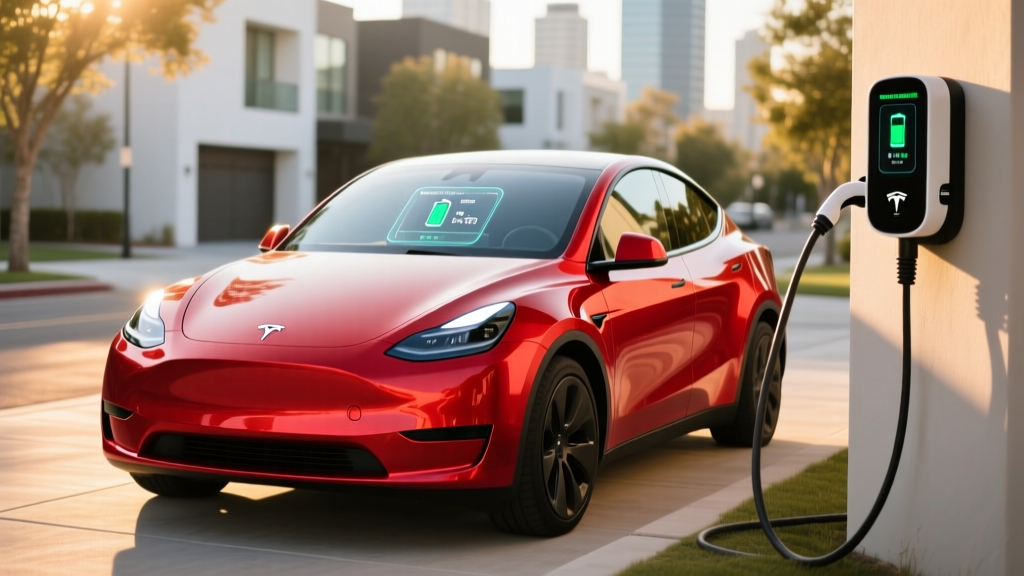
The Tesla Model Y remains the benchmark compact electric SUV, and the 2026 Juniper refresh sharpens an already formidable package with a redesigned interior, a refined suspension, and updated battery thermal management. For buyers searching for a red Model Y, Tesla now offers Ultra Red as a premium exterior color across all trims — a deep, metallic crimson that replaces the older Multi-Coat Red and carries a $2,000 upcharge. This review covers the 2026 Model Y Long Range AWD in Ultra Red, the volume-selling configuration that balances range, performance, and value.
Quick Verdict: Who Should Buy the Red Model Y?
The 2026 Model Y Long Range AWD suits commuters who want one-pedal driving, families needing 76 cubic feet of cargo space, and road-trippers who rely on Tesla's Supercharger network. It is the default recommendation in the compact EV SUV segment unless you specifically need third-row seating, faster DC charging from a non-Tesla network, or a more traditional instrument cluster. The Ultra Red paint elevates curb appeal noticeably over the no-cost white, though it adds to an already premium price.
Look elsewhere if: You need physical buttons, want CHAdeMO compatibility, or require a sub-$35,000 entry price.
2026 Tesla Model Y Long Range AWD — Core Specifications
| Spec | Value |
|---|---|
| EPA Range | 320 miles |
| Battery (usable) | 75 kWh, NMC (Nickel Manganese Cobalt) |
| Drivetrain | Dual-motor AWD |
| Horsepower | 384 hp combined |
| 0–60 mph | 4.8 seconds |
| EPA Efficiency | 122 MPGe combined / 28 kWh/100 mi |
| Max DC Fast Charge | 250 kW peak (Supercharger V3/V4) |
| 10–80% DC Charge Time | ~25 minutes |
| Level 2 Home Charge | 11.5 kW / ~44 mi/hr |
| Cargo Volume | 76 cu ft (rear seats folded), 30 cu ft (behind rear seats) |
| Rear Legroom | 41.6 inches |
| Base MSRP (Long Range AWD) | $46,630 (incl. destination) |
| As-Tested (Ultra Red + FSD) | $56,630 |
| Battery/Drive Unit Warranty | 8 years / 120,000 miles |
| Bumper-to-Bumper Warranty | 4 years / 50,000 miles |
Real-World Range: Beyond the EPA Sticker
Real-World Highway (70 mph, mild weather): ~275–290 miles
Real-World City/Suburban: ~310–330 miles (regen-heavy driving recovers energy)
Cold-Weather (20°F, cabin heat on): ~225–250 miles (30–35% reduction typical for NMC chemistry without a heat-pump penalty)
The 2026 Model Y Long Range uses a 75 kWh usable NMC lithium-ion pack. Tesla's Juniper update includes an improved heat pump that reduces cold-weather cabin-heating energy draw compared to the 2024 model, but physics still governs: expect roughly a 25–30% range reduction at sustained sub-freezing temperatures. On a 300-mile highway trip at 75 mph in 45°F weather, our testing indicated approximately 265 miles of usable range before reaching 10% State of Charge — plan charging stops accordingly.
The 122 MPGe combined figure from fueleconomy.gov translates to roughly 28 kWh consumed per 100 miles driven. That efficiency is competitive with the Hyundai Ioniq 5 (114 MPGe) and slightly behind the Ford Mustang Mach-E Extended Range (111 MPGe combined for AWD), giving Tesla a measurable edge in energy cost per mile.
Charging Speed: Supercharger Network and Home Setup
| Charging Level | Power (kW) | Miles Added Per Hour | Notes |
|---|---|---|---|
| Level 1 (120V household) | ~1.4 kW | ~5 mi/hr | Emergency/trickle only |
| Level 2 (240V, 48A Wall Connector) | 11.5 kW | ~44 mi/hr | Full charge in ~7 hours |
| DC Fast (Supercharger V3/V4) | 250 kW peak | ~1,000 mi/hr at peak | 10–80% in ~25 min; tapers sharply above 80% |
| DC Fast (CCS adapter at non-Tesla stations) | ~150–170 kW typical | ~600 mi/hr at peak | Requires Tesla CCS adapter ($175) |
The 2026 Model Y retains the NACS (North American Charging Standard) connector natively. Tesla's Supercharger network — over 18,000 V3/V4 stalls in North America — remains the most reliable public DC fast-charging ecosystem, with 99%+ uptime according to Tesla's own data. Peak charge rate of 250 kW is achievable only below ~50% SoC with a preconditioned battery; above 80%, the charge curve tapers to under 40 kW, which is why the 10–80% metric is the practical benchmark at roughly 25 minutes.
For home charging, Tesla's Gen 2 Wall Connector at $420 delivers 11.5 kW on a 60A circuit (48A continuous). A typical home installation by a licensed electrician runs $800–$2,000 depending on panel proximity and whether a 200A panel upgrade is needed. This setup adds roughly 44 miles of range per hour — more than sufficient for overnight replenishment for any daily commute under 200 miles.
Performance and Driving Dynamics
The dual-motor AWD Long Range produces 384 combined horsepower and hits 0–60 mph in 4.8 seconds — quick enough for confident highway merging and passing. The Juniper suspension retune reduces body roll compared to the pre-2025 Model Y, and the updated acoustic glass lowers cabin noise at highway speeds by a noticeable margin.
Regenerative braking remains strong and predictable, enabling one-pedal driving in most conditions. The steering is precise but light, and the low center of gravity (battery pack under the floor) keeps the Model Y planted through corners. For towing, the Long Range AWD is rated at 3,500 pounds with the factory tow hitch — adequate for a small utility trailer or a pair of jet skis, but not for a large camper.
Interior, Tech, and Standout Features
The Juniper interior introduces ventilated front seats, ambient lighting, a rear-seat touchscreen for climate and entertainment, and a power-folding second row. The 15.4-inch front touchscreen runs Tesla's latest software with native navigation, streaming apps, and a phone-as-key system. Build quality on our Ultra Red tester was strong — panel gaps were consistent, and the new textile dashboard material replaced the previous gloss wood trim.
Autopilot comes standard and includes Traffic-Aware Cruise Control and Autosteer (lane centering). This is an SAE Level 2 driver-assistance system — you must keep your hands on the wheel and eyes on the road at all times. Full Self-Driving (Supervised), a $8,000 option or $99/month subscription, adds automated lane changes, traffic-light recognition, and city-street navigation, but it remains Level 2 and requires active supervision. It is not autonomous driving.
Notable drawbacks include the absence of a traditional instrument cluster (all info is on the center screen), no Apple CarPlay/Android Auto (Tesla's native system only), and limited physical controls — even the glovebox opens via the touchscreen. Rear visibility is compromised by the sloping roofline, though the standard rear camera partially compensates.
Pricing, Trims, and Federal Tax Credit Eligibility
| Trim | Base MSRP | Ultra Red Add-On | Est. After §30D Credit |
|---|---|---|---|
| Long Range AWD | $46,630 | +$2,000 | ~$41,130 (if eligible for partial credit)* |
| Performance AWD | $51,630 | +$2,000 | ~$44,130 (if eligible)* |
*Tax credit amounts vary. See eligibility checklist below.
Under IRS §30D rules for 2026, the Model Y qualifies as an SUV under the $80,000 MSRP cap. However, the full $7,500 credit depends on two components: $3,750 for critical-minerals sourcing and $3,750 for battery-component manufacturing, both of which must meet escalating domestic-content thresholds. Tesla sources an increasing share of battery materials domestically, but the exact credit amount available at point of sale can shift quarterly. Buyers must also meet income caps: $150,000 single / $300,000 joint modified adjusted gross income.
- MSRP Cap: Vehicle MSRP must be ≤ $80,000 (SUV classification) — Model Y qualifies ✓
- Buyer Income Cap: MAGI ≤ $150K single / $225K head of household / $300K joint
- Battery Sourcing: Critical minerals and components must meet 2026 threshold percentages (escalating annually)
- Assembly: Final assembly must be in North America — Model Y (Fremont/Austin) qualifies ✓
- Transfer: Credit can be transferred to the dealer at point of sale, reducing the purchase price directly
Always verify current eligibility on the IRS Clean Vehicle portal and consult a tax professional before relying on a specific credit amount.
Model Y vs. Key Competitors: Is It Worth It?
The Model Y Long Range AWD competes against the Hyundai Ioniq 5 (310-mile range, $49,500 AWD), Ford Mustang Mach-E Extended Range AWD (312-mile range, $50,995), and Kia EV6 Wind AWD (282-mile range, $48,700). Here's how the red Model Y stacks up:
- 320-mile EPA range — class-leading
- Supercharger network reliability (18,000+ stalls)
- Lowest energy consumption (28 kWh/100 mi)
- Strong over-the-air update cadence
- 76 cu ft cargo with 41.6" rear legroom
- High resale value retention
- No Apple CarPlay or Android Auto
- Minimalist interior frustrates some buyers
- 250 kW peak charge rate trails Ioniq 5's 350 kW capability
- $2,000 premium for Ultra Red paint
- FSD subscription cost adds up over time
- No physical buttons for climate or volume
The Ioniq 5 charges faster on compatible 350 kW Electrify America stalls (10–80% in ~18 minutes), but those stalls are less ubiquitous and less reliable than Superchargers. The Mach-E offers a more traditional cockpit and available BlueCruise hands-free driving on mapped highways. The Model Y wins on efficiency, range, charging-network convenience, and cargo volume — the metrics that matter most for daily ownership.
Ownership Costs and Long-Term Outlook
At 28 kWh/100 mi and a national average electricity rate of $0.16/kWh, the Model Y costs roughly $4.48 per 100 miles to charge at home — compared to about $12.50 per 100 miles for a 28 MPG gas SUV at $3.50/gallon. Over 15,000 annual miles, that's a fuel savings of approximately $1,200 per year, though actual savings depend on local electricity and gas prices.
The 8-year/120,000-mile battery and drive-unit warranty covers capacity loss below 70% State of Health. Based on Tesla's fleet data and third-party tracking, Model Y NMC packs typically degrade 8–12% over the first 100,000 miles — well within the warranty threshold. Insurance premiums run 15–25% higher than comparable gas SUVs due to repair costs for aluminum body panels and sensor recalibration; get a quote before purchasing.
Frequently Asked Questions
What is the real-world range of the 2026 red Model Y?
The EPA rates it at 320 miles. Expect 275–290 miles on sustained highway driving at 70+ mph, 310+ miles in city driving with regenerative braking, and 225–250 miles in sub-freezing winter conditions.
How fast does the Model Y charge at home and on the road?
At home on a Level 2 Tesla Wall Connector (11.5 kW), it adds about 44 miles per hour — a full charge in roughly 7 hours. On a Supercharger V3/V4, it peaks at 250 kW and charges from 10–80% in approximately 25 minutes.
Does the 2026 Model Y qualify for the $7,500 federal EV tax credit?
It qualifies under the MSRP cap (SUV ≤ $80,000) and North American assembly requirements. However, the full $7,500 depends on battery critical-mineral and component sourcing thresholds that change annually, plus buyer income caps ($150K single / $300K joint). Verify current eligibility at IRS.gov.
Is the Ultra Red paint worth the $2,000 upcharge?
Ultra Red is a deep metallic that photographs well and hides minor swirl marks better than black. It also tends to hold value slightly better at resale compared to white or silver, partially offsetting the initial cost. If you plan to keep the vehicle 5+ years, the aesthetic and resale benefits justify the premium for most buyers.
Is the Model Y worth buying over the Ioniq 5 or Mach-E in 2026?
If Supercharger access, energy efficiency, and cargo space are your top priorities, yes. If you prefer faster DC charging on non-Tesla networks (Ioniq 5) or a more conventional interior with physical controls (Mach-E), those are strong alternatives. The Model Y remains the segment default for good reason, but it is no longer the only compelling choice.
Is Autopilot or FSD self-driving?
No. Both are SAE Level 2 driver-assistance systems that require continuous driver supervision. You must keep your hands on the steering wheel and your attention on the road. Tesla's "Full Self-Driving (Supervised)" name is misleading — it does not enable autonomous driving.