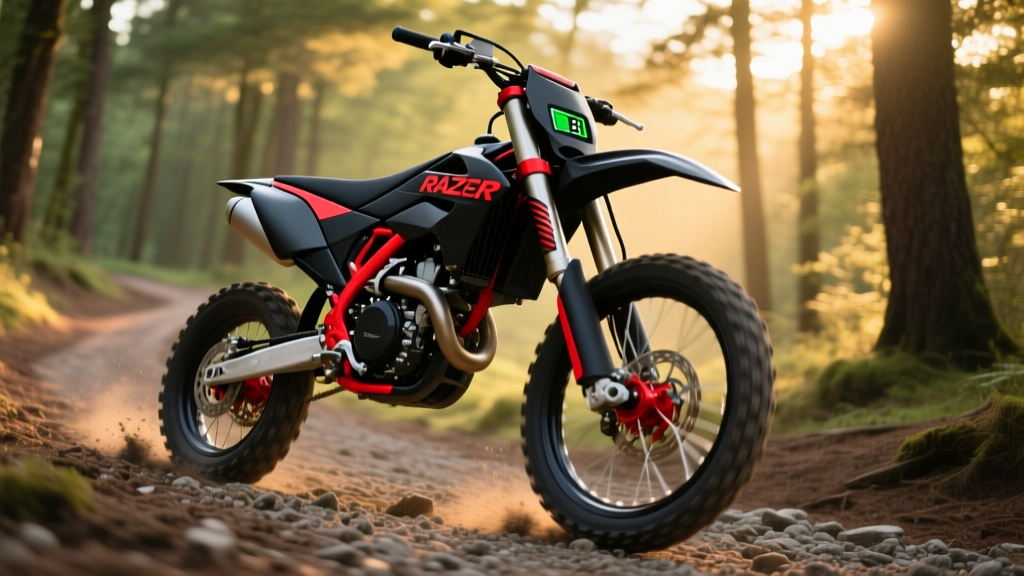
Quick Answer: The Razor MX350 (often called the Razor 350 electric dirt bike) is a compact, battery-powered off-road bike designed primarily for younger riders (ages 13+). It delivers up to 30 minutes of continuous ride time on a full charge, reaches speeds up to 14 mph, and costs around $350-$400. While it's an accessible entry point into electric off-road riding, it is not a full-size adult dirt bike and does not qualify for federal EV tax credits under IRS §30D, which apply only to highway-capable four-wheeled vehicles. If you're comparing it to a gas-powered mini bike or pit bike, the Razor 350 trades raw power and extended run time for near-silent operation, zero tailpipe emissions, and minimal maintenance.
This guide breaks down exactly what you get, what it costs to own, how it compares to gas alternatives, and whether it's the right electrified ride for your situation.
Razor MX350 at a Glance
Top Speed: 14 mph | Ride Time: Up to 30 min continuous | Charge Time: ~12 hours (full) | Motor: 24V sealed lead-acid battery system | Weight Capacity: 140 lbs | Price: ~$350-$400 MSRP | Federal Tax Credit: Not eligible
Razor 350 Electric Dirt Bike: Range, Power, and Battery Specs
The Razor MX350 runs on a 24-volt sealed lead-acid (SLA) battery pack — not the lithium-ion chemistry you'd find in modern electric cars or higher-end electric motorcycles. This matters for understanding its capabilities and limitations.
Here's what the numbers look like:
| Spec | Razor MX350 |
|---|---|
| Battery Type | 24V Sealed Lead-Acid (SLA) |
| Motor | Chain-driven, single-speed |
| Top Speed | 14 mph |
| Ride Time (continuous) | Up to 30 minutes |
| Charge Time (0-100%) | ~12 hours |
| Max Rider Weight | 140 lbs |
| Bike Weight | ~65 lbs |
| Wheels | 12" pneumatic, knobby tires |
| MSRP | $350-$400 |
Battery Chemistry: Why It Matters
Lead-acid batteries are heavier, less energy-dense, and degrade faster than the lithium-ion (NMC or LFP) packs used in electric cars and premium electric motorcycles. You can expect a lead-acid pack to last 200-300 full charge cycles before noticeable capacity loss — roughly 1-3 seasons of regular weekend riding. Replacement battery packs cost approximately $40-$70.
The 30-minute ride time is a best-case figure on flat terrain with a lighter rider. On hills, rough trails, or with a rider near the 140-lb limit, expect closer to 15-20 minutes of usable run time before the battery sags and power drops off noticeably. Unlike lithium-ion systems, lead-acid voltage drops steadily under load, so the bike feels progressively slower as the battery depletes.
Electric vs Gas Dirt Bike: Cost and Ownership Comparison
The Razor MX350's closest gas-powered competitors are 50cc pit bikes and mini dirt bikes like the SSR 50 or Thumpstar 50, typically priced between $600-$1,000. Here's how they stack up on ownership costs:
| Cost Factor | Razor MX350 (Electric) | 50cc Gas Pit Bike |
|---|---|---|
| Purchase Price | $350-$400 | $600-$1,000 |
| Fuel/Energy per Hour of Riding | ~$0.05-$0.10 (electricity) | ~$2.50-$4.00 (gas+oil mix) |
| Annual Maintenance | $0-$70 (battery replacement every 1-3 yrs) | $100-$250 (oil, filters, spark plug, carb tuning) |
| Noise Level | Near-silent (~55 dB) | 85-95 dB |
| 5-Year Estimated Total Cost | $450-$650 | $1,400-$2,500 |
The electric bike wins decisively on operating cost. Charging a 24V lead-acid pack draws roughly 0.2-0.3 kWh per charge cycle. At the U.S. average electricity rate of $0.16/kWh (EIA, 2025), a full charge costs about 3-5 cents. Over 100 rides per year, that's $3-$5 annually in electricity.
The trade-off: gas pit bikes offer 1-2 hours of continuous run time, 25-40 mph top speeds, and refueling in under a minute. If your riding involves long trail loops or group rides where 30 minutes won't cut it, gas still has a range and convenience advantage.
Real-World Ownership: What to Expect
Charging at Home
The Razor MX350 charges from a standard 120V household outlet using the included charger. No special electrical work, Level 2 installation, or dedicated circuit is needed. You simply plug it in overnight. The trade-off is the long 12-hour charge time — if your rider drains the battery Saturday morning, it won't be ready again until Saturday night or Sunday morning.
Practical tip: Buy a second battery pack (~$50) and swap them. This effectively doubles ride time and lets one pack charge while the other is in use.
Climate and Terrain Impact
Lead-acid batteries lose capacity in cold weather — expect roughly 20-30% less ride time when riding below 40°F. Hot weather (above 95°F) accelerates battery degradation. Store and charge the bike in a temperature-controlled space when possible.
On flat, packed dirt or pavement, the 14-mph top speed and 30-minute run time hold up. On loose sand, steep hills, or muddy terrain, the motor works harder, draining the battery faster and reducing run time to 15-20 minutes.
Who This Bike Is For
The Razor MX350 is designed for riders ages 13 and up, with a 140-lb weight limit. It fits younger teens or smaller adults looking for casual backyard or neighborhood riding. It is not a trail bike for adult riders or competitive motocross — for that, you'd need a full-size electric dirt bike like the KTM Freeride E-XC (~$8,000) or Sur-Ron Light Bee (~$4,500).
Common Misconceptions About the Razor 350 Electric Dirt Bike
| Myth | Fact |
|---|---|
| "It qualifies for the $7,500 federal EV tax credit" | Not eligible. IRS §30D credits apply only to highway-capable, four-wheeled vehicles meeting battery sourcing and MSRP caps. See IRS clean vehicle credit rules. |
| "30 minutes of ride time is enough for a full day" | 30 minutes is continuous run time under ideal conditions. Real-world riding with stops, hills, and heavier riders yields 15-25 minutes. Plan accordingly or buy a spare battery. |
| "Electric dirt bikes need no maintenance" | No oil changes or carb tuning, but you still need chain lubrication, tire pressure checks, brake adjustments, and eventual battery replacement. |
| "It's as fast as a gas mini bike" | The Razor MX350 tops out at 14 mph. A typical 50cc gas pit bike reaches 25-40 mph. Speed is not the Razor's strength — quiet, accessible riding is. |
Decision Framework: Should You Buy the Razor MX350?
Choose the Razor MX350 if:
- The primary rider is under 140 lbs (teen or smaller adult)
- You ride in noise-restricted areas (neighborhoods, campsites) where gas bikes are banned or frowned upon
- You want near-zero maintenance and pennies-per-charge operating costs
- 15-30 minutes of ride time per session is acceptable
- Your budget is under $500 all-in
Choose a gas pit bike or higher-end electric dirt bike if:
- The rider is over 140 lbs or an adult seeking full-size performance
- You need 1+ hours of continuous trail riding
- You want speeds above 20 mph
- You ride remote trails far from power outlets and need quick refueling
- You're competing or riding aggressively on technical terrain
First-Time EV Buyer Essentials
If the Razor MX350 is your first electric vehicle of any kind, here's what transfers to the broader EV world — and what doesn't:
What transfers:
- Charging is mostly a home game. Just as the Razor charges on a standard outlet, most EV owners do 80%+ of their charging at home. Public charging exists but is more expensive and less reliable.
- Real-world range falls short of the sticker. The Razor's 30-minute claim assumes ideal conditions. Similarly, a car with 300 miles of EPA range may deliver 240-260 miles on the highway or in cold weather.
- Battery chemistry defines longevity. The Razor's lead-acid pack degrades faster than lithium-ion. When you step up to an EV car, look for LFP chemistry (longer cycle life, more tolerant of 100% charges) or NMC (higher energy density but prefers 80% daily limits).
What doesn't transfer:
- Tax credits. The Razor doesn't qualify, but many new EVs are eligible for up to $7,500 under §30D (subject to MSRP caps, income limits, and battery sourcing rules — verify on irs.gov). Some states also offer rebates for electric motorcycles and off-road vehicles, though these vary widely.
- Charging infrastructure. A dirt bike charges on any household outlet. Full-size EVs benefit from Level 2 home chargers (240V, $500-$2,000 installed) and DC fast-charging networks for road trips.
- Insurance and registration. The Razor MX350 is classified as a toy/recreational device in most states and doesn't require registration or insurance. Full-size electric motorcycles and cars do.
Razor 350 Electric Dirt Bike: Bottom Line
The Razor MX350 is a low-cost, low-maintenance entry into electric off-road riding for younger or lighter riders. At $350-$400 with virtually no fuel cost, it's an economical choice for backyard riding and noise-sensitive environments. Its limitations — 14 mph top speed, 15-30 minute run time, 12-hour charge cycle, and 140-lb weight limit — are the direct trade-offs for that accessible price point.
If your needs outgrow the Razor, the next step up in electric off-road is the Sur-Ron Light Bee or Segway X160 (both around $4,000-$5,000), which offer lithium-ion batteries, 40-50 mph speeds, and 1-2 hours of range. For full-size adult motocross, the KTM Freeride E-XC and Electric Motion Escape remain the benchmarks.
Frequently Asked Questions
Can adults ride the Razor MX350 electric dirt bike?
Technically yes, if you're under the 140-lb weight limit. However, the bike's small frame, 14-mph top speed, and limited suspension travel make it impractical for most adults. Riders over 140 lbs will strain the motor and drastically reduce battery life.
How long does the Razor 350 battery last before needing replacement?
The sealed lead-acid battery typically lasts 200-300 full charge cycles, which translates to 1-3 riding seasons depending on frequency. You'll notice reduced ride time as the battery ages. Replacement packs cost $40-$70 and are user-installable.
Is the Razor MX350 street legal?
No. It lacks the lighting, mirrors, DOT-certified tires, and registration capability required for street use in virtually all U.S. states. It's designed for off-road and private property use only.
Does the Razor 350 qualify for any EV incentives?
Not the federal §30D clean vehicle credit, which is limited to four-wheeled highway vehicles. Some states or local utilities offer small rebates for electric recreational equipment — check your state energy office or utility provider for current programs.
How does the Razor 350 compare to the Razor MX650?
The MX650 is the larger sibling: 36V battery, 17 mph top speed, 165-lb weight capacity, and roughly 40 minutes of ride time. It costs about $550-$650. If your rider is approaching the MX350's limits, the MX650 is a logical step up within the Razor lineup.