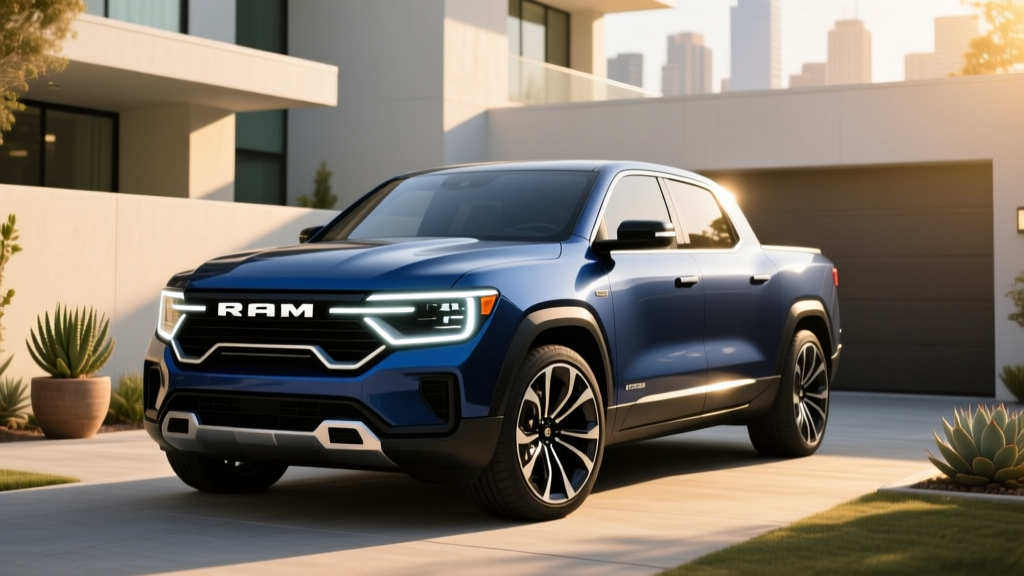
Quick Answer: Ram's EV truck lineup for 2026 centers on two models: the fully electric Ram 1500 REV (up to 350 miles EPA range, ~$58,000 starting MSRP) and the extended-range Ram 1500 Ramcharger (a series hybrid with ~145 miles of electric-only range plus a gas generator for unlimited range). Both qualify for the §30D federal tax credit if you meet IRS income and sourcing requirements. If you need uncompromised towing range or work in rural areas with sparse charging, the Ramcharger is the safer bet. If you have reliable home Level 2 charging and mostly drive under 200 miles daily, the REV delivers lower operating costs and zero tailpipe emissions.
Ram's Electrified Truck Lineup: What's Available in 2026
Ram has taken a dual-track approach to truck electrification — a strategy that acknowledges the real limitations of pure battery-electric pickups for certain use cases. The Ram 1500 REV is a battery-electric vehicle (BEV) built on the new STLA Frame platform, offered with two battery packs. The Ram 1500 Ramcharger is technically an extended-range electric vehicle (EREV): its wheels are always driven by electric motors, but an onboard 3.6L V6 gasoline generator recharges the battery when it depletes, eliminating range anxiety entirely.
This matters because truck buyers have specific needs — towing, payload, job-site power, and the ability to drive 400+ miles through rural corridors where DC fast chargers remain scarce. Ram's answer is to offer one model that eliminates fuel stops entirely and another that eliminates them only when you want it to.
| Spec | Ram 1500 REV (Standard Pack) | Ram 1500 REV (Max Pack) | Ram 1500 Ramcharger |
|---|---|---|---|
| Powertrain | Dual-motor AWD BEV | Dual-motor AWD BEV | Dual-motor EREV (3.6L V6 generator) |
| Battery (usable) | ~168 kWh (NMC) | ~229 kWh (NMC) | ~92 kWh (NMC) |
| EPA Range | ~230 mi (est.) | ~350 mi (est.) | ~145 mi electric + ~690 mi total |
| Horsepower | 654 hp | 654 hp | 663 hp |
| 0–60 mph | ~4.4 sec | ~4.4 sec | ~4.4 sec |
| Max DC Fast Charge | ~350 kW (peak) | ~350 kW (peak) | ~150 kW (peak) |
| 10–80% DC Time | ~25 min (est.) | ~40 min (est.) | ~30 min (est.) |
| Level 2 Rate | 11.5 kW | 11.5 kW | 11.5 kW |
| Max Towing | ~10,500 lbs | ~10,500 lbs | ~14,000 lbs |
| Payload | ~1,800 lbs | ~1,600 lbs | ~2,600 lbs |
| Base MSRP (est.) | ~$58,095 | ~$70,000+ | ~$62,000 |
| §30D Tax Credit Eligible | Yes (subject to IRS rules) | Yes (subject to IRS rules) | Yes (PHEV/EREV, $3,750 max) |
| Battery Warranty | 8 yr / 100,000 mi | 8 yr / 100,000 mi | 8 yr / 100,000 mi |
Note: Some 2026 model-year specs are based on manufacturer-announced preliminary figures. Final EPA certifications may vary. Verify at fueleconomy.gov before purchase.
Real-World Range: What the EPA Sticker Doesn't Tell You
EPA range estimates are measured under controlled conditions that rarely match how truck owners actually drive. For the Ram 1500 REV Max Pack, the headline is ~350 miles — but real-world conditions compress that figure significantly.
Ram 1500 REV Max Pack — Range Reality Check:
- EPA sticker: ~350 miles
- Highway (70–75 mph, mild weather): ~280–310 miles
- Cold weather (below 32°F, cabin heat): ~220–260 miles
- Towing 8,000+ lbs: ~140–180 miles (range cut roughly in half)
The 229 kWh battery pack is massive, which helps offset aerodynamic losses at highway speed. But towing with any electric truck remains a range-crushing scenario — physics wins. If your work involves frequent heavy towing over long distances, the Ramcharger's gasoline generator eliminates this problem entirely.
For the Ramcharger, the 145 miles of electric-only range covers most daily commutes and errands without the generator ever starting. When the battery depletes, the V6 generator kicks in seamlessly — you'll hear it, but the electric motors continue to drive the wheels. Total range exceeds 800 miles with a full tank and full battery, which is genuinely transformative for remote job sites or cross-country trips.
Charging Infrastructure: Home Setup and Public Reality
Charging a truck-sized battery is fundamentally different from charging a sedan. The REV's 168–229 kWh pack requires serious electrical infrastructure, and understanding the difference between kW (power — how fast energy flows) and kWh (energy — the battery's total capacity) is essential to planning your setup.
| Level | Power | Miles Added per Hour | Full Charge Time (Max Pack) | Use Case |
|---|---|---|---|---|
| Level 1 (120V outlet) | ~1.4 kW | ~3–4 mi/hr | ~65+ hours | Emergency/trickle only |
| Level 2 (240V, 48A) | 11.5 kW | ~30–35 mi/hr | ~20 hours | Overnight home charging |
| DC Fast Charge | Up to 350 kW (peak) | ~900+ mi/hr (peak) | 10–80% in ~40 min | Road trips, rapid top-ups |
Home charging is near-mandatory for practical REV ownership. A Level 2 home charger delivering 11.5 kW adds roughly 30–35 miles of range per hour. Overnight (10 hours), you gain ~300+ miles — enough to refill the Max Pack almost completely. However, that 11.5 kW draw requires a dedicated 60-amp circuit on a 200-amp (ideally) electrical panel. Many older homes with 100-amp panels will need a panel upgrade, which typically costs $1,500–$3,500 from a licensed electrician.
| Item | Cost Range |
|---|---|
| Level 2 charger hardware (48A, hardwired) | $400–$750 |
| Electrician labor (60A circuit, 40–60 ft run) | $800–$2,000 |
| Electrical panel upgrade (if needed, 100A→200A) | $1,500–$3,500 |
| Permit and inspection | $100–$300 |
| Total (no panel upgrade) | $1,300–$3,050 |
| Total (with panel upgrade) | $2,800–$6,550 |
For Ramcharger owners, home charging is simpler. The ~92 kWh battery fills overnight on Level 2 in roughly 8–9 hours, and the gasoline generator means you're never stranded. You can also rely on the generator for weeks at a time if charging access is limited — though you'll sacrifice the cost savings of electric driving.
Cost of Ownership: Ram Trucks EV vs Gas Ram 1500
The purchase price of the Ram 1500 REV and Ramcharger is significantly higher than a comparably equipped gas Ram 1500. But operating costs tell a different story — especially if you charge at home with off-peak electricity rates.
| Category | Ram 1500 REV Max Pack | 2026 Ram 1500 Laramie 4x4 (5.7L V8) |
|---|---|---|
| Base MSRP | ~$70,095 | ~$57,000 |
| §30D Federal Tax Credit | –$7,500 (if eligible) | $0 |
| Effective Purchase Price | ~$62,595 | ~$57,000 |
| Fuel/Energy (5 yr, 75,000 mi) | ~$4,500 (home charging @ $0.14/kWh) | ~$12,400 (gas @ $3.60/gal, 19 MPG) |
| Maintenance (5 yr) | ~$1,800 | ~$4,200 |
| Insurance (5 yr avg) | ~$11,500 | ~$9,500 |
| Estimated Depreciation | ~$28,000 | ~$22,000 |
| Total 5-Year Cost | ~$108,395 | ~$105,100 |
Sources: fueleconomy.gov for gas MPG, IRS §30D rules for credit eligibility. Insurance and depreciation are estimates and vary by state, driving record, and market conditions.
The key takeaway: the REV's fuel and maintenance savings (~$10,300 over five years) nearly close the gap with the gas Ram 1500, even after accounting for higher insurance premiums and steeper depreciation on the EV. If electricity costs are lower in your area or you have solar panels, the REV pulls ahead. But the gas truck remains cheaper on pure purchase price, and depreciation risk on large-battery EVs is still higher than established ICE trucks.
Federal Tax Credits and Incentive Rules for 2026
Not every buyer qualifies for the full §30D federal tax credit. The rules have tightened significantly, and eligibility depends on your income, the vehicle's MSRP, and battery component sourcing.
- Income caps: Modified AGI ≤ $150,000 (single), ≤ $300,000 (joint), ≤ $225,000 (head of household)
- MSRP cap: Trucks/SUVs/vans must have an MSRP ≤ $80,000 (both REV trims and Ramcharger qualify)
- Battery sourcing: Critical minerals and battery components must meet escalating domestic-content thresholds set by the IRS; partial credits ($3,750) apply if only one requirement is met
- Point-of-sale transfer: You can transfer the credit to the dealer at purchase for an immediate price reduction, rather than waiting to claim it on your tax return
- EREV/PHEV note: The Ramcharger, as an extended-range vehicle, may qualify for a reduced credit (up to $3,750) depending on battery capacity and sourcing compliance
Always verify current eligibility at IRS.gov and consult a tax professional. Rules change, and battery-sourcing compliance shifts as manufacturers adjust supply chains.
Towing, Payload, and Job-Site Performance
This is where truck buyers separate from crossover shoppers. The Ram 1500 REV and Ramcharger both deliver genuine truck capability, but with different trade-offs.
The Ramcharger leads in payload (~2,600 lbs) and towing (~14,000 lbs), thanks to its lighter 92 kWh battery and the structural advantages of the STLA Frame. The onboard generator also means you can tow an 8,000-lb trailer 500 miles without stopping for a charge — you'll stop for gas, just like a conventional truck, but the logistics are familiar and the fueling infrastructure exists everywhere.
The REV Max Pack sacrifices some payload (~1,600 lbs) due to the heavy 229 kWh battery, and towing range drops to roughly 140–180 miles under load. For contractors who tow daily over long distances, this is a real limitation. However, the REV offers vehicle-to-load (V2L) capability — you can power job-site tools, lights, or even a small welder directly from the truck's battery. A full 229 kWh pack holds enough energy to run a 2 kW load for over 100 hours, which is a transformative feature for remote work sites without generator access.
Common Misconceptions About Ram Trucks EV
| Myth | Fact |
|---|---|
| "Electric trucks can't tow." | The REV tows up to 10,500 lbs and the Ramcharger tows 14,000 lbs — competitive with gas equivalents. Range while towing is the real limitation, not capability. |
| "The battery will need replacing in 5 years." | Ram warranties the battery for 8 years / 100,000 miles against degradation below 70% capacity. NMC batteries in liquid-cooled packs typically retain 85–90% capacity at 100,000 miles based on industry data. |
| "Charging takes all day." | On a 350 kW DC fast charger, the REV reaches 80% in ~25–40 minutes depending on pack size. Home Level 2 charging happens overnight while you sleep. |
| "I need a special electrical system." | A standard 240V Level 2 charger on a 60A circuit handles daily charging. Most homes with 200A panels need no upgrade. The Ramcharger's smaller battery is even less demanding. |
| "There's no charging infrastructure." | The U.S. has over 180,000 public charging ports as of 2025, including growing 350 kW stations along interstates. However, rural corridors remain sparse — plan accordingly. |
Decision Framework: Which Ram Electrified Truck Is Right for You?
Choose the Ram 1500 REV (Max Pack) if:
- You have reliable home Level 2 charging (garage or driveway with 240V access)
- Your daily driving is under 200 miles, and long trips are occasional
- You want the lowest operating costs and zero tailpipe emissions
- Job-site V2L power is valuable to you
- You qualify for the full $7,500 §30D tax credit
Choose the Ram 1500 Ramcharger if:
- You tow frequently over long distances (300+ miles) and can't risk charging delays
- You live in a rural area or cold climate where charging infrastructure is thin
- You want electric daily driving but need unlimited range for work trips
- Maximum towing (14,000 lbs) and payload (2,600 lbs) are priorities
- You don't have reliable home charging access and need flexibility
Stick with a gas Ram 1500 if:
- Your budget is strictly under $55,000 and you can't wait for price reductions
- You drive fewer than 8,000 miles/year — the fuel savings won't offset the EV premium
- You live in an apartment or condo with no charging access and no prospect of installing it
First-Time EV Truck Buyer: What You Must Know
If this is your first electrified vehicle, a few practical realities will shape your ownership experience:
Cold weather hits range hard. Lithium-ion batteries lose efficiency below freezing, and cabin heating draws significant power. Expect 25–35% range reduction in sustained sub-32°F conditions. The REV's heat pump helps, but physics is unforgiving. The Ramcharger sidesteps this entirely — the gas generator provides heat and range regardless of temperature.
Charging curves taper above 80%. The REV may peak at 350 kW, but that rate only holds between roughly 10–50% state of charge. Above 80%, the charge rate drops dramatically to protect battery health. Plan road-trip stops around 10–80% charges for maximum speed; charging to 100% at a public station wastes time.
Insurance costs more. EV trucks carry higher insurance premiums due to expensive battery packs, specialized repair requirements, and higher initial vehicle cost. Budget $200–$400/year more than a comparable gas truck. Get quotes before purchasing.
Preconditioning matters. Both the REV and Ramcharger can precondition the battery before you arrive at a DC fast charger — warming it to optimal temperature for maximum charge speed. Use the navigation system to route to a charger, and the truck will precondition automatically. Skipping this can add 10–15 minutes to your charge time in cold weather.
Frequently Asked Questions
Is the Ram 1500 REV actually available to buy in 2026?
Ram began accepting orders for the 1500 REV in late 2024, with deliveries ramping through 2025 and into 2026. Availability varies by dealer and region. The Ramcharger followed shortly after. Check with your local Ram dealer for current inventory and lead times, as production volumes are still scaling.
Can I charge the Ram 1500 REV at a Tesla Supercharger?
Yes. Ram has adopted the NACS (North American Charging Standard) connector for the REV, which provides native access to Tesla's Supercharger network — the largest and most reliable DC fast-charging network in the U.S. This is a significant advantage over older CCS-only trucks that require adapters.
How much does it cost to charge the REV at home vs. public chargers?
At home with an average U.S. electricity rate of ~$0.14/kWh, fully charging the 229 kWh Max Pack costs roughly $32 — for ~350 miles of range, or about $0.09/mile. Public DC fast chargers typically cost $0.35–$0.55/kWh, bringing the cost to $80–$125 for the same fill, or $0.23–$0.36/mile. Home charging is dramatically cheaper; public charging approaches gas-truck fuel costs per mile.
What happens if the Ramcharger's generator breaks?
The Ramcharger can still operate as a pure EV on its 92 kWh battery (~145 miles of range) if the generator is inoperative. However, you'll lose extended range and should service it promptly. The generator uses the proven 3.6L Pentastar V6, which has been in production for over a decade with well-understood reliability and widely available parts.
Will the Ram 1500 REV's battery last 200,000 miles?
Based on industry degradation data for liquid-cooled NMC packs, most EV batteries retain 80–88% of original capacity at 150,000 miles. Ram warranties the pack for 8 years / 100,000 miles against falling below 70% capacity. Reaching 200,000 miles with 75–80% capacity remaining is a reasonable expectation, though individual results depend on charging habits (frequent DC fast charging and habitual 100% charges accelerate wear slightly).
Does the §30D tax credit apply to the Ramcharger?
The Ramcharger qualifies as a plug-in hybrid / extended-range vehicle under §30D rules. However, the credit amount may be reduced (up to $3,750 rather than $7,500) depending on battery capacity thresholds and component sourcing requirements. Verify current eligibility on IRS.gov and with your dealer at point of sale.