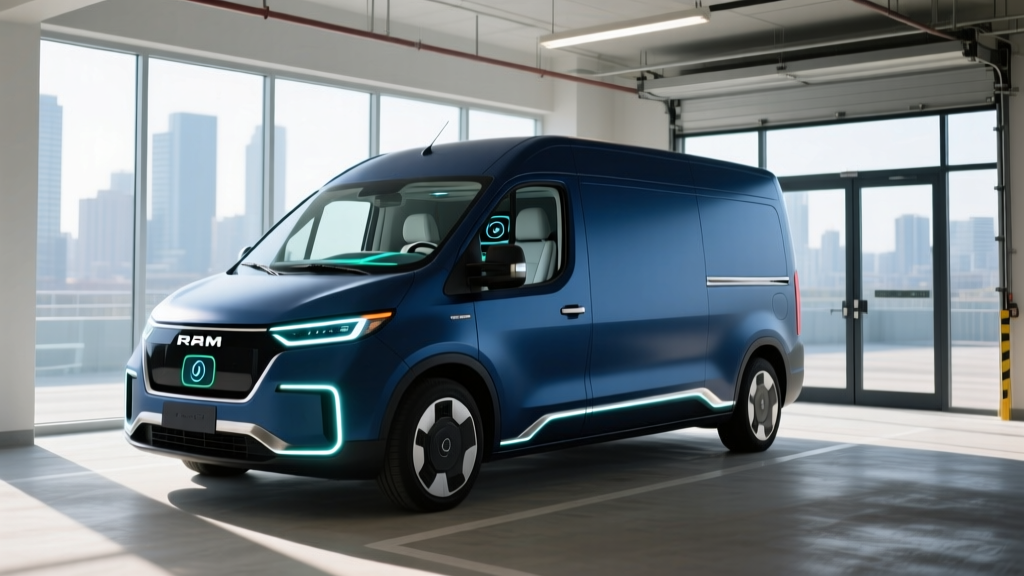
Bottom Line: The Ram ProMaster EV is a battery-electric commercial cargo van built for predictable urban and suburban delivery routes. With a 110 kWh battery pack, an EPA-estimated 162 miles of range, and 150 kW peak DC fast charging, it targets last-mile fleet operators who can install depot-level Level 2 charging. At a starting MSRP of approximately $58,000 (before federal incentives), it costs roughly $12,000–$15,000 more than a gas ProMaster upfront — but fleet operators can recoup that premium in 3–5 years through fuel and maintenance savings on routes under 120 miles per day.
What Is the Ram Electric Van? ProMaster EV Overview
Ram entered the electric commercial van market with the ProMaster EV, a battery-electric variant of its long-running ProMaster cargo platform. For 2026, the ProMaster EV is available primarily in the 2500 High Roof 159-inch wheelbase configuration — the volume configuration for delivery fleets. It's built on Stellantis's STLA Frame architecture adapted for commercial use and assembled at the Saltillo facility in Mexico alongside its ICE counterpart.
This isn't a startup prototype. Ram has deployed early ProMaster EV units with major fleet customers including Amazon and USPS contractors, and the 2026 model year reflects production-spec hardware with revised thermal management and updated software. If you're researching the Ram electric van for fleet procurement or owner-operator use, here's what the spec sheet actually looks like.
| Spec | Value |
|---|---|
| EPA Range (est.) | 162 miles |
| Real-World Range (loaded, mixed driving) | ~120–140 miles |
| Battery Capacity (usable) | 110 kWh (NMC lithium-ion) |
| Peak DC Fast Charge Rate | 150 kW |
| 10–80% DC Fast Charge Time | ~40 minutes |
| Level 2 AC Charge Rate | 11 kW (onboard charger) |
| Level 2 Full Charge Time (0–100%) | ~11 hours |
| Electric Motor Output | 270 hp / 302 lb-ft torque |
| 0–60 mph | ~8.5 seconds |
| Max Payload Capacity | ~3,280 lbs |
| Cargo Volume | 463 cu ft (High Roof 159" WB) |
| Starting MSRP (2500 High Roof) | ~$58,000 |
| Battery Warranty | 8 years / 100,000 miles |
| Commercial EV Tax Credit (§45W) | Up to $7,500 (if eligible) |
Sources: Ram Commercial, fueleconomy.gov (EPA estimates). Real-world range reflects loaded operation with HVAC use. Confirm current pricing with your Ram BusinessLink dealer.
Range Reality: What 162 EPA Miles Means for Your Routes
The EPA-estimated 162-mile range is measured under controlled conditions that don't fully reflect commercial use. Fleet operators need to plan for real-world variables:
EPA Sticker: 162 miles
Real-World Expectations:
- Urban stop-and-go (light load, mild weather): ~145–155 miles — regenerative braking recovers energy in city driving
- Suburban mixed (50% payload, 70°F): ~125–140 miles
- Highway-heavy (65+ mph, loaded): ~100–115 miles — aerodynamic drag on a tall van crushes efficiency at speed
- Cold weather (below 32°F, cabin heat on): ~90–110 miles — battery chemistry and HVAC demand can reduce range 25–35%
For a delivery van, this matters differently than it does for a passenger car. Most urban delivery routes run 60–100 miles per day with a return-to-depot pattern. If your routes fit that profile, the ProMaster EV's range is more than adequate — and you'll charge overnight at the depot on Level 2. If your drivers regularly exceed 120 miles per day or operate in extreme cold without heated depot parking, you'll need to plan mid-shift DC fast charging or stick with the gas ProMaster.
The ProMaster EV uses a heat pump for cabin climate control, which helps mitigate cold-weather range loss compared to resistive heating. However, in sustained sub-freezing temperatures, expect the battery to also use energy for thermal self-management. Preconditioning the battery while still plugged in at the depot is essential for preserving range on cold mornings.
Charging the Ram Electric Van: Depot, Public, and Cost
Commercial van charging is fundamentally a depot game. Here's what you need to know about keeping the ProMaster EV powered:
| Level | Power (kW) | Approx. Miles Added/Hour | Use Case |
|---|---|---|---|
| Level 1 (120V, 12A) | ~1.4 kW | ~3–4 mi/hr | Emergency/trickle only — not practical for daily fleet ops |
| Level 2 (240V, 48A) | 11 kW (vehicle-limited) | ~28–32 mi/hr | Overnight depot charging — primary method |
| DC Fast Charge (CCS) | Up to 150 kW peak | ~200+ mi/hr (peak) | Mid-shift top-ups, ~40 min for 10–80% |
Important: The ProMaster EV's 11 kW onboard charger means that even on a 19.2 kW Level 2 station, the van will only draw 11 kW. That's roughly 11 hours for a full 0–100% charge — which works perfectly for overnight depot schedules (plug in at 7 PM, full by 6 AM).
The 150 kW DC fast-charging peak is competitive but not class-leading. Expect sustained charging to taper significantly above 80% state of charge (SoC), which is typical of NMC battery chemistry. For fleet operations, charging to 80% and deploying is the optimal strategy — it saves time and reduces long-term battery degradation.
Depot Charging Infrastructure Cost: Budget $3,000–$6,000 per Level 2 charging pedestal (hardware + installation) for a commercial depot, plus potential electrical panel upgrades. For a 10-van fleet, that's $30,000–$60,000 in charging infrastructure before considering utility demand charges or transformer upgrades. Many utilities offer commercial EV make-ready programs that offset a portion of this cost — contact your local utility's commercial EV team early in the procurement process.
ProMaster EV vs. Gas ProMaster: Total Cost of Ownership
The purchase price gap between the electric and gas ProMaster is real. But fleet buyers think in total cost of ownership (TCO), not sticker price. Here's a 5-year / 75,000-mile comparison:
| Cost Category | ProMaster EV | Gas ProMaster 2500 (3.6L V6) |
|---|---|---|
| Purchase Price (MSRP) | $58,000 | $44,000 |
| Federal Tax Credit (§45W commercial) | –$7,500 (if eligible) | $0 |
| Net Acquisition Cost | $50,500 | $44,000 |
| Fuel/Energy (75K mi) | ~$6,750 (at $0.13/kWh avg) | ~$16,875 (at $3.50/gal, 15 MPG avg) |
| Maintenance (75K mi) | ~$2,200 | ~$5,500 |
| Insurance (5 years, commercial) | ~$14,000 | ~$12,000 |
| Depot Charging Install (per vehicle) | ~$4,500 | $0 |
| 5-Year Total Cost | ~$77,950 | ~$78,375 |
The TCO is nearly identical over five years — with the EV pulling slightly ahead thanks to dramatically lower fuel and maintenance costs. The crossover point (where cumulative EV savings exceed the acquisition premium) typically arrives around year 3–4 for high-utilization fleets running 15,000+ miles annually.
Key assumptions in this table:
- Electricity cost of $0.13/kWh (commercial average — varies widely by utility and time-of-use rates; depot charging on off-peak rates can drop this to $0.08–$0.10/kWh)
- Gas at $3.50/gal — if fuel prices rise, the EV advantage grows
- Maintenance savings reflect elimination of oil changes, spark plugs, transmission fluid, and reduced brake wear from regenerative braking
- Insurance for commercial EVs currently runs 10–20% higher due to repair-cost data and parts availability
Tax credit note: The §45W Commercial Clean Vehicle Credit applies to vehicles placed in service for business use, with different rules than the consumer §30D credit. Eligibility depends on battery sourcing, vehicle weight class, and your tax liability. Consult a tax professional for your fleet's specific situation.
Common Misconceptions About the Ram Electric Van
| Myth | Fact |
|---|---|
| "162 miles of range isn't enough for a work van." | 70%+ of commercial delivery routes run under 100 miles/day (U.S. DOE data). For last-mile delivery, this range is sufficient with overnight depot charging. |
| "Electric vans can't handle payload." | The ProMaster EV carries ~3,280 lbs of payload — slightly less than the gas version (~3,600 lbs) due to battery weight, but competitive for most parcel and cargo applications. |
| "The battery will need replacement in a few years." | Ram warranties the battery for 8 years / 100,000 miles with a capacity retention threshold (typically 70%+ SoH). NMC packs in commercial service with depot-level charging (avoiding daily 100% fills and DC fast-charge abuse) should retain 80%+ capacity at 100K miles. |
| "Charging takes too long for fleet operations." | Overnight Level 2 charging at the depot adds ~28–32 miles of range per hour — a full charge in ~11 hours. This aligns with typical overnight fleet schedules. Mid-day DC top-ups take ~40 minutes for 10–80%. |
| "EVs are unreliable in cold weather." | Range drops 25–35% in freezing temps — real and measurable. But with depot preconditioning and route planning, fleets in northern climates operate EVs year-round. The heat pump helps. |
Who Should Buy the Ram ProMaster EV (and Who Shouldn't)
Choose the ProMaster EV if:
- Your daily routes are under 120 miles with return-to-depot patterns
- You can install Level 2 charging at your depot or fleet yard
- You operate primarily in urban/suburban environments where regenerative braking maximizes efficiency
- You want to reduce per-mile operating costs and lock in energy pricing vs. volatile fuel markets
- Your municipality or clients require zero-emission fleet commitments (increasingly common in municipal contracts and corporate ESG mandates)
- You plan to hold the vehicle 5+ years to realize the TCO crossover
Stick with the gas ProMaster if:
- Your routes regularly exceed 140 miles per day or include sustained highway segments at 70+ mph
- You operate in extreme cold (sustained below 10°F) without access to heated depot parking or preconditioning
- You lack depot charging access and cannot install it (relying solely on public DC fast charging is expensive and operationally disruptive for a fleet)
- You need maximum payload capacity — the gas ProMaster offers ~300 lbs more payload
- You turn over vehicles every 2–3 years (the TCO advantage requires time to materialize)
- Your area has high commercial electricity rates ($0.20+/kWh) with no off-peak discount programs
What First-Time Commercial EV Buyers Need to Know
If the ProMaster EV is your fleet's first electric vehicle, here's what the purchasing process looks like differently from buying gas vans:
1. Engage your utility early. Depot charging for a fleet of even 5 vans can require a transformer upgrade or new service drop. Utilities often need 6–12 months lead time for make-ready work. Start this conversation before you order vehicles.
2. Plan for charging management software. If you're deploying multiple vans, you'll want networked chargers with load management to avoid demand-charge spikes. Platforms like ChargePoint, EV Connect, or AmpUp let you schedule charging during off-peak rate windows and monitor each vehicle's state of charge remotely.
3. Train drivers on range-maximizing habits. Regenerative braking settings, smooth acceleration, and HVAC management (using seat heaters instead of full cabin heat where possible) can recover 10–15% range. This matters more in a van than a sedan because the vehicle is less aerodynamic to begin with.
4. Budget for higher insurance premiums. Commercial EV insurance currently runs 10–20% higher than ICE equivalents. This gap is narrowing as repair networks gain EV experience, but factor it into your TCO model.
5. Understand the tax credit landscape. The IRS §45W commercial credit (up to $7,500 for vehicles under 14,000 lbs GVWR) has battery-sourcing and assembly requirements that change annually. Some states offer additional commercial EV incentives — check your state energy office. For point-of-sale transfer options, consult your dealer and tax advisor.
Frequently Asked Questions
Is the Ram ProMaster EV available to individual (non-fleet) buyers?
Yes. While Ram's initial ProMaster EV allocation prioritized large fleet customers, the 2026 model year has broader availability through Ram BusinessLink dealerships. Individual owner-operators, small businesses, and tradespeople can order one, though dealer inventory may be limited in some regions. Expect a build-to-order lead time of 8–16 weeks.
Can I tow with the ProMaster EV?
The ProMaster EV is rated for light towing — approximately 3,500 lbs when properly equipped. Towing significantly reduces range (expect a 25–40% reduction depending on trailer weight and aerodynamics), so plan routes accordingly if you'll be hauling a trailer regularly.
What happens if the battery degrades past warranty threshold?
Ram's battery warranty covers capacity falling below a stated threshold (typically 70% state of health) within 8 years or 100,000 miles. If the battery degrades beyond that, Ram will repair or replace it at no cost. Out-of-warranty battery replacement for a 110 kWh pack is expensive — estimated at $15,000–$22,000 depending on labor and parts pricing at time of service. However, real-world data from commercial EV fleets suggests NMC batteries managed with depot-level Level 2 charging and 80% SoC targets retain 80–85% capacity at 100,000 miles.
Does the ProMaster EV qualify for the $7,500 federal tax credit?
For commercial/business use, the relevant credit is §45W (Commercial Clean Vehicle Credit), not the consumer §30D credit. The §45W credit provides up to $7,500 for qualifying vehicles under 14,000 lbs GVWR, subject to battery component and critical mineral sourcing requirements. Eligibility depends on your business's tax liability and the vehicle's supply-chain compliance at time of purchase. Confirm current-year eligibility with your tax professional and reference IRS guidance on §45W.
How does the ProMaster EV compare to the Ford E-Transit or BrightDrop Zevo 600?
The Ford E-Transit offers a lower starting price (~$47,000) but significantly less range (EPA 126 miles) and a smaller 68 kWh battery. It's suited for shorter urban routes. The BrightDrop Zevo 600 (formerly available through GM's BrightDrop division) targets a similar range profile but has had limited availability and shifting corporate support post-GM restructuring. The ProMaster EV sits in the middle: more range than the E-Transit, established dealer/service network, and a cargo volume competitive with both. If your routes are under 80 miles, the E-Transit's lower price may win. For 80–140 mile routes, the ProMaster EV's larger battery is the safer choice.
What's the maintenance schedule like?
The ProMaster EV eliminates oil changes, spark plugs, transmission fluid, and exhaust system maintenance. Scheduled service focuses on tire rotation, cabin air filter, brake fluid checks, coolant system service (for battery thermal management), and windshield washer fluid. Ram recommends service intervals at 15,000 miles or 12 months. Budget roughly $400–$600/year in scheduled maintenance vs. $1,000–$1,400/year for the gas ProMaster.