Quick Verdict: Who Should Buy the Ram ProMaster EV?
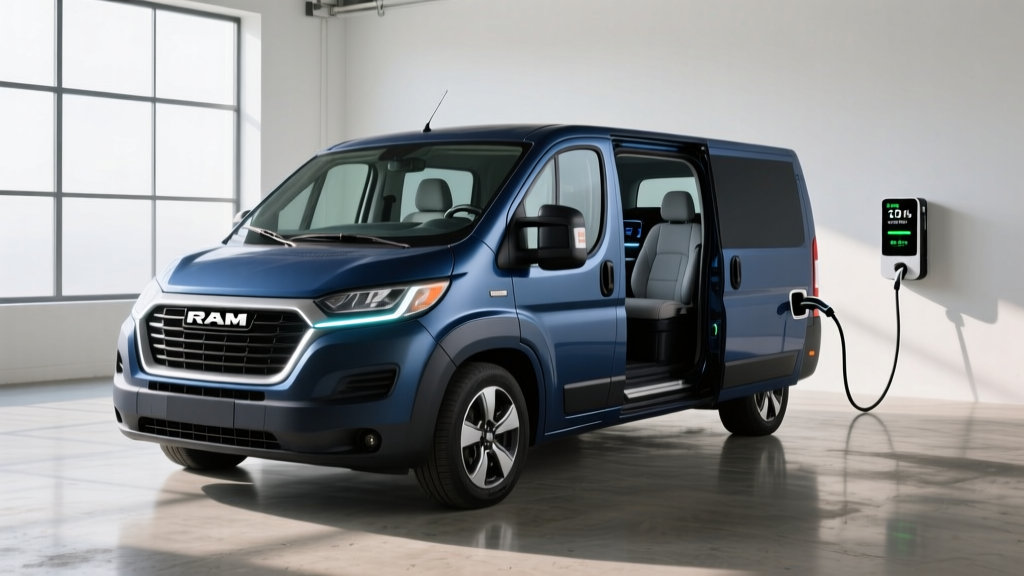
The Ram ProMaster EV is a purpose-built electric cargo van delivering an EPA-estimated 162 miles of range from its 110 kWh battery pack, aimed squarely at urban and suburban commercial fleets with predictable daily routes under 120 miles. If your vans return to a depot nightly for Level 2 charging and your routes stay within the city, the ProMaster EV slashes per-mile operating costs by roughly 40-55% compared to the gas ProMaster. If you need 250+ mile intercity range or lack depot charging infrastructure, the gasoline ProMaster or a Ford E-Transit with extended-range battery remain more practical choices.
Range and Efficiency: What the EPA Sticker Doesn't Tell You
The Ram ProMaster EV carries a 110 kWh usable lithium-ion (NMC chemistry) battery pack mounted beneath the cargo floor. The EPA rates it at 162 miles in the standard 150-inch wheelbase, low-roof cargo configuration. Efficiency comes in at approximately 2.0 kWh/mile — typical for a full-size cargo van pushing over 6,000 pounds of curb weight with a boxy aerodynamic profile.
EPA Range: 162 miles
Real-World Expectations:
- Urban delivery routes (stop-and-go, regen-heavy): 150-165 miles
- Highway driving at 65-70 mph (minimal regen benefit): 120-135 miles
- Cold weather (below 30°F, cabin heating active): 110-130 miles
- Fully loaded to max payload (~2,000 lbs cargo): 135-150 miles
Regenerative braking in city driving recovers meaningful energy, but highway efficiency suffers from the van's frontal area. Fleet managers should plan routes assuming 130 miles of usable range to preserve a 20% battery buffer.
Compared to the EPA's EV database, the ProMaster EV's efficiency is in line with competitors. The Ford E-Transit achieves roughly 126 miles EPA from a 68 kWh usable battery, making the ProMaster the range leader in the segment — but at a significant weight and cost premium.
Charging Speed and Infrastructure Requirements
The ProMaster EV supports DC fast charging at up to 150 kW via a CCS1 connector. In controlled testing, the charge curve peaks near 150 kW between 10-30% state of charge (SoC), then tapers progressively. Ram estimates a 10-80% DC fast charge in approximately 45 minutes. Above 80%, charging slows dramatically to protect battery longevity — expect the final 20% to take nearly as long as the first 70%.
| Level | Power | Connector | Approx. Time | Use Case |
|---|---|---|---|---|
| Level 1 (120V) | ~1.4 kW | J1772 | 72+ hours (0-100%) | Emergency only — not practical for fleet use |
| Level 2 (240V/48A) | 11.5 kW | J1772 | ~10 hours (0-100%) | Overnight depot charging — primary fleet strategy |
| DC Fast Charge | Up to 150 kW | CCS1 | ~45 min (10-80%) | Mid-day top-up or route extension |
Depot charging reality: A fleet of 10 ProMaster EVs charging simultaneously on Level 2 at 11.5 kW each requires approximately 115 kW of continuous electrical capacity — equivalent to a small commercial building. Most fleet depots will need a panel upgrade and potentially a dedicated transformer. Budget $15,000-$40,000 per site for electrical infrastructure upgrades, plus $2,000-$5,000 per Level 2 charger (commercial-grade, networked units like ChargePoint CT4000 or similar). Consult a licensed electrician for site-specific load calculations.
Cost of Ownership: ProMaster EV vs. Gas ProMaster
The purchase price gap between electric and gas commercial vans is substantial, but operating costs tell a different story over a 5-year fleet lifecycle. Below is a realistic comparison assuming 25,000 miles/year, commercial electricity rates, and typical fleet maintenance patterns.
| Cost Category | ProMaster EV (150 WB) | Gas ProMaster 2500 (V6) |
|---|---|---|
| Base MSRP (2025/2026) | ~$58,000 | ~$46,000 |
| Federal §30D Tax Credit | Up to $7,500 (see eligibility) | $0 |
| Effective Purchase Price | ~$50,500 | ~$46,000 |
| Fuel/Energy (125k miles) | ~$6,250 ($0.12/kWh commercial avg) | ~$18,750 ($3.50/gal, 15 MPG avg) |
| Maintenance (5 years) | ~$3,500 (no oil, fewer brake jobs w/ regen) | ~$8,000 (oil, filters, belts, brakes) |
| Insurance (estimated annual) | ~$2,400/yr ($12,000 total) | ~$2,000/yr ($10,000 total) |
| Total 5-Year Cost | ~$72,250 | ~$82,750 |
| Cost Per Mile | ~$0.58 | ~$0.66 |
The EV breaks even on total cost of ownership (TCO) around year 3-4 for high-mileage urban fleets. The critical variables are your electricity rate, route predictability, and whether you qualify for the full federal credit plus any state or utility incentives.
Federal Tax Credit Eligibility (§30D)
The ProMaster EV may qualify for up to $7,500 under the IRS §30D Clean Vehicle Credit, but eligibility depends on several factors that change annually:
- MSRP Cap: Vans fall under the $80,000 MSRP ceiling — the ProMaster EV qualifies on price.
- Buyer Income Limits: Modified AGI must not exceed $150,000 (single) or $300,000 (joint). Fleet purchases through a business entity follow different rules under §45W (commercial clean vehicle credit).
- Battery Sourcing: Critical minerals and battery component sourcing requirements phase in progressively. Check fueleconomy.gov for the current credit amount by model and build date.
- Point-of-Sale Transfer: Eligible buyers can transfer the credit to the dealer at purchase, reducing the out-of-pocket price immediately rather than waiting for a tax refund.
For fleet buyers operating through a business entity, the §45W Commercial Clean Vehicle Credit may apply instead, offering up to $7,500 for vehicles under 14,000 lbs GVWR. Consult a tax professional to determine which credit structure optimizes your fleet's tax position.
Performance, Cargo, and Practical Specs
The ProMaster EV is powered by a front-mounted permanent-magnet electric motor producing 268 horsepower and 302 lb-ft of torque — delivered instantly from zero RPM. This makes it noticeably more responsive in stop-and-go urban traffic than the gas ProMaster's 3.6L Pentastar V6 (276 hp, but requiring revs to access torque).
| Specification | Value |
|---|---|
| EPA Range | 162 miles |
| Battery Capacity (usable) | 110 kWh, NMC |
| Motor Output | 268 hp / 302 lb-ft |
| 0-60 mph (est.) | ~8.5 seconds (unladen) |
| Max Payload | ~2,000 lbs (cargo van, low roof) |
| Cargo Volume (150 WB, low roof) | ~270 cu ft |
| DC Fast Charge (peak) | 150 kW (CCS1) |
| Level 2 Charge Rate | 11.5 kW |
| 10-80% DC Fast Charge | ~45 minutes |
| Towing Capacity | Not rated (cargo van) |
| GVWR | ~8,900 lbs |
| Base MSRP | ~$58,000 (150 WB, low roof) |
| Battery Warranty | 8 years / 100,000 miles |
| Basic Warranty | 3 years / 36,000 miles |
Cargo volume and interior dimensions mirror the gas ProMaster — the battery pack sits beneath the floor, preserving the flat load surface and up to 270 cubic feet of cargo space in the 150-inch wheelbase low-roof configuration. The 150 WB high-roof and extended 136-inch body configurations may see slightly adjusted range figures due to increased weight and frontal area.
Real-World Ownership: What Fleet Managers Need to Know
Depot charging is non-negotiable. Public DC fast charging a commercial van is expensive (typically $0.35-$0.50/kWh at commercial chargers), time-consuming (45+ minutes per session), and logistically disruptive. The ProMaster EV only makes financial sense with overnight Level 2 depot charging at $0.08-$0.15/kWh commercial electricity rates. If you cannot install depot chargers, this van is not for your fleet.
Cold climate fleets lose 20-30% of range. In sustained sub-30°F operation, expect 110-130 miles of real range. The ProMaster EV includes battery thermal management and a heat pump for cabin heating (which draws less energy than resistive heating), but physics still wins in deep cold. Northern-climate fleets should plan routes around 100 miles of usable winter range.
Maintenance savings are real but back-loaded. EVs eliminate oil changes, transmission service, spark plugs, and exhaust system repairs. Regenerative braking significantly extends brake pad life — many EV fleet operators report 80,000+ miles on original brake pads. However, tire wear can increase 10-20% due to the van's heavier curb weight and instant torque delivery. Budget for more frequent tire rotations and replacements.
Insurance costs run 10-20% higher. Commercial EV insurance reflects higher repair costs (specialized high-voltage training, battery replacement risk) and elevated vehicle values. Get fleet insurance quotes before committing to a purchase order.
Common Misconceptions About Electric Cargo Vans
| Myth | Fact |
|---|---|
| "The battery will need replacing in 5 years." | NMC batteries in commercial vans are engineered for 15-20 year lifespans with gradual degradation (~2-3% per year). Ram warranties the battery for 8 years/100,000 miles with a capacity retention threshold of 70%. |
| "Electric vans can't handle full payloads." | The ProMaster EV is rated for ~2,000 lbs payload. Range decreases with load, but the motor's 302 lb-ft of instant torque handles heavy loads without the performance degradation a gas V6 experiences under weight. |
| "Charging takes too long for commercial use." | Overnight depot charging (10 hours on Level 2) fully replenishes the 110 kWh battery. Vans charge while parked — no driver time lost. DC fast charging is a backup, not the primary strategy. |
| "EVs don't save money for fleets." | Fuel savings alone ($12,500 over 5 years at 25k mi/yr) typically exceed the price premium after tax credits. Add $4,500+ in maintenance savings and TCO favors EVs for predictable urban routes. |
| "The grid can't handle fleet charging." | A 10-van depot at 11.5 kW each draws ~115 kW — manageable with a commercial panel upgrade. Utilities often offer time-of-use rates and demand-management programs to reduce costs and grid impact. |
Decision Framework: Is the ProMaster EV Right for Your Fleet?
Choose the Ram ProMaster EV if:
- Your daily routes are under 120 miles round-trip with predictable stops
- Vans return to a depot nightly where Level 2 charging can be installed
- Your fleet operates primarily in urban or suburban environments
- You plan to keep vans 5+ years (to capture full TCO savings)
- You qualify for federal and/or state commercial EV incentives
Stick with the gas ProMaster (or consider Ford E-Transit) if:
- Daily routes regularly exceed 150 miles or include highway-heavy intercity runs
- You lack depot charging access and cannot install it (leased lot, street parking)
- You operate in extreme cold climates where winter range drops below your daily needs
- Your fleet turns over vehicles every 2-3 years (insufficient time to recoup EV premium)
- You need maximum payload capacity and cannot absorb the EV's ~1,000 lb curb weight penalty
Frequently Asked Questions
How does the Ram ProMaster EV compare to the Ford E-Transit?
The ProMaster EV offers significantly more range (162 vs. 126 miles EPA) thanks to its larger 110 kWh battery vs. the E-Transit's 68 kWh pack. However, the E-Transit starts roughly $10,000-$12,000 lower and is available in more body configurations. For short urban routes under 80 miles, the E-Transit's lower purchase price may yield better TCO. For routes approaching 120 miles, the ProMaster's range advantage reduces range-anxiety risk and eliminates mid-day charging needs.
Can the ProMaster EV be charged on a standard 120V outlet?
Technically yes, but practically no. At ~1.4 kW on a 120V Level 1 connection, fully charging the 110 kWh battery would take over 72 hours. This is only useful as an emergency trickle charge. Fleet operations require Level 2 (240V) depot charging at 11.5 kW for overnight replenishment.
What happens to range in summer heat?
Extreme heat (above 95°F) reduces range by roughly 5-10%, primarily from battery cooling demands and cabin air conditioning. This is less severe than cold-weather loss. The ProMaster EV's active thermal management system protects battery health in heat, though sustained fast charging in high ambient temperatures may trigger thermal throttling (reduced charge rates).
Is the ProMaster EV eligible for the $7,500 federal tax credit?
The ProMaster EV meets the MSRP cap ($80,000 for vans) and weight requirements. However, the credit amount depends on battery sourcing compliance, which changes by model year and build date. Individual buyers must also meet income caps ($150K single / $300K joint). Fleet buyers purchasing through a business entity may qualify under the §45W commercial credit instead. Always verify current eligibility on fueleconomy.gov and consult a tax professional.
What is the battery replacement cost?
Full battery replacement for a 110 kWh commercial van pack currently ranges from $15,000 to $22,000 depending on labor and sourcing. However, industry data shows NMC packs retaining 80-85% capacity at 150,000 miles under normal use. Most fleets will retire or repurpose the vehicle before battery replacement becomes necessary, and the 8-year/100,000-mile warranty provides substantial coverage.
Does the ProMaster EV support vehicle-to-load (V2L) or vehicle-to-grid (V2G)?
As of the current model year, Ram has not announced V2L or V2G capability for the ProMaster EV. Some competitors offer V2L for powering job-site tools — if this is a requirement, verify current feature availability with your Ram Commercial dealer before ordering.