Is the Ram ProMaster EV the Right Van for Your Fleet?
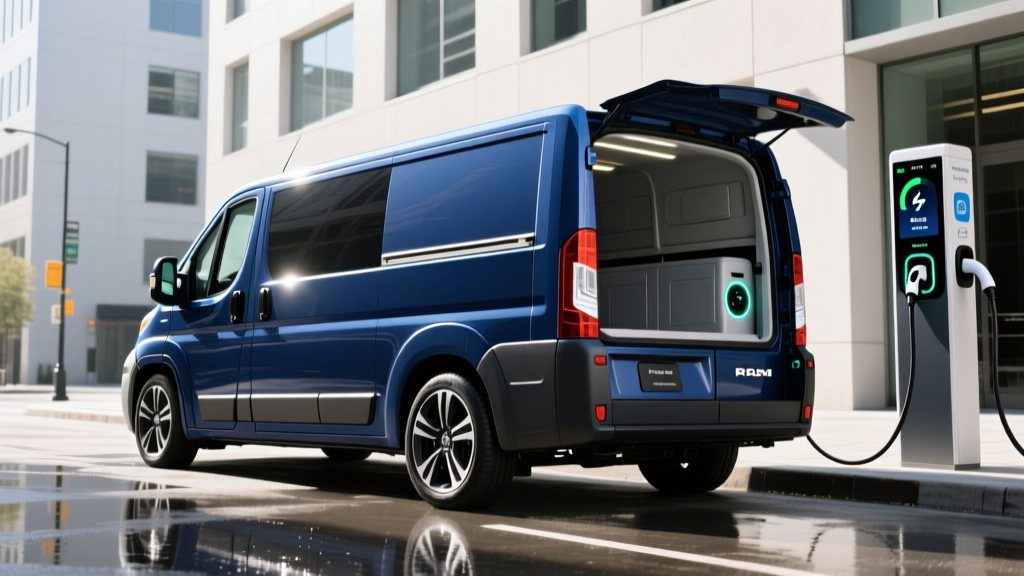
The 2025-2026 Ram ProMaster EV delivers 162 miles of EPA-estimated range from a 110 kWh battery pack, targeting urban delivery and last-mile commercial routes. Starting around $58,000, it costs significantly more than a gas ProMaster (~$43,000) but offers dramatically lower per-mile energy costs and near-zero routine maintenance. It's best suited for predictable sub-120-mile daily routes with depot-based Level 2 charging access.
Ram ProMaster EV: Core Specifications
Stellantis brought the ProMaster EV to market as a purpose-built electric cargo van, sharing its platform architecture with the Citroën ë-Jumpy and Peugeot e-Expert lineage but scaled for North American commercial duty. Here are the numbers fleet managers need:
| Spec | ProMaster EV (2500 Cargo) |
|---|---|
| EPA Range | 162 miles |
| Battery Capacity | 110 kWh (NMC chemistry) |
| DC Fast Charge Peak | 150 kW |
| 10–80% DC Charge Time | ~43 minutes |
| Level 2 AC Charge Rate | 11 kW (onboard charger) |
| Level 2 Full Charge Time | ~10.5 hours |
| Motor Output | 270 hp / 302 lb-ft torque |
| Payload Capacity | ~2,049 lbs |
| Cargo Volume | Up to 463 cu ft (high-roof extended) |
| Base MSRP | ~$58,000 |
| Battery/Powertrain Warranty | 8 years / 100,000 miles |
Real-World Range Reality
The EPA rates the ProMaster EV at 162 miles, but fleet operators should plan around 120–140 miles in real-world urban delivery cycles with frequent stops, HVAC use, and partial loads. Highway driving at 65+ mph drops range closer to 110–120 miles. In cold climates (below 32°F), expect a 20–35% range reduction due to battery chemistry limitations and cabin/cargo heating demands. This van is a depot-return vehicle, not a long-haul runner.
ProMaster EV vs. Gas ProMaster: Operating Cost Breakdown
The purchase premium for the ProMaster EV is substantial, but the per-mile operating economics tell a different story for high-utilization fleets. Here's a 5-year comparison assuming 20,000 miles/year (100,000 miles total) and national average energy prices:
| Cost Category | ProMaster EV | Gas ProMaster (3.6L V6) |
|---|---|---|
| Base Purchase Price | $58,000 | $43,000 |
| Federal Commercial EV Credit (§45W) | −$7,500* | $0 |
| Effective Purchase | $50,500 | $43,000 |
| Fuel/Energy Cost (100k mi) | $3,600 (at $0.12/kWh) | $14,285 (at $3.50/gal, 14 MPG) |
| Maintenance (100k mi) | ~$1,200 | ~$4,500 |
| Estimated Insurance (5 yr) | $9,500 | $7,800 |
| 5-Year Total Cost | $64,800 | $69,585 |
*The §45W commercial clean vehicle credit applies to fleet/commercial purchases (not personal use). It offers up to $7,500 for vehicles under 14,000 lbs GVWR. Eligibility depends on battery sourcing requirements. Consult IRS guidelines and a tax professional.
The ProMaster EV breaks even against the gas model in roughly 3.5–4 years at 20,000 miles/year, after which the energy and maintenance savings compound. Fleets running 30,000+ miles/year will see payback in under 3 years.
Charging Infrastructure: What Fleet Depots Need
The ProMaster EV's viability hinges on depot charging. Here's what installation looks like for a typical small fleet:
| Charging Level | Power | Miles Added/Hour | Use Case |
|---|---|---|---|
| Level 1 (120V) | 1.4 kW | ~4 mi/hr | Emergency/top-up only |
| Level 2 (240V, 48A) | 11 kW | ~32 mi/hr | Overnight depot charging (primary) |
| DC Fast Charge | 150 kW peak | ~180 mi/hr (to 80%) | Mid-day opportunity charging |
For overnight depot charging, you'll need one Level 2 station per vehicle (or staggered shifts sharing chargers). A commercial-grade Level 2 charger (e.g., ChargePoint CT4000 or EVgo Commercial) costs $2,500–$5,000 per unit for hardware, with installation running $3,000–$8,000 per stall depending on electrical panel upgrades, trenching, and permitting.
Critical note: the 110 kWh battery requires a full 10.5 hours at 11 kW to charge from empty. For fleets running evening-to-morning shifts, this works. But if your vans return at 6 PM and leave at 6 AM, you're cutting it close in winter when range drops and charging may slow in cold temperatures. Preconditioning the battery (available via the Ram Commercial app) helps maintain charge speed in cold weather.
Federal Tax Credits and State Incentives
Commercial fleet buyers should evaluate two primary federal incentives:
- §45W Commercial Clean Vehicle Credit: Up to $7,500 for qualifying commercial EVs under 14,000 lbs GVWR. The vehicle must be used for business, and battery components/critical minerals must meet domestic sourcing thresholds that tighten annually through 2030.
- §30C Alternative Fuel Infrastructure Credit: Up to $100,000 per item for commercial charging equipment installed in eligible census tracts (typically rural or low-income areas). This can offset depot charger installation significantly.
- State incentives vary widely: California's HVIP program, New York's Truck Voucher Incentive Program, and others can stack additional $10,000–$30,000 in purchase incentives. Check your state's energy office for current programs.
Personal-use buyers (owner-operators, small business owners purchasing under their name) may qualify for the §30D consumer credit instead, but income caps ($150K single / $300K joint) and MSRP caps ($80K for vans/trucks/SUVs) apply. The ProMaster EV clears the MSRP cap. Always verify current rules at IRS.gov.
Common Misconceptions About Electric Cargo Vans
| Myth | Fact |
|---|---|
| "Electric vans can't handle real payloads." | The ProMaster EV carries 2,049 lbs — competitive with the gas 2500 model. The battery weight does reduce payload vs. gas, but for most parcel/bakery/electrical contractor use cases, it's sufficient. |
| "Charging takes too long for commercial use." | At 150 kW DC, a 10–80% charge takes ~43 minutes — feasible for lunch-break opportunity charging. Most fleets charge overnight at Level 2, which is fully adequate for sub-120-mile routes. |
| "Batteries won't last." | Ram warrants the battery for 8 years/100,000 miles against degradation below 70% capacity. NMC batteries in commercial duty cycles typically retain 80–85% capacity at 100k miles based on fleet data from similar platforms in Europe. |
| "EVs are more expensive to insure." | True in many cases — expect 15–25% higher commercial premiums due to repair costs and battery replacement risk. Factor this into TCO. |
| "You can't use EVs in cold weather." | You can, but plan for 20–35% range loss below freezing. Fleets in Minnesota or Maine should spec routes at 100 miles max in winter, not 140. |
Who Should Buy the ProMaster EV (and Who Shouldn't)
Buy the ProMaster EV If:
- Your daily routes are under 120 miles with predictable depot returns
- You have (or can install) Level 2 charging at your depot or yard
- You operate in a state with additional commercial EV incentives
- Your fleet runs 20,000+ miles/year per vehicle (faster payback)
- You want to reduce idle-time emissions in urban neighborhoods and meet ESG/sustainability goals
- You value the near-silent operation for early-morning residential deliveries
Stick with Gas (or Wait) If:
- Your routes regularly exceed 150 miles/day or are unpredictable
- You lack depot charging access and rely on street parking
- You operate in extreme cold climates with routes over 100 miles
- Your annual mileage is under 12,000 miles (payback extends past 6 years)
- You need towing capacity (the gas ProMaster tows up to 6,910 lbs; the EV is not rated for heavy towing)
Frequently Asked Questions
Can the ProMaster EV be fast-charged on a road trip?
Technically yes — it has a CCS1 port and accepts up to 150 kW at public DC fast chargers like Electrify America. However, the 162-mile range and large van form factor make it impractical for long-distance travel. This is a metro-area tool, not a road-trip vehicle. Fleet managers should not plan inter-city routes with this van.
What happens if the battery needs replacement?
Out-of-warranty battery replacement for the 110 kWh pack is estimated at $18,000–$25,000 based on comparable Stellantis platforms. However, NMC degradation data from European e-Expert/ë-Jumpy fleets shows 80%+ capacity retention at 150,000 km (~93,000 miles). With the 8-year/100,000-mile warranty, most fleets will trade the vehicle before facing a battery replacement.
Does the ProMaster EV qualify for the $7,500 federal tax credit?
For commercial/fleet purchases, the §45W credit offers up to $7,500, but eligibility depends on battery component and critical mineral sourcing requirements that change annually. For the 2025-2026 model year, check the latest fueleconomy.gov listings and consult your tax advisor. Personal-use purchases may qualify under §30D if income and sourcing rules are met.
How does payload compare to the gas ProMaster?
The gas ProMaster 2500 offers approximately 3,390 lbs of payload capacity, while the EV variant is rated around 2,049 lbs — a reduction of roughly 1,300 lbs due to the battery pack. For parcel delivery, catering, and service trades carrying tools and light materials, this is usually sufficient. For heavy-materials trades (plumbing, masonry), the gas model remains the better choice.
Is there a passenger version of the ProMaster EV?
As of the 2026 model year, Ram offers the ProMaster EV exclusively as a cargo van (2500 configuration). A passenger/wagon variant has not been announced for the North American market. Fleets needing electric passenger transport should look at the Mercedes-Benz eSprinter or the Ford E-Transit passenger configurations.