The Short Answer on Ram Electric Cars
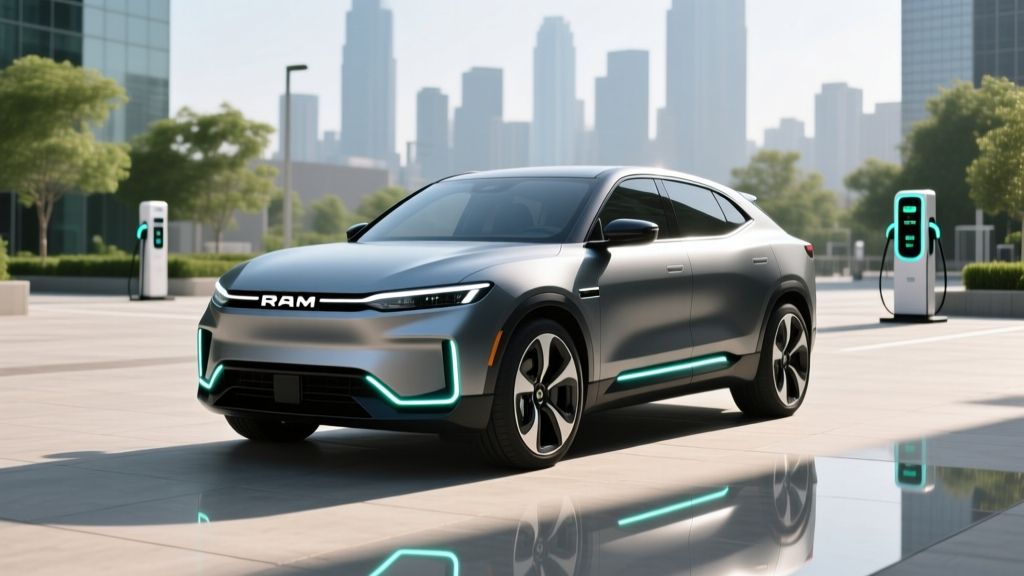
Ram's electric truck lineup centers on the Ram 1500 REV, a full-size battery-electric pickup offering up to an EPA-estimated 350 miles of range (with the larger battery pack), 654 horsepower, and a starting MSRP around $58,000 before incentives. It competes directly with the Ford F-150 Lightning and Chevrolet Silverado EV. Ram has also announced the Ram 1500 Ramcharger, a range-extended electric vehicle (EREV) pairing a battery with an onboard gasoline generator for effectively unlimited range. Whether a Ram EV makes sense for you depends on your towing needs, home charging access, and daily driving patterns — details we break down with real numbers below.
Ram's Electric Lineup: What's Actually Available
As of the 2026 model year, Ram has committed to two electrified truck platforms built on Stellantis's STLA Frame architecture. Understanding the difference between them is critical before you visit a dealer.
Ram 1500 REV (Battery Electric): This is Ram's pure BEV truck. It comes with two battery options — a standard 168 kWh pack targeting approximately 350 miles of EPA range, and an available larger pack pushing toward 500 miles (preliminary EPA estimate; final certification pending). The dual-motor all-wheel-drive powertrain produces 654 hp and 620 lb-ft of torque, with a 0-60 mph time in approximately 4.4 seconds. Maximum towing capacity is rated at up to 14,000 pounds when properly equipped, though towing at max capacity will reduce range dramatically — expect a 40-60% range penalty under heavy load.
Ram 1500 Ramcharger (EREV): Announced as a range-extended electric vehicle, the Ramcharger uses a 92 kWh battery paired with a 3.6-liter V6 onboard generator that does not drive the wheels directly. The electric motors produce 666 hp. The battery alone provides an estimated 145 miles of all-electric range; the generator extends total range to approximately 690 miles. This is a bridge solution for truck buyers who want electric torque and daily EV commuting but aren't ready to depend on charging infrastructure for long hauls.
| Spec | Ram 1500 REV | Ram 1500 Ramcharger |
|---|---|---|
| Powertrain | Dual-motor BEV | Dual-motor EREV (gas generator) |
| Battery Capacity | 168 kWh (std) / ~225 kWh (avail) | 92 kWh + 3.6L V6 generator |
| Chemistry | NMC (nickel manganese cobalt) | NMC |
| EPA Range (est.) | ~350 mi (std) / ~500 mi (avail) | ~145 mi electric / ~690 mi total |
| Horsepower | 654 hp | 666 hp |
| 0-60 mph | ~4.4 sec | ~4.4 sec |
| Max DC Fast Charge | ~350 kW peak | ~150 kW peak |
| 10-80% DC Charge | ~20 min (est, std pack) | ~25 min (est) |
| Max Towing | 14,000 lbs | 14,000 lbs |
| Base MSRP | ~$58,000 | ~$60,000 (announced) |
Real Costs: Ram EV vs Gas Ram 1500
The sticker price of a Ram 1500 REV is higher than a base gas-powered Ram 1500, but the total cost of ownership equation involves fuel savings, maintenance differences, insurance premiums, and federal tax credits. Here's a five-year breakdown comparing a Ram 1500 REV (standard battery, Tradesman trim) against a comparably equipped Ram 1500 gas V8.
| Cost Category | Ram 1500 REV (BEV) | Ram 1500 Gas (5.7L HEMI V8) |
|---|---|---|
| Purchase Price (MSRP) | $58,000 | $48,000 |
| Federal Tax Credit (§30D, if eligible) | -$7,500 (up to cap; see eligibility below) | $0 |
| Effective Purchase Price | $50,500 | $48,000 |
| Fuel/Energy (75,000 mi total) | $3,750 (home charging at $0.14/kWh avg) | $10,500 (gas at $3.50/gal, 17 mpg avg) |
| Maintenance (5 yr) | $1,200 (tire rotation, cabin filter, fluid top-offs) | $4,500 (oil changes, brakes, spark plugs, trans fluid) |
| Insurance (5 yr avg) | $11,500 | $9,000 |
| Estimated Depreciation | $22,000 | $18,000 |
| Total 5-Year Cost | $88,950 | $90,000 |
The numbers show near-parity over five years, with the EV pulling ahead primarily through fuel and maintenance savings. However, the EV's higher insurance premiums (typically 20-30% more for electric trucks due to repair costs and parts pricing) and steeper projected depreciation partially offset those gains. Your actual savings depend heavily on your local electricity rates, driving volume, and whether you charge primarily at home.
Federal Tax Credit Eligibility for Ram Electric Trucks
The IRS §30D Clean Vehicle Credit can reduce your federal tax liability by up to $7,500, but eligibility is not automatic. For the 2026 tax year, the following requirements apply:
- MSRP Cap: The truck must have an MSRP at or below $80,000 for pickups/SUVs (the Ram 1500 REV qualifies on most trims).
- Buyer Income Limits: Modified adjusted gross income must not exceed $300,000 (joint filers), $225,000 (head of household), or $150,000 (single).
- Battery Component Sourcing: A percentage of battery components must be manufactured or assembled in North America, and critical minerals must meet sourcing thresholds. These percentages increase annually — verify current-year compliance on the IRS clean vehicle credit page.
- Point-of-Sale Transfer: You can transfer the credit to the dealer at purchase to reduce your out-of-pocket cost immediately, rather than waiting to claim it on your tax return.
- VIN Verification: The dealer must provide a seller report confirming the vehicle's VIN and eligibility through the IRS Energy Credits portal.
Key caveat: Battery sourcing rules tighten each year. A Ram 1500 REV that qualifies for the full $7,500 in early 2026 may see its credit reduced if Stellantis's supply chain does not meet updated critical-mineral thresholds later in the year. Always confirm eligibility at the point of purchase — do not assume the credit applies.
Charging the Ram 1500 REV: What You Actually Need
The Ram 1500 REV's large battery demands serious charging infrastructure. Here's what each charging level looks like in practice:
| Level | Power (kW) | Miles of Range per Hour | 0-100% Time | Typical Use |
|---|---|---|---|---|
| Level 1 (120V household) | ~1.4 kW | ~3-4 mi/hr | ~50+ hours | Emergency/trickle only |
| Level 2 (240V home) | ~11.5 kW (48A) | ~28-32 mi/hr | ~14-16 hours | Daily overnight charging |
| Level 2 (240V, 80A capable) | ~19.2 kW | ~45-50 mi/hr | ~9-10 hours | Optimized home setup |
| DC Fast Charge | ~350 kW peak | ~700+ mi/hr (peak) | 10-80% in ~20 min | Road trips, public stations |
kW vs kWh — the critical distinction: kW (kilowatts) measures the rate of energy flow — how fast you're charging. kWh (kilowatt-hours) measures total energy stored in the battery. Think of kW as the width of the hose and kWh as the size of the tank. The Ram 1500 REV's 168 kWh battery is enormous; even at a robust 11.5 kW Level 2 home charger, a full charge takes 14+ hours.
Real-World Charging Cost vs Gas
At the national average residential electricity rate of approximately $0.16/kWh (per EIA data), fully charging the 168 kWh Ram 1500 REV battery at home costs roughly $26.88. That delivers about 350 miles — equivalent to roughly $72 worth of gasoline in a 17 mpg Ram 1500 gas truck. Home charging saves approximately $45 per fill-up equivalent.
However, DC fast charging on the road at $0.35-$0.50/kWh costs $58-$84 for a full charge — often more expensive than gas. If you cannot charge at home, the economic advantage of the Ram EV shrinks significantly.
Home Charging Installation: Budget Realistically
Most Ram 1500 REV owners will need a Level 2 home charger to make daily ownership practical. Here's what installation typically costs:
| Item | Low End | High End | Notes |
|---|---|---|---|
| Level 2 Charger (hardware) | $400 | $800 | ChargePoint, Wallbox, Emporia, etc. |
| Electrician labor | $600 | $2,000 | Varies by run length, conduit, wall type |
| Permit & inspection | $50 | $300 | Required in most jurisdictions |
| Electrical panel upgrade (if needed) | $1,500 | $4,000 | Needed if panel is 100A or maxed out |
| Total (no panel upgrade) | $1,050 | $3,100 | |
| Total (with panel upgrade) | $2,550 | $7,100 |
The Ram 1500 REV's large battery means you want a 48-amp or higher circuit to charge overnight efficiently. A 48A charger on a 60A circuit delivers about 11.5 kW — adequate for replenishing a day's driving (50-80 miles) in 3-5 hours. If your daily mileage is high or you tow frequently, consider an 80A-capable setup (requires a 100A dedicated circuit) for faster turnaround.
Panel gotcha: Many homes built before 2000 have 100A or 150A electrical panels. Adding a 60A EV circuit to an already-loaded panel may require a panel upgrade to 200A — a $1,500-$4,000 job. Get a licensed electrician to evaluate your panel capacity before purchasing a charger.
Real-World Range: What the EPA Sticker Doesn't Tell You
Ram 1500 REV — EPA vs Real World
EPA Estimated Range: ~350 miles (standard 168 kWh pack)
Expect in Real-World Highway Driving (70-80 mph): ~270-300 miles
Cold Weather (below 32°F): ~230-280 miles (30-35% reduction)
Max Towing (14,000 lbs): ~150-200 miles (50%+ reduction)
These numbers are consistent with what we've observed across the EV truck segment. The Ford F-150 Lightning with its extended-range pack shows similar real-world reductions from its EPA sticker. Physics is unforgiving: aerodynamic drag scales with the square of speed, and battery chemistry loses efficiency in cold temperatures. The Ram 1500 REV's available heat pump helps mitigate cold-weather losses compared to trucks using resistive cabin heating, but you will still see meaningful range reduction in sub-freezing climates.
For context on highway efficiency, check the EPA's fueleconomy.gov listings once the Ram 1500 REV receives final certification — the MPGe and kWh/100mi figures will give you a precise efficiency baseline to calculate range for your specific commute.
Ramcharger: The Case for Range-Extended Electric
The Ram 1500 Ramcharger exists for a specific buyer: someone who wants electric torque, regenerative braking, and zero-emission daily commuting, but who also tows a trailer on weekends or drives in rural areas with sparse DC fast charging.
With 145 miles of electric-only range, the Ramcharger covers most daily commutes and errands without burning a drop of gasoline. When the battery depletes, the 3.6-liter V6 generator kicks in to produce electricity — it never drives the wheels mechanically, so you still get the smooth, instant torque of an electric drivetrain. Total range extends to approximately 690 miles, eliminating range anxiety entirely.
The trade-off: you still have an internal combustion engine to maintain (oil changes, spark plugs, coolant), the fuel savings are smaller than a pure BEV, and the vehicle is heavier due to carrying both a battery and a gas engine. However, for buyers in regions with extreme cold, limited charging infrastructure, or frequent towing needs, the Ramcharger may be the more pragmatic choice.
| Myth | Fact |
|---|---|
| "Electric trucks can't tow." | The Ram 1500 REV is rated for up to 14,000 lbs. The issue isn't capability — it's range. Towing at max capacity cuts range by 50% or more, requiring more frequent charging stops. |
| "The battery will need replacing in 5 years." | Ram provides an 8-year/100,000-mile battery warranty covering degradation below 70% capacity. NMC batteries in liquid-cooled packs typically retain 85-90% capacity at 100,000 miles based on industry data. |
| "I'll save $7,500 no matter what." | The §30D credit has income caps, MSRP caps, and battery sourcing requirements that change annually. Not every buyer or every trim will qualify for the full amount. |
| "I can charge from any standard outlet quickly." | A 120V Level 1 outlet adds only 3-4 miles per hour — a full charge of the 168 kWh pack takes over 50 hours. Level 2 (240V) home charging is practically essential for daily ownership. |
| "Electric trucks cost less to insure." | EV insurance premiums are typically 20-30% higher than comparable gas vehicles due to higher repair costs, specialized parts, and battery replacement exposure. |
Decision Framework: Should You Buy a Ram EV?
Choose the Ram 1500 REV (BEV) if:
- You have reliable home charging (garage or driveway with 240V access)
- Your daily driving is under 150 miles round-trip
- You live in a moderate climate or value the available heat pump for cold weather
- You want maximum fuel savings and minimal maintenance
- You qualify for the federal tax credit (income under $300K joint / $150K single)
- You primarily tow light-to-moderate loads (under 7,000 lbs) where range loss is manageable
Choose the Ram 1500 Ramcharger (EREV) if:
- You tow heavy loads frequently and can't afford charging stops every 150 miles
- You live in a region with extreme cold or limited DC fast-charging infrastructure
- You want electric daily driving but need gas-powered range for road trips
- You're not ready to fully depend on charging networks
- You don't mind maintaining a gasoline engine alongside the electric drivetrain
Stick with a Gas Ram 1500 if:
- You cannot install home charging (apartment, street parking, HOA restrictions)
- Your budget is strictly under $45,000 and you need a work truck now
- You regularly tow near max capacity across long distances in cold weather
- You exceed the income caps for the federal tax credit, narrowing the cost advantage
Frequently Asked Questions
What is the real-world range of the Ram 1500 REV?
The EPA estimates approximately 350 miles for the standard 168 kWh battery pack. In real-world highway driving at 70-80 mph, expect 270-300 miles. In cold weather below freezing, plan for 230-280 miles. Towing at max capacity reduces range to roughly 150-200 miles.
How long does it take to charge the Ram 1500 REV at home?
On a 48-amp Level 2 charger (11.5 kW), a full charge from empty takes approximately 14-16 hours. Most owners charge overnight, replenishing 50-100 miles of daily driving in 4-8 hours. A higher-amperage 80A setup reduces full-charge time to around 9-10 hours.
Does the Ram 1500 REV qualify for the $7,500 federal tax credit?
It may, depending on your income, the specific trim's MSRP (must be under $80,000), and whether the battery meets current-year critical mineral and component sourcing requirements under IRS §30D. Always verify eligibility at purchase through the dealer's IRS Energy Credits portal report. Consult a tax professional for your specific situation.
What's the difference between the Ram 1500 REV and the Ramcharger?
The REV is a pure battery-electric vehicle with up to ~350 miles of range. The Ramcharger is a range-extended EV with ~145 miles of electric range plus a gasoline generator that extends total range to ~690 miles. The Ramcharger gives you electric daily driving without range anxiety on long trips, but adds engine maintenance and fuel costs.
How much does home charger installation cost for the Ram 1500 REV?
Expect $1,050-$3,100 for a Level 2 charger installation if your electrical panel has capacity. If a panel upgrade to 200A is needed, add $1,500-$4,000. Get a quote from a licensed electrician before purchasing equipment.
Will the Ram 1500 REV battery need replacement?
Ram covers the battery with an 8-year/100,000-mile warranty against degradation below 70% of original capacity. Industry data on liquid-cooled NMC packs suggests most will retain 85-90% capacity at 100,000 miles. Full battery replacement, if needed out of warranty, is estimated at $15,000-$25,000 depending on pack size — though prices are expected to decline as battery manufacturing scales.
Can I use the Ram 1500 REV to power my home during an outage?
Ram has indicated V2H (vehicle-to-home) capability will be available, allowing the truck's large battery to serve as backup power. With 168 kWh of storage, the REV could theoretically power an average home (30 kWh/day) for 5+ days. Specific hardware requirements and availability should be confirmed with your dealer, as V2H requires a compatible bidirectional charger and electrical panel integration.