Quick Verdict: The EREV That Erases Range Anxiety for Truck Buyers
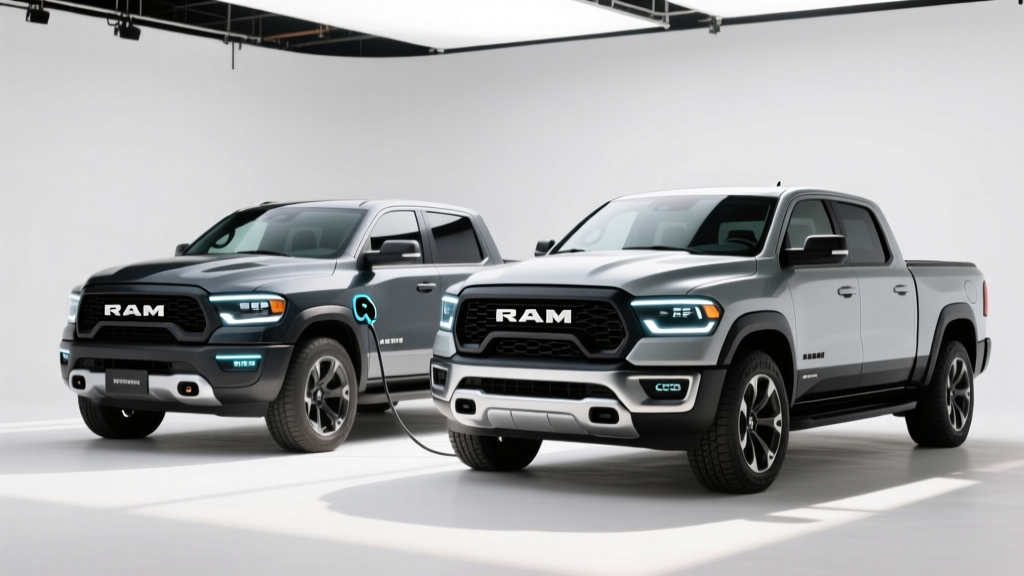
The extended-range electric vehicle (EREV) is a powertrain category that most American buyers are only now encountering — and the 2026 Ram 1500 Ramcharger is the first mainstream truck to bring the concept to the U.S. market at scale. Unlike a plug-in hybrid, where the gasoline engine mechanically drives the wheels, an EREV's engine never touches the drivetrain. The 3.6-liter Pentastar V6 under the Ramcharger's hood exists solely as an onboard generator, feeding electricity to the battery and electric motors. The wheels are always driven by electricity alone.
The result is a truck that delivers 145 miles of pure electric driving for daily commutes, then fires up its generator to extend total range to a claimed 690 miles — enough to tow a trailer across two states without a single charging stop. For buyers who need a full-size truck's capability but want electric-motor torque and daily EV efficiency, the Ramcharger occupies a space no other vehicle currently fills. But its complexity, weight, and pricing demand a hard look at the numbers.
Range, Battery, and Efficiency: The EREV Advantage Explained
| Specification | 2026 Ram 1500 Ramcharger |
|---|---|
| Battery Capacity (usable) | 92 kWh, NMC lithium-ion |
| Electric-Only EPA Range | 145 miles |
| Total Range (EREV mode) | Up to 690 miles (generator-assisted) |
| Combined MPGe (EV mode) | 56 MPGe (estimated) |
| Fuel Tank | 26.0 gallons |
| Onboard Generator | 3.6L V6, 174 kW output |
| Drivetrain | Dual-motor AWD (electric front & rear axles) |
| Horsepower / Torque | 663 hp / 615 lb-ft |
| 0–60 mph | 4.4 seconds |
| Max Towing Capacity | 14,000 lbs (properly equipped) |
| Max Payload | 2,625 lbs |
The 92 kWh NMC (nickel-manganese-cobalt) battery pack sits in a structural frame rail enclosure beneath the floor. NMC chemistry was chosen over LFP here for its higher energy density — critical in a truck where packaging space competes with towing hardware, a fuel tank, and a generator. The trade-off is that NMC cells are more sensitive to sustained high-state-of-charge storage and extreme heat, so Ram includes an active liquid thermal management system to condition the pack.
Real-World Range Reality Check
EPA Electric-Only: 145 miles
Expect in mixed driving: ~120–130 miles on the battery alone, depending on temperature and terrain.
Highway at 75 mph: ~105–115 electric-only miles before the generator engages.
Cold weather (below 32°F): Expect a 20–30% reduction in electric-only range (~90–110 miles). The V6 generator will kick in sooner to maintain cabin heat and battery temperature.
Total range in EREV mode: Ram's 690-mile figure assumes a mix of battery and generator operation. On a long highway trip towing a 6,000-lb trailer, plan for 350–450 miles total before refueling, as towing crushes efficiency in both EV and generator modes.
The EREV architecture means the gasoline engine runs at its most efficient RPM when generating electricity, rather than responding to throttle inputs directly. This gives the Ramcharger a meaningful efficiency edge over a conventional gas V8 truck in stop-and-go driving and moderate-load scenarios. Under heavy towing, however, the generator must work continuously at high output, and fuel economy drops to levels comparable to — or slightly worse than — a modern EcoDiesel, due to the double energy conversion (fuel → electricity → motion).
Charging: DC Fast Charge, Level 2, and the Generator Fallback
| Charging Level | Power / Rate | 10–80% Time | Miles of EV Range Added |
|---|---|---|---|
| Level 1 (120V household) | ~1.4 kW | N/A (overnight partial) | ~3–4 miles EV per hour |
| Level 2 (240V, 48A home charger) | ~11.5 kW | ~7.5 hours (full charge) | ~28 miles EV per hour |
| DC Fast Charge (peak) | Up to 180 kW | ~25 minutes (10–80%) | ~110 miles EV in 25 min |
| Onboard Generator (EREV mode) | 174 kW continuous | Continuous while fuel remains | Extends total range up to 690 mi |
The Ramcharger uses a CCS1 connector for DC fast charging. Peak charge rate is 180 kW — respectable for a 92 kWh pack, translating to roughly a 2C charge rate. On a 350 kW Electrify America or EVgo station, you'll see peak speeds sustained from roughly 10% to 55% state of charge, after which the charge curve tapers to protect the NMC cells. Expect the 55–80% phase to add another 8–10 minutes beyond the initial 15-minute sprint.
At home, a Level 2 wall connector on a 60-amp circuit (48A continuous) will fully replenish the 92 kWh battery in about 7.5 hours — easily overnight. This is the sweet spot for EREV ownership: plug in every evening, wake up to 145 electric miles, and never touch the generator on a typical 40-mile round-trip commute.
The onboard generator also functions as a range-extending fallback at any DC charging station. If you arrive at a broken or occupied charger, you can simply keep driving. This is the EREV's core psychological advantage over a pure BEV truck: charging infrastructure gaps don't strand you.
Performance and Capability: Electric Torque Meets Truck Work
The dual electric motor setup — one on each axle — delivers full-time all-wheel drive without a mechanical driveshaft connecting the front and rear axles. This eliminates the traditional transfer case and allows independent torque distribution front-to-rear. The combined output of 663 hp and 615 lb-ft of torque is available essentially from zero RPM, giving the Ramcharger a 4.4-second 0–60 time that embarrasses most V8 half-tons.
More relevant to truck buyers: that instant torque is available at low speeds when towing and hauling. Ram rates the Ramcharger at 14,000 lbs maximum towing capacity when properly equipped with the Max Tow package and weight-distributing hitch. Payload tops out at 2,625 lbs. Both figures are competitive with the Ford F-150 Lightning and exceed the Chevrolet Silverado EV's current ratings in equivalent trims.
One limitation worth flagging: the Ramcharger's curb weight is substantial — estimated at over 6,800 lbs due to the dual powertrain (battery pack, two electric motors, V6 generator, and a 26-gallon fuel tank). This weight impacts tire wear, braking distances, and registration fees in weight-based-fee states. It also means the truck sits at the upper edge of the 8,500-lb GVWR threshold that defines a "heavy duty" vehicle for certain tax purposes.
Interior, Tech, and Cargo: What You Get Inside
The Ramcharger inherits the current-generation Ram 1500's interior, which remains one of the strongest in the full-size truck segment. The top-trad Ramcharger Tradesman and Warlock trims feature an 8.4-inch Uconnect touchscreen, while the Laramie, Limited, and Tungsten trims step up to a 14.5-inch infotainment display plus a 10.3-inch passenger screen.
Cargo and Passenger Dimensions:
- Bed length: 5'7" (standard on crew cab)
- Bed volume: 61.5 cu ft
- Rear legroom (crew cab): 45.2 inches
- Front headroom: 40.9 inches
- Frunk (front trunk): Yes — approximately 5.0 cu ft of enclosed, weather-sealed storage where the engine traditionally lives, supplementing the bed
The frunk is a notable EREV packaging win: because the V6 generator is smaller and mounted lower than a traditional longitudinal V8, Ram was able to carve out usable front storage — something the gas Ram 1500 doesn't offer.
Driver assistance features include Ram's Hands-Free Active Driving Assist, a Level 2 SAE system that provides hands-free highway driving on pre-mapped divided roads (similar to GM's Super Cruise or Ford's BlueCruise). The driver must remain attentive; this is not autonomous driving. Adaptive cruise, lane centering, blind-spot monitoring, and trailer-reverse guidance are standard across all Ramcharger trims.
Pricing, Trims, and Federal Tax Credit Eligibility
| Trim Level | Base MSRP | Est. Price After §30D Credit* |
|---|---|---|
| Tradesman | $62,995 | $55,495 |
| Warlock | $67,495 | $59,995 |
| Laramie | $74,995 | $67,495 |
| Limited | $84,995 | $77,495 |
| Tungsten | $89,995 | $82,495 |
*Assumes full $7,500 federal tax credit eligibility. See IRS rules below.
The Ramcharger qualifies as a light-duty truck under the IRS §30D clean vehicle credit, meaning the MSRP cap is $80,000 (higher than the $55,000 sedan cap). The Tradesman, Warlock, and Laramie trims fall under this cap and are potentially eligible for the full $7,500 credit — provided the buyer meets income requirements and the vehicle's battery satisfies critical-mineral and battery-component sourcing rules.
§30D Tax Credit Eligibility Checklist (2026 rules):
- MSRP cap: ≤ $80,000 for trucks/vans/SUVs (Tradesman, Warlock, Laramie qualify; Limited and Tungsten do not)
- Buyer income cap: Modified AGI ≤ $150,000 (single), $225,000 (head of household), $300,000 (joint)
- Battery sourcing: Must meet escalating critical-mineral and battery-component requirements per the Inflation Reduction Act — Ram has confirmed Tradesman and Laramie trims with the standard 92 kWh pack meet current-year sourcing thresholds
- Point-of-sale transfer: Eligible buyers can apply the $7,500 credit as an instant rebate at the dealership rather than waiting for a tax refund (per IRS qualified vehicles list)
- VIN verification: Dealership must verify the specific VIN's eligibility at the time of sale — always confirm before signing
The Limited and Tungsten trims exceed the $80,000 MSRP cap and are ineligible for the federal credit regardless of buyer income. State-level incentives vary by jurisdiction — consult your state's energy office or a tax professional for local rebate details.
Who Should Buy the Ramcharger — And Who Shouldn't
Pros
- 145-mile EV range covers most daily commutes without burning gas
- 690-mile total range eliminates charging-station dependency on road trips
- 663 hp and instant electric torque make it the quickest Ram 1500 ever
- 14,000-lb towing capacity matches or beats BEV truck competitors
- Frunk adds practical sealed storage unavailable on gas Rams
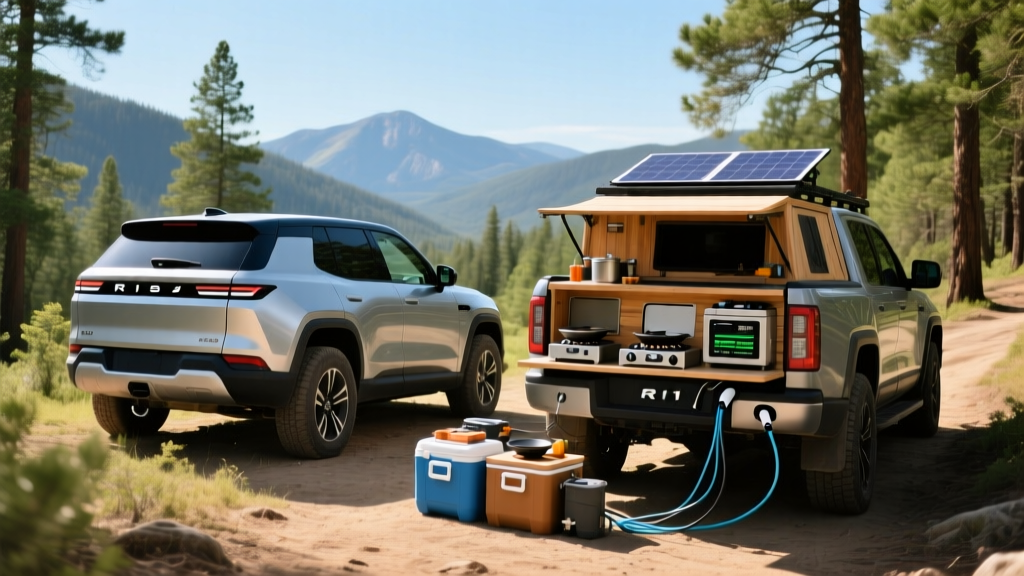
- Generator acts as a mobile power source (V2L capability for job sites)
- Eligible for $7,500 federal tax credit on three trims
Cons
- 6,800+ lb curb weight hurts tire wear and efficiency under heavy loads
- Two powertrains mean more components that could require maintenance long-term
- Limited and Tungsten trims exceed the §30D MSRP cap
- 180 kW peak DC charging is slower than the 350 kW-capable Silverado EV
- Real-world towing range on generator alone drops significantly vs. EPA total-range claims
- No mechanical 4WD low-range — not ideal for extreme off-road rock crawling
Best for: Truck owners with a 30–80 mile daily commute who also need long-haul towing capability and can't rely on public charging infrastructure for road trips. Contractors who want electric-motor torque on job sites with V2L power output. Fleet buyers who want to electrify daily operations without range-risk on long routes.
Skip it if: You rarely tow or haul and a smaller, lighter EV SUV would serve your needs. If your commute is under 20 miles and you never road-trip, a pure BEV with lower complexity (and lower maintenance exposure) may make more financial sense. If you need hardcore off-road crawling with a mechanical transfer case and locking differentials, the gas-powered Ram 1500 Rebel or TRX remains better suited.
Warranty and Long-Term Ownership
Ram provides the following warranty coverage for the 2026 Ramcharger:
- High-voltage battery: 8 years / 100,000 miles (whichever comes first), covering capacity retention below 70% of original
- Electric drive motors: 8 years / 100,000 miles
- Onboard generator (V6): 5 years / 60,000 miles (powertrain warranty)
- Bumper-to-bumper: 3 years / 36,000 miles
The dual-powertrain complexity is a legitimate long-term consideration. While electric motors have very few moving parts and the generator V6 runs under lighter load than a traditional drivetrain engine (it operates at steady RPM rather than accelerating and decelerating), you're still maintaining two complete propulsion systems. Oil changes on the generator, coolant service on the battery thermal loop, and eventual spark plug replacement on the V6 are all items a pure BEV owner wouldn't face. Budget accordingly for years 6–10 of ownership.
For battery longevity, Ram recommends keeping the state of charge between 20% and 80% for daily use and only charging to 100% when you need maximum electric range for a specific trip. The NMC chemistry in the Ramcharger is more susceptible to calendar degradation from prolonged high-SoC storage than LFP packs found in some competitors. For detailed guidance on NMC vs. LFP trade-offs, see our battery technology resources.
How the Ramcharger Compares to BEV Trucks
The Ramcharger doesn't compete with other EREVs — there simply aren't any in the U.S. full-size truck market at this time. Its real cross-shops are the Ford F-150 Lightning and the Chevrolet Silverado EV. Here's the decision framework:
- Choose the Ramcharger if: You need 600+ miles of total range without planning charging stops, you tow frequently on routes with sparse DC fast-charging infrastructure, or you want V2L job-site power without draining your traction battery to zero.
- Choose the F-150 Lightning if: You have reliable home charging, your daily drive is under 100 miles, you want a proven BEV platform with lower long-term maintenance complexity, and you prefer Ford's dealer network.
- Choose the Silverado EV if: You prioritize maximum DC fast-charging speed (350 kW capable on higher trims) and need the longest pure-electric range in a BEV truck (up to 440 EPA miles on the 4WT long-range configuration).
Frequently Asked Questions
What exactly is an EREV, and how is it different from a plug-in hybrid?
In an EREV (extended-range electric vehicle), the gasoline engine only generates electricity — it never mechanically drives the wheels. In a PHEV like the Jeep Wrangler 4xe, the engine can both generate electricity and directly turn the wheels through a transmission. The EREV drives like a pure EV at all times; the PHEV switches between EV and conventional hybrid modes.
How fast does the Ramcharger charge at home and on the road?
At home on a 240V Level 2 charger (48A), the Ramcharger adds roughly 28 miles of EV range per hour and fully charges in about 7.5 hours. On a DC fast charger, it peaks at 180 kW and charges from 10–80% in approximately 25 minutes, adding roughly 110 miles of EV range.
Does the Ramcharger qualify for the $7,500 federal EV tax credit?
Yes — the Tradesman, Warlock, and Laramie trims (all under the $80,000 MSRP truck cap) are potentially eligible for the full $7,500 §30D credit, subject to buyer income limits ($300K joint / $150K single) and battery-sourcing compliance. The Limited and Tungsten trims exceed the MSRP cap and do not qualify. Always verify VIN eligibility with your dealer and consult the IRS qualified vehicles list before purchase.
What is the real-world towing range?
Under heavy towing (6,000+ lbs on the highway), the electric-only range drops to roughly 50–70 miles before the generator engages. Once in EREV mode, expect total range of 250–400 miles on a full tank depending on trailer weight, terrain, and speed. This is significantly less than Ram's 690-mile claim, which assumes unladen mixed driving.
Is the Ramcharger worth buying over a gas Ram 1500?
If your daily commute is under 100 miles and you can charge at home, the Ramcharger will eliminate most of your fuel spending while delivering faster acceleration and V2L capability. The break-even point versus a gas Ram 1500 Laramie depends on local electricity and gas prices, but most high-mileage commuters will recoup the price premium within 4–6 years. If you drive very few miles annually or lack home charging access, the gas Ram remains simpler and cheaper upfront.
Can the Ramcharger power my home or job site?
Yes. The Ramcharger supports Vehicle-to-Load (V2L) functionality, allowing you to power tools, appliances, or a home transfer switch using the battery and generator. Output capacity is rated up to 7.2 kW through the bed outlet, sufficient for most job-site equipment and emergency home backup during outages.