Quick Answer: Is the Ram 1500 REV Electric Truck Worth Buying in 2026?
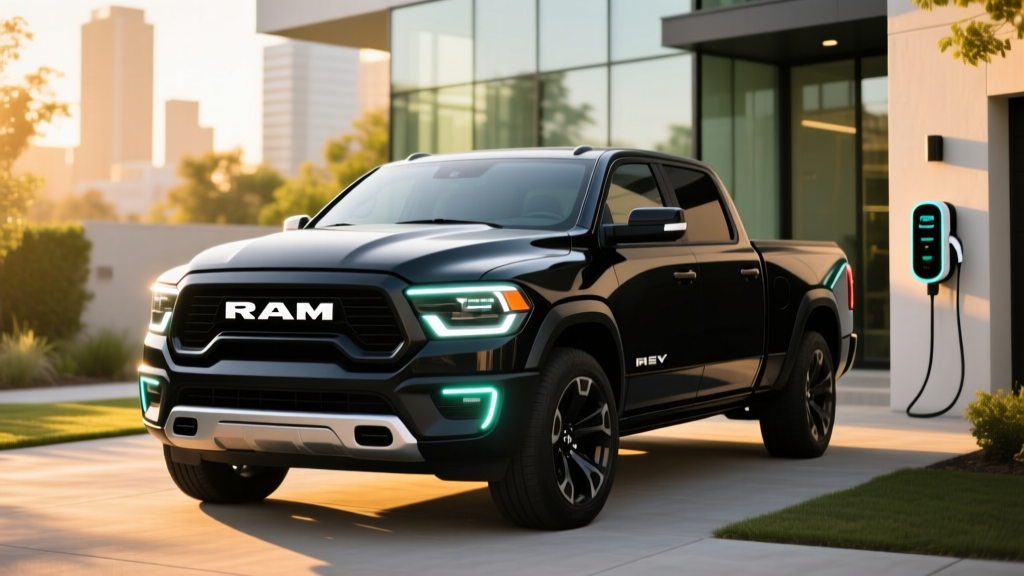
The Ram 1500 REV is Stellantis's first all-electric full-size pickup, arriving for the 2026 model year with two battery options: a standard 92 kWh pack targeting roughly 230 miles of EPA range, and an available 180 kWh pack targeting up to 350 miles. Pricing starts around $58,000 before incentives for the Tradesman base trim, with the long-range variant pushing past $75,000. It offers up to 14,000 lbs of towing capacity, 2,700 lbs of payload, and DC fast charging up to 350 kW on the larger battery. For truck buyers who can charge at home and whose daily driving stays under 200 miles, the REV delivers meaningful fuel and maintenance savings over the gas V6 Ram 1500. But if you regularly tow heavy loads over long distances or lack reliable charging access, the gas or hybrid Ram 1500 remains a more practical choice.
What Exactly Is the Ram 1500 REV?
The Ram 1500 REV (Ram Electric Vehicle) is a battery-electric full-size pickup built on Stellantis's STLA Frame platform — a body-on-frame architecture designed specifically for electric trucks and large SUVs. Unlike the Ford F-150 Lightning, which adapted an existing truck platform, the REV rides on a dedicated EV skateboard with a battery pack integrated into the frame rails.
Ram has confirmed two battery configurations:
- Standard Range: 92 kWh usable capacity (NMC chemistry), targeting ~230 miles EPA range
- Long Range: 180 kWh usable capacity (NMC chemistry), targeting ~350 miles EPA range
Both versions use a dual-motor all-wheel-drive layout producing an estimated 654 horsepower and 620 lb-ft of torque, with a 0–60 mph time in the mid-4-second range. The 180 kWh version is notably one of the largest battery packs ever fitted to a production vehicle, which directly contributes to both its impressive range and its substantial curb weight.
Real-World Range Reality Check
EPA Target (Long Range): ~350 miles
Real-world highway (70 mph, moderate temps): Expect ~280–310 miles
Highway towing (5,000+ lb trailer): Expect ~140–175 miles
Cold weather (below 30°F, cabin heat): Expect ~240–280 miles
The 350-mile EPA figure is measured on a combined city/highway cycle. Highway-only driving at sustained speeds reduces efficiency significantly in any EV, and trucks are particularly affected by their aerodynamic profile. When towing, range drops roughly 40–50% — this is physics, not a flaw unique to the REV. The F-150 Lightning and Silverado EV show similar towing-range reductions.
Ram 1500 REV vs. Gas Ram 1500: The Numbers That Matter
The most common question from truck buyers is how the REV stacks up against the familiar gas-powered Ram 1500. Here's a data-driven comparison using the gas Ram 1500 with the 3.6L Pentastar V6 and eTorque mild-hybrid system as the baseline.
| Attribute | Ram 1500 REV (180 kWh) | Ram 1500 Gas 3.6L V6 eTorque |
|---|---|---|
| Powertrain | Dual-motor AWD BEV | 3.6L V6 + eTorque mild hybrid |
| Horsepower | 654 hp | 305 hp |
| Torque | 620 lb-ft | 269 lb-ft |
| 0–60 mph | ~4.4 sec (est.) | ~7.5 sec |
| EPA Range / Fuel Economy | ~350 mi / ~70 MPGe (est.) | 22 mpg combined (EPA) |
| Max Towing Capacity | 14,000 lbs | 7,730 lbs |
| Max Payload | 2,700 lbs | 2,300 lbs |
| Starting MSRP | ~$75,000 (Long Range) | ~$42,000 |
| Estimated Cost per Mile (fuel/energy) | $0.04–$0.06/mi (home charging) | $0.16–$0.20/mi (gas at $3.40/gal) |
| Scheduled Maintenance (5 yr) | ~$500–$800 | ~$2,000–$3,000 |
The REV's power and towing advantages are substantial on paper. The 14,000-lb tow rating exceeds the gas V6 by nearly double and rivals the Hemi V8-equipped Ram 1500. However, towing range is the critical trade-off. If you tow a 6,000-lb camper 200 miles one way, the REV will require a DC fast-charge stop (or two), adding 30–50 minutes to the trip. The gas truck covers that distance on a single tank in roughly 3.5 hours with no stops.
Charging: Speeds, Infrastructure, and Home Setup
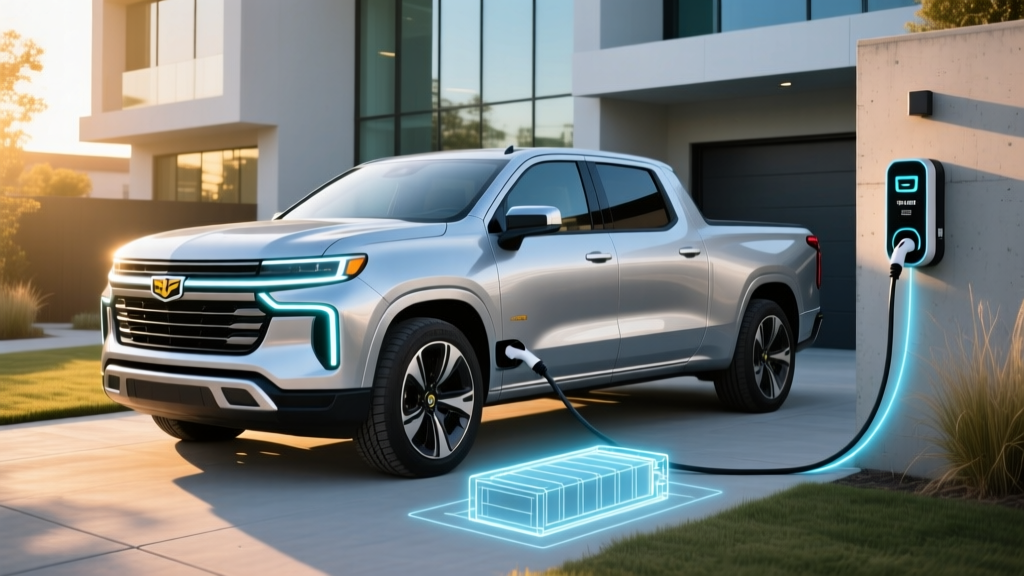
Charging is where most first-time EV truck buyers have the steepest learning curve. The Ram 1500 REV supports three charging levels:
| Level | Power (kW) | Connector | Miles Added per Hour | 10–80% Time |
|---|---|---|---|---|
| Level 1 (120V household) | ~1.4 kW | NACS (standard) | ~4–5 mi/hr | N/A (days) |
| Level 2 (240V home/public) | Up to 11.5 kW | NACS (standard) | ~30–38 mi/hr | ~10–16 hours |
| DC Fast Charge | Up to 350 kW (180 kWh) | NACS (standard) | Up to ~200+ mi in 10 min | ~20 min (est.) |
kW vs. kWh — the critical distinction: kW (kilowatts) measures charging power — how fast energy flows into the battery. kWh (kilowatt-hours) measures battery energy capacity — how much total energy the battery stores. A 350 kW charger delivers energy very quickly into a 180 kWh battery, but only if the battery's state of charge and temperature allow it. Peak charge rates are never sustained for the entire session; the charge curve tapers significantly above 80% state of charge to protect battery health.
Home charging is essential for truck owners. Level 1 (standard 120V outlet) adds only 4–5 miles per hour — essentially useless for a truck driven more than 20 miles daily. A Level 2 home charger (240V, 48-amp circuit) is the practical baseline. Expect to pay:
| Component | Low Estimate | High Estimate |
|---|---|---|
| Level 2 EVSE hardware (WallConnector, ChargePoint, etc.) | $400 | $750 |
| Electrician labor (240V/50A circuit run) | $600 | $1,500 |
| Electrical panel upgrade (if needed, 200A service) | $1,500 | $3,500 |
| Permit and inspection | $100 | $300 |
| Total | $1,100 | $6,050 |
Most homes with a modern 200-amp electrical panel won't need an upgrade, keeping the typical install in the $1,000–$2,500 range. Homes with older 100-amp panels may require the upgrade, which adds significant cost. Always get a quote from a licensed electrician before committing to an EV purchase if you're unsure about your panel capacity.
The REV uses the NACS (North American Charging Standard) connector, the same plug used by Tesla. This gives REV owners access to the Tesla Supercharger network — the most reliable and extensive DC fast-charging network in North America — without an adapter. This is a significant infrastructure advantage over CCS-equipped trucks that rely on Electrify America, EVgo, and other networks with more variable uptime.
Real Ownership Costs: 5-Year Breakdown
Purchase price is only part of the equation. Here's a 5-year / 75,000-mile total cost of ownership comparison, assuming 15,000 miles driven annually, $0.13/kWh home electricity, and $3.40/gallon gasoline.
| Cost Category | Ram 1500 REV (Long Range) | Ram 1500 Gas V6 eTorque |
|---|---|---|
| Purchase Price (MSRP base, before incentives) | $75,000 | $42,000 |
| Federal Tax Credit (§30D, if eligible) | −$7,500 | $0 |
| Effective Purchase Price | $67,500 | $42,000 |
| Home Charger Install | $2,000 | $0 |
| Fuel / Energy (75,000 mi) | $3,900 | $11,600 |
| Maintenance (5 yr) | $700 | $2,500 |
| Insurance (5 yr, estimated) | $9,500 | $7,500 |
| Estimated Depreciation (5 yr) | $28,000 | $18,000 |
| Total 5-Year Cost | $111,600 | $81,600 |
| Cost per Mile | $0.59/mi | $0.53/mi |
Key takeaways from the data:
- The REV saves approximately $7,700 on fuel and $1,800 on maintenance over 5 years — real money that partially offsets the higher purchase price.
- Insurance runs higher for the REV, typically 15–25% more than the gas equivalent, due to higher repair costs and vehicle value.
- Depreciation is the wildcard. EV depreciation has been volatile; early data suggests electric trucks hold value less predictably than gas trucks, though the REV's NACS compatibility and strong range may help.
- Even with the $7,500 federal tax credit, the REV costs roughly $30,000 more to own over 5 years. The financial case strengthens if you drive more than 15,000 miles annually or if gas prices rise above $4.00/gallon.
Federal Tax Credit: §30D Eligibility for the Ram 1500 REV
The Ram 1500 REV may qualify for up to $7,500 under the IRS §30D Clean Vehicle Credit, but eligibility is not guaranteed. As of 2026, the credit is subject to several requirements:
- MSRP Cap: The vehicle must have an MSRP at or below $80,000 for trucks (vans and SUVs are $80,000; sedans are $55,000). Most REV trims should qualify, but a fully loaded Laramie or Limited could exceed the cap — verify the window sticker.
- Buyer Income Limits: Modified adjusted gross income must not exceed $300,000 (joint filers), $225,000 (head of household), or $150,000 (single filers).
- Battery Component Sourcing: At least a specified percentage of battery components must be manufactured or assembled in North America. Stellantis has indicated the REV's batteries will be sourced from Samsung SDI's U.S. plants, but the critical-minerals requirement is more complex and depends on supply-chain certifications.
- Point-of-Sale Transfer: As of 2024, buyers can transfer the credit to the dealer at the point of sale, effectively reducing the purchase price by up to $7,500 at the dealership rather than waiting to claim it on your tax return.
The credit's battery-sourcing requirements have tightened annually. Consult the IRS Clean Vehicle Credit page or a tax professional before relying on the full $7,500 — partial credits ($3,750) are possible if only one of the two sourcing requirements is met.
Common Misconceptions About Electric Trucks
| Myth | Fact |
|---|---|
| "Electric trucks can't tow anything useful." | The REV rates at 14,000 lbs — competitive with gas V8 trucks. The limitation isn't capability but range while towing (expect a 40–50% range reduction). |
| "The battery will need replacing in 5 years." | Modern NMC batteries are warrantied for 8 years / 100,000 miles (minimum 70% capacity retention). Industry data shows average degradation of ~10–15% over 8 years under normal use. |
| "Charging takes hours on road trips." | At a 350 kW DC fast charger, the 180 kWh pack can go from 10–80% in roughly 20 minutes. The charge curve tapers above 80%, so plan stops at 80% for efficiency. |
| "EVs don't work in cold weather." | Range drops 15–30% below freezing due to battery chemistry and cabin heating. The REV includes a heat pump and battery preconditioning to mitigate this, but the loss is real and must be factored into winter trip planning. |
| "I'll save money immediately by going electric." | Higher purchase price and insurance mean savings accrue over years, not months. Break-even vs. a gas Ram 1500 typically occurs around year 7–8 at current fuel and electricity prices. |
Decision Framework: Should You Buy the Ram 1500 REV?
Choose the Ram 1500 REV If:
- You can install a Level 2 charger at home and drive under 200 miles daily (covering ~90% of trips without public charging).
- You value instant torque and 654 hp for job-site performance or spirited driving.
- You want to reduce fuel and maintenance costs and plan to keep the truck 7+ years.
- Your towing needs are local or moderate-distance (under 150 miles one way).
- You qualify for the §30D tax credit and your state offers additional EV incentives.
Stick With the Gas or Hybrid Ram 1500 If:
- You regularly tow heavy loads over 200+ miles (construction, ranching, long-distance camping).
- You live in an apartment or lack access to reliable home or workplace charging.
- Your area has sparse DC fast-charging infrastructure (rural regions, charging deserts).
- You prioritize lowest upfront cost and predictable long-distance travel without route planning.
- You live in an extreme cold climate (consistently below 0°F) where range loss is most severe.
What First-Time EV Truck Buyers Need to Know
If the Ram 1500 REV would be your first electric vehicle, prepare for these practical realities:
1. Route planning becomes part of road trips. Apps like A Better Routeplanner or the built-in navigation will identify charging stops. On a 500-mile highway trip, plan one or two 20–30 minute DC fast-charge stops. This adds roughly 45–60 minutes to a journey that takes about 7.5 hours non-stop in a gas truck.
2. Home charging changes your refueling habits entirely. Most EV owners report that plugging in at home every night — waking up to a "full tank" every morning — is the single biggest quality-of-life improvement. You'll visit a gas station only on road trips.
3. Regenerative braking takes a week to learn. The REV offers adjustable regen levels, including one-pedal driving where lifting off the accelerator slows the truck significantly. Most drivers adapt within a week and prefer it, but it feels unfamiliar initially — especially in a heavy truck.
4. Tire wear increases. Electric trucks are heavier and deliver instant torque, which accelerates tire wear. Budget for tire replacement every 30,000–40,000 miles rather than the 50,000+ miles typical of gas trucks. EV-specific tires (like the Michelin Defender LTX with low rolling resistance) can help.
5. The frunk (front trunk) adds real utility. Without a gas engine, the REV features a front trunk — useful for storing charging cables, tools, or groceries, and a lockable compartment that's more secure than the bed.
Ram 1500 REV Specifications at a Glance
| Spec | Standard Range (92 kWh) | Long Range (180 kWh) |
|---|---|---|
| Battery Chemistry | NMC | NMC |
| Usable Battery Capacity | 92 kWh | 180 kWh |
| EPA Range (Target) | ~230 miles | ~350 miles |
| Drivetrain | Dual-motor AWD | Dual-motor AWD |
| Horsepower | 654 hp | 654 hp |
| Torque | 620 lb-ft | 620 lb-ft |
| 0–60 mph | ~4.4 sec | ~4.4 sec |
| Max DC Fast Charge Rate | ~200 kW | Up to 350 kW |
| 10–80% DC Fast Charge (est.) | ~25 min | ~20 min |
| Level 2 Charge Rate | 11.5 kW | 11.5 kW |
| Max Towing | 14,000 lbs | 14,000 lbs |
| Max Payload | 2,700 lbs | 2,700 lbs |
| Connector | NACS | NACS |
| Battery Warranty | 8 yr / 100,000 mi | 8 yr / 100,000 mi |
| Starting MSRP (est.) | ~$58,000 | ~$75,000 |
Note: Ram 1500 REV specifications are based on manufacturer announcements and are subject to final EPA certification. Verify final figures on the EPA Fuel Economy website once testing is complete.
Frequently Asked Questions
Can the Ram 1500 REV power my home during an outage?
Ram has indicated the REV will support bidirectional charging (V2H — vehicle-to-home), which would allow the truck's battery to supply power to your home through a compatible bidirectional charger and transfer switch. With a 180 kWh battery, the REV could theoretically power an average U.S. home (roughly 30 kWh/day) for 5–6 days. However, bidirectional chargers (like the Ford Charge Station Pro for the F-150 Lightning) add $2,000–$4,000 to installation costs and require electrician setup with a transfer switch. Confirm V2H availability and compatible hardware at time of purchase.
How does the Ram 1500 REV compare to the Ford F-150 Lightning and Chevy Silverado EV?
The REV's 350-mile target range (180 kWh version) exceeds the F-150 Lightning Extended Range (~320 miles EPA) and competes with the Silverado EV 4WT (~400 miles EPA). The REV's 14,000-lb tow rating matches the Lightning and trails the Silverado EV's 20,000-lb max (work truck config). The REV's NACS connector is a direct advantage over the Lightning (which also now uses NACS) and Silverado EV (also NACS-equipped for 2025+). Pricing is broadly competitive across all three, with each offering base trims in the $55,000–$60,000 range.
Is the Ram 1500 REV eligible for the full $7,500 federal tax credit?
Eligibility depends on three factors: the truck's MSRP (must be ≤$80,000 for trucks), your income (must be below IRS thresholds), and battery-sourcing compliance. Stellantis plans U.S. battery production for the REV, which should satisfy the component-manufacturing requirement, but critical-minerals sourcing is evaluated annually and can change. Check the IRS §30D guidance for the specific model year you purchase. The credit can be transferred to the dealer at point of sale to reduce your out-of-pocket cost immediately.
What happens to the REV's range when towing a trailer?
Expect a 40–50% range reduction when towing at highway speeds. The 350-mile Long Range version would realistically deliver 140–175 miles with a 5,000–7,000 lb trailer at 65–70 mph. This is consistent with the Ford F-150 Lightning and Silverado EV — it's an aerodynamic and weight issue inherent to all electric trucks. For long-distance towing, plan DC fast-charge stops every 120–150 miles.
How long will the Ram 1500 REV battery last?
Ram warranties the battery for 8 years or 100,000 miles, guaranteeing at least 70% of original capacity. Industry-wide data from similar NMC packs (in vehicles like the Tesla Model 3 and Hyundai Ioniq 5) suggests real-world degradation of approximately 10–15% over 8 years with normal charging habits. To maximize longevity, avoid routinely charging to 100% on DC fast chargers, and use the vehicle's built-in charge-limit settings to cap daily charging at 80%.