The Quick Answer on the Ram 1500 REV Electric Truck
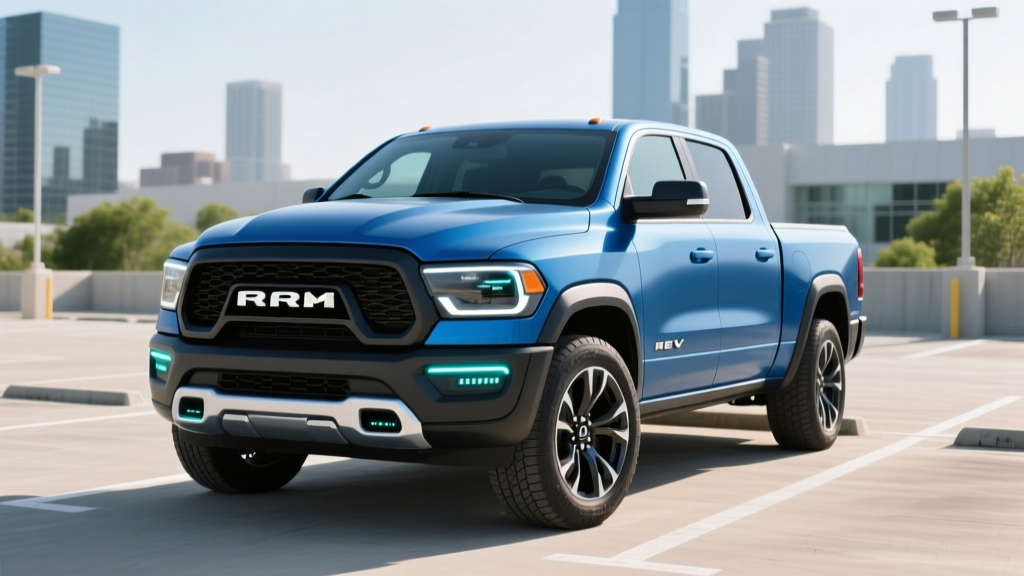
The 2026 Ram 1500 REV is a full-size battery-electric pickup built on Stellantis's STLA Frame platform, offering two battery options: a standard 168 kWh pack rated for up to 355 miles of EPA range and an extended-range 229 kWh pack targeting up to 500 miles (final EPA certification pending). Peak DC fast charging reaches 350 kW on the larger pack via an 800-volt architecture, enabling roughly 110 miles of range in 10 minutes under ideal conditions. Pricing starts at approximately $58,095 for the Tradesman trim and climbs to over $85,000 for the top Tungsten trim. Federal §30D tax credit eligibility depends on battery sourcing, buyer income caps, and MSRP limits that are subject to change — consult the IRS clean vehicle credit page before purchasing. If you tow heavy, live in a cold climate without home charging, or frequently drive remote routes, the Ram 1500 REV's real-world limitations demand honest evaluation before committing.
Ram 1500 REV: Real-World Range vs. EPA Estimates
The EPA range sticker tells only part of the story. For the 168 kWh standard pack, the 355-mile estimate assumes moderate temperatures, mixed driving, and no payload. In real-world highway testing at 70 mph, expect closer to 280–310 miles. Add a cold Midwestern winter (below 30°F) and range drops another 15–25%, potentially landing you at 220–260 usable miles before needing a charger.
The extended-range 229 kWh pack aims for 500 miles, but that figure is a manufacturer target awaiting final EPA certification. Realistically, highway and cold-weather driving could yield 380–430 miles — still class-leading among electric pickups, but not the 500-mile promise on the window sticker.
| Scenario | Standard 168 kWh | Extended 229 kWh |
|---|---|---|
| EPA Estimate | 355 mi | ~500 mi (pending) |
| 70 mph Highway | ~280–310 mi | ~400–440 mi |
| Cold Weather (sub-30°F) | ~220–260 mi | ~330–380 mi |
| Towing (5,000 lb trailer) | ~170–200 mi | ~250–300 mi |
Towing is where electric trucks face the harshest reality check. Pulling a 5,000-pound trailer can cut range nearly in half due to the combined weight and aerodynamic drag. If your weekend routine involves hauling a boat or camper more than 150 miles one-way, route planning around DC fast chargers rated at 150 kW or above becomes mandatory.
Charging Speed and Infrastructure: What Ram 1500 REV Owners Need
The Ram 1500 REV's 800-volt architecture is its charging advantage. On the extended-range pack, peak DC fast-charge rate hits 350 kW — but only under ideal conditions: battery preconditioned to optimal temperature, state of charge (SoC) between roughly 10–30%, and a compatible 350 kW charger (such as Electrify America's latest stalls).
Charging curves are not flat. The 350 kW peak tapers significantly above 60% SoC. Expect a realistic 10–80% charge in approximately 22–25 minutes on a 350 kW station, and 25–30 minutes on a 250 kW station. Above 80%, charging slows dramatically to protect battery longevity — going from 80% to 100% can add another 20+ minutes.
| Level | Power | Miles Added/Hour | Use Case |
|---|---|---|---|
| Level 1 (120V) | ~1.4 kW | ~3–4 mi/hr | Emergency/trickle only |
| Level 2 (240V, 48A) | ~11.5 kW | ~28–35 mi/hr | Home overnight charging |
| DC Fast (150 kW) | 150 kW peak | ~350+ mi/hr* | Road trips, public stations |
| DC Fast (350 kW) | 350 kW peak | ~600+ mi/hr* | Fastest available public charging |
*Peak rate under ideal conditions; actual sustained rate varies with SoC, temperature, and station capability.
At home, a Level 2 charger (240V, 48-amp circuit) requires a NEMA 14-50 outlet or hardwired wall connector, plus a dedicated 60-amp breaker. Installation by a licensed electrician typically runs $800–$2,500 depending on panel proximity, and a panel upgrade to 200A service adds $1,500–$4,000 if your home has older 100A service. Without home charging, daily reliance on public infrastructure — where pricing averages $0.35–$0.55/kWh and uptime varies — erodes the cost and convenience advantage significantly.
Ram 1500 REV vs. Gas and Hybrid Trucks: Cost Comparison
The most direct competitor to the Ram 1500 REV is the gas-powered Ram 1500 with the 3.6L Pentastar V6 (with eTorque mild hybrid) or the 5.7L HEMI V8. Let's compare five-year ownership costs for a buyer driving 15,000 miles annually.
| Category | Ram 1500 REV (Extended) | Ram 1500 Gas V8 4x4 |
|---|---|---|
| Purchase Price (Laramie trim) | ~$72,095 | ~$55,595 |
| Federal Tax Credit (§30D) | Up to $7,500* | $0 |
| Net Purchase | ~$64,595 | $55,595 |
| Fuel/Energy (75k mi) | $6,200–$9,800** | $12,750 |
| Maintenance (5 yr) | ~$1,200 | ~$3,500 |
| Insurance (5 yr) | ~$11,500 | ~$9,500 |
| 5-Year Total | ~$83,495–$87,095 | ~$81,345 |
*§30D eligibility depends on battery critical-mineral sourcing, buyer AGI caps ($300k joint / $150k single), and MSRP caps ($80k for trucks). Verify at irs.gov.
**Energy cost assumes $0.14/kWh home charging (lower end) to $0.45/kWh public DC fast charging (upper end). Gas assumes $3.40/gal at 17 MPG combined.
The numbers reveal a narrow gap. If you charge predominantly at home on a utility rate below $0.16/kWh, the REV pulls ahead in operating costs within 3–4 years. If you rely on public DC fast charging at $0.40+/kWh, the gas truck retains a cost advantage — and the convenience advantage of a 3-minute fill-up at any of the nation's 150,000+ gas stations versus roughly 30,000 public Level 2 and DC fast-charging ports (per AFDC data).
What First-Time Electric Truck Buyers Must Know
Buying the Ram 1500 REV as your first EV introduces several ownership realities that brochures don't emphasize:
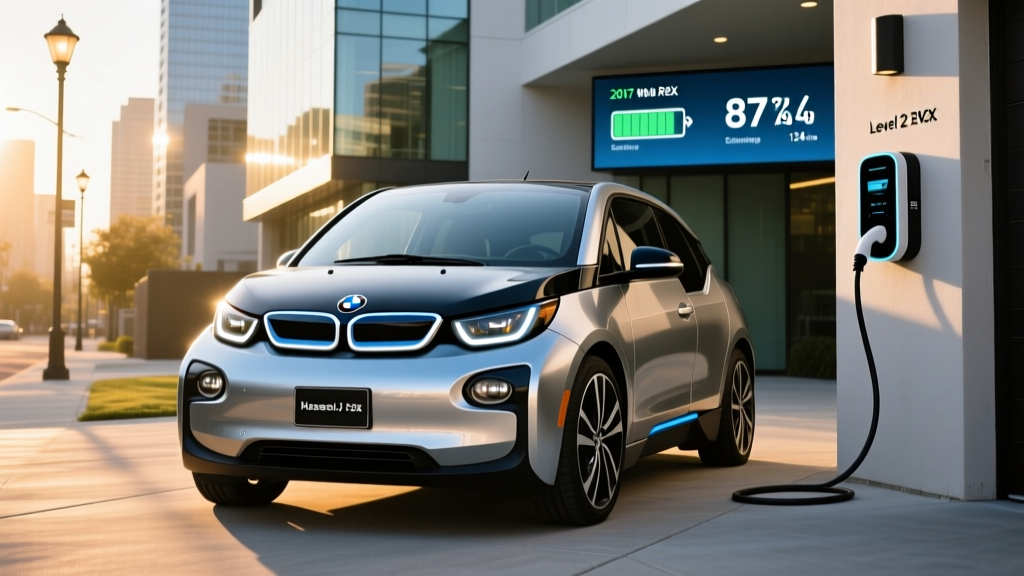
Home charging is nearly non-negotiable for truck owners. The 229 kWh battery would take approximately 90+ hours on a standard 120V outlet — useless for daily driving. A Level 2 home charger delivering a full overnight charge (8–10 hours) is essential unless your daily mileage stays below 30 miles and you can tolerate multi-day charge cycles.
Battery degradation is real but manageable. Stellantis warranties the REV's battery pack for 8 years/100,000 miles against capacity loss below 70%. Industry data from similar NMC (nickel manganese cobalt) chemistries shows typical degradation of 8–12% over the first 100,000 miles, after which the curve flattens. You won't suddenly lose range at year 8, but expect a gradual decline from day one.
Insurance premiums run 15–25% higher than comparable gas trucks due to higher repair costs, specialized parts, and the vehicle's elevated MSRP. Get quotes from your insurer before signing a purchase agreement — the delta can be $400–$800/year.
Regenerative braking changes how you drive. The REV offers adjustable regen levels, including a one-pedal-driving mode that can bring the truck to a full stop without touching the brake pedal. It takes 1–2 weeks to build muscle memory, but most owners prefer it once adapted — it reduces brake wear dramatically.
Weight affects tires and roads. The REV's curb weight exceeds 7,500 pounds (extended battery), which accelerates tire wear by roughly 20–30% compared to a gas Ram 1500. Budget for tire replacement every 30,000–35,000 miles instead of the 45,000–50,000 miles typical for lighter trucks.
Ram 1500 REV vs. Rivals: Ford F-150 Lightning and Chevy Silverado EV
| Spec | Ram 1500 REV (Ext.) | Ford F-150 Lightning (Ext.) | Chevy Silverado EV (4WT) |
|---|---|---|---|
| EPA Range | ~500 mi* | 320 mi | 440 mi |
| Battery (usable) | 229 kWh | 131 kWh | ~200 kWh |
| Peak DC Charge | 350 kW | 150 kW | 350 kW |
| 10–80% DCFC | ~22–25 min | ~41 min | ~20 min |
| Max Towing | 10,000 lb | 10,000 lb | 10,000 lb |
| 0–60 mph | ~4.5 sec | ~3.8 sec | ~4.5 sec |
| Starting MSRP | $58,095 | $54,995 | $39,900** |
| Battery Warranty | 8 yr / 100k mi | 8 yr / 100k mi | 8 yr / 100k mi |
*Pending final EPA certification. **Silverado EV 4WT is a fleet-oriented Work Truck trim; retail trims start higher.
The Ram 1500 REV's headline advantage is range — if the 500-mile target holds under EPA testing, it eclipses the Lightning and matches the top Silverado EV trims. The 350 kW charging capability is also a meaningful edge over the Lightning's 150 kW ceiling. However, the F-150 Lightning has been on sale since 2022 with a proven track record, broader dealer service readiness, and a lower starting price. The Silverado EV undercuts all rivals on price at the fleet trim but lacks the refined interior and tech of the Ram's upper trims.
Common Misconceptions About Electric Trucks — Corrected
| Myth | Fact |
|---|---|
| "Electric trucks can't tow." | The Ram 1500 REV is rated for up to 10,000 pounds — matching many gas V8 configurations. The limitation isn't capability, it's range: towing cuts range by 40–50%, requiring more frequent charging stops. |
| "Batteries need replacing every few years." | Modern NMC packs are warrantied for 8 years/100,000 miles at 70% capacity retention. Data from high-mileage EVs shows 80–88% capacity remaining at 150,000 miles. Full replacement costs $15,000–$25,000 but is rarely needed within typical ownership periods. |
| "EVs are worse in cold weather." | Range drops 15–30% in sub-freezing temps due to battery chemistry and cabin heating demands. However, EVs start reliably in any cold (no engine cramping), and preconditioning while plugged in mitigates most range loss. The REV includes a heat pump to improve winter efficiency. |
| "Charging takes too long." | At home on Level 2, charging happens while you sleep — 8–10 hours for a full charge. On road trips, a 10–80% DC fast charge takes 22–25 minutes at a 350 kW station — comparable to a rest stop with food and restroom break. |
| "The power grid can't handle EVs." | Most home charging occurs overnight during off-peak hours when grid capacity is underutilized. Utilities are upgrading distribution infrastructure in high-EV-adoption areas. A single Level 2 home charger draws roughly the same as a central AC unit. |
Decision Framework: Is the Ram 1500 REV the Right Truck for You?
Choose the Ram 1500 REV if:
- You have reliable home Level 2 charging (garage or driveway with 240V access)
- Your daily driving is under 200 miles round-trip, with road trips planned around DC fast-charging corridors
- You value cabin quietness, instant torque (0–60 in ~4.5 seconds), and lower per-mile energy cost
- You want maximum electric range among pickups and are willing to pay a premium for the extended battery
- You qualify for the full §30D tax credit (income under caps, MSRP under $80k for the trim you choose, battery sourcing compliant)
Choose a Gas or Hybrid Truck Instead if:
- You lack home charging access and your area has sparse public DC fast-charging infrastructure
- You regularly tow over 5,000 pounds on routes exceeding 200 miles without reliable fast-charger stops
- You live in a region with extreme cold (sustained sub-10°F winters) and cannot accept 25%+ range reduction
- You need a truck today with proven long-term reliability data and established dealer EV service capability
- Your budget is under $55,000 and you need a crew cab 4x4 — the gas Ram 1500 remains significantly cheaper at equivalent trims
Key Specs: 2026 Ram 1500 REV at a Glance
| Specification | Standard Battery | Extended Battery |
|---|---|---|
| Battery Capacity (usable) | 168 kWh | 229 kWh |
| Chemistry | NMC (Nickel Manganese Cobalt) | NMC |
| EPA Range | 355 mi | ~500 mi (pending) |
| Horsepower | 654 hp | 654 hp |
| 0–60 mph | ~4.5 sec | ~4.5 sec |
| Peak DC Fast Charge | ~280 kW | 350 kW |
| 10–80% DCFC Time | ~25–28 min | ~22–25 min |
| Level 2 Charge Rate | 11.5 kW (onboard) | 11.5 kW (onboard) |
| Max Towing | 10,000 lb | 10,000 lb |
| Max Payload | 2,700 lb | 2,625 lb |
| Starting MSRP | $58,095 | ~$68,095 |
| Battery Warranty | 8 yr / 100,000 mi (70% retention) | 8 yr / 100,000 mi (70% retention) |
Frequently Asked Questions
Does the Ram 1500 REV qualify for the $7,500 federal tax credit?
Eligibility depends on three factors under current §30D rules: (1) the buyer's adjusted gross income must be under $300,000 (joint) or $150,000 (single), (2) the truck's MSRP must not exceed $80,000, and (3) the battery must meet critical-mineral and component sourcing thresholds that tighten annually. Some Ram 1500 REV trims (Laramie and below) fall under the $80k cap; Tungsten and top trims exceed it. Battery sourcing compliance is determined at time of manufacture — verify with your dealer and cross-reference the DOE's qualifying vehicle list at fueleconomy.gov before purchasing. The credit can now be transferred to the dealer at point of sale as an upfront discount.
How much does it cost to charge the Ram 1500 REV?
At the national average residential electricity rate of ~$0.16/kWh, a full charge of the 229 kWh extended pack costs approximately $36.64 — yielding roughly $0.07–$0.09 per mile. At a public DC fast charger averaging $0.45/kWh, that same charge runs ~$103, or ~$0.21 per mile. For comparison, the gas Ram 1500 at 17 MPG combined and $3.40/gallon costs ~$0.20 per mile. Home charging is where the REV's economics shine; exclusive public charging narrows the gap considerably.
Can the Ram 1500 REV power my home during an outage?
Stellantis has announced vehicle-to-home (V2H) capability for the REV, which would allow the truck's battery to back-feed power to your home through a compatible bidirectional charger and transfer switch. With the 229 kWh pack, the REV could theoretically power an average home (30 kWh/day) for over 7 days. However, bidirectional hardware availability and utility interconnection approvals are still rolling out — confirm V2H functionality and required equipment with your dealer before relying on this feature.
What happens to the battery after the warranty expires?
NMC batteries degrade gradually, typically retaining 80–88% of original capacity at 150,000 miles based on industry fleet data. The battery doesn't "die" at warranty expiration — it simply holds less energy, reducing range proportionally. A full pack replacement runs $15,000–$25,000 out of warranty, but individual module repair is sometimes possible at lower cost. By the time warranty expires (8 years), second-life battery markets and refurbished packs are expected to reduce replacement costs further.