Is the Ram 1500 Electric Worth Buying in 2026?
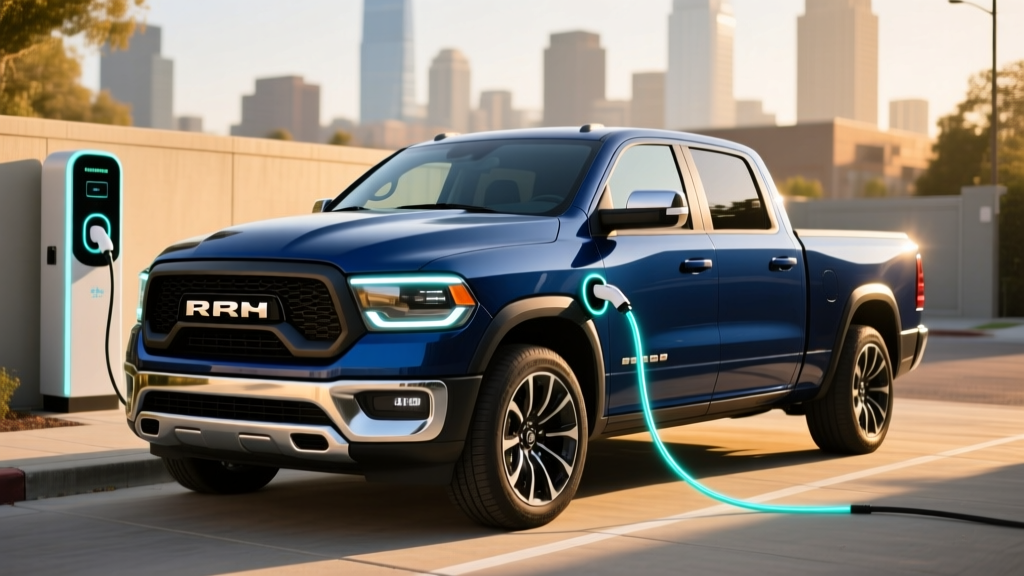
The Ram 1500 REV is Ram's first battery-electric full-size pickup, built on the STLA Frame platform. It offers up to 350 miles of EPA-estimated range (with the optional 229 kWh Max Range pack), 654 horsepower, and a starting MSRP around $58,095 before incentives. Real-world highway range drops to roughly 270–295 miles, and cold weather can cut that further. It competes directly with the Ford F-150 Lightning and Chevrolet Silverado EV. The REV makes sense if you tow light-to-moderate loads, have Level 2 home charging, and want a full-size truck without tailpipe emissions — but its heavy battery, limited public fast-charging infrastructure in rural areas, and ~$1,200+ annual insurance premiums mean it isn't for everyone.
Specs That Matter: Ram 1500 REV at a Glance
| Spec | Standard Range (168 kWh) | Max Range (229 kWh) |
|---|---|---|
| EPA Range | ~230 miles | ~350 miles |
| Real-World Highway Range | ~185–200 mi | ~270–295 mi |
| Battery Chemistry | NMC (nickel manganese cobalt) | NMC |
| Horsepower | 654 hp (dual motor AWD) | 654 hp (dual motor AWD) |
| 0–60 mph | ~4.4 seconds | ~4.4 seconds |
| Peak DC Fast Charge | ~150 kW | ~150 kW |
| 10–80% DC Charge Time | ~41 min | ~55 min |
| Level 2 (240V) Charge Rate | ~11.5 kW | ~11.5 kW |
| Max Towing Capacity | ~10,700 lbs | ~10,700 lbs |
| Max Payload | ~1,800 lbs | ~1,400 lbs (battery weight penalty) |
| Starting MSRP (Tradesman) | ~$58,095 | |
| Battery/Powertrain Warranty | 8 years / 100,000 miles | |
Note: Specs reflect announced/preliminary figures from Ram's official REV page. Final EPA certifications may vary by trim and model year. Always verify at fueleconomy.gov before purchase.
Real-World Range vs. the EPA Sticker
The 350-mile Max Range figure is compelling on paper, but full-size electric trucks face physics that sedans don't. The REV's boxy aerodynamics, heavy curb weight (~7,800+ lbs with the large pack), and tall ride height all work against highway efficiency.
What to Actually Expect
- Mixed driving (city/highway): ~300–320 miles on the Max Range pack
- Sustained 70–80 mph highway: ~270–295 miles — the large frontal area demands more energy at speed
- Cold weather (below 30°F): Expect a 20–35% reduction. The Max Range pack could deliver ~220–260 miles in freezing temps, especially with cabin heat running
- Towing (~7,000 lb trailer): Range can halve to ~150–180 miles depending on trailer aerodynamics and terrain
The REV uses NMC lithium-ion cells, which offer higher energy density than LFP chemistry but are more sensitive to extreme temperatures. Ram includes a thermal management system with battery preconditioning — activate it via the infotainment system before arriving at a DC fast charger to optimize charge speed.
Charging Speed and the Curve Reality
The Ram 1500 REV peaks at approximately 150 kW on a DC fast charger using its CCS connector. That's a competitive figure, but peak kW is not sustained kW. Here's how the charge curve actually behaves:
| Charging Level | Power (kW) | Miles of Range Added Per Hour | Typical Use Case |
|---|---|---|---|
| Level 1 (120V household) | ~1.3 kW | ~3–4 mi/hr | Emergency/trickle only |
| Level 2 (240V home) | ~11.5 kW | ~28–33 mi/hr | Overnight home charging |
| DC Fast (150 kW peak) | 150 kW → tapers | ~170 mi in first 20 min | Road trips |
On a 150 kW station, the REV charges from 10–80% in roughly 41 minutes (Standard Range) or 55 minutes (Max Range). However, once you pass 80% state of charge, the charge rate drops sharply to protect the battery — the final 80–100% can take as long as the first 70%. For road trips, plan stops around the 10–80% window to minimize downtime.
Home Level 2 charging is essential for daily ownership. A full overnight charge on an 11.5 kW Level 2 station adds roughly 28–33 miles per hour — enough to replenish the Standard Range pack in ~15 hours or the Max Range pack in ~20 hours from near-empty. Most owners charging nightly from 30–80% will wake up fully ready.
Ram 1500 REV vs. Gas F-150 vs. Lightning: Cost Breakdown
Buying an electric truck isn't just about the sticker price. Here's a 5-year total cost comparison against two benchmarks:
| Cost Factor (5 Years) | Ram 1500 REV Max Range (~$70K Laramie) | Ford F-150 Lightning (~$60K Lariat) | Gas Ram 1500 V6 (~$52K Laramie) |
|---|---|---|---|
| Purchase Price (MSRP) | ~$70,000 | ~$60,000 | ~$52,000 |
| Federal Tax Credit (§30D) | Up to $7,500* | Up to $7,500* | $0 |
| Fuel / Electricity (75K mi) | ~$5,200 (home charging) | ~$5,400 | ~$11,250 (20 MPG, $3/gal) |
| Maintenance (5 yr) | ~$1,500 | ~$1,500 | ~$4,000 |
| Insurance (5 yr avg) | ~$9,500 | ~$8,500 | ~$7,000 |
| Estimated 5-Year Total | ~$83,700 | ~$72,900 | ~$74,250 |
*The §30D federal EV tax credit has strict eligibility requirements: buyer income caps ($150K single / $300K joint), vehicle MSRP caps ($80K for trucks), and battery critical-mineral sourcing rules that change annually. Verify your eligibility at IRS.gov or with a tax professional. Point-of-sale transfer is available at participating dealers.
The REV's higher purchase price is partially offset by dramatically lower fuel and maintenance costs. However, EV insurance premiums run 25–40% higher than comparable gas trucks due to battery replacement costs and specialized repair requirements. Over 5 years, the REV roughly breaks even with a gas Ram 1500 on total cost — but you get far more performance and a quieter, smoother drive.
Home Charging: What You Actually Need
Owning the Ram 1500 REV without reliable home charging is impractical. Public DC fast chargers are expensive ($0.35–$0.55/kWh in many areas) and inconsistent in availability, especially in rural regions where truck owners often live.
| Item | Cost Range | Notes |
|---|---|---|
| Level 2 Charger (hardware) | $400–$800 | ChargePoint Home Flex, Emporia Vue, Wallbox Pulsar Plus |
| Electrician (240V/50A circuit) | $800–$2,500 | Depends on panel proximity and conduit run length |
| Electrical Panel Upgrade (if needed) | $1,500–$4,000 | Required if your panel is 100A or near capacity |
| Permit & Inspection | $100–$300 | Varies by municipality |
| Total Typical Install | $1,300–$3,600 | Without panel upgrade; $2,800–$7,600 with upgrade |
The REV's ~11.5 kW onboard charger requires a 48-amp continuous circuit (60-amp breaker) for maximum charging speed. Have a licensed electrician assess your panel before purchasing — many older homes with 100-amp service will need an upgrade to safely support EV charging alongside existing loads like HVAC and electric ovens.
Common Misconceptions About Electric Trucks
| Myth | Fact |
|---|---|
| "The battery will need replacing in 5 years" | Ram warrants the battery for 8 years/100,000 miles with a minimum 70% capacity retention. NMC degradation typically levels off at ~10–15% loss after 150K+ miles based on industry data. |
| "Electric trucks can't tow" | The REV tows up to 10,700 lbs — competitive with half-ton gas trucks. The trade-off is range: towing cuts range roughly in half. |
| "Charging takes too long for road trips" | At 150 kW, 10–80% takes ~41–55 min. Combined with meal/rest stops, this adds 20–30 minutes per 250 miles — manageable for most drivers. |
| "EVs are worse in cold weather" | Range drops 20–35% in freezing temps, but the REV's heat pump and preconditioning mitigate this. Remote preconditioning while plugged in means a warm cabin with no range penalty at departure. |
| "I'll save $7,500 no matter what" | The §30D credit has income caps, MSRP limits, and battery-sourcing requirements. Many buyers qualify for partial or no credit depending on the model year and sourcing rules. |
Decision Framework: Is the Ram 1500 REV Right for You?
Choose the Ram 1500 REV if:
- You have (or can install) Level 2 home charging and drive under 250 miles daily
- You want 654 hp, instant torque, and a near-silent powertrain in a full-size truck
- You tow occasionally but not daily long-haul (under 10,700 lbs, trips under 150 mi one-way)
- You qualify for the §30D tax credit, bringing effective cost closer to $50K–$62K
- You value V2L (vehicle-to-load) capability for job-site power or tailgating
Consider the Ford F-150 Lightning instead if:
- You need a more proven platform with years of real-world ownership data
- You want a lower starting price and broader dealer/service network
- BlueCruise hands-free highway driving is a priority
Stick with a gas or hybrid Ram 1500 if:
- You tow heavy loads daily over long distances (range and charging infrastructure remain limiting)
- You live in an area with minimal public DC fast charging and cannot install Level 2 at home
- You need maximum payload capacity (the REV's heavy battery reduces payload vs. gas models)
- Your annual mileage is low enough that fuel savings won't offset the higher purchase price
Frequently Asked Questions
Does the Ram 1500 REV qualify for the $7,500 federal tax credit?
Potentially. The §30D credit requires the truck's MSRP to be under $80,000 (which most REV trims satisfy), your adjusted gross income to be under $150K (single) or $300K (joint), and the battery to meet critical-mineral and component sourcing thresholds that tighten each year. Some trims may qualify for the full $7,500, a partial credit, or none at all. Check the latest sourcing requirements on IRS.gov and confirm with your dealer before purchase. Point-of-sale transfer lets you apply the credit as a down payment reduction at participating dealerships.
How does the REV's range compare to the Ford F-150 Lightning?
The Lightning Extended Range offers an EPA-estimated ~320 miles with a 131 kWh battery. The REV Max Range targets ~350 miles with its larger 229 kWh pack. In real-world highway driving, both trucks deliver roughly 270–295 miles. The REV's advantage is its larger battery buffer; the Lightning's advantage is a lighter overall vehicle and slightly better efficiency per kWh.
Can I charge the Ram 1500 REV at Tesla Superchargers?
As of 2026, Ram has equipped the REV with a CCS connector. Tesla's NACS Supercharger network is opening to non-Tesla EVs via built-in adapters or integrated NACS ports on select new vehicles. Check whether your specific REV trim includes a NACS port or whether Ram provides a CCS-to-NACS adapter. The Electrify America, EVgo, and ChargePoint networks all support CCS natively.
What happens to the battery after the warranty expires?
NMC batteries typically retain 80–85% of original capacity after 150,000+ miles based on fleet data from similar platforms. Out-of-warranty replacement for a pack this size (168–229 kWh) could cost $15,000–$25,000+ at current pricing, though costs are expected to decline as the supply chain matures. Most owners will trade in or sell before facing this expense.
Is the Ram 1500 REV good for off-road use?
The REV comes with standard AWD via its dual-motor setup and offers decent ground clearance. However, the extreme curb weight (~7,800+ lbs) limits its agility on technical trails compared to lighter platforms. It's suitable for fire roads, camping access, and light off-road work, but serious rock crawling or deep mud isn't its strength. The underbody battery pack is armored but remains a high-value component to protect.