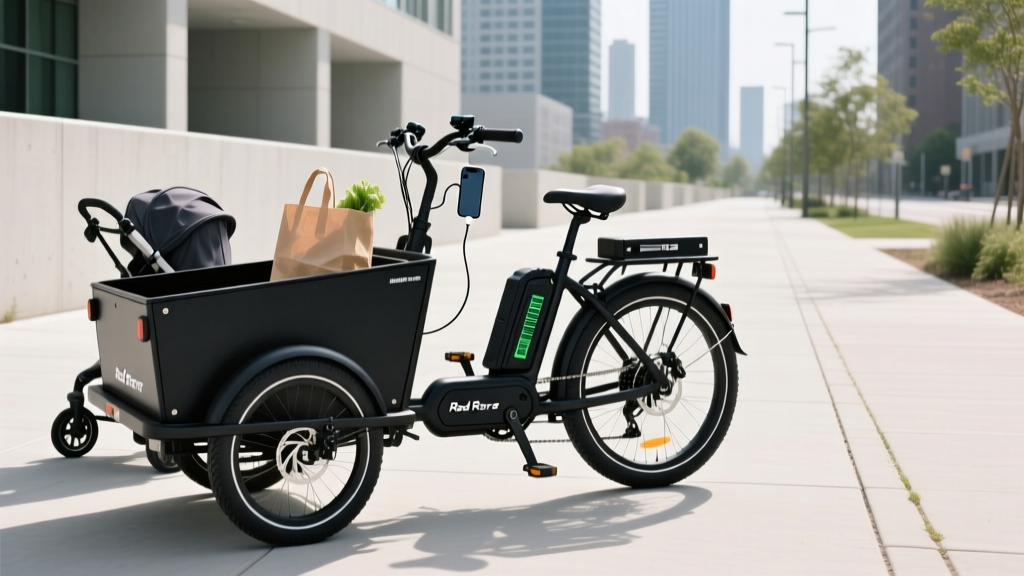
If you're researching the Rad Power Bikes RadWagon 5 electric cargo bike as a potential car replacement or supplement, here's the direct answer: the RadWagon 5 offers a 750W rear-hub motor, a 672 Wh (48V, 14Ah) lithium-ion battery, and a claimed range of 20–45 miles per charge depending on assist level and cargo load. It starts around $1,899 and qualifies for some state/local e-bike rebates but does not qualify for the federal §30D EV tax credit (which applies only to four-wheeled vehicles). For urban errands and short commutes under 15 miles each way, it can meaningfully reduce car trips. For longer commutes, highway travel, or extreme weather, you'll still need a primary vehicle.
Quick Verdict: Who Is the RadWagon 5 For?
- Best for: Urban/suburban riders hauling kids, groceries, or cargo on trips under 20 miles round-trip, with access to a standard 120V outlet for charging.
- Not ideal for: Commutes exceeding 20 miles one-way, rural areas without bike infrastructure, or riders in regions with sustained sub-30°F winters who need daily reliability.
- Bottom line: A practical second-vehicle replacement at ~$1,899, but not a sole-vehicle solution for most households.
RadWagon 5 Specs: Range, Motor, Battery, and Charging
The RadWagon 5 uses a 750W (nominal) rear-hub motor with pedal assist up to 20 mph (Class 2 e-bike classification, with a throttle option). The 672 Wh battery is the core constraint — here's what that means in practice.
| Spec | Value |
|---|---|
| Motor | 750W rear hub (nominal) |
| Battery | 672 Wh (48V, 14Ah), lithium-ion NMC |
| Claimed Range | 20–45 miles (varies by assist level, cargo, terrain) |
| Real-World Range (cargo load, PAS 3) | ~25–32 miles |
| Top Assisted Speed | 20 mph (Class 2) |
| Charge Time (0–100%, 120V) | ~5–6 hours |
| Charger Included | 2A standard charger (96W) |
| Max Cargo Capacity | 150 lbs rear rack + rider weight |
| Base Price (MSRP) | ~$1,899 |
Real-World Range Reality
Rad Power claims up to 45 miles on the lowest assist setting with a light rider on flat terrain. In our experience with cargo bikes in this watt-hour class, expect 25–32 miles when carrying 40–80 lbs of cargo or a child seat on mixed terrain at PAS 3 (moderate assist). Cold weather (below 40°F) reduces lithium-ion battery output by 15–30%, dropping effective range to roughly 18–27 miles. Plan your routes around the conservative number, not the sticker.
How Does the RadWagon 5 Compare to an EV Car or Hybrid?
The honest comparison isn't RadWagon vs. Tesla Model Y — it's RadWagon vs. the second car in a two-car household, or vs. the short trips that make up the bulk of daily driving. According to the U.S. Department of Energy, roughly 60% of daily vehicle trips in the U.S. are under 6 miles. That's where a cargo e-bike excels.
| Factor | RadWagon 5 | Used Gas Car (2nd Vehicle) | New Compact EV (e.g., Chevy Bolt EV) |
|---|---|---|---|
| Upfront Cost | ~$1,899 | $8,000–$15,000 | ~$26,500 (before credits) |
| "Fuel" Cost per Mile | ~$0.004–$0.008 | ~$0.12–$0.18 | ~$0.03–$0.05 |
| Annual Insurance | $0–$150 (optional) | $800–$1,500 | $1,200–$2,000 |
| Annual Maintenance | $100–$300 | $600–$1,200 | $300–$600 |
| Range | 25–32 miles (real-world) | 300–400 miles | 230–259 miles (EPA) |
| Weather Limitations | Significant (rain, snow, extreme cold) | Minimal | Minimal (cold reduces range ~20%) |
| Parking | Free, anywhere bikes fit | Varies | Varies |
| Federal Tax Credit | None (not a 4-wheeled vehicle) | None | Up to $7,500 (§30D, income/MSRP rules apply) |
The cost-per-mile advantage of the RadWagon 5 is dramatic: at roughly $0.006/mile in electricity (charging a 672 Wh battery at the national average of ~$0.16/kWh), it costs about $0.15 to fully charge — versus $4–$7 to fill a gas car for equivalent short trips.
Total Ownership Cost Breakdown: Year 1 Through Year 5
Let's model a realistic ownership scenario: 4,000 miles/year (roughly 15 miles/day, 5 days/week, with weekends off), which is ambitious but achievable for an urban cargo bike user replacing short car trips.
| Cost Category | RadWagon 5 (5-Year) | Used Gas Sedan (5-Year) |
|---|---|---|
| Purchase Price | $1,899 | $12,000 |
| Fuel/Energy | $120 (5 yrs at $0.006/mi) | $7,500 (5 yrs at $0.15/mi avg) |
| Insurance | $500 (optional, 5 yrs) | $5,500 |
| Maintenance & Repairs | $1,000 (tires, brakes, chain, tune-ups) | $4,000 |
| Battery Replacement (Year 3–4) | $500–$700 | N/A |
| Registration/DMV | $0–$50 (varies by state) | $500–$1,500 |
| Total 5-Year Cost | ~$4,019–$4,269 | ~$29,500–$31,500 |
| Cost per Mile | ~$0.20–$0.21 | ~$1.48–$1.58 |
Even factoring in a mid-life battery replacement (the 672 Wh pack will degrade to ~80% capacity after 500–800 full charge cycles, typically 3–4 years of daily use), the RadWagon 5 costs roughly 85% less per mile than a used gas car over five years.
Charging at Home: What You Actually Need
Unlike an electric car that may require a 240V Level 2 charger installation, the RadWagon 5 charges from a standard 120V household outlet. The included 2A charger delivers roughly 96W, meaning a full 672 Wh charge takes about 5–6 hours.
Charging Logistics for Apartment Dwellers
The battery is removable — you can carry it indoors (it weighs about 7.5 lbs) and charge it at your desk or kitchen counter. This eliminates the "home charging access" barrier that plagues many EV car buyers in apartments. However, if you ride daily and drain 50%+ of the battery each day, plan to charge nightly. There's no fast-charging option; the chemistry and BMS (battery management system) aren't designed for rapid DC charging.
Charging Cost Math
At the U.S. average electricity rate of ~$0.16/kWh, a full 0.672 kWh charge costs roughly $0.11. Even at California's higher rates (~$0.30/kWh), it's about $0.20. If you charge nightly, annual electricity cost is roughly $40–$75.
Common Misconceptions About E-Bikes as Car Replacements
| Myth | Fact |
|---|---|
| "E-bikes qualify for the $7,500 federal EV tax credit." | The IRS §30D credit applies only to four-wheeled plug-in electric vehicles. E-bikes are excluded. Some states (e.g., Colorado, California) offer separate e-bike rebates of $300–$1,500 — check your local program. |
| "The 45-mile range means I can commute 22 miles each way." | At moderate assist with cargo, expect 25–32 miles total. A 22-mile round trip is feasible, but leaves minimal buffer for detours, headwinds, or battery degradation over time. |
| "I don't need to maintain an e-bike." | The drivetrain (chain, cassette, brake pads, tires) requires the same maintenance as a conventional bicycle. Budget $150–$300/year for tune-ups, and more if riding in rain or carrying heavy loads. |
| "The battery will last forever." | NMC lithium-ion batteries degrade. Expect 500–800 full charge cycles before capacity drops to ~80%. With daily charging, plan for a replacement pack ($500–$700) in years 3–5. |
| "I can ride year-round in any weather." | Possible with proper gear, but cold reduces battery output 15–30%, rain increases flat-tire risk, and snow/ice makes cargo bike handling dangerous. Most riders in four-season climates use the bike 7–9 months/year. |
Decision Framework: Should You Buy the RadWagon 5?
If X, Then Y
- If your daily trips are under 15 miles round-trip, you have bike-lane access, and you want to eliminate a second car → the RadWagon 5 is a strong candidate. Budget ~$2,500 total (bike + lock + lights + panniers + helmet).
- If you need to carry two children or 100+ lbs of cargo regularly → consider a longtail cargo bike with a higher-capacity battery (e.g., RadTrike or a mid-drive cargo bike with 900+ Wh), as the 672 Wh pack will feel limiting under heavy loads.
- If your commute exceeds 20 miles one-way or requires highway-speed travel → the RadWagon 5 is not your primary vehicle. Look at a used EV (Chevy Bolt, Nissan Leaf) or a PHEV (Toyota RAV4 Prime) instead.
- If you live in an apartment without secure bike storage → theft risk is significant. Cargo bikes are high-value targets. Factor in a $200–$400 U-lock and/or indoor storage solution before purchasing.
- If you're in a state with e-bike rebates (CO, CA, CT, VT, and others as of 2025–2026) → check eligibility before buying; you may save $300–$1,500 at point of sale or via tax return.
What First-Time E-Bike Buyers Should Know Before Purchasing
The RadWagon 5 is a well-reviewed entry point into cargo e-bikes, but ownership has nuances that marketing pages don't highlight:
- Test-ride loaded. A cargo bike handles very differently with 60 lbs on the rear rack versus empty. If possible, test with weight before committing.
- Secure storage is non-negotiable. At $1,899, this is a theft target. A garage, locked shed, or high-security indoor space is essential.
- Brake wear accelerates with cargo. The RadWagon 5 uses mechanical disc brakes. Under heavy loads, expect to replace pads every 1,000–2,000 miles. Some owners upgrade to hydraulic discs for better stopping power.
- Tire punctures are more disruptive. With a loaded rear rack, changing a flat on the road is difficult. Carry a patch kit, spare tube, and consider tire liners or sealant.
- The throttle is convenient but range-killing. Using throttle-only mode (no pedaling) can cut range by 40–50%. Use pedal assist for efficiency.
Frequently Asked Questions
Does the Rad Power Bikes RadWagon 5 qualify for any tax credits or incentives?
Not the federal §30D EV tax credit — that applies only to four-wheeled plug-in vehicles per IRS guidelines. However, several states and municipalities offer e-bike-specific rebates (Colorado's e-bike tax credit, California's CARB vouchers, various city programs). Check your state energy office or local air quality district for current programs.
How long does the RadWagon 5 battery last before needing replacement?
The NMC lithium-ion battery is rated for approximately 500–800 full charge cycles before degrading to ~80% of original capacity. With daily charging, that translates to roughly 2–4 years of heavy use before you'll notice meaningful range loss. A replacement battery costs approximately $500–$700 from Rad Power Bikes.
Can the RadWagon 5 replace my car entirely?
For most households, no — but it can replace 50–70% of short car trips. It excels at grocery runs, school drop-offs, and commutes under 15 miles. For highway travel, long distances, severe weather, or hauling large items, you'll still need a car (or access to one via car-share or a second vehicle).
How does the RadWagon 5 handle in rain and cold weather?
The electrical components are weather-resistant (not waterproof), and the bike can be ridden in light rain. However, cold temperatures (below 40°F) reduce battery output by 15–30%, and wet roads increase braking distance and flat-tire risk. Fenders, waterproof panniers, and cold-weather riding gear are necessary for year-round use in most climates.
What's the actual cost per mile to operate the RadWagon 5?
Electricity cost alone is roughly $0.004–$0.008 per mile. Factoring in maintenance (tires, brakes, chain), insurance, and an eventual battery replacement, total operating cost is approximately $0.10–$0.21 per mile — compared to $0.55–$0.70/mile for the average gas car (per AAA's annual driving cost study) and $0.35–$0.50/mile for a compact EV.