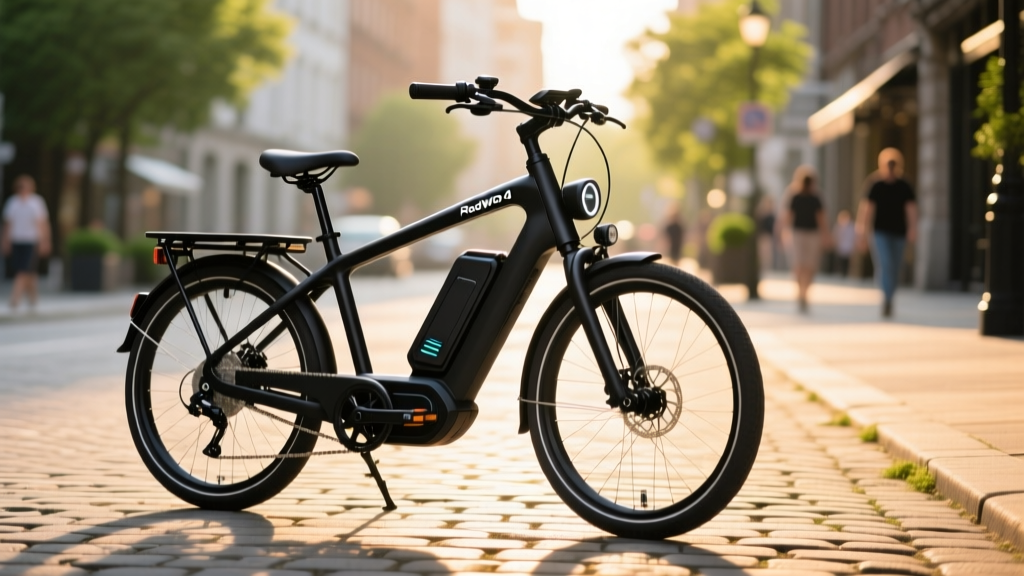
The RadWagon 4 electric cargo bike is a Class 2 e-cargo utility bike priced at $1,899, featuring a 750W rear hub motor, a 48V 14Ah (672 Wh) lithium-ion battery, and an EPA-estimated range of up to 45 miles. It's designed for urban cargo hauling — groceries, kids, and last-mile deliveries — at speeds up to 20 mph under throttle. If you're evaluating it as a partial car replacement, the real-world range with a 100+ lb payload drops to roughly 25–35 miles, and full recharges cost about $0.10 at the average US electricity rate. It's a compelling tool for specific trip patterns, but it is not a universal vehicle replacement.
RadWagon 4 Core Specifications and Performance
Rad Power Bikes positions the RadWagon 4 as their flagship cargo hauler, and the spec sheet reflects that purpose. Here's the complete breakdown of what you're buying:
| Specification | Value |
|---|---|
| Base MSRP | $1,899 |
| Motor | 750W geared rear hub motor |
| Battery | 48V 14Ah (672 Wh), lithium-ion NMC cells |
| Claimed Range | Up to 45 miles (pedal assist, flat terrain, light load) |
| Real-World Cargo Range | 25–35 miles (100+ lb payload, mixed terrain) |
| Top Speed (Class 2) | 20 mph (throttle and pedal assist) |
| Payload Capacity | 350 lbs total (rider + cargo) |
| Rear Rack Capacity | 120 lbs |
| Charge Time (0–100%) | 5–6 hours (120V standard outlet, ~2A charger) |
| Bike Weight | ~77 lbs |
| Brakes | Mechanical disc brakes |
| Warranty | 1 year comprehensive |
A critical note on the battery: the 672 Wh capacity uses NMC (nickel manganese cobalt) lithium-ion cells, which offer good energy density but require care to maximize lifespan. Avoid storing the battery at 100% or 0% state of charge for extended periods, and bring the battery indoors during freezing temperatures — cold charging below 32°F can permanently damage lithium-ion cells.
The Car-Replacement Math: RadWagon 4 vs. Gas Vehicle
The most common question from prospective e-cargo bike buyers is whether the RadWagon 4 can realistically replace car trips — and what the financial impact looks like. The answer depends entirely on your trip profile. According to FHWA National Household Travel Survey data, roughly 60% of all US vehicle trips are under 6 miles, and the average American drives about 37 miles per day. The RadWagon 4 can cover many of those short trips, but not all of them.
| Cost Factor | RadWagon 4 | 2026 Toyota RAV4 (Gas AWD) |
|---|---|---|
| Purchase Price | $1,899 | $32,350 |
| Energy Cost per Mile | $0.004 (at $0.17/kWh) | $0.14 (at $3.50/gal, 28 MPG combined) |
| Annual Fuel/Energy (5,000 mi) | $20 | $700 |
| Annual Insurance | $0–$200 (optional) | $1,600 (avg US) |
| Annual Maintenance | $100–$200 (tires, brakes, chain) | $600–$900 |
| Registration / Taxes | $0 | $150–$400 |
| Total Year-1 Cost | ~$2,119–$2,299 | ~$35,400–$35,950 |
| Annual Running Cost (Years 2+) | ~$220–$400 | ~$3,050–$3,600 |
The savings are dramatic — but only for trips the RadWagon 4 can actually handle. It cannot replace highway commutes, long road trips, or trips in severe weather without significant compromise. Think of it as a second-vehicle replacement or a primary vehicle for car-light urban households, not a one-to-one car substitute for most American families.
For context against an electric vehicle like the Chevrolet Equinox EV (EPA range 319 miles, ~$35,000 base), the RadWagon 4 wins on upfront cost by a factor of 18x, but the EV provides all-weather capability, highway speeds, and a range that covers virtually any daily driving need.
Charging the RadWagon 4: What You Need to Know
One of the RadWagon 4's biggest advantages over an electric car is charging simplicity. There's no need for a Level 2 home charger installation or a 240V outlet upgrade. Here's how charging works:
- Charger type: Included 48V 2A smart charger, plugs into any standard 120V household outlet
- Charging power: ~96W (2 amps × 48 volts) — comparable to running two laptop chargers
- Full charge time: 5–6 hours from empty
- Cost per full charge: ~$0.10 (672 Wh ÷ charger efficiency × $0.17/kWh national average)
- Annual electricity cost: ~$20 for 5,000 miles of riding (assuming 13.5 Wh/mile average consumption)
The battery is removable, meaning apartment dwellers can carry it inside to charge — a significant advantage for riders without garage or outdoor outlet access. However, you must store and charge the battery in a temperature-controlled environment (ideally 50–77°F). Charging lithium-ion batteries below freezing causes lithium plating on the anode, which permanently degrades capacity and creates a safety risk.
Real-World Ownership Considerations
Beyond the spec sheet, several practical factors determine whether the RadWagon 4 fits your life:
Climate and Seasonality
If you live in a region with harsh winters — sustained temperatures below 30°F, heavy snow, or icy roads — the RadWagon 4 becomes a seasonal vehicle for most riders. Battery range drops 15–30% in cold weather, mechanical disc brakes perform poorly in wet conditions compared to hydraulic discs, and riding in snow or ice is genuinely dangerous on a heavy cargo bike. Riders in Phoenix, San Diego, or Miami can use it year-round; riders in Minneapolis or Buffalo will likely shelve it for 3–4 months.
Cargo Capacity vs. Reality
The 120-lb rear rack capacity handles two small children in compatible seats (Rad Power Bikes sells the Yepp Maxi and Thule Yepp Nexxt Maxi child seats) or roughly 4–6 bags of groceries. However, the 77-lb bike weight plus cargo means the bike is difficult to carry up stairs, hard to load onto car racks, and challenging to maneuver at walking speed when fully loaded. The 350-lb total payload (rider + cargo) is generous but means a 220-lb rider can only carry 130 lbs of cargo — just above the rack limit.
Security and Theft
E-bike theft is a significant and growing problem in US cities. The RadWagon 4's high visibility and $1,899 price tag make it a target. Budget $150–$300 for a U-lock and chain lock combination, and consider e-bike-specific insurance through providers like Velosurance or Sundae (typically $100–$250/year for theft, damage, and liability coverage).
Maintenance
Unlike electric cars, e-cargo bikes require regular mechanical maintenance: chain lubrication every 200–300 miles, brake pad replacement every 1,000–2,000 miles (sooner with heavy cargo loads), tire replacement every 2,000–3,000 miles, and annual tune-ups at a bike shop ($80–$150). The hub motor and battery require essentially zero maintenance, but the mechanical bicycle components wear faster under cargo loads than on a standard commuter bike.
Common Misconceptions About E-Cargo Bikes
| Myth | Fact |
|---|---|
| "E-cargo bikes don't need to be registered or insured." | Most states classify Class 2 e-bikes (throttle up to 20 mph) as bicycles, requiring no registration. However, some municipalities have specific e-bike rules, and theft/damage insurance is strongly recommended. Check your local laws. |
| "45 miles of range means I can ride 45 miles any day." | The 45-mile range is a best-case scenario with a light rider on flat ground using low assist. Real cargo-hauling range is 25–35 miles, and cold weather reduces that further. Plan trips using the lower number. |
| "I can ride it in any weather like a car." | Mechanical disc brakes lose significant stopping power in rain. The battery should not be charged below freezing. Heavy rain, snow, and ice make a 77-lb cargo bike genuinely unsafe for most riders. |
| "The battery will last forever." | NMC lithium-ion batteries typically retain 70–80% of original capacity after 500–800 full charge cycles. With daily charging, expect noticeable range loss after 2–3 years. Replacement batteries cost $500–$700. |
| "It qualifies for the federal EV tax credit." | The IRS §30D Clean Vehicle Credit applies to four-wheeled motor vehicles with a GVWR under 14,000 lbs. E-bikes do not qualify. Some states and utilities offer separate e-bike rebates — check DSIRE for local incentives. |
Decision Framework: Is the RadWagon 4 Right for You?
Choose the RadWagon 4 if:
- Your most common car trips are under 10 miles round-trip (grocery runs, school drop-offs, café trips)
- You live in a region with mild winters or are willing to use it seasonally
- You have secure, indoor bike storage with access to a standard outlet
- Your typical cargo load is under 100 lbs (two small children or a week of groceries)
- You already own a car for longer trips and want to reduce short-trip driving
- Your household budget for a second vehicle is under $2,500
Choose an EV or PHEV instead if:
- Your daily commute exceeds 15 miles one-way or involves highway driving
- You need year-round all-weather transportation in a cold/snowy climate
- You regularly carry more than two passengers or 150+ lbs of cargo
- You lack secure indoor bike storage (high theft risk)
- You need a single primary vehicle that handles all trip types
- You qualify for the §30D federal tax credit (up to $7,500 for qualifying new EVs, subject to MSRP caps, income limits, and battery sourcing rules)
Choose a conventional bicycle or walk if:
- Your trips are under 3 miles and you don't regularly carry heavy cargo
- Your fitness goals favor human-powered transportation
- You want zero ongoing energy costs and minimal maintenance complexity
RadWagon 4 vs. Competitors: Quick Market Context
The e-cargo bike market has expanded significantly. Here's how the RadWagon 4 compares to key alternatives:
- Lectric Xpress 750 (~$1,499): Lower price, similar 750W motor, but smaller battery (500 Wh) and lower 150-lb rack capacity. Better for budget buyers with lighter cargo needs.
- Tern GSD S10 (~$5,399): Premium option with a Bosch mid-drive motor, 200-kg (440-lb) cargo capacity, dual-battery capability for 128-mile range, and hydraulic disc brakes. Justified for daily commercial use or families who need maximum capability.
- Aventon Abound (~$1,799): Direct RadWagon 4 competitor with similar specs, slightly lower 808 Wh battery option available, and a torque sensor for smoother pedal assist. Comparable choice — test ride both if possible.
Frequently Asked Questions
Does the RadWagon 4 qualify for any tax credits or incentives?
No. The federal §30D Clean Vehicle Credit applies only to four-wheeled vehicles. E-bikes are not eligible. However, some states (California, Colorado, Massachusetts, and others) and local utilities offer e-bike rebates ranging from $100 to $1,500. Check the DSIRE incentive database for programs in your area.
How long will the RadWagon 4 battery last before needing replacement?
NMC lithium-ion batteries typically retain 70–80% of original capacity after 500–800 full charge cycles. If you charge daily, expect 2–3 years before noticeable range reduction and 4–5 years before you'll want a replacement. Rad Power Bikes sells replacement batteries for approximately $500–$700. Maximize battery life by storing between 20–80% charge when not in use and avoiding extreme temperatures.
Can I ride the RadWagon 4 in the rain?
The bike's electrical components are water-resistant (not waterproof), and Rad Power Bikes rates it for light rain. However, mechanical disc brakes lose significant stopping power when wet, the 77-lb weight makes hydroplaning on wet surfaces more dangerous, and prolonged heavy rain exposure can damage electrical connections. If you ride in rain regularly, install full-coverage fenders and consider upgrading to hydraulic disc brakes ($200–$350 aftermarket).
How does the RadWagon 4 compare to a plug-in hybrid like the Toyota RAV4 Prime?
They serve fundamentally different purposes. The RAV4 Prime PHEV ($45,000+, 42 miles electric-only range, 38 MPG gas) handles all trip types including highway, long-distance, and severe weather. The RadWagon 4 handles short urban cargo trips at a fraction of the cost. For many households, the ideal setup is a PHEV for long and all-weather trips plus an e-cargo bike for daily short-haul errands — capturing most of the fuel savings without sacrificing capability.
What's the actual cost per mile to ride the RadWagon 4?
At the US average electricity rate of $0.17/kWh, a full 672 Wh charge costs about $0.11 and provides roughly 30 real-world cargo miles — that's approximately $0.004 per mile in energy. Adding maintenance ($150/year over 5,000 miles = $0.03/mile), total operating cost is roughly $0.034/mile. Compare that to a gas car at $0.14/mile (fuel only) or an EV like the Equinox EV at $0.04/mile. The e-cargo bike is the cheapest motorized transportation option available.