The Verdict: A Stylish Starter EV for the Driveway Set
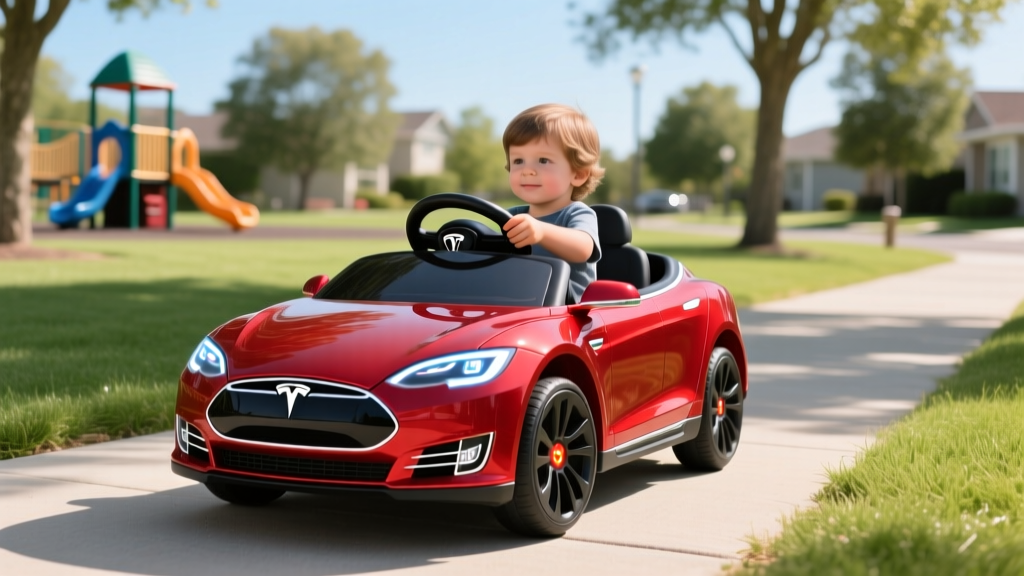
If you've spent any time browsing gifts for a toddler, you've likely encountered the Radio Flyer Tesla S — a 1:4-scale licensed replica of the Tesla Model S, designed for children ages 3 to 5. Unlike the full-size BEVs we typically review at AutoEdgeView, this ride-on runs on a 6-volt sealed lead-acid battery, tops out at roughly 3 mph, and costs a fraction of a Supercharger installation. But as a first introduction to the concept of an electric vehicle — complete with a working horn, LED headlights, and a miniature "frunk" — it occupies a genuinely interesting niche in the toy market.
This review evaluates the Radio Flyer Tesla S on the criteria that matter to parents and gift-givers: battery runtime, charge time, build quality, safety features, age-appropriateness, and value relative to competing ride-on toys. We'll also translate the specs into the EV terminology you already know, because understanding what a 6V/7Ah battery actually delivers in real-world playtime is no different from parsing a 82 kWh pack's usable capacity.
Specifications at a Glance
| Spec | Radio Flyer Tesla S (6V) |
|---|---|
| Battery | 6V / 7Ah sealed lead-acid (SLA) |
| Motor | Single rear-drive, ~25W |
| Top Speed | ~3 mph (forward), ~2 mph (reverse) |
| Run Time (real-world) | 40–60 minutes per full charge |
| Charge Time | 8–12 hours (included AC wall adapter) |
| Weight Capacity | Up to 49 lbs |
| Recommended Age | 3–5 years |
| Product Weight | ~18 lbs |
| Dimensions (L×W×H) | ~37 × 19 × 19 inches |
| MSRP | $249–$279 |
| Warranty | 1 year (limited); battery ~6 months |
Battery, Range, and Runtime: What 42 Wh Actually Gets You
The Radio Flyer Tesla S uses a 6-volt, 7 amp-hour (Ah) sealed lead-acid battery. For those keeping score in kWh terms, that's roughly 0.042 kWh (42 watt-hours) of total energy storage — compared to the ~82 kWh usable in a 2026 Tesla Model S Long Range. The chemistry is lead-acid, not lithium-ion, which means heavier weight per unit of energy and a shorter cycle life (typically 200–300 full cycles before noticeable capacity loss).
Claimed: ~1 hour of continuous drive time on a full charge.
Real-world: Expect 40–50 minutes of mixed stop-and-go play on flat pavement with a 35–45 lb child. Hills, grass, or a heavier rider will cut runtime to 25–35 minutes. Cold weather (below 50°F) further reduces SLA battery output by 15–25%, mirroring the range loss you'd see in a full-size BEV.
The single-speed forward/reverse gearbox and lightweight chassis mean efficiency is reasonable for the platform, but lead-acid batteries suffer from voltage sag under load. You'll notice the car slows noticeably in the final 10–15 minutes of a session — the toy equivalent of a charge-curve taper above 80% SoC, but happening at the bottom of the discharge curve instead.
Charging: Slow and Simple
Charging the Radio Flyer Tesla S is straightforward but slow. The included AC wall adapter (typically 6V/1A output) replenishes the battery in 8 to 12 hours from empty. There is no DC fast charging here — this is the toy equivalent of Level 1 trickle charging, and overnight is the only practical strategy.
| Charging Method | Power | 0–100% Time | Practical Note |
|---|---|---|---|
| Included AC adapter (Level 1 equivalent) | ~6W | 8–12 hours | Overnight charge only |
| Spare battery swap | N/A | ~30 seconds | Best workaround; spare batteries cost ~$15–$25 |
Pro tip for parents: Buy a second 6V 7Ah SLA battery (widely available online for $15–$25) and keep it charged. Swapping takes under a minute with a Phillips screwdriver and eliminates the "my toy is dead and won't be ready until tomorrow" meltdown. This is the ride-on equivalent of battery swapping — a concept NIO has pursued at full scale.
Unlike lithium-ion packs in full-size EVs, SLA batteries do not require sophisticated battery management systems (BMS) or thermal preconditioning. However, they do suffer from sulfation if left discharged for extended periods. Store the battery charged and top it off every 4–6 weeks during off-seasons to maximize cycle life.
Build Quality, Tech Features, and Drawbacks
What Works Well
The Radio Flyer Tesla S earns points for its officially licensed Tesla styling — the silhouette, faux grille, and even the badging mimic the Model S convincingly at a glance. LED headlights and taillights activate with a dashboard switch, and a working horn adds to the pretend-play authenticity. The molded plastic body is reasonably durable for driveway and sidewalk use, and the seat accommodates children up to 49 lbs comfortably with a basic lap belt.
Controls are simple: a foot pedal for acceleration and a dashboard toggle for forward/reverse. There's no steering assist or variable speed — it's on or off, full pedal or stop. For the 3–5 age range, this simplicity is a feature, not a bug. A parent-accessible speed limiter (high/low switch under the seat) caps speed at ~1.5 mph for beginners.
Notable Drawbacks
- No suspension: The rigid plastic chassis and hard plastic wheels transmit every crack and pebble. Rough surfaces, gravel, and grass are poorly handled compared to rubber-tired, spring-suspended competitors.
- Lead-acid battery limitations: Heavier, shorter-lived, and more temperature-sensitive than the lithium-ion packs used in premium ride-ons like the Peg Perego lineup.
- Single rider only: Unlike some 12V ride-ons with bench seats, this is a one-child vehicle.
- No app connectivity or Bluetooth: Some competitors (e.g., Best Choice Products 12V models) offer parental remote control via Bluetooth. The Radio Flyer Tesla S is entirely child-operated.
- Replacement parts availability: Motors and gearboxes are not easily user-serviceable beyond the battery. Once the drivetrain wears out, the vehicle is effectively disposable.
Pricing, Value, and How It Compares
The Radio Flyer Tesla S typically retails for $249 to $279, placing it in the mid-range for licensed ride-on toys. It's important to note that this product does not qualify for the IRS §30D federal EV tax credit — that credit applies to on-road motor vehicles meeting specific MSRP, income, battery-sourcing, and VIN-registration requirements. Toy ride-ons fall entirely outside that framework.
| Model | MSRP | Battery | Top Speed | Tax Credit |
|---|---|---|---|---|
| Radio Flyer Tesla S (6V) | $249–$279 | 6V / 7Ah SLA | ~3 mph | Not eligible |
| Best Choice Products 12V Kids Ride-On | $199–$249 | 12V / 7Ah SLA | ~3.7 mph | Not eligible |
| Peg Perego Tesla Model S (12V) | $349–$399 | 12V / 12Ah SLA | ~4.3 mph | Not eligible |
| Dakota Lil' Tesla (unlicensed) | $179–$219 | 6V / 4.5Ah SLA | ~2.5 mph | Not eligible |
Against the Peg Perego Tesla Model S for Kids (12V), the Radio Flyer version trades lower power and shorter runtime for a lower price and simpler operation. The Peg Perego offers two-speed shifting, rubber traction strips on its wheels, and a more robust gearbox — meaningful upgrades if your child will drive on slight inclines or uneven surfaces. If your use case is strictly flat driveways and patios, the Radio Flyer's 6V platform is adequate and saves $75–$120.
The Best Choice Products 12V ride-on undercuts the Radio Flyer on price while offering a 12V system and parental remote control — a genuine safety advantage for children near streets or driveways. The trade-off is unlicensed, generic styling that won't satisfy the Tesla-enthusiast parent.
Who Should Buy the Radio Flyer Tesla S?
- Your child is 3–4 years old, under 45 lbs, and will drive on flat, paved surfaces
- Tesla styling matters to your household and the licensed design adds gift appeal
- You want simple, foot-pedal-only operation without a remote to manage
- Budget is $250–$280 and you're willing to buy a spare battery separately
- Your child is 5+ or nearing the 49 lb weight limit (outgrowth will come fast)
- You need parental remote-control override for safety near roads
- Your terrain includes grass, gravel, or inclines (step up to a 12V model with rubber tires)
- You want longer runtime without battery swaps (12V/12Ah systems deliver 75–90 minutes)
Pros and Cons
Pros
- Officially licensed Tesla Model S styling with recognizable badging and silhouette
- LED headlights, working horn, and front "frunk" storage for pretend play
- Simple operation: foot pedal + forward/reverse toggle, no app setup required
- Parent speed limiter (1.5 mph / 3 mph) for beginner confidence
- Reasonably priced for a licensed ride-on at ~$260
- Replacement 6V batteries are cheap ($15–$25) and widely available
Cons
- 6V lead-acid battery delivers only 40–60 min runtime; voltage sag is noticeable
- 8–12 hour charge time with no fast-charge option
- Hard plastic wheels and no suspension — rough on cracks and uneven pavement
- No parental Bluetooth remote control (safety concern near streets)
- Single rider; outgrown quickly by larger or older children
- Drivetrain is not user-repairable once the motor or gearbox fails
Frequently Asked Questions
What is the real-world runtime of the Radio Flyer Tesla S?
Expect 40–60 minutes of mixed play on flat pavement with a child under 45 lbs. Hills, grass, and cold temperatures reduce runtime to 25–40 minutes. A spare battery swap is the most practical way to extend a play session.
How fast does the Radio Flyer Tesla S charge?
The included 6V AC wall adapter charges the battery from empty to full in 8–12 hours. There is no fast-charging option. Plan for overnight charging or keep a pre-charged spare battery on hand.
Does the Radio Flyer Tesla S qualify for the federal EV tax credit?
No. The IRS §30D clean vehicle credit applies only to on-road motor vehicles that meet MSRP caps, buyer income limits, battery-sourcing requirements, and are registered for road use. Toy ride-ons are not eligible.
Is the Radio Flyer Tesla S worth buying vs. competitors?
It's a solid pick for flat-surface, single-rider play where Tesla styling matters. For rougher terrain, longer runtime, or parental remote control, a 12V competitor like the Peg Perego Tesla Model S for Kids or a Best Choice Products 12V ride-on offers better capability — at a higher price or with generic styling, respectively.
How long will the battery last before needing replacement?
Sealed lead-acid batteries in this class typically last 200–300 full charge cycles, which translates to roughly 1–3 years depending on use frequency and storage care. Avoid leaving the battery discharged for long periods. Replacement 6V 7Ah SLA batteries cost $15–$25.
Is the Radio Flyer Tesla S safe for a 3-year-old?
The lap belt, speed limiter (1.5 mph low setting), and simple pedal operation make it appropriate for supervised 3-year-olds on flat, enclosed surfaces. However, the lack of parental remote control means an adult should always be within arm's reach near any slope, street, or driveway.
Can it handle grass or gravel?
Barely. The 6V motor and hard plastic wheels struggle on anything other than smooth pavement or concrete. Grass significantly increases rolling resistance and will drain the battery faster while delivering sluggish performance. For off-surface use, step up to a 12V ride-on with rubber traction tires.