If you're researching racing electric cars as a potential purchase, here's the direct answer: today's performance EVs deliver supercar-rivaling acceleration (0-60 mph in under 3 seconds for top models) and genuine track capability, but they carry premium purchase prices ($70,000–$200,000+), rapid tire wear under hard driving, significant range loss on track (often 40–60% below EPA estimates), and higher insurance costs than equivalent gas sports cars. They excel as daily-drivable performance machines that can handle occasional track days, but they are not yet a replacement for a dedicated, lightweight gas track car if your primary goal is lapping at club events every weekend.
The Real Cost of Owning a Racing Electric Car
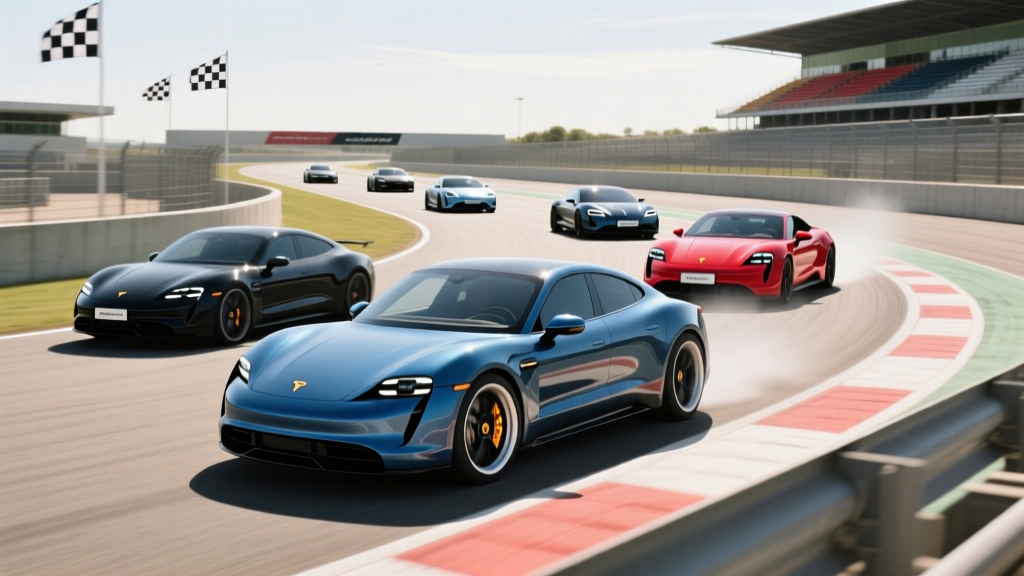
Track-capable EVs like the Tesla Model S Plaid, Porsche Taycan Turbo GT, Lucid Air Sapphire, and Hyundai Ioniq 5 N represent the current performance-EV landscape in 2026. Let's break down what ownership actually costs versus a gas performance baseline like the BMW M5 or Porsche 911 Turbo S.
Quick Answer: Racing Electric Cars vs Gas Sports Cars
Acceleration advantage: EVs. Instant torque delivers 0-60 times gas cars can't match at the price point (Model S Plaid: 1.99 sec vs BMW M5: ~3.0 sec).
Track endurance: Gas wins. Sustained high-speed lapping drains EV batteries fast and triggers thermal throttling; gas cars refuel in 3 minutes.
Daily usability: EVs win. Quiet commuting, low running costs, no gear shifts, and home charging make them superior daily drivers.
Running costs: EVs win for commuting, lose on track. Electricity is cheap per mile, but track driving burns energy at 3–5× the normal rate and accelerates tire wear severely.
Spec Breakdown: Top Racing Electric Cars in 2026
| Model | 0-60 mph | HP | Usable Battery (kWh) | EPA Range | Peak DC Charge (kW) | 10-80% Time | Base MSRP |
|---|---|---|---|---|---|---|---|
| Tesla Model S Plaid | 1.99 sec | 1,020 | 95 kWh (NMC) | 396 mi | 250 kW | ~27 min | $89,990 |
| Porsche Taycan Turbo GT | 2.1 sec | 1,019 (Launch Control) | 97 kWh (NMC) | 269 mi | 320 kW | ~18 min | $230,000 |
| Lucid Air Sapphire | 1.89 sec | 1,234 | 118 kWh (NMC) | 427 mi | 300 kW | ~22 min | $249,000 |
| Hyundai Ioniq 5 N | 3.25 sec | 641 (N Grin Boost) | 84 kWh (NMC) | 221 mi | 240 kW | ~18 min | $67,500 |
| BMW M5 (gas baseline) | 3.0 sec | 717 | N/A (18.6 gal tank) | ~370 mi (est.) | N/A | ~5 min (refuel) | $120,675 |
Sources: fueleconomy.gov, manufacturer press sites. Real-world range on track: expect 40–60% of EPA figures under sustained hard driving. Highway cruising at 75+ mph yields roughly 75–85% of EPA range.
⚡ Real-World Range Reality for Track Use
The Lucid Air Sapphire's 427-mile EPA range is exceptional for daily driving, but at a track day with sustained 100+ mph laps, that range can drop to 150–200 miles before thermal management intervenes. A Tesla Model S Plaid owner doing a 20-minute track session at Laguna Seca may use 15–25% of battery per session. Plan for 2–3 sessions before needing a charge — and most race tracks lack DC fast chargers on-site.
EV vs Gas: The Ownership Cost Comparison
Let's compare a Hyundai Ioniq 5 N (the most accessible racing electric car) against a BMW M3 Competition (gas) over 5 years and 60,000 miles, assuming 80% daily commuting and 20% spirited/track driving.
| Cost Category | Hyundai Ioniq 5 N (EV) | BMW M3 Competition (Gas) |
|---|---|---|
| Base MSRP | $67,500 | $76,900 |
| Federal Tax Credit (§30D) | $0 (Ioniq 5 N does not qualify — MSRP/sourcing) | N/A |
| 5-Year Energy Cost (60k mi) | ~$5,400 (home + DCFC mix) | ~$11,500 (premium gas, 17 MPG combined spirited) |
| 5-Year Maintenance | ~$1,800 (cabin filter, brake fluid, wipers) | ~$4,200 (oil, brakes, filters, spark plugs) |
| Tire Replacement (5 yr) | ~$4,800 (2 sets, high-wear performance tires) | ~$3,600 (2 sets) |
| Insurance (5 yr avg) | ~$14,000 ($233/mo avg) | ~$12,000 ($200/mo avg) |
| 5-Year Total Cost | ~$93,500 | ~$108,200 |
The EV saves roughly $14,700 over 5 years primarily through energy and maintenance savings, even without a federal tax credit. However, that gap narrows significantly if you track the car frequently — tire wear accelerates dramatically under hard cornering and regen-heavy braking, and DC fast charging at the track (if available) costs 2–3× home charging rates.
Tax credit note: As of 2026, the Hyundai Ioniq 5 N does not qualify for the §30D federal credit due to battery sourcing requirements. Always verify current eligibility on IRS.gov, as rules and qualified-vehicle lists update regularly. Income caps ($150k single / $300k joint) and MSRP caps ($55k sedans / $80k SUVs) also apply.
What First-Time Performance EV Buyers Must Know
If you're coming from a gas sports car, racing electric cars introduce ownership variables that don't exist in the ICE world:
1. Charging Access Is Your #1 Constraint
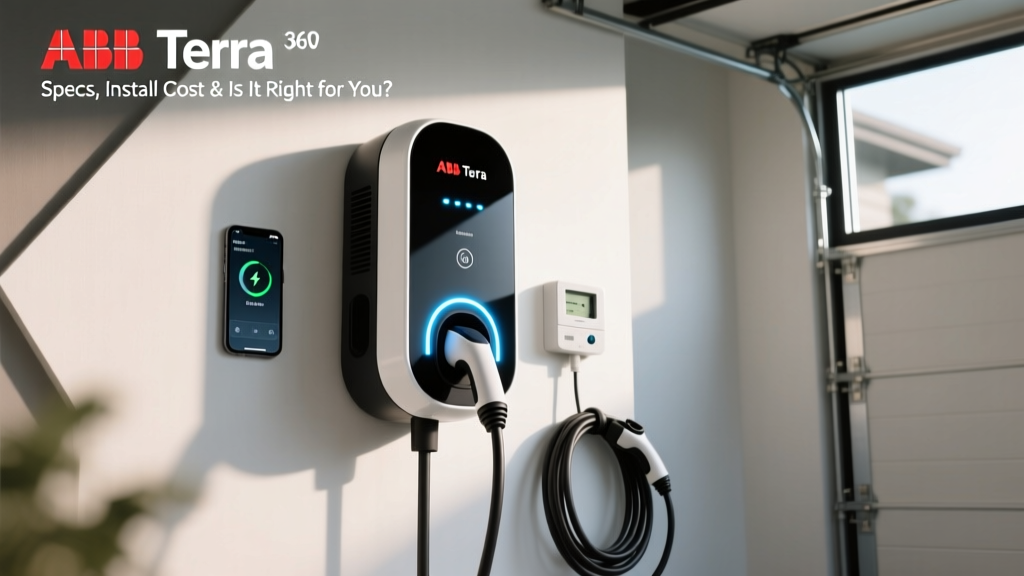
Performance EVs consume energy at extreme rates during hard driving. Without reliable Level 2 home charging (240V, 40–48A circuit delivering 7–11.5 kW), you'll struggle to replenish the battery between track sessions or spirited canyon runs. A home Level 2 installation typically costs $800–$2,500 (charger + electrician + permit), but can reach $5,000+ if your electrical panel needs a 200A upgrade. Most race venues have no charging infrastructure — plan logistics carefully.
2. Tire Wear Is Severe and Expensive
EVs are heavy. The Model S Plaid weighs ~4,766 lbs; the Lucid Air Sapphire ~5,236 lbs. That mass, combined with instant torque, chews through performance tires at roughly 1.5–2× the rate of an equivalent gas sports car. Expect 10,000–15,000 miles from a set of Michelin Pilot Sport 4S tires under mixed spirited driving. Budget $2,000–$2,800 per set for 20"+ performance rubber.
3. Thermal Management Limits Sustained Track Use
Battery thermal management is the Achilles' heel of racing electric cars. While Porsche's 800V architecture and advanced cooling allow the Taycan Turbo GT to sustain multiple hard laps, most EVs will begin power-limiting after 2–3 aggressive sessions. Tesla's Plaid models have improved thermal management with the 2024+ heat pump and octovalve system, but sustained 130+ mph runs still generate enormous battery heat. This isn't a flaw — it's physics. Battery cells degrade faster when repeatedly cycled at high temperatures.
4. Weight Affects Handling Dynamics
No racing electric car matches the curb weight of a gas track car in its class. A Porsche 911 GT3 weighs ~3,164 lbs. The Taycan Turbo GT weighs ~5,148 lbs — a 63% weight penalty. That mass is felt in braking distances, cornering G-forces, and tire wear, even when the EV's low center of gravity and torque vectoring partially compensate. On tight, technical tracks, lighter gas cars often set faster lap times despite lower power.
5. Insurance Costs More
Performance EVs carry higher insurance premiums than comparable gas cars — typically 15–30% more. Reasons include higher repair costs (battery replacement after collision damage), specialized body-shop requirements, and the sheer acceleration capability that correlates with claim frequency. Get quotes before purchasing.
Common Misconceptions About Racing Electric Cars
| Myth | Fact |
|---|---|
| "EVs can't handle real track days" | Partially true. They deliver blistering single-lap pace but struggle with sustained 20+ minute sessions due to thermal limits. The Porsche Taycan Turbo GT and Ioniq 5 N are notable exceptions with robust cooling and track-specific software modes. |
| "Electric motors don't need maintenance" | The motors need minimal maintenance, but the battery cooling system, brake fluid, cabin air filter, and especially tires require regular attention. Coolant flush intervals vary by manufacturer (typically 4–5 years). |
| "Regen braking saves your brake pads on track" | Regen helps during street driving, but on a track at high speeds, friction brakes do 80–90% of the work. Regen systems can also overheat and reduce effectiveness during sustained hard braking. The Ioniq 5 N includes reinforced brake rotors specifically for this reason. |
| "You'll save money vs a gas sports car" | For daily commuting, yes — energy costs are 40–60% lower. For frequent track use, savings shrink or reverse due to tire wear, premium DC charging at venues, and potential battery degradation from repeated high-temperature cycling. |
| "All racing EVs qualify for tax credits" | Most do not. The §30D credit has an MSRP cap of $55,000 for sedans and $80,000 for SUVs. Most racing electric cars exceed these limits. Additionally, critical-mineral and battery-component sourcing requirements disqualify many imported models. Always check the IRS qualified vehicles list. |
Battery Longevity Under Track Abuse
Repeated high-discharge and high-temperature cycling accelerates battery degradation. NMC chemistry (used in all current racing electric cars for its energy density) typically loses 8–12% capacity over 100,000 miles under normal use. Under frequent track abuse, expect degradation at the higher end of that range or slightly beyond.
Manufacturer warranties provide a safety net:
- Tesla: 8 years / 150,000 miles, 70% minimum capacity retention
- Porsche: 8 years / 100,000 miles, 70% minimum capacity retention
- Hyundai: 10 years / 100,000 miles, 70% minimum capacity retention
- Lucid: 8 years / 100,000 miles, 70% minimum capacity retention (estimated — confirm at purchase)
Battery replacement costs, should you exceed warranty coverage, range from $15,000–$35,000 depending on the model. This is a real long-term ownership risk for track-heavy users.
Decision Framework: Should You Buy a Racing Electric Car?
Choose a Racing Electric Car If:
- You want supercar acceleration as a daily driver that also handles occasional track days (3–5 per year)
- You have reliable Level 2 home charging and live near DC fast chargers
- You commute 30+ miles daily and want low per-mile energy costs
- You value instant torque, silent operation, and one-pedal driving in traffic
- Your budget accommodates $2,000+ annual tire costs and higher insurance premiums
Choose a Gas Sports Car If:
- You plan to track the car weekly or attend multi-day driving events
- You need 5+ hard 20-minute sessions per day without thermal throttling
- You want the lightest possible vehicle for technical, tight circuits
- You lack home charging access or live in an area with sparse DC fast-charging infrastructure
- You want simpler logistics at remote race venues (gas cans vs. mobile chargers)
Choose a Performance PHEV If:
- You want electric torque for daily driving plus gas range for track days and road trips
- The BMW XM or Porsche Cayenne E-Hybrid fits your use case (heavier, less track-focused but more versatile)
- You want to hedge against charging-infrastructure gaps in your region
Frequently Asked Questions
Can you actually race an EV at a sanctioned motorsport event?
Yes, but options are limited. Organizations like NASA and SCCA have begun adding EV classes, and series like Electric GT and Extreme E exist at the professional level. Most amateur track days (HPDE events) welcome EVs, but you'll need to check with the organizer regarding safety requirements, charging access at the venue, and any class restrictions.
How much range do you lose driving a performance EV on a track?
Expect to use 3–5× your normal energy consumption on track. A car rated at 3 mi/kWh on the highway may drop to 0.8–1.2 mi/kWh during hard lapping. For a 95 kWh battery (Model S Plaid), that translates to roughly 75–115 miles of track use from a full charge — enough for 3–5 twenty-minute sessions depending on pace.
Do racing electric cars hold their resale value?
Depreciation on performance EVs is steeper than on comparable gas sports cars, primarily due to rapid technology advancement, battery degradation concerns among used buyers, and the fact that EV tax credits effectively lower the new-car price floor. Expect 40–55% depreciation over 3 years for most models, versus 25–40% for a Porsche 911. The Ioniq 5 N may hold value better due to its lower entry price and enthusiast following.
Is the Hyundai Ioniq 5 N a legitimate track car or just a marketing exercise?
It's legitimate. Hyundai engineered the Ioniq 5 N with reinforced brakes, a track-specific cooling system, simulated gear shifts (N e-Shift) for driver engagement, and an 84 kWh battery with robust thermal management. At NHTSA-tested safety levels and with a $67,500 MSRP, it's the most accessible entry point into racing electric cars — and it has proven competitive in comparative track tests against gas hot hatches.
What's the cheapest way to get into a racing electric car in 2026?
The Hyundai Ioniq 5 N at $67,500 is the clear value leader. The Tesla Model 3 Performance ($54,990) offers strong acceleration (0-60 in 2.9 sec) but lacks the Ioniq 5 N's track-specific engineering (brakes, cooling, software). Used Tesla Model S Plaid examples from 2023–2024 have depreciated into the $65,000–$75,000 range, offering another path — but verify battery State of Health (SoH) before purchasing.
Does cold weather affect track performance in an EV?
Significantly. Cold batteries (below 50°F / 10°C) deliver less peak power and accept less regen braking. Most performance EVs include battery preconditioning — the Tesla Model S Plaid and Porsche Taycan will warm the battery to optimal temperature if you navigate to a Supercharger or use a track-mode preconditioning setting. Expect 10–20% range loss in cold-weather track use beyond the normal track-use penalty.
Ownership costs are estimates based on national averages for 2026. Actual insurance, energy, and maintenance costs vary by state, driving record, and usage patterns. Always consult IRS.gov for current tax credit eligibility and a licensed electrician for home charging installation quotes.