Quick Verdict: Why Quicksilver Is the Model Y to Get in 2026
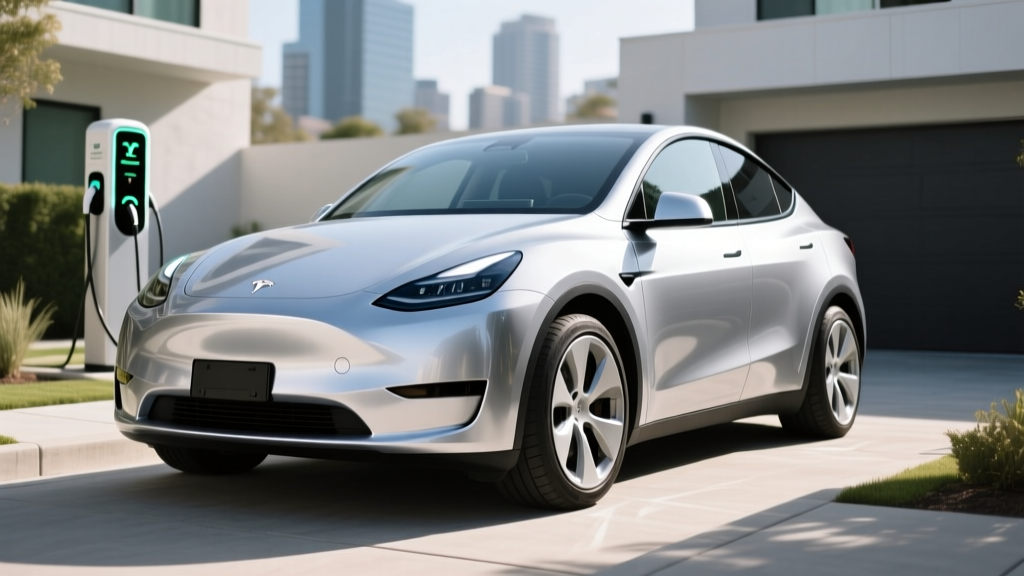
Tesla reintroduced Quicksilver as a premium exterior color for the refreshed Model Y (internally dubbed "Juniper") in mid-2025, and it has quickly become one of the most sought-after configurations on the road. But beyond the striking silver-paint aesthetic, the 2026 Model Y Long Range AWD underneath is a substantially improved EV — quieter, more efficient, and faster-charging than the pre-refresh versions that dominated sales charts for years.
This review breaks down the 2026 Tesla Model Y Long Range AWD in Quicksilver with exact specs, real-world range data, charging curves, tax-credit eligibility, and honest ownership trade-offs. If you're cross-shopping the Model Y against the Hyundai Ioniq 5, Ford Mustang Mach-E, or Kia EV6, this is the data-driven deep dive you need.
Range, Efficiency, and the Real-World Reality
The 2026 Model Y Long Range AWD carries an EPA-estimated range of 320 miles on a full charge, up from 308 miles in the pre-refresh 2024 model. The efficiency gains come from improved aerodynamics (a lower drag coefficient), a revised heat pump system, and more aggressive regenerative braking calibration.
EPA Sticker: 320 miles
Real-World Highway (70-75 mph, mild weather): ~275–290 miles
Real-World City/Suburban (mixed stop-and-go): ~300–315 miles
Cold Weather (below 32°F, highway): ~230–260 miles (20–30% reduction)
Tesla's efficiency improvements are real, but highway driving at sustained speeds above 70 mph still consumes significantly more energy than the EPA combined cycle suggests. Cold weather compounds this — plan for roughly 240 miles of usable range on freezing road trips and precondition the battery before Supercharger stops.
Efficiency is rated at 122 MPGe combined (city/highway), which translates to approximately 27 kWh per 100 miles driven. That puts the Model Y LR AWD among the most efficient electric crossovers in its class, trailing only the slightly smaller Hyundai Ioniq 5 RWD (132 MPGe) and matching the Kia EV6 LR AWD closely.
Battery Chemistry, Capacity, and Longevity
The 2026 Model Y Long Range AWD uses a 78.1 kWh (usable) battery pack built on NMC (nickel-manganese-cobalt) chemistry. Tesla sources cells primarily from Panasonic's Nevada Gigafactory and, increasingly, LG Energy Solution. NMC offers higher energy density than LFP (lithium iron phosphate), which is why it remains the choice for Long Range and Performance trims.
The base Model Y RWD, by contrast, uses a ~60 kWh LFP pack — which trades range for a lower price and the ability to charge routinely to 100% without long-term degradation concerns. For the Long Range NMC pack, Tesla recommends daily charging to 80% and reserving 100% charges for road trips.
| Spec | Value |
|---|---|
| EPA Range | 320 miles |
| Battery (usable) | 78.1 kWh, NMC |
| Efficiency | 122 MPGe / 27 kWh/100 mi |
| Max DC Fast Charge | 250 kW peak |
| 10–80% DC Charge Time | ~25 minutes |
| Level 2 Home Charging | 11.5 kW (~44 mi/hr) |
| 0–60 mph | 4.8 seconds |
| Horsepower | 384 hp (dual motor) |
| Drivetrain | AWD (dual motor) |
| Battery Warranty | 8 years / 120,000 miles |
| Base MSRP | $47,990 |
Tesla's battery warranty guarantees at least 70% capacity retention over 8 years or 120,000 miles — whichever comes first. Real-world degradation data from Tesla's fleet suggests most NMC packs lose roughly 10% capacity in the first 30,000 miles, then degrade very slowly (1–2% per year) for the remainder. Most owners report 90%+ state of health at 100,000 miles, per data aggregated by sources like fueleconomy.gov.
Charging Speed: Supercharger Network Advantage
The refreshed Model Y supports peak DC fast-charging at 250 kW on V3 Superchargers and compatible third-party CCS/NACS stations. However, peak rate is not sustained rate — the charging curve tapers meaningfully above 60% state of charge.
| Charging Level | Power | Speed (miles added/hr) | Notes |
|---|---|---|---|
| Level 1 (120V household) | ~1.4 kW | ~5 mi/hr | Emergency/trickle only |
| Level 2 (240V home wall connector) | 11.5 kW | ~44 mi/hr | Full charge in ~7 hours |
| DC Fast (V3 Supercharger) | 250 kW peak | ~162 mi in 15 min | 10–80% in ~25 min |
| DC Fast (V4 Supercharger) | 250 kW peak | Similar to V3 | Improved cable handling |
The 10–80% charge time of approximately 25 minutes is competitive but not class-leading — the Hyundai Ioniq 5 and Kia EV6, with their 800V architectures, can hit 10–80% in roughly 18 minutes at a 350 kW charger. Tesla's 400V architecture caps the Model Y at 250 kW, which is still plenty fast for most road trips, but it's a spec-sheet disadvantage worth noting.
Home charging on a Tesla Wall Connector (48-amp circuit, 60-amp breaker) delivers 11.5 kW, adding roughly 44 miles of range per hour. A full 10–80% home charge takes about 5 hours, which means overnight charging easily covers daily needs. Installation costs for a Level 2 home setup typically run $800–$2,000 depending on panel capacity and conduit distance — consult a licensed electrician for a site-specific quote.
Performance and Driving Dynamics
The dual-motor AWD powertrain produces 384 horsepower and propels the Model Y LR to 60 mph in 4.8 seconds — a meaningful improvement over the pre-refresh 5.0-second time, thanks to revised motor mapping and slightly reduced curb weight. The Performance trim drops that to 3.5 seconds with 510 hp, at a $5,000 premium.
The Juniper refresh brought notable improvements to ride quality: new frequency-selective dampers, additional acoustic insulation, and a retuned steering rack. The cabin is measurably quieter at highway speeds, and the ride over broken pavement is substantially less jarring than earlier Model Y versions. It's still a firm-riding crossover — the Ioniq 5 and EV6 both absorb bumps more gracefully — but the gap has narrowed considerably.
Autopilot comes standard, including Traffic-Aware Cruise Control and Autosteer. Full Self-Driving (Supervised) remains a $8,000 add-on (or $99/month subscription). To be clear: FSD Supervised is an SAE Level 2 system — you must remain attentive, keep your hands on or near the wheel, and be prepared to take over at any moment. It is not autonomous driving.
Tesla Autopilot and FSD (Supervised) are SAE Level 2 systems. The driver must continuously supervise the vehicle and can be held liable for all driving actions. True driverless operation (Level 4) is currently offered only by Waymo in limited metro areas. Never treat Level 2 systems as self-driving.
Interior, Cargo, and Tech
The refreshed Model Y interior received the most significant overhaul since the vehicle's 2020 debut. Highlights include ventilated front seats (a long-requested feature), ambient lighting, a rear-seat touchscreen for climate and media controls, power-folding second-row seats, and improved material quality throughout.
Cargo volume stands at 30.2 cubic feet behind the second row and 72.1 cubic feet with the rear seats folded — among the most spacious in the electric crossover segment. The front trunk (frunk) adds 4.1 cubic feet, useful for charging cables or a small bag.
Legroom measures 41.8 inches up front and 38.2 inches in the rear. Rear-seat comfort improved with a slightly reclined seatback angle and more supportive cushioning, though taller passengers (6'2"+) will still find the sloping roofline cuts into headroom compared to the boxier Hyundai Ioniq 5.
The 15.4-inch center touchscreen runs Tesla's latest software, which is responsive and feature-rich but still lacks Apple CarPlay and Android Auto. Navigation, media, and vehicle controls all run through the Tesla interface. Wireless phone charging is standard, and the updated sound system (14 speakers, 2 subwoofers) is a notable step up in clarity.
Pricing, Tax Credits, and Total Cost
The 2026 Tesla Model Y Long Range AWD starts at $47,990 (including destination). The Quicksilver premium color adds $2,000, bringing a well-equipped Quicksilver LR AWD to approximately $49,990 before any incentives. Adding FSD (Supervised) pushes the total to $57,990.
| Configuration | MSRP | Est. After §30D Credit |
|---|---|---|
| LR AWD (base color) | $47,990 | $40,490* |
| LR AWD + Quicksilver | $49,990 | $42,490* |
| LR AWD + Quicksilver + FSD | $57,990 | $50,490* |
| Performance + Quicksilver | $54,990 | $47,490* |
*Tax credit estimates assume full §30D eligibility. Actual credit depends on battery sourcing, buyer income, and MSRP caps — see checklist below.
Federal tax credit eligibility under IRS §30D is nuanced. The Model Y qualifies as an SUV under the $80,000 MSRP cap. However, the full $7,500 credit depends on meeting critical-mineral and battery-component sourcing requirements, which Tesla has been progressively satisfying through domestic and free-trade-agreement supply chains. Buyer income caps also apply: $300,000 joint / $225,000 head of household / $150,000 individual modified AGI. Always verify current eligibility on irs.gov and consult a tax professional.
- MSRP Cap: Must be ≤ $80,000 (SUV classification) — Model Y qualifies ✓
- Income Cap: Joint ≤ $300K, HOH ≤ $225K, Individual ≤ $150K MAGI
- Battery Sourcing: Critical minerals + component assembly must meet phased domestic/FTA thresholds — verify current-year compliance on IRS site
- Point-of-Sale Transfer: Eligible buyers can apply the credit as a down-payment reduction at purchase (effective 2024+)
- Assembly: Must be assembled in North America — Tesla Fremont, CA ✓
Pros, Cons, and Who Should Buy the Quicksilver Model Y
- 320-mi EPA range is among the best in the class
- Supercharger network access (most reliable public charging in the US)
- Quicksilver premium paint is striking and holds resale value well
- Spacious cargo area (72.1 cu ft max) with practical frunk
- Strong efficiency (122 MPGe) keeps charging costs low
- Over-the-air updates continuously add features
- Improved ride comfort and cabin quietness post-refresh
- 250 kW peak charge rate lags 800V competitors (Ioniq 5, EV6)
- No Apple CarPlay or Android Auto
- FSD (Supervised) is expensive and still Level 2 only
- Rear headroom tight for tall passengers due to roofline
- $2,000 premium for Quicksilver color adds to already-high price
- Insurance costs run 15–25% higher than comparable gas crossovers
Choose the Model Y LR AWD if: You want the longest range in the segment, rely on road-trip charging infrastructure (Supercharger network), and prioritize cargo space and efficiency. The Quicksilver color is ideal if you care about resale value and understated premium aesthetics.
Look elsewhere if: You need the fastest possible DC charging (check the Ioniq 5 or EV6), you want CarPlay integration, you need three rows of seating, or your budget is under $40,000 (consider the base Model Y RWD or a used EV).
Frequently Asked Questions
What is the real-world range of the 2026 Quicksilver Tesla Model Y?
The EPA rates it at 320 miles, but expect approximately 275–290 miles on sustained highway driving at 70–75 mph in mild weather. In freezing temperatures, range can drop to 230–260 miles. City and suburban driving with regenerative braking recovers more energy, getting closer to the EPA sticker at around 300–315 miles.
How fast does the Model Y charge at home and on the road?
On a home Level 2 Tesla Wall Connector (11.5 kW), you'll add about 44 miles of range per hour — a full overnight charge covers virtually any daily need. On a V3 Supercharger, the Model Y peaks at 250 kW and charges from 10–80% in roughly 25 minutes. That's about 162 miles added in 15 minutes under ideal conditions.
Does the 2026 Model Y qualify for the $7,500 federal EV tax credit?
It can, but eligibility depends on multiple factors: your income (MAGI caps apply), battery critical-mineral and component sourcing compliance, and the $80,000 MSRP cap for SUVs. The Model Y is assembled in Fremont, CA, satisfying the North American assembly requirement. Check current eligibility rules at irs.gov and consult a tax professional before relying on the credit.
Is the Quicksilver Model Y worth buying over the Ioniq 5 or EV6?
It depends on your priorities. The Model Y wins on range (320 vs. ~305 mi for the Ioniq 5), cargo space, Supercharger network access, and software ecosystem. The Ioniq 5 and EV6 win on DC charging speed (18-minute 10–80% on 350 kW chargers), ride comfort, and CarPlay support. If road-trip charging reliability is your top concern, Tesla's network advantage is significant. If you mostly charge at home and want the fastest public stops, the Korean platforms are compelling.
What's the biggest drawback of the Quicksilver Model Y?
The most common complaints are the lack of Apple CarPlay/Android Auto, the $2,000 premium for the Quicksilver paint, and higher-than-average insurance costs. From a driving standpoint, the 250 kW peak charge rate — while fast — is falling behind 800V competitors. And FSD (Supervised), despite its name, remains a Level 2 driver-assist system requiring full driver attention.
How does the battery warranty work?
Tesla covers the Model Y Long Range battery for 8 years or 120,000 miles, whichever comes first, guaranteeing at least 70% capacity retention. If the battery falls below that threshold within the warranty period, Tesla will repair or replace it. Real-world data suggests most NMC packs retain 88–92% capacity at 100,000 miles under normal use patterns.