The Quest for a Purple Rivian: What 2026 Buyers Need to Know
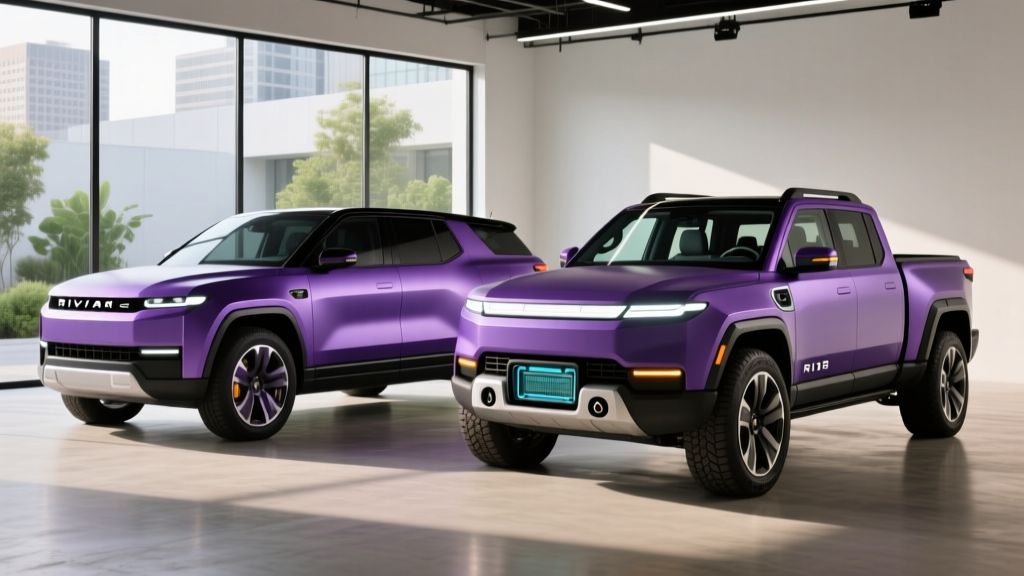
Search forums, Reddit threads, and Rivian owner groups and one question surfaces constantly: "Can I get a purple Rivian?" The short answer is more nuanced than a simple yes or no. Rivian's paint palette has evolved significantly since the R1T and R1S launched, and while a factory purple isn't on the standard 2026 color menu, there are legitimate paths to putting a purple Rivian in your driveway — along with a truck and SUV that deserve serious consideration regardless of hue.
This guide breaks down everything you need to know about getting a purple Rivian R1S or R1T in 2026, then dives deep into the specs, range, charging, pricing, and ownership realities that matter far more than paint once you're behind the wheel.
Rivian's 2026 Color Palette: Where Does Purple Stand?
Rivian offers a curated selection of exterior colors for the 2026 R1S and R1T, typically rotating one or two "launch" or limited-edition shades each model year. The standard lineup includes colors like LA Silver, El Cap Granite, Glacier White, Forest Green, and Canyon Red. Rivian has historically avoided a true purple in its factory offerings.
However, there are three realistic routes to a purple Rivian:
- Aftermarket vinyl wrap: The most popular and reversible option. A full-body wrap in satin purple, gloss plum, or metallic violet typically costs $3,500–$6,000 from a reputable installer. Wraps also protect the factory paint underneath, which helps resale value.
- Aftermarket paint: A professional respray runs $5,000–$10,000+ and is permanent. This can affect warranty claims if paint-related issues arise, so document everything.
- Watch for limited editions: Rivian has released special color packages in the past (like the R1T's limited-run colors). A purple or plum-toned limited edition is always possible, though unannounced as of early 2026.
2026 Rivian R1S and R1T: Core Specs at a Glance
Whether you wrap it purple or keep it factory-fresh, the 2026 Rivian lineup shares a common architecture. Here are the numbers that matter:
| Spec | R1S (SUV, Dual-Motor) | R1T (Truck, Dual-Motor) | R1S Tri-Motor | R1T Tri-Motor |
|---|---|---|---|---|
| EPA Range (Max Pack) | ~390 mi | ~405 mi | ~370 mi | ~380 mi |
| Battery Capacity (Max Pack) | ~141 kWh (NMC) | ~141 kWh (NMC) | ~141 kWh (NMC) | ~141 kWh (NMC) |
| Standard Pack Range | ~270 mi | ~270 mi | N/A | N/A |
| Large Pack Range | ~335 mi | ~340 mi | ~320 mi | ~330 mi |
| Horsepower (Dual-Motor) | 533 hp | 533 hp | 850 hp | 850 hp |
| 0-60 mph (Dual-Motor) | ~4.5 sec | ~4.5 sec | ~2.9 sec | ~2.9 sec |
| Max DC Fast Charge | ~220 kW | ~220 kW | ~220 kW | ~220 kW |
| 10-80% DC Charge Time | ~21 min (Max Pack) | ~21 min (Max Pack) | ~21 min | ~21 min |
| Level 2 Home Charge Rate | ~11.5 kW (48A) | ~11.5 kW (48A) | ~11.5 kW | ~11.5 kW |
| Towing Capacity | 7,700 lbs | 11,000 lbs | 7,700 lbs | 11,000 lbs |
| MPGe (Combined) | ~69 MPGe | ~70 MPGe | ~63 MPGe | ~65 MPGe |
| Drivetrain | AWD (Dual-Motor) | AWD (Dual-Motor) | AWD (Tri-Motor) | AWD (Tri-Motor) |
Real-World Range: What the EPA Sticker Doesn't Tell You
Rivian's range numbers are competitive for the full-size EV segment, but physics governs all large, heavy vehicles. The R1S and R1T tip the scales at roughly 7,000 lbs, and that mass demands energy — especially at sustained highway speeds and in cold temperatures. The heat pump included on 2026 models helps mitigate cold-weather losses compared to earlier model years, but it doesn't eliminate them.
For buyers planning a purple-wrapped Rivian for cross-country road trips, here's a practical framework:
- Summer highway (70 mph): Expect ~80-85% of EPA range on the Max Pack
- Winter highway (30°F, 70 mph): Expect ~65-75% of EPA range
- City/commuting with regen: Expect ~95-105% of EPA range
- Towing (R1T at max capacity): Expect ~50-60% of EPA range — plan charging stops accordingly
Efficiency is rated at approximately 48 kWh per 100 miles for the Dual-Motor R1T Max Pack, per fueleconomy.gov. That's roughly 2.1 miles per kWh — respectable for a 7,000-lb electric truck, but not as efficient as lighter crossovers like the Hyundai Ioniq 5 or Tesla Model Y.
Charging Speed: DC Fast Charging and Home Setup
Rivian's 2026 models use the NACS (North American Charging Standard) connector natively, granting direct access to Tesla Supercharger stations alongside Rivian's own Adventure Network. This is a significant advantage for road-trippers who want maximum charging infrastructure coverage.
| Charging Level | Power | Miles of Range Added per Hour | Notes |
|---|---|---|---|
| Level 1 (120V household) | ~1.4 kW | ~3-4 mi/hr | Emergency/trickle only; impractical for daily use on Max Pack |
| Level 2 (240V, 48A) | ~11.5 kW | ~25-28 mi/hr | Full charge in ~12-14 hrs (Max Pack); ideal overnight home charging |
| Level 2 (240V, 32A) | ~7.7 kW | ~17-19 mi/hr | Common for lower-amperage home circuits |
| DC Fast Charge (Peak) | ~220 kW | ~500+ mi/hr (at peak) | 10-80% in ~21 min; tapers significantly above 80% |
| DC Fast Charge (Sustained 10-80%) | ~150-180 kW avg | ~350 mi/hr avg | Real-world average across the 10-80% curve |
The charge curve matters more than peak kW. Rivian's Max Pack peaks near 220 kW at low state of charge (around 10-20%), then progressively tapers. By 60% SoC, you're typically seeing 150-170 kW; above 80%, charging slows dramatically to protect the NMC battery cells. This is why Rivian (and the industry) quotes 10-80% times rather than 0-100%.
For home Level 2 charging, plan for a 60-amp dedicated circuit to support the full 48A charge rate. Installation costs vary widely by region and panel condition, but budget $1,200–$3,500 for a professional install (including permit, wiring, and a quality EVSE like the Rivian Wall Charger or ChargePoint Home Flex). If your home has a 100-amp main panel, a panel upgrade to 200 amps could add $1,500–$3,000.
Pricing, Trims, and Federal Tax Credit Eligibility
The 2026 Rivian R1S and R1T are positioned as premium electric vehicles, and the pricing reflects that. Here's where the trims land:
| Configuration | R1S MSRP | R1T MSRP |
|---|---|---|
| Dual-Motor, Standard Pack | ~$75,900 | ~$69,900 |
| Dual-Motor, Large Pack | ~$82,900 | ~$76,900 |
| Dual-Motor, Max Pack | ~$89,900 | ~$83,900 |
| Tri-Motor, Large Pack | ~$94,900 | ~$89,900 |
| Tri-Motor, Max Pack | ~$99,900 | ~$94,900 |
Federal Tax Credit: Does a Rivian Qualify?
This is where 2026 buyers need to pay close attention. Under IRS §30D rules, the federal clean vehicle credit offers up to $7,500, but eligibility depends on several factors that change regularly:
- MSRP Cap: SUVs (R1S) must have an MSRP at or below $80,000; trucks (R1T) at or below $80,000. This means many Dual-Motor Standard and Large Pack R1T configurations may qualify, but Max Pack and all Tri-Motor trims exceed the cap.
- Buyer Income Cap: Modified adjusted gross income must not exceed $300,000 (joint), $225,000 (head of household), or $150,000 (individual).
- Battery Sourcing Requirements: The $7,500 credit is split into two $3,750 halves — one for critical minerals sourcing and one for battery component manufacturing. Rivian has worked to localize its supply chain, but the exact credit amount available for 2026 models depends on current battery sourcing compliance. Some configurations may qualify for $3,750 rather than the full $7,500.
- Point-of-Sale Transfer: As of 2024, eligible buyers can transfer the credit to the dealer at purchase, reducing the upfront price rather than waiting for a tax refund. This is available for Rivian purchases if the vehicle qualifies.
Battery Chemistry, Warranty, and Long-Term Durability
Rivian uses NMC (nickel manganese cobalt) lithium-ion cells in its Large and Max battery packs. NMC chemistry offers higher energy density than LFP (lithium iron phosphate), which is why Rivian can pack ~141 kWh into the Max Pack to achieve 400+ miles of range. The trade-off is that NMC cells are more sensitive to sustained high state-of-charge and extreme temperatures compared to LFP.
Practical battery care recommendations for Rivian owners:
- Set daily charge limit to 80-85% for routine commuting (the Rivian app makes this easy)
- Charge to 100% only before long road trips, and try to depart shortly after reaching full charge
- Precondition the battery before DC fast charging (the navigation system does this automatically when you route to a charger)
- Avoid leaving the vehicle at very low SoC (below 10%) for extended periods, especially in hot weather
Warranty coverage is a strong point for Rivian:
- Battery and drive unit: 8 years / 175,000 miles (whichever comes first), with a capacity retention threshold of 70%
- Limited vehicle warranty: 5 years / 60,000 miles
- Corrosion perforation: 12 years / unlimited miles
The 175,000-mile battery warranty exceeds the more common 100,000-mile threshold found on many competitors, giving long-term owners additional peace of mind.
Interior, Cargo, and Tech: Living With a Rivian Daily
The R1S and R1T interiors reflect Rivian's outdoor-adventure positioning. Materials are durable and premium without being ostentatious — think perforated vegan leather, real wood trim, and rugged-but-refined surfaces that don't mind a bit of trail dust.
R1S cargo space: Approximately 105 cu ft with rear seats folded, plus a front trunk (frunk) of ~11 cu ft. The R1S seats up to seven with the optional third row, though third-row legroom is tight at ~30 inches — best for children on shorter trips.
R1T cargo space: The 4.5-foot bed (with the gear tunnel option adding ~11 cu ft of enclosed storage) is shorter than a full-size truck bed but highly versatile. The gear tunnel — a pass-through compartment behind the rear seats — is a Rivian signature and perfect for skis, camping gear, or groceries. The frunk adds ~11 cu ft of lockable, weatherproof storage.
Infotainment and driver assistance: Rivian runs its proprietary software on a 15.6-inch center touchscreen. The interface is clean and responsive, with over-the-air updates adding features regularly. The Driver+ assistance package includes adaptive cruise control, lane centering, and automatic lane changes on highways. This is a SAE Level 2 system — the driver must remain attentive and keep hands on the wheel at all times. It is not autonomous driving.
Notable tech features include:
- Vehicle-to-Load (V2L) capability — power devices or a campsite directly from the vehicle's battery
- Integrated air compressor (R1T) for trail use
- Four-motor torque vectoring on Tri-Motor models for precise off-road control
- Camp mode with climate control and lighting optimized for overnight stays
Pros and Cons: An Honest Assessment
Pros
- Class-leading range on Max Pack (400+ mi EPA)
- NACS native — direct Supercharger access without adapters
- Excellent build quality and thoughtful storage solutions
- Strong off-road capability with adjustable air suspension
- 175,000-mile battery warranty exceeds most competitors
- V2L capability for camping and emergency power
- Active OTA updates continuously improve the vehicle
Cons
- Premium pricing — most trims exceed $80K tax-credit cap
- Heavy vehicle means higher tire wear and lower efficiency
- R1T bed is shorter than traditional full-size trucks
- R1S third row is cramped for adults
- Service center network still expanding in some regions
- No factory purple paint option (wrap required)
- Towing drastically reduces range (50-60% of EPA)
Who Should Buy a Rivian (Purple or Otherwise)?
The Rivian R1S and R1T serve specific use cases exceptionally well:
- Outdoor enthusiasts: If you camp, ski, mountain bike, or tow a small trailer on weekends, the R1T's gear tunnel, V2L, and air suspension are purpose-built for you.
- Adventure-oriented families: The R1S offers three rows, massive cargo space, and genuine off-road capability that most three-row SUVs can't match.
- Tech-forward commuters: If your daily drive includes highway miles and you want Level 2 driver assistance, OTA improvements, and the ability to charge at home overnight, a Dual-Motor with the Large Pack is a strong daily driver.
- Truck buyers going electric: The R1T is one of very few electric trucks that deliver real utility (11,000-lb towing, lockable storage, V2L) without compromise on daily drivability.
The Rivian is not the best choice if you need maximum efficiency per dollar (look at the Hyundai Ioniq 5 or Tesla Model Y), require a full-size truck bed for work (the Ford F-150 Lightning has a longer bed), or need the longest possible road-trip range without charging stops (the Lucid Air exceeds 500 miles, though it's a sedan).
Frequently Asked Questions
Can I order a purple Rivian directly from the factory?
As of 2026, Rivian does not offer a factory purple exterior color on the R1S or R1T. Your best option is to order in a light base color (Glacier White or LA Silver) and have the vehicle professionally wrapped in your preferred purple shade. Full wraps typically cost $3,500–$6,000 and are fully reversible.
What is the real-world highway range of the Rivian R1T?
The R1T Max Pack is EPA-rated at approximately 405 miles. Real-world highway driving at 70-75 mph in moderate temperatures yields roughly 320-350 miles. In winter conditions below 30°F, expect 250-290 miles of effective highway range.
Does the Rivian R1T qualify for the $7,500 federal tax credit?
It depends on the configuration and your income. The R1T Dual-Motor Standard Pack (~$69,900 MSRP) falls under the $80,000 truck MSRP cap, making it potentially eligible. However, you must also meet income limits ($150K individual / $300K joint) and the vehicle must satisfy battery critical-mineral and component sourcing requirements per current IRS §30D rules. Max Pack and Tri-Motor trims exceed the MSRP cap and do not qualify. Always verify with a tax professional.
How fast does the Rivian charge at home?
On a 240V Level 2 charger at 48 amps (11.5 kW), the Rivian adds approximately 25-28 miles of range per hour. A full charge from empty on the Max Pack takes roughly 12-14 hours, making overnight charging practical for daily use. You'll need a dedicated 60-amp circuit; budget $1,200-$3,500 for professional installation.
Is the Rivian worth buying over the Ford F-150 Lightning or Tesla Cybertruck?
It depends on your priorities. The Rivian R1T offers superior range (Max Pack), more innovative storage (gear tunnel, frunk), better off-road capability, and a more refined interior than the F-150 Lightning. The Cybertruck offers stainless-steel construction and comparable performance but with a more polarizing design and less proven long-term reliability. If adventure versatility and premium build quality matter most, the R1T earns its price premium. If you need a longer bed or lower starting price, the Lightning is worth cross-shopping.
Will wrapping my Rivian purple void the warranty?
A professional vinyl wrap does not void Rivian's battery, powertrain, or general vehicle warranty. Wraps are considered a reversible cosmetic modification. However, if a wrap installation causes damage (e.g., to sensors, cameras, or trim), that specific damage would not be covered. Choose an experienced installer familiar with EV sensor placement.