The Bottom Line on the Proterra Electric Bus
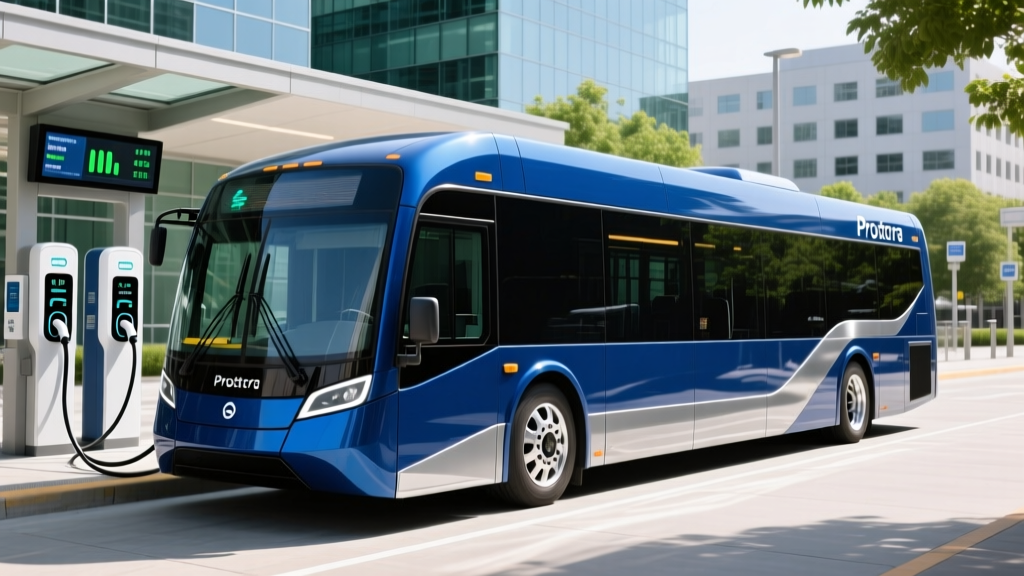
The Proterra ZX5 (and its predecessor, the ZX5 Max) is a battery-electric transit bus built for municipal and private fleet operators replacing diesel routes. The standard ZX5 carries a 440 kWh LTO (lithium-titanate) or NMC battery pack delivering up to roughly 200 miles of real-world range, while the ZX5 Max with its 660 kWh pack pushes past 300 miles under typical transit duty cycles. DC fast charging at up to 350 kW via CCS can replenish a depleted pack in approximately 2–3 hours depending on pack size. For fleet managers, the Proterra electric bus eliminates diesel fuel costs (saving roughly $40,000–$65,000 annually per vehicle at 45,000 miles/year), cuts maintenance spend by 30–50%, and qualifies for federal Low-No Grant funding plus potential IRA commercial clean vehicle credits. The trade-off: a significantly higher upfront acquisition cost ($900,000–$1.2M+ per bus before incentives) and the need to plan depot charging infrastructure carefully.
Why Fleet Buyers Are Looking at the Proterra Electric Bus
Transit agencies and private shuttle operators face mounting pressure to electrify. Federal mandates, state clean-fleet rules (like California's Innovative Clean Transit regulation), and public expectation are all accelerating the shift. Proterra, headquartered in Burlingame, California, has been one of the most prominent North American manufacturers of heavy-duty battery-electric buses, with thousands of vehicles delivered or on order to agencies like Foothill Transit, King County Metro, and SEPTA.
The Proterra electric bus lineup targets the Class 8 transit segment — 35-foot and 40-foot fixed-route buses, plus 60-foot articulated models. Unlike consumer EVs, these vehicles are evaluated on passenger capacity, route duty-cycle energy consumption (measured in kWh/mile rather than MPGe), depot charging logistics, and total lifecycle cost over a 12-to-18-year service life.
It is important to note that Proterra filed for Chapter 11 bankruptcy in August 2023 and subsequently restructured, with its transit bus business acquired by a consortium including the Volvo Group. As of 2026, the ZX5 platform continues under new ownership, and fleet buyers should verify current production status, warranty backing, and parts availability directly with the reorganized entity before committing to orders.
Proterra ZX5 Specs: Battery, Range, and Charging
| Specification | ZX5 (Standard) | ZX5 Max |
|---|---|---|
| Length Options | 35 ft / 40 ft | 40 ft / 60 ft (articulated) |
| Battery Capacity | 220–440 kWh (NMC/LTO options) | 440–660 kWh (NMC) |
| EPA/Stated Range | Up to ~250 mi (stated) | Up to ~329 mi (stated) |
| Real-World Transit Range | ~140–200 mi | ~220–300 mi |
| Peak DC Fast Charge | Up to 350 kW (CCS1) | Up to 350 kW (CCS1) |
| 10–80% Charge Time (est.) | ~90–120 min (440 kWh pack) | ~120–180 min (660 kWh pack) |
| Depot AC Charging | Up to 60 kW (J1772/CCS AC) | Up to 60 kW |
| Electric Motor Output | Up to 550 hp / 4,500 lb-ft torque (axle) | Up to 550 hp |
| Passenger Capacity (40 ft) | ~40 seated / ~80 total | ~40 seated / ~80 total |
| Estimated Base Price | $900,000–$1,050,000 | $1,050,000–$1,250,000+ |
Real-World Range Reality Check
Proterra's stated range figures come from controlled testing cycles (like the FTA Altoona standard). In actual transit service, range is heavily affected by passenger load (a full 80-passenger bus is significantly heavier), HVAC demand (heating in cold climates can cut range 25–40%), route topography (hilly routes consume far more energy), and stop-and-go frequency. A 440 kWh ZX5 on a flat urban route in mild weather with moderate passenger loads might achieve 1.8–2.2 kWh/mile, yielding roughly 200–240 miles. That same bus on a hilly route in January in Minneapolis could see consumption rise to 3.0–3.5 kWh/mile, dropping effective range to 125–145 miles. Fleet planners must model worst-case scenarios, not best-case ones.
Proterra Electric Bus vs. Diesel: Cost and Efficiency Comparison
| Cost Factor | Proterra ZX5 (Electric) | Diesel Transit Bus (New Flyer Xcelsior XD40) |
|---|---|---|
| Acquisition Cost | $900K–$1.25M | $500K–$600K |
| Fuel/Energy Cost per Mile | $0.30–$0.55 (electricity at $0.08–$0.15/kWh) | $0.80–$1.20 (diesel at $3.50–$4.50/gal, ~4.5 mpg) |
| Annual Fuel/Energy (45K mi/yr) | $13,500–$24,750 | $36,000–$54,000 |
| Annual Maintenance | $15,000–$25,000 | $30,000–$45,000 |
| Estimated Annual Savings (EV) | $27,000–$60,000/year per bus | |
| 12-Year Fuel + Maintenance Savings | $324,000–$720,000 per bus | |
| Tailpipe Emissions | Zero | NOx, PM, CO₂ |
| Lifespan (typical) | 12–18 years (battery may need mid-life replacement) | 12–18 years (engine/transmission overhauls) |
The math favors electric on operating cost — often decisively. The challenge is the upfront capital gap. A single Proterra electric bus can cost $400,000–$650,000 more than a comparable diesel. That gap is where federal and state incentives become essential to the purchasing decision.
Federal Incentives, Grants, and Funding for Electric Transit Buses
Unlike consumer EVs eligible for the IRS §30D tax credit, heavy-duty transit buses fall under different incentive structures:
- FTA Low-No Grant Program: The Federal Transit Administration's Low or No Emission Vehicle program has been the primary funding mechanism, covering up to 80–85% of the capital cost differential between an electric bus and its diesel counterpart. Awards are competitive and allocated annually.
- IRA Commercial Clean Vehicle Credit (§45W): For qualifying commercial vehicles over 14,000 lbs GVWR, a credit of up to $40,000 may be available. This is a smaller fraction of total bus cost but can stack with other incentives. Consult IRS guidance on §45W for current eligibility rules.
- State and Regional Incentives: Programs like California's Hybrid and Zero-Emission Truck and Bus Voucher Incentive Project (HVIP), New York's Truck Voucher Incentive Program, and various utility make-ready programs can cover $100,000–$350,000+ per bus and offset charging infrastructure costs.
- Utility Infrastructure Support: Many electric utilities offer fleet charging make-ready programs covering the cost of transformers, switchgear, and trenching — sometimes $200,000–$500,000+ per depot site.
Fleet buyers should work with grant writers and utility account managers early in the procurement process. The incentive landscape changes annually, and stacking multiple programs is often necessary to close the cost gap.
Depot Charging Infrastructure: What Fleet Planners Must Know
| Charging Method | Power Level | Use Case | Infrastructure Cost (per stall, est.) |
|---|---|---|---|
| Depot AC Level 2 | 19.2–60 kW | Overnight charging (8–12 hrs) | $15,000–$40,000 |
| Depot DC Fast | 60–150 kW | Opportunity + overnight hybrid | $60,000–$150,000 |
| High-Power DC Fast | 150–350 kW | Mid-day opportunity charging | $150,000–$300,000+ |
| Overhead Pantograph | Up to 450 kW | On-route opportunity charging | $300,000–$500,000+ |
Most transit agencies deploying the Proterra electric bus use overnight depot charging at 50–150 kW per stall. A fleet of 20 buses might need 10–20 chargers (depending on scheduling), a dedicated medium-voltage utility feed (often 480V three-phase), and potentially a new transformer and switchgear. Total depot charging infrastructure for a 20-bus fleet can range from $1.5M to $4M+ depending on site conditions, utility capacity, and whether trenching or new service panels are required.
Common Misconceptions About Electric Transit Buses
| Myth | Fact |
|---|---|
| "Electric buses can't handle cold weather." | They can, but range drops 25–40% in sub-freezing temps due to cabin heating and battery chemistry. Agencies in cold climates spec larger battery packs and use depot preheating. |
| "Electric buses are more expensive over their lifetime." | Higher upfront, but 12-year total cost of ownership is typically $200K–$500K lower than diesel when fuel and maintenance savings are included, even before incentives. |
| "Batteries will need replacing every 5 years." | Modern NMC and LTO transit bus batteries are warrantied for 8–12 years with guaranteed capacity retention (typically 70–80% at end of warranty). Mid-life battery refresh may be needed on 15–18 year buses. |
| "Charging takes too long for transit schedules." | Overnight depot charging (6–10 hours) fits most transit schedules. For high-utilization routes, opportunity charging at 350 kW adds ~80 miles in 15–20 minutes. |
| "The grid can't handle a fleet of electric buses." | A single utility feed can typically support 10–30 buses with proper planning. Smart charging software staggers charging to avoid peak demand charges. |
Real-World Ownership Considerations for Fleet Buyers
Route Planning and Duty Cycles
Not every route is a candidate for a standard-pack Proterra electric bus. Routes exceeding 180 miles per day, routes with extreme elevation changes, or routes in very cold climates may require the ZX5 Max configuration, mid-day opportunity charging, or may not yet be practical for full electrification. Fleet planners should conduct detailed route energy modeling using tools like the National Renewable Energy Laboratory's (NREL) FASTSim or the FTA's standard Altoona test data before committing to specific battery pack sizes.
Workforce and Training
Transitioning to electric buses requires retraining maintenance staff on high-voltage systems (600V+ DC), regenerative braking components, and battery thermal management. Proterra and third-party providers offer technician certification programs. Agencies report a 6–12 month ramp-up period before maintenance teams are fully proficient.
Insurance and Liability
Insurance for electric transit buses is still maturing. Premiums can be 10–25% higher than diesel equivalents due to battery replacement cost exposure and limited actuarial data. Some agencies self-insure or negotiate fleet policies that specifically address battery degradation and thermal-event coverage.
Residual Value and End-of-Life
The resale market for used electric transit buses is nascent. Battery state of health (SoH) at retirement significantly affects residual value. Some agencies are exploring second-life battery applications (stationary storage) to recoup value from retired packs.
Decision Framework: Is the Proterra Electric Bus Right for Your Fleet?
Choose the Proterra ZX5 If:
- Your routes are under 180 miles/day (standard pack) or under 280 miles/day (Max pack)
- You have depot space and utility capacity for overnight charging infrastructure
- You've secured FTA Low-No Grant funding or equivalent state incentives to offset the acquisition premium
- Your agency has a board or regulatory mandate to reduce fleet emissions
- You operate in a region with moderate climate or can spec larger packs for cold-weather routes
Consider Alternatives or Wait If:
- Your routes regularly exceed 300 miles/day with no opportunity for mid-day charging
- Your depot lacks utility capacity for the required charging infrastructure and a panel/transformer upgrade is cost-prohibitive
- You cannot secure grant funding to close the $400K–$650K upfront cost gap
- Parts availability and warranty backing concerns persist following Proterra's 2023 restructuring — verify current support structure with the reorganized company before ordering
- Hydrogen fuel-cell buses (e.g., New Flyer Xcelsior CHARGE H2) better match your very long routes or extreme cold-weather duty cycles
| 5-Year Cost Item | Proterra ZX5 (40 ft) | Diesel Bus (40 ft) |
|---|---|---|
| Acquisition (after incentives) | $550,000–$750,000 | $500,000–$600,000 |
| Energy/Fuel (5 years, 45K mi/yr) | $67,500–$123,750 | $180,000–$270,000 |
| Maintenance (5 years) | $75,000–$125,000 | $150,000–$225,000 |
| Charging Infrastructure (amortized) | $40,000–$80,000 | $0 |
| Insurance (5 years) | $60,000–$90,000 | $50,000–$75,000 |
| Total 5-Year Cost | $792,500–$1,168,750 | $880,000–$1,170,000 |
At the 5-year mark, the Proterra electric bus approaches cost parity with diesel even under conservative assumptions. By years 8–12, the cumulative fuel and maintenance savings typically create a clear financial advantage — provided the battery does not require an unplanned mid-life replacement (estimated at $150,000–$250,000 for a 440 kWh pack).
Frequently Asked Questions
What happened to Proterra after the 2023 bankruptcy?
Proterra filed for Chapter 11 in August 2023. Its transit bus business was acquired through the restructuring process, with the Volvo Group taking a significant stake. The ZX5 platform continues production under the reorganized entity. Fleet buyers should confirm current warranty terms, parts supply chain status, and service network availability directly with the company before placing orders. The battery and powertrain technology division was separately acquired.
How long does a Proterra bus battery last?
Proterra has historically warranted its NMC battery packs for 8–12 years with guaranteed capacity retention of 70–80% at end of warranty period. LTO chemistry packs (used in some earlier configurations) offer faster charging and longer cycle life but lower energy density. Real-world degradation depends on charge/discharge cycles, thermal management, and whether the fleet uses smart charging to avoid sustained high-state-of-charge storage. Expect a potential mid-life battery refresh on buses kept in service beyond 12 years.
Can a Proterra electric bus handle hilly routes?
Yes, but energy consumption increases significantly on grades. A route with sustained 5–8% grades can increase consumption by 30–50% compared to flat terrain. Fleet planners should spec the larger battery pack (ZX5 Max) for hilly routes or incorporate mid-day opportunity charging. Regenerative braking on descents partially offsets the uphill energy penalty — typically recovering 15–25% of climb energy.
What charging connector does the Proterra ZX5 use?
The ZX5 uses the CCS1 (Combined Charging System) connector standard for both AC Level 2 and DC fast charging. This is the standard heavy-duty connector in North America. Some configurations also support overhead pantograph charging for on-route opportunity charging at up to 450 kW.
How does the Proterra compare to competitors like New Flyer XE40 or BYD K9M?
The Proterra ZX5 competes directly with the New Flyer Xcelsior CHARGE (XE40/XE60), BYD K9M/K11M, and ENC Axess-BEB. Key differentiators include Proterra's purpose-built EV platform (vs. converted diesel platforms from some competitors), its battery pack options, and its charging flexibility. However, following the 2023 restructuring, some agencies have shifted orders to competitors with more stable corporate backing. Request side-by-side Altoona test reports and total-cost-of-ownership models from each OEM before deciding. Refer to FTA Low-No program data for funded agency procurement patterns.
What does depot charging infrastructure cost for a 20-bus fleet?
A 20-bus depot with 150 kW DC fast chargers (one per two buses, charging overnight in shifts) typically costs $2M–$4M total, including chargers ($60K–$150K each), electrical infrastructure (transformer, switchgear, trenching: $500K–$1.5M), engineering and permitting ($100K–$300K), and smart charging management software ($50K–$150K). Utility make-ready programs can offset 30–70% of the electrical infrastructure cost. Contact your local utility's transportation electrification team early — lead times for utility upgrades can be 12–24 months.
Are Proterra buses eligible for the federal EV tax credit?
Heavy-duty transit buses do not qualify for the consumer §30D tax credit (which applies to light-duty vehicles under 14,000 lbs GVWR). Instead, they may qualify for the §45W Commercial Clean Vehicle Credit (up to $40,000 for vehicles over 14,000 lbs) and, more importantly, the FTA Low-No Grant program which covers the majority of the cost differential. State voucher programs and utility incentives provide additional stacking opportunities. Consult a tax professional and your transit agency's grant office for current-year eligibility.