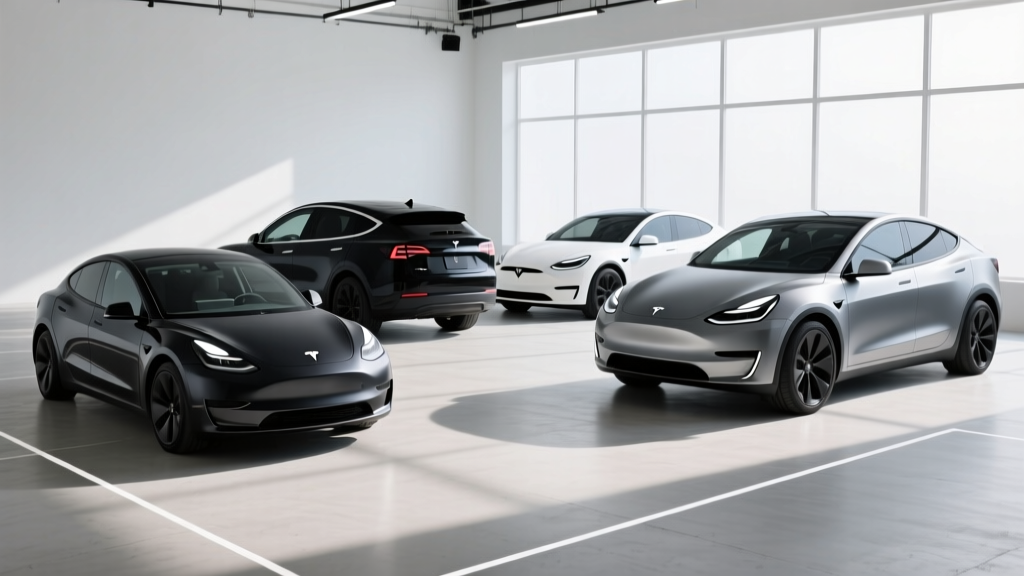
If you've been searching for the precio de un Tesla in 2026, you've likely noticed the numbers shift more often than legacy automaker sticker prices. Tesla adjusts pricing dynamically based on demand, supply chain costs, and federal incentive eligibility. This guide breaks down every current Tesla model with exact MSRP figures, real-world range data, charging speeds, and what you'll actually pay after the federal §30D tax credit.
We're writing from a 2026 model-year perspective. All prices reflect Tesla's US configurator as of early 2026, and tax credit eligibility follows current IRS rules — which include buyer income caps, MSRP caps, and critical-mineral sourcing requirements that can change. Always verify your personal eligibility at IRS.gov or through a point-of-sale transfer at delivery.
Tesla Model 3: The Entry Point
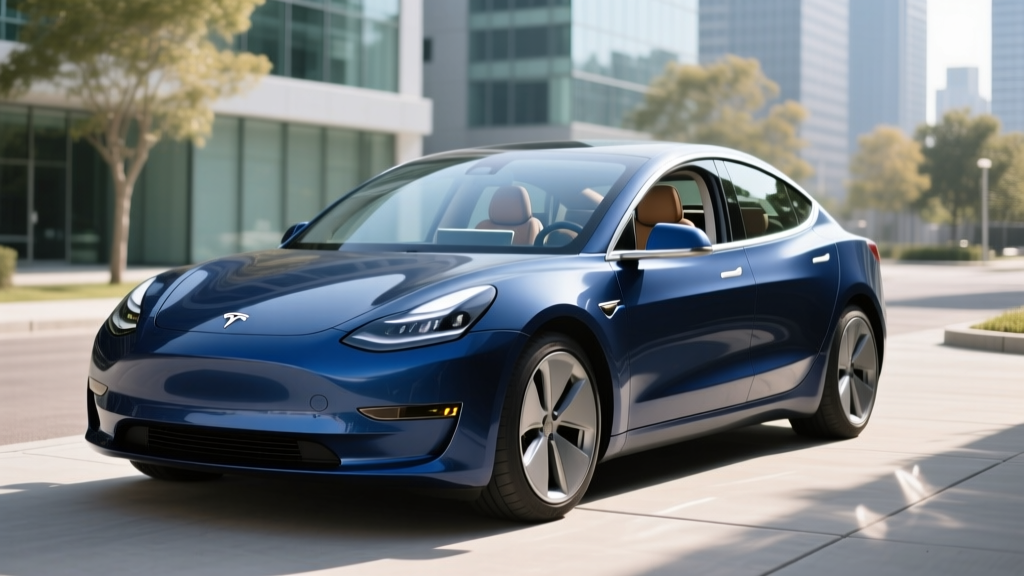
The Model 3 remains Tesla's volume sedan and the most affordable way into the ecosystem. For 2026, Tesla continues offering the Highland-refresh body style introduced in late 2023, with improved cabin insulation, ventilated seats, and a rear touchscreen.
| Trim | Base MSRP | EPA Range | Drivetrain | 0–60 mph | HP |
|---|---|---|---|---|---|
| Long Range RWD | $42,490 | 363 mi | RWD | 5.8 s | ~283 |
| Long Range AWD | $47,490 | 341 mi | Dual-Motor AWD | 4.2 s | ~384 |
| Performance | $54,990 | 315 mi | Dual-Motor AWD | 2.9 s | ~510 |
Battery & Charging
The Long Range trims use a ~79 kWh usable NMC (nickel manganese cobalt) battery pack. The RWD Standard Range variant (when available) uses a ~60 kWh LFP (lithium iron phosphate) pack — heavier but more cycle-durable and recommended to charge to 100% daily.
| Level | Power | Speed / Time |
|---|---|---|
| Level 1 (120V) | ~1.4 kW | ~3–4 mi/hr |
| Level 2 (240V / 48A) | 11.5 kW | ~44 mi/hr |
| DC Fast Charge (V4 Supercharger) | Peak 250 kW | 10–80% in ~25 min |
Tesla's charge curve is well-managed. The Model 3 peaks near 250 kW between 10–30% SoC, then tapers progressively. By 60%, you're at roughly 120 kW, and above 80% it drops below 50 kW. This is why Tesla recommends charging to 80% at Superchargers for speed and battery longevity.
Efficiency & Interior
The Long Range RWD achieves approximately 132 MPGe combined (25 kWh/100 mi) per fueleconomy.gov, making it one of the most efficient EVs in its class. Cargo space is 23 cu ft (rear trunk + frunk combined), with rear legroom at 35.3 inches — adequate for adults but tighter than a Hyundai Ioniq 6.
Warranty: 4 years / 50,000 miles basic; 8 years / 120,000 miles battery and drive unit (Long Range). Tesla warrants the battery to retain at least 70% capacity over the warranty period.
Tesla Model Y: The Best-Selling EV
The Model Y crossover is Tesla's highest-volume vehicle globally. The 2026 Juniper refresh brings a redesigned front fascia, ambient interior lighting, acoustic glass, and a rear entertainment screen — similar to the Highland Model 3 treatment.
| Trim | Base MSRP | EPA Range | Drivetrain | 0–60 mph | HP |
|---|---|---|---|---|---|
| Long Range RWD | $44,990 | 320 mi | RWD | 6.5 s | ~295 |
| Long Range AWD | $48,990 | 310 mi | Dual-Motor AWD | 4.8 s | ~384 |
| Performance | $53,990 | 285 mi | Dual-Motor AWD | 3.5 s | ~480 |
Battery, Charging & Practicality
The Model Y Long Range uses a ~78 kWh usable NMC pack. DC fast charging peaks at 250 kW, with a 10–80% time of approximately 27 minutes. Home Level 2 charging at 11.5 kW (48A) adds roughly 37 miles per hour.
Cargo volume is the Model Y's ace: 76 cu ft with the second row folded (30 cu ft behind the rear seats), plus a 4.1 cu ft frunk. An optional third row adds two small seats, bringing passenger capacity to 7 — though the third row is realistically for children only.
Warranty: 4 yr / 50,000 mi basic; 8 yr / 120,000 mi battery & drive unit.
Tesla Model S: The Luxury Performance Sedan
The Model S continues into 2026 with its 2021-refreshed interior (yoke or round steering wheel, 17-inch landscape touchscreen, rear passenger display). It competes with the Lucid Air, BMW i5, and Mercedes EQS.
| Trim | Base MSRP | EPA Range | Drivetrain | 0–60 mph | HP |
|---|---|---|---|---|---|
| Long Range | $79,990 | 402 mi | Dual-Motor AWD | 3.1 s | ~670 |
| Plaid | $94,990 | 359 mi | Tri-Motor AWD | 1.99 s | 1,020 |
The 402-mile EPA range on the Long Range is among the highest of any production EV. Real-world highway driving yields ~320–340 miles; cold weather drops that to ~270–300 miles. The ~100 kWh (usable) NMC battery charges at up to 250 kW DC, with a 10–80% time of roughly 30 minutes given the larger pack.
Cargo space is generous: 28 cu ft trunk + 5.3 cu ft frunk. Rear legroom measures 35.4 inches. The 1,020-hp Plaid's 1.99-second 0–60 time remains one of the quickest acceleration figures of any production car.
Tesla Model X: The Three-Row SUV
| Trim | Base MSRP | EPA Range | Drivetrain | 0–60 mph | HP |
|---|---|---|---|---|---|
| Long Range | $84,990 | 335 mi | Dual-Motor AWD | 3.8 s | ~670 |
| Plaid | $99,990 | 311 mi | Tri-Motor AWD | 2.5 s | 1,020 |
The Model X seats up to 7 with its optional third row. Cargo volume reaches 88 cu ft with both rear rows folded. The falcon-wing rear doors remain a polarizing feature — dramatic in tight parking spots but adding mechanical complexity. Real-world highway range for the Long Range hovers around 270–290 miles, with cold-weather range dipping to ~230 miles.
Tesla Cybertruck: The Polarizing Pickup
Now in its third year of production, the Cybertruck has moved beyond early-delivery quirks. Tesla has ramped output and stabilized pricing after the initial Foundation Series markup.
| Trim | Base MSRP | EPA Range | Drivetrain | 0–60 mph | Towing |
|---|---|---|---|---|---|
| AWD | $79,990 | 340 mi | Dual-Motor AWD | 4.1 s | 11,000 lb |
| Cyberbeast | $99,990 | 320 mi | Tri-Motor AWD | 2.6 s | 11,000 lb |
The 48-volt electrical architecture and steer-by-wire system are engineering firsts for a production truck. The 6.5-foot bed includes a powered tonneau cover and 120V/240V outlets for job-site or camping use. Payload capacity is 2,500 lb.
Federal Tax Credit: What You'll Actually Pay
Under IRS §30D, the federal clean vehicle credit offers up to $7,500 for qualifying new EVs — and since 2024, it can be transferred to the dealer as a point-of-sale discount. However, eligibility depends on several factors that change periodically:
- MSRP Cap: Sedans (Model 3, Model S) must be under $55,000; SUVs, vans, and trucks (Model Y, Model X, Cybertruck) must be under $80,000.
- Buyer Income Cap: AGI must not exceed $150,000 (single), $225,000 (head of household), or $300,000 (joint filing).
- Battery Sourcing: Critical minerals and battery components must meet phased-in domestic/free-trade sourcing thresholds that tighten annually.
- Assembly: Vehicle must undergo final assembly in North America (all Tesla US-market vehicles qualify).
| Model / Trim | Base MSRP | Under MSRP Cap? | Max Credit | Effective Price* |
|---|---|---|---|---|
| Model 3 Long Range RWD | $42,490 | Yes (<$55K) | $7,500 | ~$34,990 |
| Model 3 Long Range AWD | $47,490 | Yes (<$55K) | $7,500 | ~$39,990 |
| Model 3 Performance | $54,990 | Yes (<$55K) | $7,500 | ~$47,490 |
| Model Y Long Range RWD | $44,990 | Yes (<$80K) | $7,500 | ~$37,490 |
| Model Y Long Range AWD | $48,990 | Yes (<$80K) | $7,500 | ~$41,490 |
| Model S Long Range | $79,990 | No (>$55K sedan) | $0 | $79,990 |
| Model X Long Range | $84,990 | No (>$80K SUV) | $0 | $84,990 |
| Cybertruck AWD | $79,990 | Yes (<$80K truck) | $7,500 | ~$72,490 |
*Effective price assumes full $7,500 credit eligibility. Your actual credit may be $0, $3,750, or $7,500 depending on battery-sourcing compliance and your income. Always check the latest IRS guidance and consult a tax professional.
Tesla Driver Assistance: Autopilot & FSD
Tesla Autopilot and Full Self-Driving (Supervised) are Level 2 driver-assistance systems — not self-driving. You must keep your hands on the wheel and eyes on the road at all times. The driver is legally and practically responsible for the vehicle. Only Level 4 services like Waymo operate without a human driver in geofenced areas.
Basic Autopilot (traffic-aware cruise control + lane centering) is included on all Tesla vehicles. FSD (Supervised), currently priced at $8,000 one-time or $99/month, adds automatic lane changes, Navigate on Autopilot, traffic-light recognition, and city-street autosteer. As of 2026, FSD remains a supervised system requiring constant driver attention.
Which Tesla Is Right for You?
Choose the Model Y if: You need cargo space, optional third-row seating, and crossover ride height. The best all-around Tesla for families.
Choose the Model S if: You want 400+ miles of range, luxury performance, and don't mind paying a premium. Competes with Lucid Air and Porsche Taycan.
Choose the Model X if: You need three rows, falcon-wing doors, and tri-motor Plaid performance in an SUV. Niche but capable.
Choose the Cybertruck if: You need a truck for towing, job-site power, or off-road use — and accept the range penalty that comes with its aerodynamics.
Pros and Cons Across the Tesla Lineup
Pros
- Supercharger network: 20,000+ stalls in North America — the most reliable DC fast-charging ecosystem
- Over-the-air updates continuously add features post-purchase
- Class-leading efficiency (kWh/100mi) in Model 3 and Model Y
- Strong resale value relative to most EV competitors
- Minimal maintenance: no oil changes, brake wear reduced by regen
- Point-of-sale tax credit transfer simplifies purchase
Cons
- No physical controls — all climate, mirror, and glovebox functions run through the touchscreen
- Build quality inconsistency: panel gaps and paint defects still reported
- Repair costs can be high; limited independent service options
- FSD costs $8,000 extra and remains Level 2 — not autonomous
- Insurance premiums often 15–30% higher than comparable ICE vehicles
- Model S and X exceed MSRP caps, disqualifying them from the federal credit
Frequently Asked Questions
What is the cheapest Tesla in 2026?
The 2026 Tesla Model 3 Long Range RWD starts at $42,490 before incentives. With the full $7,500 federal tax credit (if you qualify), the effective price drops to approximately $34,990 — making it one of the most affordable long-range EVs on the market.
Does every Tesla qualify for the $7,500 federal tax credit?
No. The Model S (sedan, MSRP cap $55K) and Model X (SUV, MSRP cap $80K) currently exceed their respective caps and do not qualify. The Model 3, Model Y, and Cybertruck AWD all fall under their caps. You must also meet income requirements and the vehicle's battery must comply with critical-mineral sourcing rules. Check IRS.gov for current rules.
How fast do Teslas charge at home?
With a Tesla Wall Connector on a 60A circuit (48A continuous), all current Tesla models charge at up to 11.5 kW, adding roughly 37–44 miles of range per hour. A full overnight charge (8 hours) adds approximately 300 miles — sufficient for most daily needs. Installation typically costs $500–$2,000 depending on your electrical panel and run length.
Is a Tesla cheaper to own than a gas car?
For most drivers, yes — but the savings depend on local electricity rates, annual mileage, and whether you charge at home. At the US average of $0.16/kWh, a Model 3 Long Range costs roughly $4.00 to "fill" 300 miles of range, versus $45–$55 for a comparable gas sedan at $3.50/gallon. Over 5 years and 75,000 miles, fuel savings alone can reach $8,000–$12,000. However, insurance and potential tire costs are higher.
What is Tesla's battery warranty?
Tesla warranties its batteries for 8 years / 120,000 miles (Long Range and Performance models) or 8 years / 100,000 miles (Standard Range), guaranteeing at least 70% capacity retention. Real-world degradation data from fleet analytics shows most Tesla packs retain 85–90% capacity at 100,000 miles, with the curve flattening significantly after the initial 20,000-mile break-in loss.
How does Tesla's Supercharger network compare?
Tesla's Supercharger network is widely regarded as the most reliable public DC fast-charging infrastructure in North America, with 99.9% uptime and real-time stall availability in the navigation system. As of 2026, many Supercharger stations have opened to non-Tesla EVs via the NACS connector standard, but Tesla owners still benefit from seamless plug-and-charge integration and automatic routing.
Should I buy a Tesla now or wait?
Tesla's next-generation, lower-cost platform (sometimes referred to as the "Model 2" or "Redwood") has been discussed but has no confirmed 2026 launch date. If you need a vehicle now, the Model 3 and Model Y are mature, well-reviewed products with established service infrastructure. Waiting always carries the risk of shifting tax-credit rules and potential price increases.