The Case for a Pre-Owned Tesla Model 3 in 2026
With Tesla aggressively discounting new vehicles and lease return volumes climbing, the secondary market is flush with well-maintained Model 3 sedans. For buyers searching pre owned Tesla lease deals, the 2023-2025 Model 3 Long Range and Standard Range variants offer compelling value — often $8,000 to $14,000 below original MSRP. But lease returns come with unique considerations: battery health history, mileage caps, and the question of whether a used EV qualifies for any tax incentives. This guide breaks down the real-world numbers you need before signing.
Real-World Range: EPA Sticker vs. What You'll Actually Get
EPA Estimated Range: 341 miles (2025 Long Range AWD) | 272 miles (2025 RWD Standard)
Real-World Expectation: Expect 270-300 miles on highway road trips at 70-80 mph in moderate weather. In freezing temperatures (below 32°F), plan for 20-30% range reduction — roughly 230-260 miles from the Long Range. City driving with regenerative braking recovers closer to the EPA sticker.
The Model 3 Long Range AWD pairs a 79 kWh usable battery (NMC chemistry) with dual motors for 341 miles EPA. The base RWD model uses a 60 kWh LFP (lithium iron phosphate) battery, which sacrifices range but offers superior longevity — LFP cells tolerate regular 100% charging and degrade more slowly over thousands of cycles. For lease-return shoppers, the LFP chemistry is a genuine advantage if the vehicle was charged to 100% nightly.
Charging Speed: DC Fast, Level 2, and the Charge Curve Reality
| Charging Level | Power / Rate | Time / Miles Added |
|---|---|---|
| DC Fast Charge (Peak) | 250 kW (Long Range) | 10-80% in ~25 min |
| DC Fast Charge (Sustained avg) | ~160 kW average | 10-80% realistic: ~30 min |
| Level 2 Home (48A / 11.5 kW) | 11.5 kW | ~30 miles per hour of charging |
| Level 2 Home (32A / 7.7 kW) | 7.7 kW | ~20 miles per hour |
| Level 1 (120V / 1.4 kW) | 1.4 kW | ~3-4 miles per hour |
The Model 3 Long Range peaks at 250 kW on V3 Superchargers, but peak rate is not sustained rate. The charge curve tapers significantly above 60% State of Charge (SoC). A 10-80% session takes roughly 25 minutes in warm conditions; add 5-10 minutes in cold weather unless you precondition the battery via the car's navigation-routed Supercharger prep. The RWD LFP model maxes at 170 kW DC — adequate for most owners but slower on road trips.
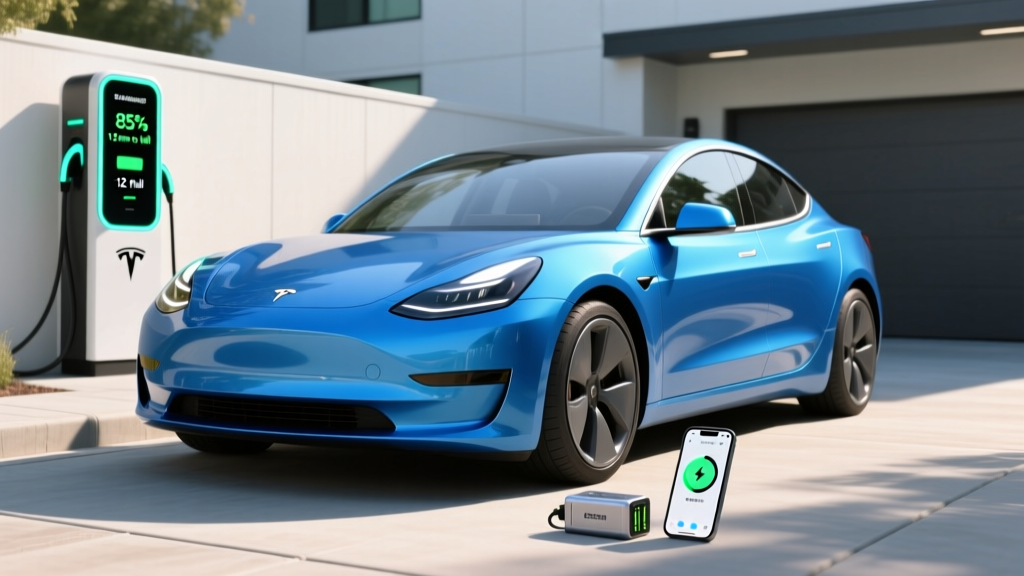
Home charging on a 48-amp Level 2 circuit (requiring a 60-amp breaker) delivers about 30 miles of range per hour — enough to fully replenish overnight. Budget $500-$1,500 for professional Level 2 installation depending on panel proximity; older homes may need a $2,000-$4,000 panel upgrade to support a dedicated 60A circuit.
Performance and Efficiency by the Numbers
| Spec | 2025 Model 3 Long Range AWD | 2025 Model 3 RWD |
|---|---|---|
| 0-60 mph | 4.2 seconds | 5.8 seconds |
| Horsepower | 346 hp (dual motor) | 271 hp (single motor) |
| Drivetrain | AWD (dual motor) | RWD |
| EPA Efficiency | 131 MPGe / 25 kWh/100mi | 132 MPGe / 25 kWh/100mi |
| Battery Usable Capacity | 79 kWh (NMC) | 60 kWh (LFP) |
| EPA Range | 341 miles | 272 miles |
Efficiency is nearly identical between trims at ~25 kWh per 100 miles — among the best in the EV segment. This translates to roughly $0.10-$0.14 per mile on average US electricity rates ($0.16/kWh national average), versus $0.15-$0.18/mile for a 30 MPG gas car at $3.50/gallon. The Long Range AWD's dual-motor setup provides genuine all-weather traction, making it the stronger pick for northern climates.
Pricing, Pre-Owned Lease Values, and Tax Credit Reality
| Trim / Source | Original MSRP | Pre-Owned Lease Range (2026) |
|---|---|---|
| 2024 Model 3 RWD (lease return) | $38,990 | $26,000 - $31,000 |
| 2024 Model 3 Long Range AWD (lease return) | $45,240 | $32,000 - $38,000 |
| 2023 Model 3 Long Range AWD (pre-refresh) | $47,740 | $27,000 - $33,000 |
Pre-owned Tesla lease deals typically surface through Tesla's own Used Inventory, third-party dealers acquiring lease returns at auction, and private sales. Tesla-certified vehicles carry a limited warranty but command a $1,000-$3,000 premium over independent listings.
Does a Used Model 3 Qualify for the Federal Tax Credit?
Under IRS §30D rules, the used EV tax credit (technically §25E) offers up to $4,000 or 30% of the sale price (whichever is lower) for qualifying pre-owned EVs. Key requirements:
- Vehicle price cap: Sale price must be $25,000 or below
- Buyer income cap: AGI ≤ $75,000 (single) / $150,000 (joint)
- Vehicle age: Must be at least 2 model years old
- Dealer requirement: Must be purchased from a licensed dealer (private sales excluded)
- One-time use: Credit applies once per VIN, and once per buyer per 3 years
This means a 2024 Model 3 Long Range selling for $32,000 does not qualify (above $25,000 cap). A 2023 Model 3 RWD at $24,500 from a dealer, purchased by a buyer under the income threshold, could receive up to $4,000 off — effectively bringing the cost to ~$20,500. Always verify current rules at IRS.gov and consult a tax professional.
Interior, Cargo, and Tech: What You Live With Daily
The refreshed "Highland" Model 3 (2024+) improved cabin materials and added rear-seat ventilation, a rear touchscreen, and ambient lighting. Cargo space measures 23 cu ft (trunk + frunk combined), adequate for two suitcases and groceries but tight for bulky family gear. Rear legroom is 35.3 inches — comfortable for adults under 6 feet on longer drives, but tighter than a Hyundai Ioniq 6 or BMW i4.
Standout tech:
- 15.4-inch center touchscreen with responsive, minimal-button interface
- Tesla Autopilot (Level 2 driver assist) standard — adaptive cruise + lane centering
- Over-the-air updates continuously add features
- Supercharger network access (most reliable public charging in the US)
- Native route planning with battery preconditioning
Notable drawbacks:
- No Apple CarPlay or Android Auto — Tesla's ecosystem is closed
- Minimalist controls require touchscreen use for mirrors, glovebox, and wiper speed
- FSD (Supervised) remains Level 2 — driver must remain fully engaged at all times
- Ride quality firm on 19-inch wheels; 18-inch Aero wheels recommended for comfort
Warranty and Battery Longevity on a Lease Return
Tesla's battery and drive unit warranty transfers to subsequent owners:
- Battery & Drive Unit: 8 years / 120,000 miles (Long Range) or 8 years / 100,000 miles (RWD), whichever comes first, with minimum 70% capacity retention
- Basic Vehicle: 4 years / 50,000 miles (likely expired on most 2023 lease returns)
Real-world data from fleet operators and Tesla's own impact reports show Model 3 batteries retaining approximately 85-90% capacity at 100,000 miles. LFP batteries (RWD models) tend to degrade even more slowly, often retaining 90%+ at the same mileage. Before purchasing any pre-owned Tesla, request the battery State of Health (SoH) reading via the Tesla Service menu or a third-party diagnostic.
Who Should Buy a Pre-Owned Model 3 — and Who Shouldn't
Best For
- Commuters: 272-341 miles of range eliminates daily charging stress
- Tech-forward buyers: OTA updates, Supercharger network, best-in-class app
- Cost-conscious EV adopters: Lease returns undercut new pricing by 25-35%
- Single professionals / couples: Adequate cargo, excellent efficiency
Look Elsewhere If
- Large families: Rear seat and cargo tight vs. Model Y or Ioniq 5
- CarPlay loyalists: Tesla offers zero smartphone mirroring
- Towing needs: Model 3 is not rated for towing
- Rural / charging-desert residents: Supercharger gaps remain in some regions
Frequently Asked Questions
What is the real-world range of a pre-owned Tesla Model 3?
The 2024-2025 Long Range AWD delivers approximately 270-300 miles on highway trips in moderate weather, and 230-260 miles in freezing conditions. The RWD Standard Range achieves about 220-250 miles highway. City driving with regen braking often matches or exceeds EPA estimates.
How fast does a used Model 3 charge at home and on road trips?
At home on a 48A Level 2 charger, expect ~30 miles of range per hour (full charge in 6-8 hours). On DC fast chargers, the Long Range peaks at 250 kW and charges 10-80% in about 25-30 minutes. The RWD model peaks at 170 kW for 10-80% in ~32 minutes.
Does a pre-owned Tesla Model 3 qualify for a federal tax credit?
Possibly. Under §25E (used EV credit), you can receive up to $4,000 if the sale price is $25,000 or less, your income is under $75K single / $150K joint, the car is at least 2 model years old, and you buy from a licensed dealer. A 2023 Model 3 RWD at $24,500 may qualify; higher-priced Long Range models typically do not. Verify at IRS.gov.
Is a pre-owned Model 3 worth it vs. a new Hyundai Ioniq 6 or Chevy Bolt?
The Model 3 wins on charging speed (250 kW vs. Ioniq 6's 350 kW capability but fewer stations), Supercharger network access, and software. The Ioniq 6 offers more rear space and CarPlay. A used Bolt is far cheaper ($15K-$20K) but charges slower and has less range. Choose Model 3 for network and efficiency; Ioniq 6 for space and CarPlay.
What should I check before buying a pre-owned Tesla lease return?
Request battery State of Health (SoH) data, verify remaining warranty coverage (8yr/120K battery), check for open recalls via NHTSA.gov, inspect tire wear (EVs wear tires faster due to weight and torque), and confirm the vehicle has not been salvaged or in a major accident. A pre-purchase inspection at a Tesla Service Center costs ~$200 and is strongly recommended.
Can I still get Tesla's FSD on a used Model 3?
FSD (Supervised) transfers with the vehicle if the original owner purchased it outright. Leased vehicles typically did not include FSD purchase — it was a subscription that ends at lease return. Verify FSD status in the vehicle's software menu before buying. Note: FSD is SAE Level 2, requiring full driver attention at all times.