The Real Math Behind Pre Owned Electric Car Finance
Financing a used EV isn't just about the monthly payment. The sticker on a pre-owned Chevrolet Bolt EV, Tesla Model 3, or Ford Mustang Mach-E is only the opening line of a five-year ledger that includes electricity, insurance, maintenance, depreciation, and — critically — whether you qualify for the federal used-EV tax credit under IRS §25E (up to $4,000) or can still access §30D incentives depending on the vehicle's model year and battery sourcing. Buyers who run only the purchase price often leave thousands on the table, or walk into ownership costs they didn't model.
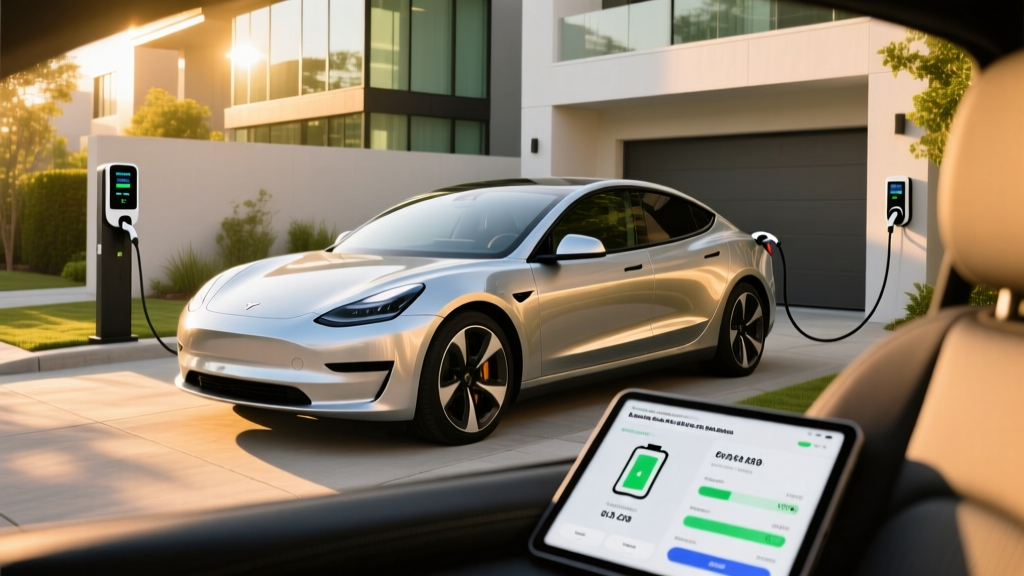
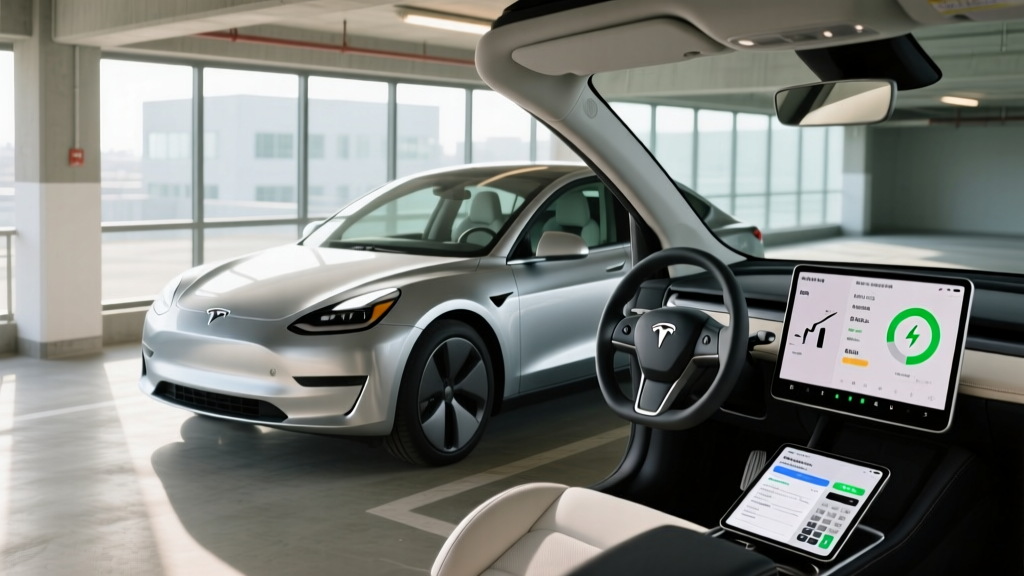
This guide rebuilds that ledger with concrete numbers: $/kWh electricity rates, real maintenance intervals, 2026 insurance premiums, and the exact IRS income and MSRP caps that determine credit eligibility. We'll use a representative pre-owned 2023 Tesla Model 3 Long Range (AWD, ~75 kWh usable NMC battery, EPA 341 mi when new, ~65,000 miles on the odometer) purchased at roughly $24,500 in early 2026 as our baseline, then compare it to a similarly priced used gas sedan.
5-Year Total Cost of Ownership: EV vs Gas Baseline
The table below models five years / 75,000 miles of ownership for a pre-owned 2023 Model 3 Long Range versus a 2022 Honda Accord 1.5T (30 MPG combined) bought at a similar transaction price. Electricity is priced at the U.S. residential average of $0.17/kWh (EIA), gasoline at $3.45/gal. Efficiency for the Model 3 uses the EPA-rated 25 kWh/100 mi figure from fueleconomy.gov.
| Category | Used Model 3 LR | Used Accord 1.5T |
|---|---|---|
| Purchase price (before credit) | $24,500 | $24,500 |
| Federal tax credit applied | −$4,000 (§25E) | $0 |
| Net acquisition | $20,500 | $24,500 |
| Energy (electricity / gasoline) | $3,188 | $8,625 |
| Maintenance | $1,400 | $4,100 |
| Insurance (5-yr total) | $10,250 | $7,400 |
| Depreciation (est. resale at yr 5) | −$9,500 | −$11,000 |
| Net 5-year cost | $25,838 | $33,625 |
The used Model 3 wins by roughly $7,800 over five years, but the margin is built on three fragile assumptions: you qualify for the full $4,000 used-EV credit, you charge primarily at home at residential rates, and you don't live in a state where EV insurance loadings are extreme. Remove any one and the gap narrows fast.
Federal Tax Credits: §25E for Used EVs and §30D Caveats
The single biggest variable in pre owned electric car finance is which credit the vehicle actually qualifies for. For model-year 2026 purchases of used EVs, the relevant statute is IRC §25E (Previously-Owned Clean Vehicles), not §30D. §30D applies to new vehicles only. Confusing the two is the most common mistake buyers make at the dealership.
- Credit amount: 30% of sale price, capped at $4,000
- Sale price must be $25,000 or less
- Vehicle must be at least 2 model years old (so a 2024 or older in calendar 2026)
- Battery capacity ≥ 7 kWh
- Buyer AGI limits: $150k (married filing jointly), $112.5k (head of household), $75k (single)
- Must purchase from a licensed dealer — private-party sales do not qualify
- Credit can be transferred to the dealer as a point-of-sale reduction (effective cash off the price)
- Each VIN can only trigger the credit once — verify the car hasn't already been claimed
For buyers considering a new EV instead, §30D still offers up to $7,500 but carries its own stack of constraints: MSRP caps ($80,000 for SUVs/pickups/vans, $55,000 for sedans), the same AGI limits, North American final assembly, and critical-mineral and battery-component sourcing thresholds that tighten annually. Always cross-check the specific VIN against the IRS's list at irs.gov before signing.
Charging Cost Per Mile vs Gasoline
Electricity pricing varies wildly — from $0.11/kWh in the Pacific Northwest to $0.30+/kWh in California and the Northeast — and public DC fast charging routinely runs $0.40–$0.60/kWh. The honest comparison has to separate home charging from road-trip charging.
| Scenario | $/kWh or $/gal | EV $/mi | Gas $/mi |
|---|---|---|---|
| Home Level 2 (U.S. avg) | $0.17 / kWh | $0.043 | — |
| Home, off-peak TOU rate | $0.09 / kWh | $0.023 | — |
| Public DC fast charger | $0.48 / kWh | $0.120 | — |
| Gasoline sedan | $3.45 / gal @ 30 MPG | — | $0.115 |
At home on the national average, the EV costs 62% less per mile than gas. On a road trip relying solely on DC fast charging, the EV is actually slightly more expensive per mile — which is why EV ownership economics hinge on home or workplace charging access. If your daily routine can't accommodate Level 2 charging where you park overnight, the fuel-cost advantage largely evaporates.
Maintenance Savings: What You Actually Skip
EVs don't eliminate maintenance — they reshape it. You still rotate tires (EVs are heavier and torque-heavy, so tires often wear faster), replace cabin air filters, top off washer fluid, and eventually service the brake fluid and battery coolant loop. What disappears are the internal-combustion line items.
| Service Item | EV (Model 3) | Gas Sedan |
|---|---|---|
| Oil changes | $0 | $750 (10× @ $75) |
| Transmission fluid | $0 | $180 |
| Spark plugs | $0 | $320 |
| Brake pads (regen extends life) | $0–$250 | $600 |
| Tires (heavier vehicle, instant torque) | $1,100 | $800 |
| Cabin filter, wipers, fluid | $300 | $350 |
| Total | $1,400–$1,650 | $3,000 |
Net maintenance savings of roughly $1,400–$1,600 over five years is realistic, not the "$5,000" figure some marketing materials imply. Also note: tires often cost more on an EV because of the extra 500–800 lbs of battery mass and the instant torque on takeoff — budget for one extra set over 75,000 miles.
Insurance Reality: The Cost Most Buyers Miss
EV insurance premiums in 2026 remain 15–30% higher than equivalent gas vehicles on average, for three concrete reasons: (1) higher repair costs after collisions because of battery-pack safety protocols and aluminum-intensive structures, (2) elevated total-loss rates when the traction battery is even lightly damaged, and (3) the higher original MSRP of many EV models flowing into comprehensive/collision coverage. For our 2023 Model 3 example, expect roughly $2,050/year nationally versus $1,480/year for the Accord — a $2,850 five-year gap that eats into the fuel and maintenance savings if you don't shop aggressively.
Mitigation tactics: get quotes from at least four carriers (Tesla Insurance, Geico, Progressive, and regional writers price EVs very differently), ask about low-mileage and garage-parked discounts, and consider a higher comprehensive deductible if the vehicle's cash value is low enough to self-insure minor damage.
Depreciation and Resale Value Trends
Used-EV depreciation has been turbulent. After the 2023–2024 price wars led by Tesla and aggressive leasing incentives from Hyundai/Kia, resale values on 2–4 year-old EVs fell 30–45% from their pandemic peaks — which is exactly what makes pre owned electric car finance attractive for buyers today, but also a warning about what may happen to your trade-in value in five years.
Current iSeeCars and Kelley Blue Book data shows 5-year retention for mainstream EVs averaging 35–45% of original MSRP, versus 50–55% for comparable gas sedans. The Model 3 holds better than most (roughly 48% at five years thanks to Supercharger network effects and software support), while early Nissan LEAFs and Bolt EVs trade lower due to smaller batteries and CHAdeMO/CCS legacy concerns. Budget for 40–50% retention on a mainstream used EV; if you plan to sell at year 5, factor that into the TCO honestly rather than assuming parity with gas.
State, Local, and Utility Incentives
Beyond the federal §25E credit, dozens of states and utilities stack additional rebates: California's Clean Fuel Reward (up to $1,000 at point of sale), Colorado's state EV credit (up to $5,000 for income-qualified buyers on used EVs in 2026), New York's Drive Clean Rebate, and utility-specific programs from PG&E, Xcel Energy, ConEdison, and others that offer $300–$1,500 for used EV purchases or home Level 2 charger installation. The Database of State Incentives for Renewables & Efficiency (dsireusa.org) is the canonical lookup. Because these programs open, cap out, and close unpredictably, treat them as gravy in your finance model — not load-bearing assumptions.
Decision Framework: When the Numbers Work
- You qualify for the full $4,000 §25E credit (AGI under cap, dealer sale, price ≤ $25k, 2+ model years old)
- You have reliable home or workplace Level 2 charging at ≤ $0.20/kWh
- Your annual mileage is ≥ 10,000 mi/yr (fixed insurance cost amortizes better)
- You plan to keep the car 4+ years to ride out depreciation
- The specific model's battery shows ≥ 90% State of Health on a pre-purchase diagnostic
- You cannot install or access Level 2 charging where you park nightly
- You rely on public DC fast charging for >50% of your miles
- Your AGI exceeds §25E caps (credit phases out completely)
- You'll sell within 2 years — depreciation will dominate the ledger
Frequently Asked Questions
How much does it really cost to own an EV over 5 years?
For a pre-owned 2023 Model 3 Long Range purchased at $24,500 and driven 15,000 mi/yr, our model shows a net 5-year cost of roughly $25,800 after the $4,000 §25E credit, including energy, maintenance, insurance, and depreciation. A comparable gas sedan at the same purchase price lands near $33,600. The EV wins by about $7,800 — but only if you charge at home and qualify for the credit.
Do I qualify for the federal tax credit on a used EV?
You likely qualify for the §25E credit (up to $4,000) if your AGI is under $75k single / $150k joint, the sale price is ≤ $25,000, the car is at least 2 model years old with a ≥ 7 kWh battery, you buy from a licensed dealer, and the VIN hasn't previously claimed the credit. §30D's $7,500 credit applies to new vehicles only. Confirm eligibility with your tax professional and the IRS VIN lookup tool before closing the deal.
How much do I save on fuel and maintenance?
Expect roughly $5,400 in fuel savings and $1,400–$1,600 in maintenance savings over 75,000 miles versus a 30 MPG gas sedan, assuming $0.17/kWh home electricity and $3.45/gal gasoline. These savings shrink sharply if you rely on public DC fast charging at $0.40–$0.60/kWh.
Are EVs more expensive to insure?
Yes — typically 15–30% higher premiums than equivalent gas vehicles due to costlier collision repairs, battery-safety protocols, and higher original MSRPs. On our example Model 3 vs Accord, the insurance gap was roughly $2,850 over five years. Shop at least four carriers; pricing variance for EVs is unusually wide.
How well do EVs hold their value?
Mainstream EVs retain roughly 35–45% of original MSRP at five years, versus 50–55% for comparable gas sedans. Tesla and Hyundai/Kia models with strong software and charging-network support do better; older small-battery EVs do worse. Budget conservatively for ~40% retention on a typical used EV.
Should I worry about battery replacement cost?
A used Model 3 or Bolt with 60–80k miles typically shows 90–94% State of Health. Full traction-battery replacement runs $10,000–$18,000 out of warranty, but catastrophic failure before 150,000 miles remains statistically rare. Always request a pre-purchase SoH reading from a shop with OEM diagnostic access — it's the single most important inspection item on a used EV.