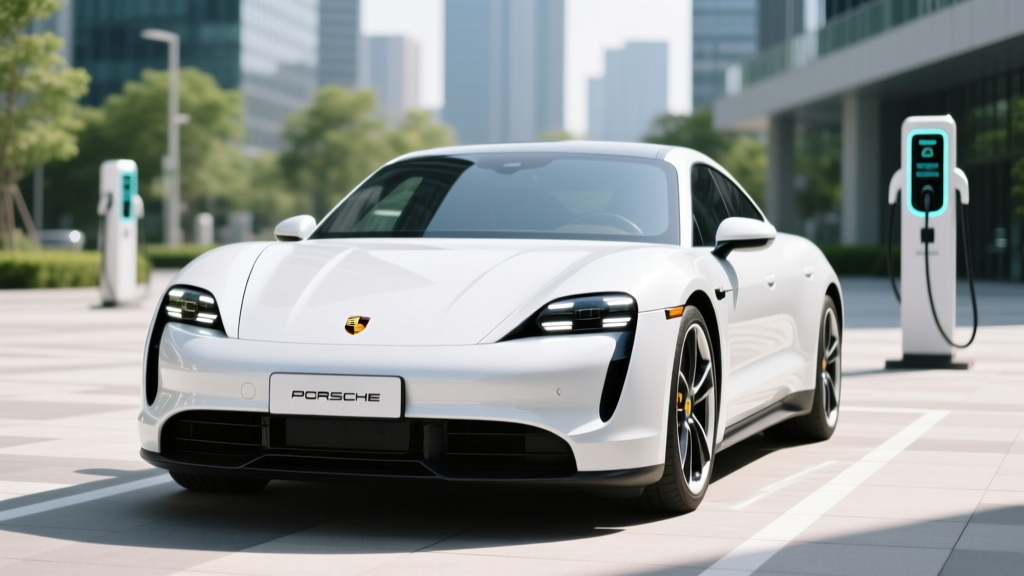
Search configurators and dealer lots for a Porsche Taycan white and you'll find one of the most photographed EVs on the road. The Taycan in Carrara White Metallic or Chalk has become the signature look for Porsche's electric sports sedan — a color that highlights the car's sculpted fenders and keeps the cabin cooler under summer sun. But beyond the paint code, the refreshed Taycan lineup (updated significantly for the 2025 model year and carried into 2026) delivers meaningfully improved range, blistering charge speeds, and driving dynamics that still set the benchmark in the luxury EV sedan segment.
This review breaks down every number that matters: real-world range versus EPA estimates, the Taycan's class-leading 800-volt charging architecture, pricing across all trims, and whether the federal EV tax credit applies. If you're researching a white Taycan — or any Taycan — these are the specs and ownership realities you need before signing a purchase order.
2026 Porsche Taycan: Full Spec Sheet at a Glance
| Specification | Taycan (Base RWD) | Taycan 4S | Taycan Turbo | Taycan Turbo GT |
|---|---|---|---|---|
| Drivetrain | RWD (single motor) | AWD (dual motor) | AWD (dual motor) | AWD (dual motor) |
| Horsepower | 402 hp | 590 hp | 870 hp | 1,019 hp (Launch Control) |
| 0-60 mph | 4.6 sec | 3.5 sec | 2.5 sec | 2.1 sec |
| Battery (usable) | 89 kWh (NMC) | 89 kWh (NMC) | 89 kWh (NMC) | 89 kWh (NMC) |
| EPA Range | 318 mi | 290 mi | 279 mi | 269 mi |
| Max DC Charge Rate | 320 kW | 320 kW | 320 kW | 320 kW |
| 10-80% DC Fast Charge | ~18 min | ~18 min | ~18 min | ~18 min |
| Level 2 AC Charging | 11 kW (est. ~32 mi/hr) | 11 kW | 11 kW | 11 kW |
| MPGe (combined) | 94 MPGe | 87 MPGe | 82 MPGe | 78 MPGe |
| Base MSRP | $99,400 | $113,400 | $155,000 | $230,000 |
| Battery Warranty | 8 years / 100,000 miles (70% capacity retention) | |||
Sources: EPA fueleconomy.gov, Porsche USA. Specs reflect 2025 refresh carried into 2026 model year. Optional Performance Battery Plus (105 kWh usable) available on select trims — adds range and weight.
Real-World Range: What to Actually Expect
The base Taycan RWD with the standard 89 kWh Performance Battery Plus earns an EPA-estimated 318 miles — a dramatic improvement over the pre-refresh Taycan's ~225-mile rating. However, real-world results depend heavily on driving style, climate, and terrain.
- Highway driving (75 mph, moderate weather): Expect 260-280 miles. The Taycan's two-speed rear transmission helps efficiency at speed, but aero drag still takes a toll.
- City / mixed driving (65°F): 290-310 miles is achievable with moderate regen use.
- Cold weather (below 32°F): Plan for 210-250 miles. The Taycan uses a heat pump (standard), which mitigates cabin-heating losses, but battery chemistry still suffers at low temperatures.
- Spirited driving: This is a Porsche. Sustained performance driving will drop range to 180-200 miles. Track use is even more punishing.
The Taycan's NMC (nickel manganese cobalt) lithium-ion battery prioritizes energy density and power delivery over the LFP chemistry found in some competitors like the Tesla Model 3 Standard Range. NMC delivers higher specific energy and better cold-weather power output but typically shows slightly more calendar degradation over 10+ years compared to LFP. Porsche's 8-year/100,000-mile warranty guarantees at least 70% state of health (SoH) retention — consistent with industry norms.
Charging Speed: The Taycan's 800-Volt Advantage
The Taycan was the first production EV built on an 800-volt architecture, and the refreshed model pushes DC fast-charging capability to 320 kW peak at compatible chargers. That's among the fastest of any production sedan on sale.
| Charging Level | Power | Speed (Approx.) | Notes |
|---|---|---|---|
| Level 1 (120V household) | ~1.4 kW | ~4 mi/hr | Emergency/trickle only — full charge takes 60+ hours |
| Level 2 (240V home) | 11 kW | ~32 mi/hr | Full 0-100% in ~10 hours; ideal overnight charge |
| DC Fast (350 kW station) | 320 kW peak | 10-80% in ~18 min | Requires 800V-capable station (e.g., Electrify America 350 kW) |
| DC Fast (150 kW station) | ~140 kW sustained | 10-80% in ~28 min | Common at older CCS stations; still adequate for road trips |
Charging curve reality: The Taycan peaks at 320 kW only at low state of charge (roughly 10-30%) and at chargers capable of delivering that power. Above 50% SoC, the rate tapers significantly — by 80%, you're seeing roughly 80-100 kW. This is normal lithium-ion behavior; the 18-minute 10-80% figure assumes optimal battery preconditioning and a capable charger. Porsche's thermal management system is excellent at maintaining charge speed, but you won't see 320 kW sustained for the full session.
For home Level 2 charging, the Taycan accepts up to 11 kW on a 48-amp circuit. This means a dedicated Level 2 home charger (such as a Porsche Mobile Charger Connect or a ChargePoint Home Flex) will add roughly 32 miles of range per hour of charging — enough to fully replenish the battery overnight. Installation typically requires a 60-amp breaker and 6-gauge wire; consult a licensed electrician for your specific panel capacity.
Performance & Driving Dynamics
Even the base rear-wheel-drive Taycan posts a 4.6-second 0-60 mph time, but the real story is how the car delivers its power. Porsche's dual-motor AWD models use a unique two-speed transmission on the rear axle — first gear multiplies launch torque, second gear optimizes top-end efficiency. The result is launch control performance that's repeatable, not a one-time party trick.
The Turbo GT variant (1,019 hp with Launch Control) is one of the quickest production sedans ever built at 2.1 seconds to 60 mph. But the 4S strikes the best balance for most buyers: 590 hp, a 3.5-second sprint, and 290 miles of EPA range — all for roughly $113,000 before options.
Handling remains the Taycan's defining trait versus the Tesla Model S, Lucid Air, and Mercedes EQS. Rear-axle steering (available on most trims), adaptive air suspension, and Porsche's torque vectoring deliver a sports-car feel that these competitors approximate but don't match. The trade-off is ride firmness — the Taycan is communicative, not plush, especially on 21-inch wheels.
Pricing, Trims & Federal Tax Credit Eligibility
| Trim | Base MSRP | As-Tested (Typical Options) | Federal §30D Credit Eligible? |
|---|---|---|---|
| Taycan (RWD) | $99,400 | $108,000-$115,000 | No — exceeds $55,000 sedan MSRP cap |
| Taycan 4S | $113,400 | $125,000-$140,000 | No — exceeds $55,000 sedan MSRP cap |
| Taycan Turbo | $155,000 | $170,000-$190,000 | No — exceeds $55,000 sedan MSRP cap |
| Taycan Turbo GT | $230,000 | $240,000+ | No — exceeds $55,000 sedan MSRP cap |
The Porsche Taycan does not qualify for the $7,500 federal EV tax credit under current IRS rules. The §30D credit caps eligible sedans at an MSRP of $55,000 — and every Taycan trim starts well above that threshold. Additionally, the credit has adjusted gross income limits ($150,000 single / $300,000 joint) and battery critical-mineral sourcing requirements.
Some buyers may qualify for state-level incentives (California, Colorado, and others offer rebates or HOV lane access), but these vary by jurisdiction. Check your state's energy office or the IRS §30D page for current rules. Consult a tax professional before making purchase decisions based on incentives.
Options on the Taycan add up quickly. A typical well-equipped 4S with Adaptive Cruise Control, Porsche InnoDrive, 14-way power seats, the Sport Chrono package, and metallic paint (including Carrara White Metallic at $830) lands in the $130,000-$140,000 range before taxes and destination. The Turbo and Turbo GT climb steeply with carbon-ceramic brakes, Weissach packages, and exclusive interior leather options.
Interior, Cargo & Technology
The Taycan's cabin is unmistakably Porsche: a curved 16.8-inch digital instrument cluster, a 10.9-inch central touchscreen, and an optional 10.9-inch passenger display. The gear selector lives on the left side of the steering column (a nod to Porsche racing heritage). Build quality is excellent — tight panel gaps, premium materials, and a quiet cabin thanks to acoustic glass and careful aero sealing.
Practical dimensions:
- Front trunk (frunk): 2.9 cu ft — fits a small bag or charging cables
- Rear trunk: 14.3 cu ft (sedan) — competitive with the BMW 5 Series; the Taycan Cross Turismo wagon offers up to 44.6 cu ft with seats folded
- Rear legroom: 32.7 inches — adequate for adults under 6 feet on shorter trips; tall passengers will find headroom tight due to the sloping roofline
- Seating: 4 passengers standard; 5-seat option available on some trims (tight middle position)
Driver assistance: The Taycan comes with Porsche InnoDrive (adaptive cruise with predictive speed based on navigation and road-sign data), lane-keeping assist, and night vision assist (optional). This is an SAE Level 2 driver-assist system — the driver must remain attentive and keep hands on or near the wheel at all times. It is not a self-driving system. Porsche's implementation is smooth and confidence-inspiring on highways but does not offer automated lane changes or hands-free operation like GM's Super Cruise or Ford's BlueCruise.
Pros, Cons & Who Should Buy a White Taycan
- Best-in-class driving dynamics — steering feel, chassis balance, and brake modulation are sports-car caliber
- 320 kW DC fast charging with 10-80% in ~18 minutes at capable stations
- 318-mile EPA range on the base RWD (a massive improvement over prior years)
- 800V architecture future-proofs for next-gen charging infrastructure
- Build quality, cabin quietness, and brand cachet
- Carrara White and Chalk paint showcase the design exceptionally well
- No federal tax credit eligibility — MSRP far exceeds §30D sedan cap
- Rear seat space is tight for taller adults compared to Lucid Air or Mercedes EQS
- Frunk is small (2.9 cu ft) — charging cables take up most of it
- Infotainment is functional but less intuitive than Tesla or Lucid's interface
- Options escalate price rapidly — a "base" Taycan rarely leaves the factory at base price
- Regen braking is mild — no true one-pedal driving mode like Nissan Leaf or Tesla
Who the Taycan is for: The driver who prioritizes handling, build quality, and brand heritage over maximum range or maximum interior space. If you're choosing between a Model S, Lucid Air, and Taycan — and driving engagement is your top criterion — the Porsche wins. It's best suited as a daily-driver commuter and weekend canyon car that occasionally road-trips. The Cross Turismo variant adds practicality for families needing more cargo room.
Who should look elsewhere: Buyers seeking maximum rear-seat comfort (Lucid Air, EQS), the longest possible range (Lucid Air Grand Touring at 512 mi EPA), or the lowest cost of entry in a luxury EV sedan (Tesla Model S starts ~$75,000). The Taycan is a driver's car, and you pay a premium for that focus.
Taycan vs. Key Competitors: Quick Comparison
| Attribute | Porsche Taycan 4S | Tesla Model S Plaid | Lucid Air Touring | BMW i5 M60 |
|---|---|---|---|---|
| Base MSRP | $113,400 | $89,990 | $109,900 | $84,100 |
| EPA Range | 290 mi | 359 mi | 425 mi | 271 mi |
| 0-60 mph | 3.5 sec | 1.99 sec | 3.4 sec | 3.7 sec |
| Max DC Charge | 320 kW | 250 kW | 200 kW | 205 kW |
| Driving Dynamics | Best in class | Raw acceleration; softer chassis | Grand-tourer comfort | Sport-luxury balance |
| Federal Credit? | No | No (MSRP cap) | No (MSRP cap) | No (MSRP cap) |
Ownership Costs & Warranty
Porsche covers the Taycan's battery and powertrain for 8 years or 100,000 miles, whichever comes first, with a capacity retention threshold of 70%. The limited vehicle warranty is 4 years/50,000 miles. Porsche also includes 3 years of complimentary scheduled maintenance and roadside assistance.
Insurance costs are elevated — expect annual premiums of $3,500-$5,500 depending on your profile, location, and trim level. Depreciation is steeper than a Tesla Model S in the first two years (luxury German sedans historically take a larger initial hit) but stabilizes as the Taycan establishes its collector appeal. According to industry data, a Taycan retains approximately 55-60% of its value after three years, which is respectable for a six-figure EV.
Charging costs depend on your electricity rate. At the national average of ~$0.16/kWh, a full home charge (89 kWh) costs roughly $14.24 — translating to about $0.045 per mile. That's a fraction of premium gasoline in a comparable Panamera, but public DC fast charging at $0.35-$0.50/kWh narrows the gap considerably on road trips.
Frequently Asked Questions
What is the real-world range of the Porsche Taycan?
The base Taycan RWD is EPA-rated at 318 miles. In real-world mixed driving at moderate temperatures, expect 280-300 miles. Highway-only driving at 75+ mph drops this to 260-280 miles, and cold weather (below freezing) can reduce range to 210-250 miles. The AWD 4S rates at 290 miles EPA with real-world results around 250-270 miles in mixed use.
How fast does the Taycan charge at home and on the road?
At a 350 kW-capable DC fast charger, the Taycan peaks at 320 kW and charges from 10-80% in approximately 18 minutes under optimal conditions. At home on a Level 2 charger (11 kW), a full charge takes about 10 hours — ideal for overnight replenishment. On a standard 120V outlet (Level 1), expect roughly 4 miles of range per hour — only suitable for emergencies.
Does the Porsche Taycan qualify for the federal EV tax credit?
No. Under current IRS §30D rules, new electric sedans must have an MSRP at or below $55,000 to qualify for the up-to-$7,500 federal tax credit. Every Taycan trim starts well above this cap. State-level incentives may still apply depending on your jurisdiction — check your state energy office and consult a tax professional.
Is a white Porsche Taycan more expensive than other colors?
Standard white (non-metallic) is typically included at no extra charge on the Taycan. Carrara White Metallic adds $830 to the MSRP. Chalk (a popular light grey-white) costs $830-$1,050 depending on model year. Exclusive Paint-to-Sample colors can add $3,000-$12,000+. White and light colors have a minor thermal benefit — the cabin stays cooler in direct sun, reducing HVAC load and preserving a small amount of range in hot climates.
Is the Taycan worth buying versus a Tesla Model S or Lucid Air?
If driving engagement, chassis feedback, and brand prestige are your top priorities, yes — the Taycan is the driver's choice in the luxury EV sedan segment. If you value maximum range, the Lucid Air Touring (425 mi EPA) or Model S (359 mi) are significantly more efficient. If you want the lowest entry price, the Model S undercuts the Taycan by $10,000-$25,000 depending on trim. The Taycan charges faster than both (320 kW vs. 250/200 kW) and handles better, but offers less rear-seat space and shorter range.
What battery chemistry does the Taycan use, and how long will it last?
The Taycan uses NMC (nickel manganese cobalt) lithium-ion cells supplied primarily by LG Energy Solution. NMC offers high energy density and strong power delivery. With proper care (avoiding prolonged storage at 100% SoC, using preconditioning for fast charging), NMC batteries typically retain 85-90% capacity after 100,000 miles based on industry fleet data. Porsche's warranty guarantees at least 70% SoH at 8 years/100,000 miles.