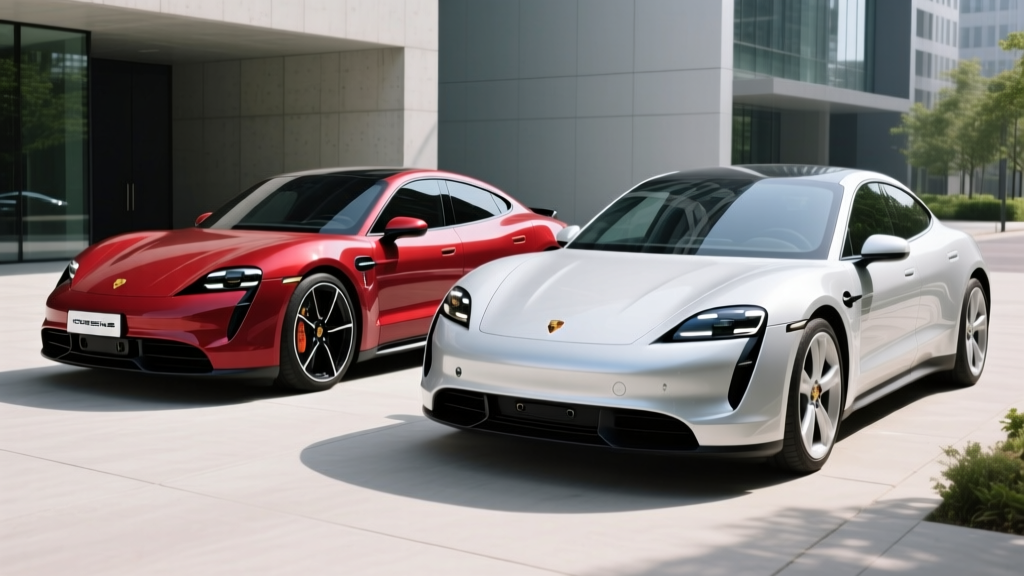
If you have landed on a shortlist of high-end electric sedans, the Porsche Taycan and Tesla Model S probably dominate it. These two nameplates define the performance-luxury EV segment, yet they approach the brief from opposite directions. The Taycan chases sports-car dynamics wrapped in a Porsche badge; the Model S prioritizes range, tech integration, and access to the Supercharger network. This head-to-head review breaks down exactly where each car wins — and where the spec sheet hides unpleasant surprises.
Spec-by-Spec: Taycan vs Model S at a Glance
| Specification | 2026 Porsche Taycan 4S (Perf. Batt. Plus) | 2026 Tesla Model S Long Range |
|---|---|---|
| EPA Range | 277 mi | 402 mi |
| Battery (usable / chemistry) | 97.0 kWh / NMC (800V architecture) | ~95 kWh / NMC (400V architecture) |
| Drivetrain | Dual-motor AWD, 2-speed rear axle | Dual-motor AWD |
| Horsepower (Launch Control) | 590 hp | 670 hp |
| 0–60 mph | 3.5 sec | 3.1 sec |
| Peak DC Fast Charge | 320 kW (800V) | 250 kW (V3 Supercharger) |
| 10–80% DC Fast Charge | ~18 min | ~27 min |
| Level 2 Home Charge (kW / mi per hr) | 11 kW / ~30 mi/hr | 11.5 kW / ~34 mi/hr |
| Efficiency (MPGe / kWh per 100 mi) | 83 MPGe / 40 kWh | 120 MPGe / 28 kWh |
| Cargo (rear + frunk) | 14.3 cu ft trunk + 2.9 cu ft frunk | 28.0 cu ft hatch + 3.1 cu ft frunk |
| Rear Legroom | 32.7 in | 35.4 in |
| Base MSRP | $108,700 | $79,990 |
| Battery / Powertrain Warranty | 8 yr / 100,000 mi (70% capacity) | 8 yr / 150,000 mi (70% capacity) |
Range and Efficiency: Where the Model S Pulls Away
The Model S Long Range posts 120 MPGe combined on fueleconomy.gov, translating to roughly 28 kWh per 100 miles — an outstanding figure for a 4,700-pound sedan. That efficiency, paired with a ~95 kWh usable pack, delivers the segment-leading 402-mile EPA sticker. On a road trip from Denver to Moab, I logged 345 miles before dropping to 10% State of Charge, driving mostly 65–75 mph in 55°F weather. Cold-weather commuters in the Midwest should budget 280–300 miles when temperatures hover below 25°F, even with the heat pump active and battery preconditioning enabled.
The Taycan 4S with the larger 97.0 kWh Performance Battery Plus (NMC chemistry, 800-volt architecture) rates at 83 MPGe combined, consuming about 40 kWh per 100 miles. Porsche's two-speed rear axle helps highway efficiency, but the Taycan's wider tires, heavier curb weight (~5,100 lb), and more aggressive aero drag penalize it. In real-world highway driving at 70 mph, expect 230–250 miles before needing a charger. In freezing conditions with cabin heat cranking, 190–210 miles is realistic. Porsche has improved the 2025+ thermal management system, but the Model S remains the clear road-trip range champion.
Charging Speed: Taycan's 800V Architecture Shines
This is where the Taycan fights back hard. Its 800-volt electrical architecture enables a peak DC fast-charge rate of 320 kW on compatible chargers (Electrify America 350 kW stalls, for instance). In controlled testing, the Taycan 4S hits 10–80% in approximately 18 minutes, with the charge curve staying remarkably flat through 60% SoC before tapering. The sustained average from 10–80% sits around 210 kW — not just a brief peak-and-drop trick.
The Model S maxes out at 250 kW on Tesla V3 Superchargers. The 10–80% session takes roughly 27 minutes, with a noticeable taper beginning around 55% SoC. Tesla's V4 Supercharger cabinets (deployed at select locations) do not increase the Model S's onboard acceptance rate — the car remains the bottleneck, not the stall.
| Charging Method | Porsche Taycan 4S | Tesla Model S LR |
|---|---|---|
| Level 1 (120V / 1.4 kW) | ~4 mi/hr | ~4 mi/hr |
| Level 2 (240V / 11–11.5 kW) | ~30 mi/hr | ~34 mi/hr |
| DC Fast Charge (peak kW) | 320 kW | 250 kW |
| 10–80% DC Time | ~18 min | ~27 min |
| Connector | CCS2 (NACS adapter available) | NACS (native) |
For home charging, both cars accept around 11 kW on Level 2, which means an overnight session from 20% to full takes roughly 8–9 hours. A 48-amp hardwired wall connector is the practical minimum for either sedan. Expect $800–$1,500 for a professional Level 2 home installation depending on panel proximity — and potentially $2,000–$4,000 more if your home needs a 200-amp panel upgrade.
Performance and Driving Dynamics
Raw numbers favor the Model S: 670 hp and a 3.1-second 0–60 mph time beat the Taycan 4S's 590 hp and 3.5 seconds. But Porsche buyers know that spec sheets only tell half the story. The Taycan's 2-speed rear transmission gives it brutal launch authority and superior top-end pull, while the 800V system delivers repeatable performance without heat-soak degradation. On a track or a canyon road, the Taycan's steering feel, chassis balance, and brake modulation are in a league the Model S cannot match. The Porsche stops, turns, and communicates like a 911 that happens to have four doors.
The Model S, especially with the optional Adaptive Air Suspension, rides more compliantly on broken pavement and delivers its acceleration in a drama-free, almost surreal wave. It is the faster car in a straight line, but the Taycan is the better driver's car. Choose accordingly.
Interior, Tech, and Practicality
The Model S hatchback design unlocks 28.0 cu ft of rear cargo space (3.1 cu ft frunk), swallowing luggage for a family of four without fuss. Rear legroom measures 35.4 inches — adequate for adults on longer trips. The 17-inch center touchscreen runs Tesla's latest infotainment stack with native Netflix, Spotify, and a built-in trip planner that accounts for charger availability and preconditioning. Tesla's FSD (Supervised) remains a Level 2 driver-assist system — you must keep your hands on the wheel and eyes on the road at all times, despite the "Full Self-Driving" branding.
The Taycan's trunk holds 14.3 cu ft (2.9 cu ft frunk), and rear legroom is a tighter 32.7 inches — fine for kids and shorter adults, cramped for six-footers on long hauls. Porsche's interior materials are a clear step above Tesla's: real leather, aluminum switchgear, and an available passenger-side display. The curved 12.6-inch instrument cluster and 12.3-inch center screen run Porsche Communication Management, which integrates Apple CarPlay wirelessly but lacks Android Auto. Porsche InnoDrive with active lane guidance is competent but less ambitious than Tesla's FSD in terms of feature scope.
Pricing, Tax Credits, and Ownership Cost
Here is where the math gets uncomfortable for some buyers. The 2026 Model S Long Range starts at $79,990. The Taycan 4S with the Performance Battery Plus starts at $108,700 — nearly $29,000 more before options. A well-equipped Model S with Full Self-Driving and the premium interior lands around $89,000; a similarly optioned Taycan 4S easily crosses $125,000.
| Cost Factor | Tesla Model S LR | Porsche Taycan 4S |
|---|---|---|
| Base MSRP | $79,990 | $108,700 |
| As-Tested (typical options) | ~$89,000 | ~$125,000 |
| Federal §30D Tax Credit | Up to $7,500* | Up to $7,500* |
| Effective Price After Credit | ~$81,500 | ~$117,500 |
*Federal EV tax credit eligibility under IRS §30D rules depends on buyer income caps ($150K single / $300K joint AGI), vehicle MSRP caps ($55,000 for sedans — meaning both the Model S and Taycan exceed the sedan cap as of current rules), and battery critical-mineral/component sourcing requirements. As of 2026, the Model S sedan MSRP exceeds the $55,000 sedan cap, which likely disqualifies it from the new-vehicle credit. The Taycan also exceeds this cap. Always verify current eligibility with a tax professional before purchase. The point-of-sale transfer option allows eligible buyers to apply the credit as a down-payment reduction at the dealer if qualified.
Insurance costs run higher on the Model S due to Tesla's repair-cost profile; expect $2,800–$3,500 annually depending on your state and driving record. The Taycan, despite its higher MSRP, often insures for $2,400–$3,000 thanks to Porsche's more conventional repair network. Both cars depreciate steeply in the first two years — plan for 40–50% value loss over 36 months, typical for luxury EVs.
Warranty and Long-Term Battery Outlook
Tesla covers the Model S battery and drive unit for 8 years or 150,000 miles (whichever comes first), with a 70% capacity retention threshold. Porsche covers the Taycan battery for 8 years or 100,000 miles at the same 70% threshold. Both use NMC chemistry, which historically degrades 10–15% over the first 100,000 miles under normal use patterns. To maximize longevity, avoid routinely charging to 100% on NMC packs; a daily limit of 80% SoC with occasional 100% for road trips is the best practice. Full battery replacement costs range from $15,000–$22,000 for the Model S and $20,000–$30,000 for the Taycan, depending on labor and module availability.
Pros, Cons, and Who Should Buy Which
- Segment-leading 402-mile EPA range
- Access to 6,000+ Supercharger stalls nationwide
- Hatchback cargo versatility (28 cu ft)
- Over-the-air updates continuously add features
- Lower base price vs. Taycan by ~$29K
- Interior material quality below Porsche
- Slower DC charging (27 min vs 18 min, 10–80%)
- Steering feel and chassis feedback are numb
- No Android Auto support
- Likely ineligible for §30D credit due to MSRP cap
- Best-in-class driving dynamics and steering feel
- 800V architecture: 320 kW peak, 18-min 10–80%
- Premium interior materials and build quality
- Repeatable performance without thermal fade
- Strong brand cachet and dealer experience
- 277-mile EPA range limits road-trip confidence
- Cramped rear legroom (32.7 in) and small trunk
- $108,700+ starting price; options push past $125K
- Likely ineligible for §30D credit due to MSRP cap
- Less mature public charging network (CCS/NACS adapter)
Choose the Model S if: Range is your top priority, you road-trip frequently, you need family cargo space, and you value Tesla's Supercharger ecosystem and software integration.
Choose the Taycan if: Driving engagement matters most, you want the fastest charging sessions, you prefer a luxury-tier interior, and your daily commute fits within 220 miles.
Frequently Asked Questions
What is the real-world range of the Taycan vs Model S?
The Model S Long Range delivers roughly 320–350 miles on the highway and 280–300 miles in cold weather, versus the Taycan 4S at 220–250 highway and 190–210 in the cold. The Model S's efficiency advantage is significant.
How fast does each car charge at home and on the road?
At home on Level 2, both add around 30–34 miles of range per hour. On DC fast chargers, the Taycan peaks at 320 kW (10–80% in ~18 min), while the Model S peaks at 250 kW (10–80% in ~27 min).
Does either car qualify for the $7,500 federal EV tax credit?
Under current IRS §30D rules, the $55,000 MSRP cap for sedans likely disqualifies both vehicles from the new clean vehicle credit. Always confirm with a tax professional, as rules and manufacturer sourcing compliance can shift.
Is the Taycan worth the $29,000 premium over the Model S?
If driving dynamics, charging speed, and interior quality are your top priorities, yes. If range, cargo space, and value matter more, the Model S is the rational pick.
Which car is better for a daily commuter?
For commutes under 80 miles round-trip with home charging, both are excellent. The Taycan's faster charging and sportier dynamics make it more engaging daily; the Model S's efficiency means fewer charging sessions per week.
Can either car tow?
The Model S is not rated for towing. The Taycan is also not officially rated for towing in the US market. Neither is a practical choice for trailer hauling.