The Taycan Turismo at a Glance: Quick Verdict
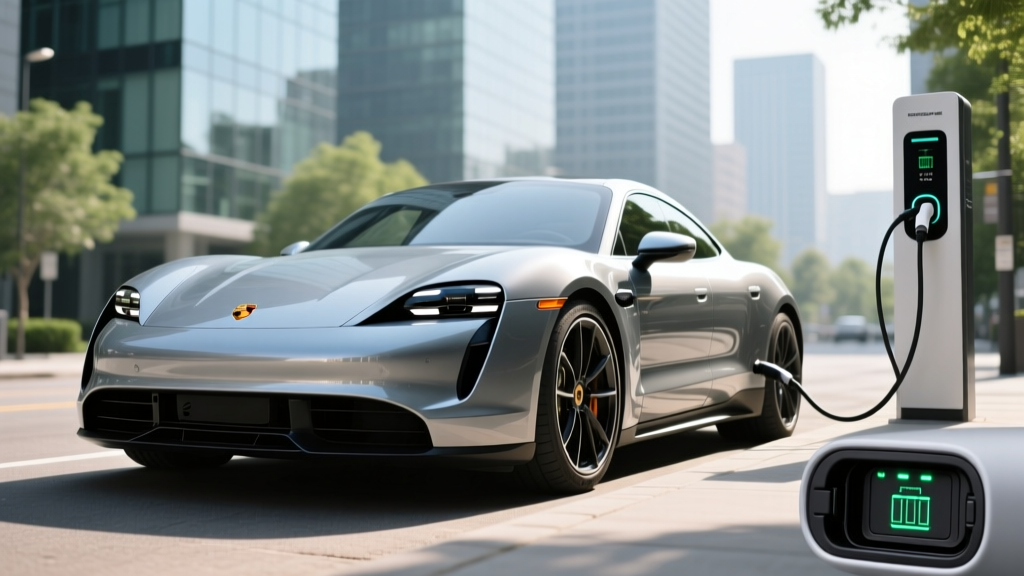
The Porsche Taycan Turismo is the wagon-bodied variant of Stuttgart's flagship electric sedan — blending sports-car dynamics with genuine cargo practicality. For 2026, the Taycan lineup receives a substantial mid-cycle refresh that Porsche calls the "Performance Battery Plus upgrade," yielding meaningful gains in range, charging speed, and sustained power delivery. The Turismo body style adds approximately 2.3 inches of rear headroom and a significantly more usable cargo area compared to the sedan, making it the most livable Taycan you can buy.
But the Taycan Turismo has always been about trade-offs. It sacrifices some EPA-rated efficiency to deliver driving dynamics that no other electric wagon can match. If you're cross-shopping against the Audi RS e-tron GT, Tesla Model S, or Lucid Air Touring, the Taycan Turismo answers a specific question: Can an EV be genuinely thrilling on a canyon road while still hauling a family's weekend gear?
The short answer: yes — with caveats around price, tax-credit eligibility, and real-world range that falls short of its most efficient rivals.
| Specification | Taycan 4 (Turismo) | Taycan 4S (Turismo) | Taycan Turbo (Turismo) | Taycan Turbo GT |
|---|---|---|---|---|
| EPA Range | 318 mi | 299 mi | 292 mi | 269 mi |
| Battery (usable) | 97.0 kWh (NMC) | 97.0 kWh (NMC) | 97.0 kWh (NMC) | 97.0 kWh (NMC) |
| Max DC Charge Rate | 320 kW | 320 kW | 320 kW | 320 kW |
| 10–80% DC Charge | ~18 min | ~18 min | ~18 min | ~18 min |
| Level 2 Charge Rate | 11 kW (AC) | 11 kW (AC) | 11 kW (AC) | 11 kW (AC) |
| 0–60 mph | 4.4 sec | 3.5 sec | 2.5 sec | 2.1 sec (w/ Launch Control) |
| Horsepower | 402 hp | 590 hp | 872 hp (overboost) | 1,019 hp (overboost) |
| Drivetrain | AWD (dual-motor) | AWD (dual-motor) | AWD (dual-motor) | AWD (dual-motor) |
| MPGe (combined) | 83 MPGe | 79 MPGe | 75 MPGe | 68 MPGe |
| Base MSRP | $103,300 | $115,500 | $153,100 | $235,000 |
| Battery Warranty | 8 yr / 100,000 mi | 8 yr / 100,000 mi | 8 yr / 100,000 mi | 8 yr / 100,000 mi |
Range & Efficiency: EPA Numbers vs. Real-World Reality
- Mixed suburban/city driving (65–72°F): Expect 300–325 mi — the Taycan's two-speed rear axle and strong regen help it meet or slightly beat its EPA sticker in moderate conditions.
- Sustained highway (75 mph, 80°F): Expect 265–285 mi. The Taycan's aerodynamic profile (Cd ~0.22) helps, but its weight (~5,300 lb) and wide tires impose a real penalty at speed.
- Cold weather (25°F, highway): Expect 215–245 mi. NMC chemistry loses roughly 25–30% capacity in freezing temps, and cabin heating draws substantial energy despite the standard heat pump.
Source: fueleconomy.gov (EPA estimates; real-world figures based on aggregated owner testing and third-party evaluations.)
The 2026 Taycan lineup uses a revised 97.0 kWh (usable) nickel-manganese-cobalt (NMC) battery pack — up from the previous generation's 83.7 kWh usable capacity. Porsche achieved this through improved cell-level energy density rather than physically enlarging the pack, preserving the car's low center of gravity and structural packaging.
The entry-level Taycan 4 Turismo leads the range chart at 318 miles EPA combined. That's a genuine improvement over the pre-refresh model's ~235-mile rating and puts the base Turismo within striking distance of the Audi e-tron GT (~270 mi) and competitive with the Tesla Model S Long Range (~402 mi, though the S is a sedan, not a wagon).
Efficiency varies sharply by trim. The Taycan 4 achieves 83 MPGe combined (roughly 40 kWh/100 mi), while the Turbo GT drops to 68 MPGe (~49 kWh/100 mi). For context, a Lucid Air Pure sedan achieves 146 MPGe combined — nearly double. The Taycan prioritizes performance over efficiency, and the numbers reflect that choice.
Charging Speed: 320 kW Peak and the 800-Volt Advantage
| Charge Level | Power | Time / Rate | Notes |
|---|---|---|---|
| Level 1 (120V household) | ~1.4 kW | ~3–4 mi/hr | Emergency/trickle only; ~70+ hours for full charge |
| Level 2 (240V home, 48A) | 11 kW (max onboard AC) | ~30–33 mi/hr; ~10 hr for 10–100% | Requires NACS or J1772 adapter; Porsche Mobile Charger Connect included |
| DC Fast Charge (peak) | 320 kW | 10–80% in ~18 min | Requires 350 kW CCS/NACS station; sustained rate ~260 kW avg in 10–80% window |
| DC Fast Charge (50 kW station) | 50 kW | 10–80% in ~95 min | Common at older Electrify America / ChargePoint sites |
The Taycan's 800-volt architecture remains one of its strongest technical differentiators. While most competitors (Tesla Model S, Lucid Air) use 400V systems, the Taycan's higher voltage allows it to accept more power with less current, reducing heat buildup and sustaining higher charge rates deeper into the session.
At a 350 kW DC fast charger (such as Electrify America's latest stalls or Tesla Supercharger V4 with NACS adapter), the Taycan Turismo peaks at 320 kW. The charge curve is aggressive: it holds above 250 kW from approximately 10% to 55% state of charge, then tapers progressively. The 10–80% session takes roughly 18 minutes under ideal thermal conditions — meaning the battery is preconditioned via the PCM (Porsche Charging Manager) navigation-routed preconditioning.
Real-world charging caveat: If you arrive at a DC fast charger without preconditioning (i.e., you didn't navigate to the charger in the car's infotainment system), expect peak rates closer to 180–220 kW and a 10–80% time of 22–28 minutes, particularly in cold weather. Always route through the car's navigation to trigger thermal prep.
For home Level 2 charging, the Taycan's onboard AC charger maxes out at 11 kW (48 amps on a 240V/60A circuit). That translates to roughly 30–33 miles of range per hour — enough to replenish a full day's driving in 3–4 hours of overnight charging. Porsche includes the Mobile Charger Connect (a portable Level 2 unit) with the vehicle; a dedicated Porsche Home Energy Manager or third-party hardwired unit (ChargePoint Home Flex, Emporia VUE) will deliver identical performance.
Performance: What 1,019 Horsepower Actually Feels Like
The Taycan Turbo GT is the headline act: 1,019 horsepower in overboost mode (with Launch Control engaged), a 2.1-second 0–60 mph time, and a top speed electronically limited to 190 mph with the Weissach package. These are hypercar numbers in a five-door wagon weighing roughly 5,400 pounds.
But the performance story extends beyond straight-line acceleration. The Taycan's dual-motor AWD system uses a two-speed transmission on the rear axle — first gear provides explosive off-the-line torque multiplication, while second gear optimizes high-speed efficiency. This is unique in the EV segment; nearly every competitor uses single-speed reductions on both axles.
The Turbo GT also introduces Porsche's Active Ride suspension (standard on Turbo GT, optional on Turbo), which uses hydraulic actuators at each corner to counteract body roll, pitch, and dive in real time. The result: the car stays virtually flat through corners, eliminating the "heavy EV" sensation that plagues lesser performance EVs. On a twisty canyon road, the Turbo GT's chassis composure is closer to a 911 GT3 than a 5,400-pound wagon — though physics still asserts itself under heavy braking from triple-digit speeds.
The Taycan 4S Turismo (590 hp, 3.5 sec 0–60) is the sweet spot for most buyers. It delivers supercar-rivaling acceleration while retaining enough efficiency to approach 300 miles of range. The Turbo trim (872 hp, 2.5 sec) is the enthusiast's choice for track-day capability without the Turbo GT's $235,000 price tag.
Interior, Cargo & Tech: The Wagon Advantage
The Turismo body style's primary justification is cargo utility. With the rear seats upright, the Taycan Turismo offers approximately 15.7 cubic feet behind the second row — roughly 40% more than the sedan's 11.2 cu ft trunk. Fold the 60/40 split rear seats, and you access roughly 42.8 cubic feet of total cargo space. The opening is wide and the load floor is flat, making it practical for luggage, strollers, or sporting equipment.
The front trunk (frunk) adds approximately 2.9 cu ft — enough for a charging cable bag and a small duffel, but significantly smaller than a Tesla Model S frunk (5.3 cu ft) due to the Taycan's more complex front-axle drivetrain packaging.
Rear-seat passengers benefit from the Turismo's raised roofline: headroom increases by roughly 2.3 inches over the sedan, and the seat cushion is mounted slightly higher for a more natural leg position. Legroom is adequate for adults up to about 6'2" but falls short of the Lucid Air's limousine-like rear quarters. Three-across seating is technically possible but tight — the center position straddles a pronounced transmission tunnel hump (a legacy of the 800V power electronics packaging beneath the floor).
Infotainment & Tech: The 2026 Taycan features Porsche's latest PCM 7.0 infotainment on a 12.6-inch curved digital instrument cluster and a 10.9-inch central touchscreen, plus an optional 10.9-inch passenger display. Wireless Apple CarPlay and Android Auto are standard. The system is responsive but menu-dense — it requires more taps to adjust climate or drive modes than Tesla's minimalist interface or Hyundai's more intuitive layout.
Driver Assistance: The Taycan includes Porsche InnoDrive (adaptive cruise with predictive speed adjustment based on navigation data and road-sign recognition) and Active Lane Keeping as standard. This is an SAE Level 2 system — it provides longitudinal and lateral support, but the driver must remain fully engaged with hands on the wheel and eyes on the road. There is no hands-free driving mode comparable to GM's Super Cruise or Ford's BlueCruise. Porsche has not announced a Level 3 or Level 4 system for the Taycan platform.
Pricing, Trims & Federal Tax Credit Eligibility
| Trim | Base MSRP | As-Tested (typical) | §30D Credit Eligible? | Effective Price (if eligible) |
|---|---|---|---|---|
| Taycan 4 Turismo | $103,300 | $112,000–$120,000 | No (exceeds $55,000 sedan MSRP cap) | $103,300+ |
| Taycan 4S Turismo | $115,500 | $128,000–$140,000 | No (exceeds MSRP cap) | $115,500+ |
| Taycan Turbo Turismo | $153,100 | $170,000–$185,000 | No (exceeds MSRP cap) | $153,100+ |
| Taycan Turbo GT | $235,000 | $260,000+ | No (exceeds MSRP cap) | $235,000+ |
Does the Taycan Turismo qualify for the federal EV tax credit? No — under current IRS §30D rules, new clean vehicle credits are capped at an MSRP of $55,000 for sedans (and $80,000 for SUVs/pickups/vans). The Taycan Turismo, classified as a sedan/wagon, far exceeds the $55,000 cap at every trim level. Additionally, the buyer income limits ($150,000 single / $300,000 joint AGI) and critical-mineral/battery-component sourcing requirements further restrict eligibility for luxury EVs in this price range.
The Taycan Turismo also faces limited state-level incentive access. California's CVRP rebate, for example, has an MSRP cap of $60,000 for sedans. Some states offer uncapped incentives, but these are exceptions. Check your state's energy office or the Alternative Fuels Data Center for local programs.
Leasing workaround: Under the commercial clean vehicle credit (§45W), leased EVs may pass through a $7,500 credit to the lessee regardless of MSRP or income caps, provided the lessor (typically Porsche Financial Services) elects to pass it through. This has been a popular strategy for luxury EV buyers. However, Treasury guidance on §45W passthrough has evolved — consult a tax professional before relying on this mechanism for 2026 model-year leases.
Ownership Costs, Warranty & Long-Term Outlook
Porsche provides a 4-year / 50,000-mile limited vehicle warranty and an 8-year / 100,000-mile battery warranty. The battery warranty guarantees that the pack will retain at least 70% of its original usable capacity (roughly 67.9 kWh of the 97.0 kWh total) for the coverage period. If degradation exceeds 30% within 8 years or 100,000 miles, Porsche will repair or replace the battery at no cost.
NMC battery chemistry in the Taycan has shown favorable degradation curves in real-world fleet data. Independent testing by organizations like Recurrent Auto indicates that Taycan packs (pre-refresh 79.2 and 93.4 kWh versions) typically retain 92–95% capacity after 50,000 miles. The larger 97.0 kWh pack in the 2026 model is expected to perform similarly, though long-term data is still accumulating.
Insurance: Expect annual premiums in the $3,200–$5,500 range depending on trim, location, and driving record. The Turbo GT commands significantly higher premiums due to its $235,000 replacement value and performance profile.
Maintenance: EVs eliminate oil changes, spark plugs, and transmission fluid services. Porsche recommends annual cabin-filter replacement, brake-fluid flushes every 2 years, and tire rotation every 5,000–7,500 miles. Budget approximately $600–$900/year for scheduled maintenance — higher than a Tesla but lower than a comparable BMW M5 or Mercedes-AMG GT.
Tires: The Taycan wears through tires faster than most EVs due to its weight, torque, and performance-oriented alignment. Expect to replace the rear tires every 15,000–22,000 miles on Turbo/Turbo GT trims (the Pirelli P Zero Elect or Michelin Pilot Sport EV run approximately $350–$500 per corner).
Pros & Cons: The Honest Assessment
Pros
- Class-leading driving dynamics: No other electric wagon matches the Taycan's steering feel, chassis balance, and brake modulation. It drives like a Porsche first and an EV second.
- 320 kW DC fast charging: Among the fastest-charging EVs on sale; 10–80% in ~18 min at a 350 kW station with preconditioning.
- 800V architecture: Sustained high charge rates, reduced thermal stress, and compatibility with the fastest public charging infrastructure.
- Wagon practicality: 42.8 cu ft with seats folded; more rear headroom than the sedan; genuine daily-driver usability for families.
- Build quality & materials: Leather, Alcantara, carbon fiber, and aluminum trim are executed to a standard well above Tesla or Lucid. Fit and finish are exemplary.
- Two-speed rear axle: Unique engineering that optimizes both launch acceleration and highway efficiency.
Cons
- No federal tax credit: MSRP far exceeds the §30D cap; buyers pay full sticker (lease passthrough may apply).
- Below-average efficiency: 68–83 MPGe combined is 30–50% worse than a Lucid Air or Tesla Model S, resulting in higher electricity costs and shorter real-world range per kWh.
- Small frunk: Only 2.9 cu ft — the complex front-axle packaging sacrifices cargo space competitors offer.
- Menu-heavy infotainment: Climate and drive-mode controls require too many screen taps; no physical knobs for core functions.
- No hands-free driving assist: InnoDrive is capable but requires hands-on-wheel at all times; no Super Cruise/BlueCruise equivalent.
- Rapid tire wear: Heavy weight and high torque chew through performance tires every 15,000–22,000 miles on upper trims.
- Price escalation: Options (paint, wheels, interior packages, Active Ride) add $20,000–$40,000 to base MSRP quickly.
Who Should Buy the Taycan Turismo?
The Taycan Turismo is the right EV if:
- You prioritize driving engagement above all else and refuse to compromise on steering feel, chassis feedback, and brake modulation.
- You need wagon cargo space (strollers, ski gear, dogs) but don't want an SUV.
- You have reliable access to 350 kW DC fast charging (home or corridor) and can exploit the 800V architecture.
- You're spending $110,000+ and value build quality, dealer service experience, and brand prestige over maximum range-per-dollar.
Look elsewhere if:
- Maximum range is your priority — the Lucid Air Touring (425+ mi EPA, ~$87,000) or Tesla Model S Long Range (402 mi, ~$75,000) deliver substantially more miles per charge at lower prices.
- You want a hands-free highway driving system — GM's Super Cruise (on the Cadillac Celestiq or upcoming models) or Ford BlueCruise offer hands-off capability the Taycan cannot match.
- You need federal tax-credit savings — the Taycan's MSRP disqualifies it entirely under §30D.
Frequently Asked Questions
What is the real-world range of the Porsche Taycan Turismo?
The base Taycan 4 Turismo achieves 318 miles EPA combined. In real-world mixed driving at moderate temperatures, expect 300–325 miles. Sustained highway driving at 75 mph reduces this to 265–285 miles. In freezing weather (25°F) with highway speeds, expect 215–245 miles due to NMC chemistry limitations and cabin heating demand.
How fast does the Taycan Turismo charge at home and on the road?
At a 350 kW DC fast charger with battery preconditioning, the Taycan Turismo peaks at 320 kW and charges from 10–80% in approximately 18 minutes. At home on a 240V Level 2 charger (48A/11 kW), it adds roughly 30–33 miles of range per hour, reaching a full charge in about 10 hours.
Does the 2026 Taycan Turismo qualify for the $7,500 federal EV tax credit?
No. Under IRS §30D rules, the new clean vehicle credit caps sedan/wagon MSRP at $55,000. Every Taycan Turismo trim starts well above that threshold ($103,300–$235,000). Leasing may allow a $7,500 credit passthrough via §45W commercial vehicle rules, but consult a tax professional to confirm eligibility for your specific situation.
Is the Taycan Turismo worth buying over the Tesla Model S or Audi e-tron GT?
The Taycan Turismo wins on driving dynamics, build quality, and DC fast-charge speed. The Tesla Model S wins on range (402 mi EPA), price (~$75,000), Supercharger network access, and hands-free-capable Autopilot/FSD (Level 2, supervised). The Audi RS e-tron GT shares the Taycan's J1 platform and 800V architecture but offers less range and a less differentiated driving experience. Choose the Taycan if driving feel and build quality justify the premium.
What battery chemistry does the Taycan Turismo use, and how long will it last?
The 2026 Taycan Turismo uses a 97.0 kWh (usable) NMC (nickel-manganese-cobalt) battery pack. NMC offers higher energy density than LFP (lithium iron phosphate), enabling more range in a lighter package, but is more sensitive to prolonged high-state-of-charge storage and extreme cold. Porsche warranties the battery for 8 years / 100,000 miles with a 70% capacity retention guarantee. Real-world data from earlier Taycan models suggests 92–95% retention after 50,000 miles under normal use.
Does the Taycan Turismo support NACS (Tesla) charging?
For 2026, Porsche offers a NACS charge-port adapter (CCS1-to-NACS) that enables Taycan owners to use Tesla Supercharger V3 and V4 stations. The Taycan retains its native CCS1 port. Porsche has signaled a transition to native NACS ports for future model years, but 2026 vehicles ship with CCS1 and an included adapter.