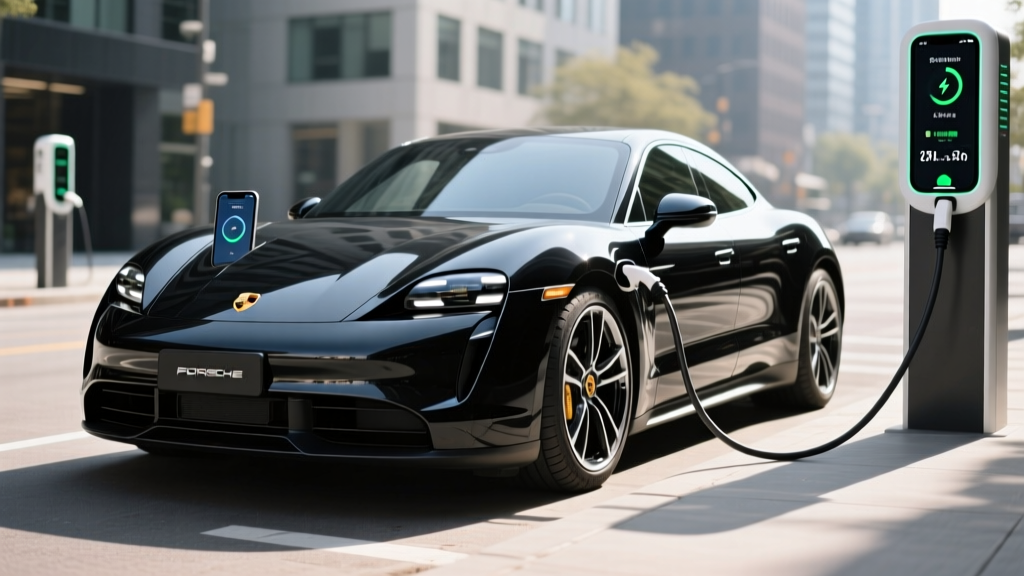
The Porsche Taycan has been on sale for over six years now, giving us a substantial data trail to evaluate its long-term dependability. For a six-figure electric sports sedan, the question isn't just whether it breaks — it's whether the battery holds up, the electronics stay glitch-free, and the ownership experience justifies the premium. Here's what the data actually shows about Porsche Taycan reliability in 2026, along with every spec a prospective buyer needs.
2026 Porsche Taycan at a Glance: Key Specifications
| Spec | Taycan (Base RWD) | Taycan 4S | Taycan Turbo GT |
|---|---|---|---|
| EPA Range | 283 mi | 272 mi | 269 mi |
| Battery (usable / gross) | 89 kWh / 105 kWh | 89 kWh / 105 kWh | 89 kWh / 105 kWh |
| Chemistry | NMC (Performance Battery Plus) | NMC (Performance Battery Plus) | NMC (Performance Battery Plus) |
| Max DC Fast Charge | 320 kW | 320 kW | 320 kW |
| 10–80% DC Time | ~18 min | ~18 min | ~18 min |
| Level 2 Home Charge (kW) | 11 kW (AC onboard) | 11 kW (AC onboard) | 11 kW (AC onboard) |
| 0–60 mph | 4.6 sec | 3.5 sec | 2.1 sec |
| Horsepower | 402 hp | 590 hp (Launch Control) | 1,019 hp (Launch Control) |
| Drivetrain | RWD (single motor) | AWD (dual motor) | AWD (dual motor) |
| MPGe (combined) | 83 MPGe | 79 MPGe | 67 MPGe |
| Efficiency (kWh/100 mi) | 40 kWh | 42 kWh | 50 kWh |
| Cargo (rear + frunk) | 14.3 cu ft trunk + 3.0 cu ft frunk | 14.3 + 3.0 cu ft | 14.3 + 3.0 cu ft |
| Rear Legroom | 32.7 in | 32.7 in | 32.7 in |
| Base MSRP | $103,800 | $123,200 | $234,100 |
Real-World Range: What the EPA Number Doesn't Tell You
Real-World Highway (70 mph, 68°F): ~230–250 miles
Real-World Highway (30°F, cold weather): ~185–210 miles
City / Mixed Commute: ~260–275 miles (regen-friendly driving)
The Taycan's 800-volt architecture is excellent for charging, but its aerodynamic efficiency still trails the Tesla Model S and Lucid Air on the highway. At sustained 70–75 mph speeds, expect to consume roughly 42–48 kWh per 100 miles depending on tire spec (the standard 19-inch aero wheels do measurably better than optional 21-inch summer rubber). In cold weather, the Taycan's heat pump — standard since the 2025 refresh — mitigates cabin-heating losses, but battery chemistry still suffers. Plan for a 20–25% range reduction in sub-freezing highway driving, per fueleconomy.gov EV testing data.
For context, the Taycan's real-world highway range is competitive with the BMW i5 M60 (~235 mi real-world) but falls short of the Mercedes EQS 450+ (~300 mi real-world). If your commute is under 80 miles round-trip, this is a non-issue. If you regularly drive 200+ mile legs, you'll be using DC fast chargers more often than Lucid or Tesla owners.
Charging Speed: The Taycan's Strongest Card
Porsche's 800-volt platform remains one of the fastest-charging systems in production. The 2026 Taycan with the Performance Battery Plus peaks at 320 kW on compatible DC fast chargers — a significant upgrade from the original 270 kW cap on 2020–2024 models. On a 350 kW Electrify America or Ionity station with adequate preconditioning, the 10–80% charge takes approximately 18 minutes.
| Charging Level | Power (kW) | Speed | Typical Use |
|---|---|---|---|
| Level 1 (120V household) | 1.4 kW | ~4 mi/hr | Emergency / overnight trickle |
| Level 2 (240V, 48A home) | 11 kW | ~33 mi/hr | Overnight home charging (full in ~9 hr) |
| DC Fast (50 kW station) | 50 kW | ~150 mi/hr | Older public chargers |
| DC Fast (350 kW station) | 320 kW peak | 10–80% in ~18 min | Highway road trips |
Charge curve reality check: The Taycan does not sustain 320 kW for the full session. Peak power holds from roughly 10% to 35% SoC, then tapers progressively. Above 80%, charging slows dramatically to protect the NMC cells — expect 80–100% to take an additional 15–20 minutes. Porsche's battery preconditioning (triggered automatically when a DC fast charger is set as your navigation destination) is critical: arriving cold can double your charge time. Always navigate to the charger.
For home Level 2 charging, the Taycan's 11 kW onboard charger means a full charge from a 48-amp wall connector takes about 9 hours. This is slower than the Tesla Model S (which accepts up to 11.5 kW) and notably slower than the Lucid Air (19.2 kW onboard, full charge in ~5 hours). If you drive 150+ miles daily, the Taycan's onboard AC rate means you'll need to plug in every night without fail.
Porsche Taycan Reliability: What the Data Shows
Reliability is the core concern here, and the Taycan's track record is mixed but trending positively. The 2020–2022 launch-year models experienced well-documented issues with 12-volt battery failures (causing complete vehicle lockouts), infotainment PCM glitches, and occasional onboard charger faults. Porsche addressed most of these through software updates and a revised 12V battery management system by the 2023 model year.
For the high-voltage traction battery — the component that drives most EV anxiety — the Taycan has been remarkably solid. Porsche uses an NMC (nickel manganese cobalt) chemistry in the Performance Battery Plus (105 kWh gross, 89 kWh usable). The large top and bottom buffer (16 kWh combined) means the cells operate in a conservative state-of-charge window, reducing degradation stress. Real-world data aggregated from Taycan owner forums and fleet reports suggests approximately 4–6% capacity loss at 60,000 miles, which is in line with or slightly better than the Tesla Model S.
J.D. Power's 2025 U.S. Vehicle Dependability Study placed Porsche above the industry average for premium brands, though the Taycan specifically scores lower than the mechanically simpler Cayenne and Macan due to electrical and infotainment complaint volume. Consumer Reports rates the 2025–2026 Taycan at average predicted reliability — an improvement from the below-average scores of 2020–2022 models.
Common reported issues (2020–2026):
- 12V battery drain (mostly resolved post-2023 software update)
- PCM infotainment screen freezing or rebooting (improved with PCM 7.0 in 2025+)
- Charge port door actuator failure (warranty-covered, ~$800 out of warranty)
- Adaptive air suspension compressor wear at 50,000–70,000 mi (not unique to Taycan)
- Brake rotor corrosion from heavy regen use reducing friction brake engagement (Porsche recommends periodic "conditioning" drives)
Warranty Coverage and Battery Protection
Porsche's warranty structure is solid for the segment:
- New Vehicle Limited Warranty: 4 years / 50,000 miles
- Battery Warranty: 8 years / 100,000 miles (capacity retention threshold: 70% of original usable capacity)
- Powertrain Warranty: 8 years / 100,000 miles (covers electric motors, power electronics, onboard charger)
- Corrosion Perforation: 12 years, unlimited miles
The 70% battery capacity threshold is standard for the industry (Tesla, BMW, Mercedes all use the same floor). What's notable is that Porsche dealers have been responsive to out-of-warranty goodwill coverage for early 12V and infotainment issues, based on owner reports. If you're buying a used 2020–2022 Taycan, verify the PCM software is current and ask for the battery health report (accessible via the Porsche PCM or a dealer diagnostic scan).
Pricing, Tax Credits, and Total Ownership Cost
| Trim | Base MSRP | Federal §30D Credit | Effective Price |
|---|---|---|---|
| Taycan (RWD) | $103,800 | $0 (exceeds MSRP cap) | $103,800 |
| Taycan 4S | $123,200 | $0 (exceeds MSRP cap) | $123,200 |
| Taycan Turbo | $176,400 | $0 (exceeds MSRP cap) | $176,400 |
| Taycan Turbo GT | $234,100 | $0 (exceeds MSRP cap) | $234,100 |
Tax credit reality: The new-vehicle federal EV tax credit under IRS §30D caps sedan eligibility at an MSRP of $55,000. Every Taycan trim exceeds this cap, meaning no new Taycan qualifies for the $7,500 federal credit, regardless of your income or battery sourcing. This is a flat disqualifier.
However, if you're considering a used Taycan (model year 2022 or earlier, purchased from a dealer for $25,000 or more), the §25E used clean vehicle credit may apply: up to $4,000 (30% of sale price, capped at $4,000), subject to buyer income limits ($75,000 single / $150,000 joint) and a one-time-per-buyer restriction. A used 2021 Taycan 4S at $58,000 would not qualify (over the $25,000 sale-price ceiling for the credit to matter meaningfully), but higher-mileage examples near the $25,000–$35,000 range could capture the full $4,000.
5-Year Ownership Cost Estimate (Taycan 4S, 15,000 mi/year):
- Depreciation (5 yr): ~$55,000–$65,000 (Taycan depreciation is steep; expect 50–55% loss)
- Electricity (home + DC fast, $0.16/kWh avg): ~$6,200
- Insurance (avg premium): ~$18,000–$22,000 over 5 years
- Maintenance (tires, cabin filter, brake fluid): ~$3,500
- Estimated 5-year total: $82,700–$96,700
Compared to a Tesla Model S Plaid ($89,990 base), the Taycan 4S costs more to own primarily due to steeper depreciation and higher insurance premiums, though the gap narrows if you hold the car 7+ years.
Interior, Tech, and Daily Livability
The Taycan's cabin is a high point — and a pain point — depending on your priorities. Build quality is exceptional: every surface, switch, and stitch meets or exceeds the Panamera standard. The 12.6-inch curved instrument cluster and 10.9-inch PCM touchscreen (with an optional 10.9-inch passenger display) run Porsche's PCM 7.0 software, which is responsive and logically structured after years of refinement.
However, the Taycan's practicality is limited by its sports-sedan packaging:
- Rear seat: 32.7 inches of legroom is tight for adults on long trips. The transmission tunnel hump (a legacy of the J1 platform's architecture) compromises the middle seat.
- Cargo: 14.3 cu ft trunk + 3.0 cu ft frunk is modest. A Model S offers 28 cu ft behind the rear seats (hatchback design).
- Driver assists: Porsche InnoDrive (adaptive cruise + lane centering) is competent SAE Level 2 — requiring full driver attention at all times — but it trails Tesla Autopilot and GM Super Cruise in highway seamlessness. There is no hands-free driving mode.
Standout features include the standard 2-speed rear axle transmission (unique among EVs, enabling both brutal launch acceleration and efficient highway cruising), the 800V architecture enabling ultra-fast DC charging, and the available rear-axle steering that dramatically tightens the turning radius for city driving.
Taycan vs. the Competition: Is It Worth the Premium?
- You prioritize driving dynamics, steering feel, and chassis balance above all else in an EV
- You value Porsche build quality and dealer service experience
- Your daily driving is under 150 miles and road trips are occasional
- You want the fastest-charging EV architecture currently available (320 kW peak)
- Range is paramount → Lucid Air Grand Touring (EPA 516 mi, ~$125,600)
- Space and practicality matter → Tesla Model S (hatchback cargo, EPA 402 mi, ~$89,990)
- You want hands-free highway driving → BMW i5 with Highway Assistant or Mercedes EQS with Drive Pilot (SAE Level 3 in limited zones)
- Tax credit eligibility is important → BMW i5 eDrive40 ($71,150, under $55K sedan cap is false — also over cap; consider i4 eDrive40 at $57,900 — also over; realistically, no luxury EV sedan currently qualifies for §30D new-vehicle credit)
- Class-leading 320 kW DC fast charging
- Exceptional build quality and materials
- Best-in-class driving dynamics and steering feel
- 2-speed rear transmission for efficiency + performance
- Improved infotainment with PCM 7.0
- Strong battery health data at high mileage
- Real-world highway range trails competitors (230–250 mi)
- No federal tax credit eligibility (MSRP cap)
- Tight rear seat and limited cargo space
- Steep depreciation (~50–55% over 5 years)
- Level 2 driver assist is competent but unremarkable
- 11 kW onboard AC charging is slow for the battery size
Frequently Asked Questions
What is the real-world range of the Porsche Taycan?
The EPA rates the 2026 Taycan base RWD at 283 miles, but real-world highway driving at 70 mph yields approximately 230–250 miles in mild weather and 185–210 miles in freezing conditions. City driving with regenerative braking recovers more energy, pushing mixed-commute range closer to 260–275 miles.
How fast does the Taycan charge at home and on the road?
On a 350 kW DC fast charger, the Taycan peaks at 320 kW and charges from 10–80% in approximately 18 minutes (with battery preconditioning). At home on a Level 2 240V/48A connection, it charges at 11 kW, adding roughly 33 miles per hour and requiring about 9 hours for a full charge.
Does the Porsche Taycan qualify for the federal EV tax credit?
No. Under IRS §30D rules, new sedans must have an MSRP at or below $55,000 to qualify. The cheapest Taycan starts at $103,800, disqualifying all trims regardless of buyer income or battery sourcing. A used Taycan may qualify for the §25E used vehicle credit (up to $4,000) if the sale price is $25,000 or more and buyer income limits are met.
Is the Taycan more reliable than a Tesla Model S?
It depends on the metric. The Taycan's high-voltage battery has shown comparable or slightly better degradation than the Model S at equivalent mileage. However, the Taycan has had more reported 12V electrical and infotainment issues than the Model S, and Tesla's over-the-air update cadence resolves software bugs faster. For pure mechanical and battery reliability, they're closely matched; for software stability, Tesla has an edge.
How much does a Taycan battery replacement cost?
Out of warranty, a Taycan Performance Battery Plus replacement currently costs approximately $28,000–$33,000 including labor at a Porsche dealer. However, real-world data shows less than 6% degradation at 60,000 miles, and the 8-year/100,000-mile battery warranty covers replacements if capacity drops below 70%. Full battery replacement is extremely rare in current data.
Is the Taycan worth buying over the BMW i5 or Mercedes EQS?
If driving engagement is your top priority, yes — the Taycan's chassis, steering, and 2-speed transmission deliver a sports-car experience neither the i5 nor EQS can match. If range and back-seat comfort matter more, the EQS 450+ (EPA 390 mi) and i5 eDrive40 (EPA 295 mi) are more practical daily drivers. The Taycan is a driver's car first and an EV second; its competitors are the reverse.