How to Pronounce Taycan (And Why It Matters)
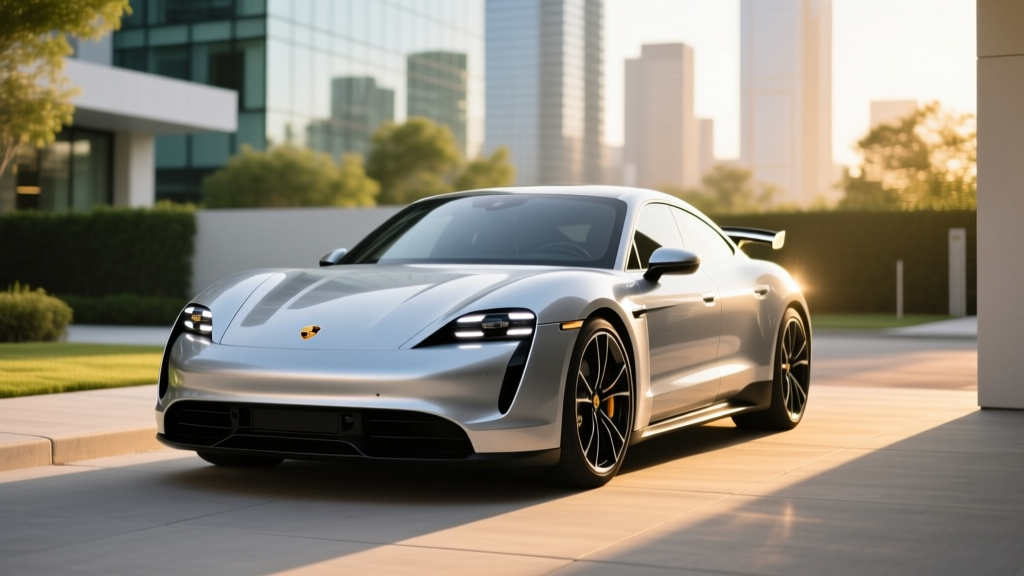
Before we get to the kilowatt-hours, let's settle the question that brings thousands of shoppers here every month: Taycan pronunciation. Porsche officially says it's "tai-KAHN" — rhyming roughly with "icon" but with a softer first syllable. The name derives from a Turanian word meaning "lively young horse," a nod to Stuttgart's crest. You've likely heard "TACK-an," "TAY-can," and even "tie-KAN" — all common misfires. Now that we've cleared that up, let's talk about whether Porsche's flagship electric sport sedan is worth its six-figure asking price in 2026.
The 2026 Porsche Taycan lineup received meaningful updates for the current generation: larger batteries, faster charging, and revised efficiency tuning that pushes EPA range figures higher than any previous model year. But does it compete with the Lucid Air, Tesla Model S, and BMW i5 on the metrics that matter to real buyers?
2026 Porsche Taycan Spec Table: Range, Battery, and Performance
| Spec | Taycan (RWD) | Taycan 4S | Taycan Turbo S |
|---|---|---|---|
| EPA Range | 292 mi | 279 mi | 256 mi |
| Battery (usable) | 97.0 kWh (NMC) | 97.0 kWh (NMC) | 97.0 kWh (NMC) |
| Horsepower | 402 hp | 590 hp (Launch Control) | 939 hp (Launch Control) |
| 0-60 mph | 4.6 sec | 3.5 sec | 2.4 sec |
| Drivetrain | RWD (single motor) | AWD (dual motor) | AWD (dual motor) |
| Max DC Fast Charge | 320 kW | 320 kW | 320 kW |
| 10-80% DC Time | ~18 min | ~18 min | ~18 min |
| Level 2 Home Rate | 11 kW (~35 mi/hr) | 11 kW (~35 mi/hr) | 11 kW (~35 mi/hr) |
| Efficiency | 83 MPGe / 40 kWh/100mi | 79 MPGe / 42 kWh/100mi | 73 MPGe / 46 kWh/100mi |
| Base MSRP | $99,400 | $118,500 | $199,800 |
Real-World Range: What the EPA Sticker Doesn't Tell You
EPA estimated range for the base RWD Taycan is 292 miles. In real-world highway driving at 70-75 mph with climate control active, expect approximately 245-265 miles. In cold weather (below 32°F), plan for 210-235 miles of usable range before needing a charger. The Turbo S, with its wider tires and higher power draw, typically delivers 215-230 miles on the highway.
The Taycan's 97.0 kWh usable battery pack uses NMC (nickel manganese cobalt) chemistry — chosen for its high energy density, which is essential in a performance sedan where packaging and weight distribution matter. Porsche's 800-volt architecture is the secret weapon here: it enables those 320 kW peak charge rates while keeping cable weight and heat generation lower than 400V competitors.
Efficiency varies significantly by trim. The RWD model's 40 kWh/100mi is competitive with the BMW i5 eDrive40, but the Lucid Air Pure achieves roughly 33 kWh/100mi — meaning more miles per kilowatt-hour from a similar battery size. If maximizing range per dollar of electricity is your priority, the Taycan is not the class leader.
Charging Speed: 800V Architecture in Practice
Porsche's 800-volt platform remains one of the fastest-charging systems available in 2026. Here's what the charge curve actually looks like at a compatible DC fast charger:
| Charging Level | Power (kW) | Miles Added per Hour | Notes |
|---|---|---|---|
| Level 1 (120V) | ~1.4 kW | ~3-4 mi/hr | Emergency/trickle only |
| Level 2 (240V, 48A) | 11 kW | ~35 mi/hr | Full overnight charge in ~9.5 hrs |
| DC Fast (50 kW) | 50 kW | ~150 mi/hr | Older public stations |
| DC Fast (150 kW) | 150 kW | ~450 mi/hr | Common Electrify America stall |
| DC Fast (320 kW peak) | 320 kW | ~950 mi/hr (peak) | Ioniq/Supercharger V4 compatible; 10-80% in ~18 min |
Critical charging-curve reality: The Taycan does not sustain 320 kW for the entire session. Peak draw occurs between roughly 10-40% State of Charge (SoC), then tapers progressively. From 80-100%, charging slows dramatically — expect the final 20% to take nearly as long as the 10-80% session. Porsche's thermal management system preconditions the battery when a DC fast charger is set as your navigation destination, which is essential for hitting peak rates. Navigate to the charger, don't just pull up cold.
The Taycan uses the NACS (North American Charging Standard) connector for 2026, granting native access to Tesla Supercharger V4 stalls equipped with 350+ kW hardware. CCS1 adapters are no longer needed for most public networks. According to fueleconomy.gov, preconditioning can improve DC charge speeds by 15-25% in cold conditions.
Performance and Driving Dynamics
The Taycan's performance credentials are not marketing — they're measurable. The Turbo S with Launch Control delivers 939 hp and a 2.4-second 0-60 mph time, placing it among the quickest production cars ever sold. But the more relevant trim for most buyers is the 4S, which balances 590 hp, all-weather AWD traction, and a 3.5-second sprint at a meaningfully lower price.
The RWD base model at 402 hp and 4.6 seconds is no slouch — it's quicker than most V8 sports sedans from five years ago. More importantly, the Taycan's two-speed rear axle transmission (a rarity in EVs) gives it genuine passing power at highway speeds, where single-speed EVs often feel breathless above 80 mph.
Ride quality varies with option selection. The standard steel-spring suspension is firm but controlled; the optional PASM adaptive air suspension ($2,270) is worth the upgrade for daily driving comfort. Rear-axle steering ($1,620) shrinks the car's effective wheelbase in parking lots and adds stability during high-speed lane changes.
Interior, Cargo, and Daily Practicality
The Taycan is a sport sedan first, family hauler second. Interior dimensions tell the story:
- Front legroom: 41.2 inches
- Rear legroom: 32.7 inches (tight for adults over 6 feet)
- Rear trunk: 14.3 cu ft
- Front trunk (frunk): 2.9 cu ft (fits a charging cable bag and a small duffel)
- Cross Touring (wagon) cargo: 15.7 cu ft rear, up to 42.8 cu ft with seats folded
The Cross Turismo body style is the practicality play — it adds roughly 1.4 cu ft of rear cargo space and offers a modest ride-height increase, though it costs about $4,000 more than the equivalent sedan trim and shaves 5-10 miles off EPA range due to aerodynamic drag.
Infotainment runs on Porsche Communication Management (PCM) with a 12.6-inch curved instrument cluster and a 10.9-inch central touchscreen. An optional 10.9-inch passenger display ($1,220) keeps your co-pilot entertained without distracting the driver. Wireless Apple CarPlay and Android Auto are standard. The available head-up display projects navigation and speed into your sightline with augmented-reality overlays.
Driver-assistance tech includes InnoDrive (adaptive cruise with predictive speed adjustment based on navigation data and road curvature), active lane keeping, and intersection assist. This is an SAE Level 2 system — you must keep your hands on the wheel and eyes on the road at all times. It does not offer hands-free driving like GM's Super Cruise or Ford's BlueCruise on mapped highways.
Pricing, Trims, and Federal Tax Credit Eligibility
| Trim | Base MSRP | As-Tested (Typical Options) | §30D Credit Eligible? |
|---|---|---|---|
| Taycan (RWD) | $99,400 | $112,000-$120,000 | No (exceeds $55,000 sedan cap) |
| Taycan 4S | $118,500 | $135,000-$148,000 | No |
| Taycan GTS | $149,500 | $162,000-$175,000 | No |
| Taycan Turbo | $175,200 | $190,000-$205,000 | No |
| Taycan Turbo S | $199,800 | $215,000-$235,000 | No |
Federal tax credit reality: The IRS §30D clean vehicle credit caps sedan eligibility at $55,000 MSRP. Every 2026 Taycan trim exceeds this threshold, making no Taycan eligible for the $7,500 federal tax credit. Additionally, the buyer income cap ($150,000 single / $300,000 joint AGI) would disqualify many buyers in this price range regardless. The Taycan also fails the critical-minerals and battery-component sourcing requirements that apply to 2026 model-year vehicles under current IRS rules.
Some states offer additional incentives that are not subject to the same MSRP caps — check your state's energy office or the AFDC incentive database for local programs. Lease structures may allow the dealer to capture the commercial clean vehicle credit (§45W) and pass savings through as a capitalized-cost reduction, though this depends on the specific leasing entity and is not guaranteed.
Warranty, Battery Longevity, and Ownership Costs
Porsche covers the Taycan with the following warranty structure:
- New vehicle limited warranty: 4 years / 50,000 miles
- Battery warranty: 8 years / 100,000 miles (retains ≥70% capacity)
- Powertrain warranty: 8 years / 100,000 miles
- Corrosion warranty: 12 years, unlimited miles
The 70% capacity retention threshold is standard for the luxury EV segment. Porsche's NMC battery has demonstrated strong longevity in real-world fleet data — European Taycan taxis have surpassed 150,000 miles with approximately 8-10% degradation. The 800V architecture's lower current draw per cell reduces thermal stress during charging, which contributes to slower degradation over time.
Battery replacement cost, should it be needed out of warranty, is estimated at $25,000-$35,000 for the full pack. Porsche offers a battery refurbishment program that replaces individual modules rather than the entire pack, which can reduce out-of-pocket cost to $8,000-$15,000 depending on the number of degraded modules.
Insurance premiums run 20-35% higher than a comparably priced gas-powered Porsche Panamera, according to industry averages. Expect annual premiums of $3,500-$5,500 for a Taycan 4S depending on your driving record, location, and coverage level.
Pros, Cons, and Who Should Buy the Taycan
- Class-leading 800V charging: 10-80% in ~18 min at compatible stations
- Two-speed rear axle gives genuine highway passing power
- Handling and ride quality rival the best sport sedans, gas or electric
- Build quality and materials justify the price
- NACS native compatibility with Supercharger network
- No federal tax credit eligibility (MSRP exceeds $55K cap)
- Rear legroom is tight at 32.7 inches
- Efficiency trails Lucid Air and Tesla Model S
- Options inflate price rapidly — $20K+ over MSRP is common
- No hands-free highway driving (Level 2 only)
Who the Taycan is for: Driving enthusiasts transitioning from a Panamera, BMW M5, or Mercedes-AMG GT who prioritize handling, build quality, and charging speed over maximum range or value. The Taycan rewards canyon-road driving and long highway trips with composed dynamics and rapid DC charging. It's a strong daily driver for one- or two-person households without frequent rear-seat needs.
Who should look elsewhere: Buyers prioritizing range-per-dollar (Lucid Air Pure, Hyundai Ioniq 6), families needing spacious rear seats (BMW i5, Mercedes EQE), or anyone counting on the $7,500 federal credit to make the math work. The Taycan is a performance purchase, not a value purchase.
Frequently Asked Questions
What is the real-world range of the 2026 Porsche Taycan?
The EPA rates the base RWD Taycan at 292 miles. Real-world highway driving yields 245-265 miles, and cold weather (below freezing) drops that to 210-235 miles. The Turbo S delivers roughly 215-230 highway miles.
How fast does the Taycan charge at home and on the road?
At home on a Level 2 (240V, 48A) charger, the Taycan adds about 35 miles per hour, fully charging overnight in roughly 9.5 hours. On a 320 kW DC fast charger with battery preconditioning, it charges from 10-80% in approximately 18 minutes.
Does the Porsche Taycan qualify for the federal EV tax credit?
No. Every 2026 Taycan trim exceeds the IRS §30D sedan MSRP cap of $55,000. The battery sourcing and buyer income requirements also present barriers. No Taycan qualifies for the $7,500 federal credit as of current 2026 rules.
Is the Taycan worth buying over the Tesla Model S or Lucid Air?
If driving dynamics, interior quality, and charging speed are your top priorities, yes. If range, rear-seat space, or value matter more, the Lucid Air Pure (372 mi EPA, ~$70K) and Tesla Model S (402 mi EPA) are more practical. The Taycan wins on engagement; competitors win on efficiency and space.
What battery chemistry does the Taycan use?
The 2026 Taycan uses NMC (nickel manganese cobalt) lithium-ion cells with a usable capacity of 97.0 kWh. NMC offers higher energy density than LFP, which is critical for packaging in a performance sedan, though it is more sensitive to sustained high-SoC storage.
How do I pronounce Taycan correctly?
Porsche's official pronunciation is tai-KAHN (IPA: /taɪˈkɑːn/). The first syllable rhymes with "eye," and the second syllable sounds like "Kahn." It is not "TAY-can" or "TACK-an."