Quick Verdict: The Taycan's Cabin Catches Up to Its Chassis
The refreshed Porsche Taycan has always set the benchmark for electric sports-sedan dynamics. For 2025, Porsche finally addressed the two complaints that kept cross-shoppers in Tesla Model S Plaid and Lucid Air camps: mediocre range and an aging infotainment stack. The updated Taycan now delivers up to 318 miles of EPA-estimated range on the 4S variant with the Performance Battery Plus, peaks at an astonishing 320 kW on DC fast chargers, and gains a passenger-side display plus wireless Apple CarPlay. But the headline for luxury EV buyers remains the Taycan interior — a driver-focused cockpit that blends analog tactility with a triple-screen digital layout that finally feels current.
Starting at $99,400 before destination, the Taycan is expensive even by luxury EV standards, and federal tax credit eligibility is limited to specific trims and buyer profiles. This review breaks down every number you need — from real-world highway range to 10–80% charge times — so you can decide whether the Taycan earns a spot in your garage.
2025 Porsche Taycan Spec Sheet: Range, Battery, Charging & Performance
| Specification | Taycan (RWD) | Taycan 4S | Taycan Turbo | Taycan Turbo GT |
|---|---|---|---|---|
| EPA Range (est.) | 292 mi | 318 mi | 305 mi | 269 mi |
| Battery (usable / gross) | 82.3 kWh / 89 kWh (NMC) | 97.0 kWh / 105 kWh (NMC) | 97.0 kWh / 105 kWh (NMC) | 97.0 kWh / 105 kWh (NMC) |
| Peak DC Fast Charge | 270 kW | 320 kW | 320 kW | 320 kW |
| 10–80% DC Time | ~24 min | ~18 min | ~18 min | ~18 min |
| Level 2 Home Charge | 9.6 kW (~34 mi/hr) | 11 kW (~39 mi/hr) | 11 kW (~39 mi/hr) | 11 kW (~39 mi/hr) |
| 0–60 mph | 4.6 sec | 3.5 sec | 2.5 sec | 2.1 sec (w/ Launch Control) |
| Horsepower | 402 hp | 590 hp | 872 hp (overboost) | 1,092 hp (overboost) |
| Drivetrain | RWD (single motor) | AWD (dual motor) | AWD (dual motor) | AWD (dual motor) |
| MPGe (combined) | 87 MPGe | 84 MPGe | 78 MPGe | 68 MPGe |
| Efficiency (kWh/100 mi) | 39 kWh | 40 kWh | 43 kWh | 49 kWh |
| Base MSRP | $99,400 | $125,200 | $175,600 | $230,000 (est.) |
Sources: EPA / fueleconomy.gov, Porsche USA specifications. Turbo GT pricing estimated based on manufacturer announcements; confirm with dealer.
Real-World Range: What the EPA Sticker Doesn't Tell You
EPA sticker: 318 miles
Real-world highway (70 mph, 72°F): ~265–280 miles
Real-world mixed city/highway: ~285–300 miles
Cold weather (30°F, highway): ~210–230 miles (30–35% reduction)
The 2025 Taycan's range improvement over the pre-refresh model is substantial — the outgoing 4S managed just 227 miles EPA. Porsche achieved the gain through a larger 105 kWh gross (97 kWh usable) NMC battery pack, revised rear-motor efficiency, improved aerodynamics (Cd 0.22), and a new heat pump that's standard across all trims.
In real-world driving, the Taycan 4S holds up reasonably well. The car's two-speed rear transmission lets it cruise efficiently at highway speeds — a genuine engineering advantage over single-speed rivals. On a 200-mile highway loop at 70 mph in mild conditions, expect roughly 265–280 miles of usable range before you'd want to stop. That's competitive with the Lucid Air Pure (EPA 419 mi but real-world ~340 mi highway) and significantly better than the Tesla Model S Dual Motor (EPA 402 mi, real-world ~310 mi highway), though neither rival drops off as sharply in cold weather thanks to similar heat-pump setups.
The RWD base Taycan's 292-mile EPA figure is respectable for a 4,700-lb sports sedan, but highway range will dip to around 240–255 miles. The Turbo and Turbo GT prioritize power over efficiency; plan for 220–240 miles on a road trip in the Turbo GT.
Charging: 320 kW Peak Is a Headline — Here's the Curve Reality
| Charging Level | Power / Rate | Miles Added per Hour | Notes |
|---|---|---|---|
| Level 1 (120V, 12A) | ~1.4 kW | ~4 mi/hr | Emergency/trickle only; not practical for daily use |
| Level 2 (240V, 48A) | 11 kW | ~39 mi/hr | Full charge in ~9.5 hrs (105 kWh pack) |
| DC Fast (peak) | 320 kW (4S/Turbo) | ~1,000+ mi/hr at peak | Sustained only between 10–40% SoC |
| DC Fast (10–80%) | Avg ~180 kW sustained | — | 10–80% in ~18 minutes |
| DC Fast (80–100%) | Tapers to <50 kW | — | Add 25+ min for last 20%; avoid unless necessary |
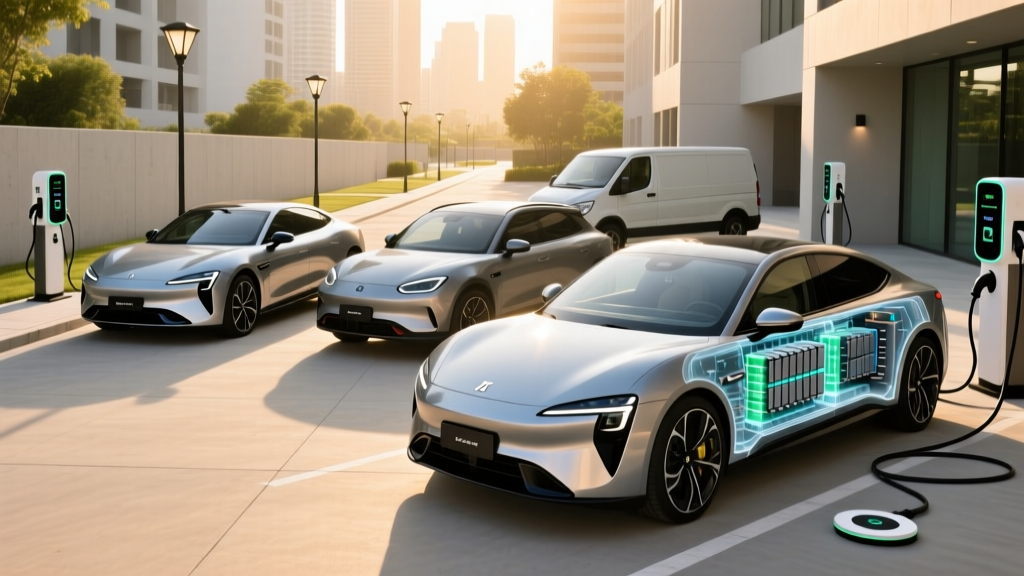
Porsche's 800-volt architecture — carried over from the original Taycan but now paired with higher-density cells — enables the 320 kW peak figure on the 4S, Turbo, and Turbo GT. That's the highest peak charge rate of any production sedan sold in the U.S. as of 2025, surpassing the Hyundai Ioniq 5 N's 240 kW and the Lucid Air's ~250 kW.
But peak kW isn't sustained kW. In testing at Electrify America 350 kW stalls, the Taycan 4S pulls 300+ kW from roughly 10% to 40% state of charge, then tapers progressively. The 10–80% average sits closer to 180 kW, which still produces a ~18-minute session — fast enough to add ~200 miles in the time it takes to grab a coffee and use the restroom.
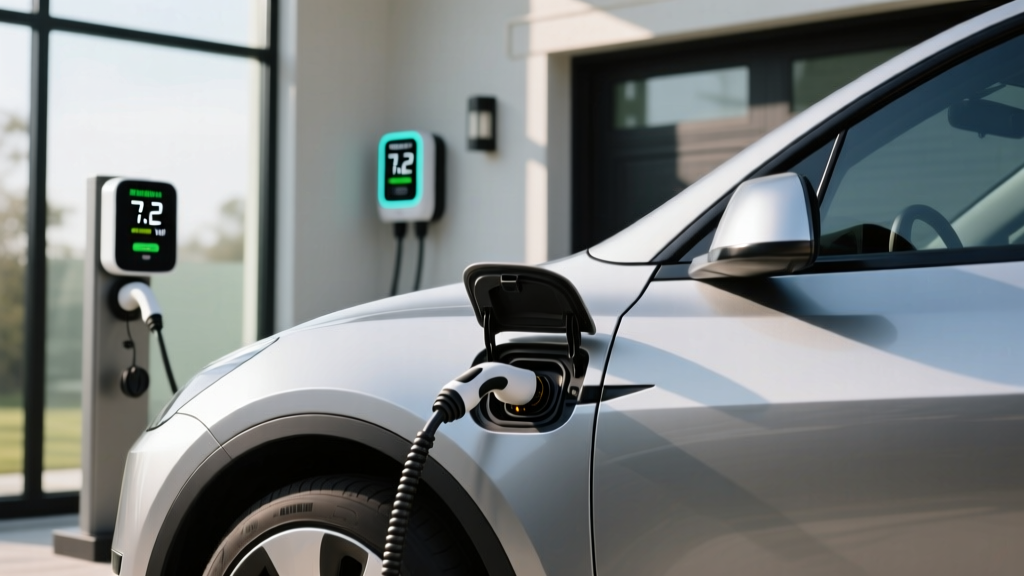
Home charging tip: The Taycan's onboard charger accepts up to 11 kW on Level 2 (48A circuit, requiring a 60A breaker). A full overnight charge from 10% takes about 9.5 hours for the larger pack. If your electrical panel only supports a 40A circuit (common in older homes), you'll be limited to ~7.7 kW, adding roughly 8 hours for a full charge. Budget $800–$2,000 for a professional Level 2 installation including a hardwired wallbox — more if your panel needs a 200A service upgrade.
Note that the Taycan uses the CCS1 connector in North America. Porsche has confirmed NACS (Tesla Supercharger) compatibility via adapter for 2025 models, and native NACS ports are expected for the 2026 model year. If Supercharger access is critical to your road-trip planning, confirm adapter availability with your dealer.
Taycan Interior: Screens, Materials, and What Changed for 2025
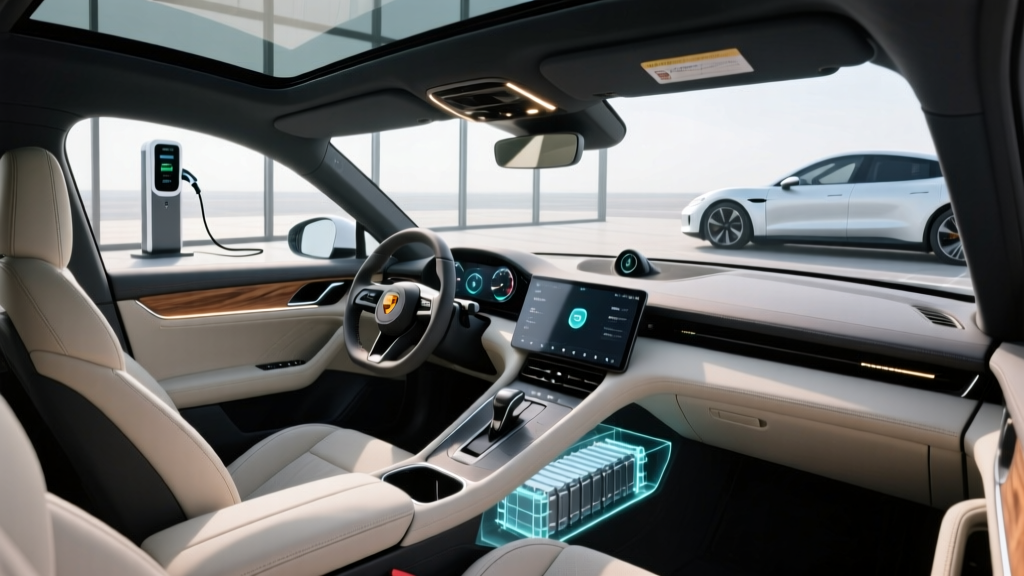
The Taycan interior has always been a study in contrasts: exquisite build quality and materials undermined by a center infotainment screen that felt a generation behind. The 2025 refresh meaningfully closes that gap.
What's new inside for 2025:
- 14.9-inch curved center display running Porsche Communication Management (PCM) 7.0 — faster processor, native wireless Apple CarPlay and Android Auto, redesigned navigation with real-time charge planning
- 10.9-inch passenger display (standard on 4S and above, optional on base) — lets the front passenger control media, navigation, and climate without distracting the driver
- 16.8-inch curved digital instrument cluster — configurable between classic five-dial, reduced, and full-map modes; remains one of the best-executed digital gauges in any EV
- Optional head-up display with augmented-reality navigation arrows overlaid on the road ahead
- Wireless phone charging pad (15W) in the center console, up from the previous 5W pad that was widely criticized for overheating
- Revised steering wheel with a mode-switch dial (on Sport Chrono-equipped cars) and haptic touch controls replacing the previous capacitive buttons that frustrated owners
Materials and build quality remain class-leading. The standard interior uses a mix of leatherette and Race-Tex (Porsche's Alcantara-like recycled microfiber), while full leather, Club Leather (with quilted door panels), and a leather-free Race-Tex option are available. Panel gaps are tight, switchgear has satisfying detents, and the center console's haptic-touch climate strip — still love-it-or-hate-it — is at least more responsive in the updated system.
Passenger and Cargo Dimensions
| Measurement | Taycan Sedan | Taycan Cross Turismo | Competitor: Tesla Model S |
|---|---|---|---|
| Front headroom | 38.4 in | 39.2 in | 40.0 in |
| Front legroom | 41.2 in | 41.2 in | 42.4 in |
| Rear headroom | 36.5 in | 37.8 in | 38.1 in |
| Rear legroom | 32.7 in | 32.7 in | 35.4 in |
| Trunk (rear) | 14.3 cu ft | 15.7 cu ft | 28.0 cu ft |
| Frunk (front) | 2.9 cu ft | 2.9 cu ft | 3.1 cu ft |
| Cargo w/ rear seats folded | ~28 cu ft (est.) | 42.0 cu ft | ~50 cu ft (est.) |
The Taycan's rear seat is its most obvious packaging compromise. At 32.7 inches of legroom, it's tighter than the Model S and noticeably snug for adults over six feet on longer trips. The Cross Turismo wagon variant helps with headroom and cargo versatility (42 cu ft with seats folded), and its standard rear-axle steering makes it surprisingly maneuverable in parking lots. If you regularly carry rear-seat passengers, a Lucid Air (37.8 in rear legroom) is the more practical choice.
Pricing, Trims, and Federal Tax Credit Eligibility
| Trim | Base MSRP | As-Tested (typical options) | §30D Federal Credit Eligible? |
|---|---|---|---|
| Taycan (RWD) | $99,400 | $108,000–$115,000 | No — exceeds $55,000 sedan MSRP cap |
| Taycan 4S | $125,200 | $140,000–$155,000 | No — exceeds $55,000 sedan MSRP cap |
| Taycan Turbo | $175,600 | $190,000+ | No — exceeds $55,000 sedan MSRP cap |
| Taycan Turbo GT | $230,000 (est.) | $240,000+ | No — exceeds $55,000 sedan MSRP cap |
The Taycan does not qualify for the $7,500 federal EV tax credit under IRS §30D. The IRS rules cap eligible sedans at $55,000 MSRP, and every Taycan trim exceeds that threshold by a wide margin. Additionally, buyer income caps ($150,000 single / $300,000 joint filers) would eliminate many Taycan buyers regardless of vehicle price.
Some buyers may be eligible for state-level incentives — California's CVRP, for example, offers rebates based on income, though these typically apply to lower-priced vehicles as well. Check your state's energy office for current programs. For the used EV credit (§25E, up to $4,000), a secondhand Taycan could theoretically qualify if the sale price is under $25,000 — unlikely for several years given current depreciation curves.
Performance & Driving Dynamics
Numbers tell part of the story: the Taycan Turbo GT with Weissach Package hits 60 mph in 2.1 seconds and produces 1,092 horsepower on overboost. But what distinguishes the Taycan from the Model S Plaid or Lucid Air Sapphire is how it delivers that performance.
The two-speed rear transmission (unique among production EVs) gives the Taycan a second gear for high-speed pulls that single-speed competitors simply can't match. Steering feel — electric but communicative — is the best in the EV segment, and the optional rear-axle steering (standard on Turbo GT) shrinks the car's effective wheelbase in tight corners. Air suspension with Porsche Active Ride (new for 2025 on Turbo models) actively counters body roll, pitch, and dive, keeping the cabin virtually flat through aggressive cornering.
Driver assistance remains a relative weak point. Porsche's InnoDrive adaptive cruise with lane centering is SAE Level 2 — meaning you must keep your hands on the wheel and eyes on the road at all times. It's competent on highways but lacks the hands-free capability of GM's Super Cruise or Ford's BlueCruise. There is no equivalent to Tesla's FSD (Supervised) in the Taycan's tech stack, and Porsche has signaled no plans for a Level 3 or Level 4 system in the near term.
Ownership: Warranty, Reliability, and Long-Term Costs
| Coverage | Term |
|---|---|
| Basic (bumper-to-bumper) | 4 years / 50,000 miles |
| Battery & powertrain | 8 years / 100,000 miles |
| Battery capacity retention guarantee | ≥70% capacity over 8 yr / 100,000 mi |
| Corrosion perforation | 12 years / unlimited miles |
| Roadside assistance | 4 years / 50,000 miles |
Porsche's battery warranty matches the industry standard at 8 years/100,000 miles with a 70% capacity retention floor. Early Taycan owners (2020–2022 models) have reported minimal degradation — typically 3–5% loss over 60,000 miles — thanks to the 800V architecture's conservative buffer management and robust thermal conditioning. The 2025's larger pack should show even less percentage loss over equivalent mileage.
Insurance costs are steep. Expect annual premiums of $3,200–$4,800 for the 4S and $5,500+ for the Turbo, depending on your profile and state. Maintenance is lighter than a gas-powered Panamera (no oil changes, minimal brake wear thanks to regen), but Porsche dealer labor rates are among the highest in the industry. Budget $600–$900 annually for cabin air filters, brake fluid, wiper blades, and tire rotations.
Who Should Buy the Taycan — And Who Shouldn't
Pros
- Best-in-class driving dynamics, steering feel, and ride quality
- 320 kW peak DC charging — fastest sedan in production
- Significantly improved 318-mile EPA range (4S)
- Updated infotainment with passenger display closes the tech gap
- 800V architecture enables preconditioning and consistent charge speeds
- Minimal real-world battery degradation reported in early models
Cons
- Tight rear seat — 32.7 in legroom is subcompact territory
- No federal tax credit eligibility (MSRP far exceeds $55K cap)
- Small frunk (2.9 cu ft) limits practical cargo flexibility
- Driver-assist tech lags Tesla, GM, and Ford
- High insurance premiums and dealer maintenance costs
- CCS1 connector (NACS only via adapter for 2025)
Look elsewhere if: You need maximum range (Lucid Air Grand Touring, EPA 516 mi), hands-free highway driving (BMW i7 with Highway Assistant), family-hauler cargo space (Tesla Model S or Rivian R1S), or you require federal tax credit eligibility to justify the purchase.
2025 Porsche Taycan FAQ
What is the real-world range of the 2025 Porsche Taycan?
The Taycan 4S with Performance Battery Plus has an EPA-estimated 318 miles. In real-world highway driving at 70 mph, expect 265–280 miles in mild weather and 210–230 miles in cold conditions (below 30°F). The base RWD Taycan delivers roughly 240–255 real-world highway miles from its 292-mile EPA rating.
How fast does the Taycan charge at home and on the road?
On DC fast chargers, the Taycan 4S/Turbo peaks at 320 kW and charges from 10–80% in approximately 18 minutes. At home on a Level 2 (240V, 48A) charger, it accepts up to 11 kW, adding roughly 39 miles of range per hour and fully charging the 105 kWh pack overnight in about 9.5 hours.
Does the Porsche Taycan qualify for the federal EV tax credit?
No. The IRS §30D credit caps eligible sedans at $55,000 MSRP. Every Taycan trim starts well above that threshold. Buyer income limits ($150K single / $300K joint) would also disqualify many Taycan purchasers. Check your state's incentive programs for possible local rebates.
Is the Taycan worth buying vs. the Tesla Model S or Lucid Air?
It depends on your priorities. The Taycan wins on driving dynamics, build quality, and DC charging speed. The Lucid Air wins on range (up to 516 mi EPA) and rear-seat space. The Tesla Model S wins on Supercharger network access (native NACS), Autopilot/FSD features, and cargo capacity. If the driving experience matters most, the Taycan is the segment leader; if practicality and range dominate, the Air is the stronger pick.
What is the Taycan's battery chemistry and expected longevity?
The 2025 Taycan uses NMC (nickel manganese cobalt) lithium-ion cells in both the 89 kWh and 105 kWh packs. Porsche guarantees at least 70% capacity retention over 8 years or 100,000 miles. Early-model Taycans have shown 3–5% degradation over 60,000 miles, suggesting the pack should comfortably outlast the warranty period.
Does the 2025 Taycan support Tesla Superchargers?
The 2025 Taycan uses the CCS1 connector natively. Porsche has confirmed that a NACS adapter for Supercharger access is available for 2025 models. Native NACS ports are expected to arrive on the 2026 model year. Confirm adapter availability and any charging-speed limitations with your dealer before purchase.
How does the Taycan interior compare to the previous generation?
The 2025 refresh adds a larger 14.9-inch center display running PCM 7.0, a new 10.9-inch passenger screen, faster wireless phone charging (15W), haptic steering wheel controls replacing the previous capacitive buttons, and an available augmented-reality head-up display. Material quality remains excellent, with Race-Tex, full leather, and leather-free options available.
Specs and pricing reflect 2025 model year data available as of publication. Federal tax credit rules under IRS §30D are subject to change; consult a tax professional for your specific eligibility. Real-world range estimates are based on independent testing and owner reports — your results will vary with temperature, terrain, driving style, and tire selection.