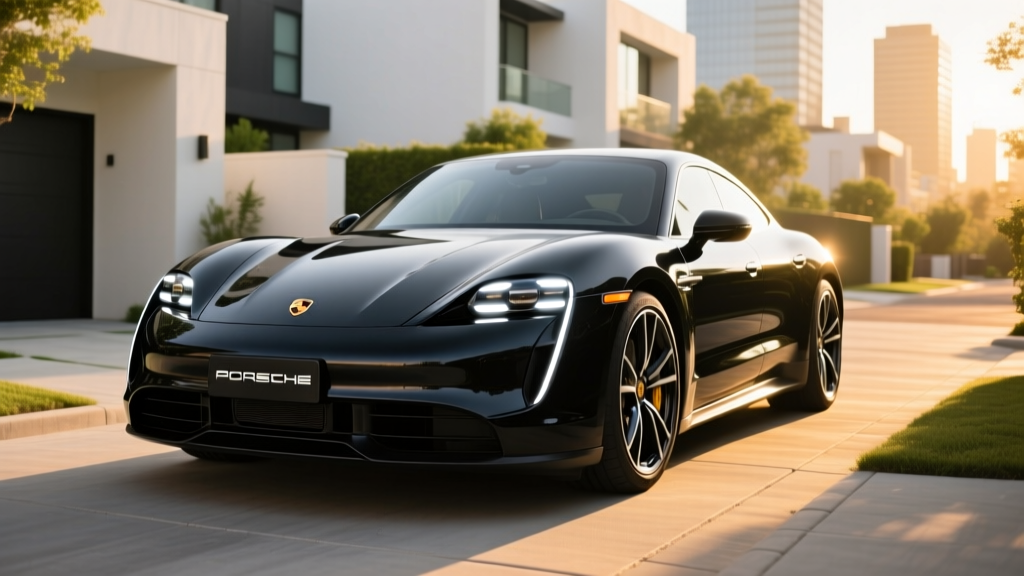
The Porsche Taycan occupies a rare position in the electric vehicle market: a luxury performance sedan where driving dynamics matter more than the MSRP sticker. But even Taycan buyers care about the bottom line — especially when federal incentives, state rebates, and local utility programs can shave thousands off the purchase price. For 2026, the Taycan lineup has been updated with larger batteries, faster charging, and revised pricing that shifts its tax-credit calculus.
This guide breaks down every incentive and rebate available for the 2026 Porsche Taycan, explains the IRS §30D federal tax credit rules that apply (and why the Taycan faces specific hurdles), and provides the exact specs you need to evaluate this EV against rivals like the Tesla Model S, Lucid Air, and BMW i5.
2026 Porsche Taycan: Full Spec Sheet at a Glance
Before we tackle the financial incentives, here are the hard numbers for the 2026 Taycan lineup. Porsche offers four core trims, each available in sedan and Cross Turismo (wagon) body styles. The figures below reflect the sedan variants.
| Spec | Taycan (Base) | Taycan 4S | Taycan GTS | Taycan Turbo S |
|---|---|---|---|---|
| EPA Range | 318 mi | 306 mi | 293 mi | 283 mi |
| Battery (usable) | 97.0 kWh (NMC) | 97.0 kWh (NMC) | 97.0 kWh (NMC) | 97.0 kWh (NMC) |
| Drivetrain | RWD, single motor | AWD, dual motor | AWD, dual motor | AWD, dual motor |
| Horsepower | 402 hp | 590 hp | 690 hp | 944 hp |
| 0–60 mph | 4.6 sec | 3.5 sec | 3.0 sec | 2.4 sec |
| Max DC Charge Rate | 320 kW | 320 kW | 320 kW | 320 kW |
| 10–80% DC Time | ~18 min | ~18 min | ~18 min | ~18 min |
| Level 2 Rate | 11.0 kW (~35 mi/hr) | 11.0 kW (~35 mi/hr) | 11.0 kW (~35 mi/hr) | 11.0 kW (~35 mi/hr) |
| MPGe (combined) | 94 MPGe | 89 MPGe | 85 MPGe | 80 MPGe |
| Base MSRP | $101,900 | $130,500 | $151,900 | $205,500 |
Source: EPA / fueleconomy.gov and Porsche AG 2026 press specifications.
Does the 2026 Porsche Taycan Qualify for the Federal EV Tax Credit?
The short answer: likely not for most buyers — and here's exactly why.
The IRS §30D Clean Vehicle Credit offers up to $7,500 for qualifying new EVs, but three separate rules work against the Taycan:
- MSRP Cap: Sedans must have an MSRP at or below $55,000 to qualify. The cheapest 2026 Taycan starts at $101,900 — nearly double the threshold. (Note: SUVs, vans, and pickups have a higher $80,000 cap, but the Taycan sedan and Cross Turismo are classified as sedans/wagons by the IRS.)
- Buyer Income Cap: Modified adjusted gross income (MAGI) must not exceed $150,000 (single), $225,000 (head of household), or $300,000 (married filing jointly). Many Taycan buyers exceed these limits.
- Battery Sourcing & Critical Minerals: A percentage of battery components must be manufactured or assembled in North America, and critical minerals must be sourced from the U.S. or free-trade-agreement partners. Porsche's supply chain for the Taycan's NMC cells (sourced from CATL and other suppliers) may not fully meet 2026 thresholds, which tighten each year.
Even if the Taycan cleared the MSRP hurdle — which it does not — the battery-sourcing requirements present a second barrier. The IRS publishes a list of qualifying vehicles that updates periodically. As of early 2026, no Taycan variant appears on that list.
| Trim | Base MSRP | Federal Credit (§30D) | Effective Price |
|---|---|---|---|
| Taycan (Base) | $101,900 | $0 (exceeds $55K MSRP cap) | $101,900 |
| Taycan 4S | $130,500 | $0 | $130,500 |
| Taycan GTS | $151,900 | $0 | $151,900 |
| Taycan Turbo S | $205,500 | $0 | $205,500 |
Used Taycan and the §25E Credit
If you're considering a pre-owned Taycan (model year 2023 or earlier), the §25E Used Clean Vehicle Credit offers up to $4,000 or 30% of the sale price (whichever is less). This credit has its own income caps ($75,000 single / $150,000 married) and requires the vehicle to be purchased from a dealer for $25,000 or less. Given Taycan depreciation curves, a 2021 or 2022 base Taycan might approach that price point in high-mileage examples, making the used credit a possibility for bargain hunters.
State, Local, and Utility Incentives for the Taycan
Federal credits may be out of reach, but state and utility incentives don't carry the same MSRP restrictions. Here's where Taycan buyers can find real savings:
State-Level Rebates and Tax Credits
Several states offer EV incentives that apply regardless of vehicle price:
- California: The Clean Fuel Reward program previously offered up to $1,000 at point of sale (funding varies by year — check current availability via the California Air Resources Board). Some California air districts offer additional local rebates.
- Colorado: Offers a state tax credit of up to $5,000 for new EVs, with no MSRP cap. Income limits do not apply.
- New York: The Drive Clean Rebate program provides up to $2,000, though it phases out for vehicles above $60,000 MSRP — meaning the Taycan would not qualify.
- Massachusetts: Offers a MOR-EV rebate of up to $3,500 for vehicles under $55,000 — Taycan excluded.
The takeaway: Colorado is currently the most Taycan-friendly state for incentives. Always verify current program status, as funding pools deplete and rules change annually.
Utility Company Rebates
Many electric utilities offer EV purchase rebates or home-charger installation credits that are price-agnostic:
- Pacific Gas & Electric (PG&E): Has historically offered $500–$1,000 EV rebates to customers in disadvantaged communities.
- Southern California Edison (SCE): Offers a $1,500 rebate for residential EV adoption in qualifying areas.
- Xcel Energy (Colorado/Minnesota): Provides rebates for Level 2 home charger installation (up to $500–$1,000), which benefits any EV owner.
Contact your local utility's EV programs page to check current offerings. These rebates are typically applied as bill credits within 60–90 days of proof of purchase.
Real-World Range: What the EPA Number Doesn't Tell You
The 2026 Taycan base model carries an EPA-estimated 318 miles of range — a meaningful jump from the pre-refresh Taycan's 227-mile rating. Porsche achieved this through the larger 97.0 kWh usable battery (up from 79.2 kWh in the Performance Battery Plus pack) and improved powertrain efficiency.
EPA Estimate: 318 miles (base RWD) / 306 miles (4S AWD)
Real-World Expectation: In mixed driving, expect 270–290 miles from the base model. On sustained highway runs at 75+ mph, range drops to approximately 250–265 miles. In freezing temperatures (below 32°F), plan for 210–240 miles due to battery resistance and cabin heating demands. The Taycan's heat pump (standard on 2026 models) helps mitigate cold-weather losses compared to older resistance-heater EVs, but physics still applies.
Porsche's 800-volt architecture deserves credit here. Unlike 400V systems that lose more energy to heat during high-power delivery, the Taycan's 800V platform runs cooler and more efficiently under load, which translates to better sustained highway efficiency than the EPA sticker alone suggests.
Charging Speed: DC Fast Charging and Home Level 2
The 2026 Taycan's charging capability is one of its strongest practical assets, especially for road-trip-oriented buyers.
| Charging Level | Power (kW) | Speed / Time | Notes |
|---|---|---|---|
| Level 1 (120V household) | ~1.4 kW | ~4 mi/hr | Emergency/trickle only — full charge takes 70+ hours |
| Level 2 (240V home/public) | 11.0 kW | ~35 mi/hr (full charge ~10 hr) | Requires 48A circuit; overnight home charging |
| DC Fast Charge (CCS/NACS) | Peak 320 kW | 10–80% in ~18 min | Requires 350 kW-class station; curve tapers above 80% |
The 320 kW peak rate is class-leading, but real-world charging depends on station capability. Most Electrify America and Tesla Supercharger (with NACS adapter, now standard on 2026 Taycans) stations deliver 150–250 kW, meaning your actual 10–80% time will be closer to 22–28 minutes. The Taycan's charge curve is relatively flat through 60% SoC before tapering — a characteristic advantage of its 800V system over competitors that spike and drop.
For home charging, the 11.0 kW onboard charger means you'll need a hardwired Level 2 station on a 60A breaker (48A continuous draw) to maximize speed. Budget $500–$2,200 for professional installation depending on your panel's proximity to the garage and whether a panel upgrade (to 200A service) is needed.
Interior, Cargo, and Technology
Passenger and Cargo Space
The Taycan is a performance sedan first, and interior packaging reflects that priority:
- Front legroom: 41.5 inches
- Rear legroom: 32.7 inches (tight for adults over 6 feet on long trips)
- Trunk (rear): 14.3 cu ft
- Frunk (front): 2.8 cu ft (enough for a charging cable and small bag)
- Cross Turismo wagon: Adds approximately 4.0 cu ft of rear cargo with seats up, and significantly more with seats folded
Compared to the Lucid Air (32.1 cu ft trunk) or the Tesla Model S (28 cu ft), the Taycan sedan sacrifices cargo utility for its low-slung sports-sedan proportions. The Cross Turismo variant is the practical choice for buyers who need hatchback-style versatility.
Technology and Driver Assists
The 2026 Taycan features Porsche's latest PCM (Porsche Communication Management) with a 12.6-inch curved instrument cluster, a 10.9-inch central touchscreen, and an optional 10.9-inch passenger display. Wireless Apple CarPlay and Android Auto are standard.
Driver assistance includes adaptive cruise control with stop-and-go, lane-keeping assist, and Porsche InnoDrive (predictive cruise that reads road topography and speed limits ahead). This is an SAE Level 2 system — the driver must keep hands on the wheel and eyes on the road at all times. It is not autonomous driving.
Notable tech drawbacks: The Taycan lacks Tesla-style over-the-air performance unlocks, and its navigation-based preconditioning for fast charging is less aggressive than Hyundai/Kia's system, meaning cold-weather DC charging may not always reach peak 320 kW without manual battery preconditioning activation.
Warranty and Long-Term Ownership
Porsche's EV warranty coverage is competitive within the luxury segment:
- New Vehicle Limited Warranty: 4 years / 50,000 miles
- Battery Warranty: 8 years / 100,000 miles (guarantees minimum 70% state of health retention)
- Powertrain Warranty: 8 years / 100,000 miles (electric motors, power electronics)
- Corrosion Perforation: 12 years / unlimited miles
The 70% SoH threshold at 8 years/100,000 miles is the industry-standard floor. Real-world Taycan degradation data from early 2020–2022 models shows most units retaining 90–94% capacity after 50,000 miles, which is encouraging. The 800V architecture's lower thermal stress during charging likely contributes to this longevity. However, an out-of-warranty battery replacement would cost an estimated $25,000–$35,000 — a significant long-term risk for second owners.
Porsche Taycan vs. Key Competitors: Is It Worth the Premium?
The Taycan doesn't exist in a vacuum. Here's how it stacks up against its closest rivals on the metrics that matter:
| Metric | 2026 Taycan 4S | 2026 Tesla Model S Long Range | 2026 Lucid Air Pure | 2026 BMW i5 M60 |
|---|---|---|---|---|
| Base MSRP | $130,500 | $82,990 | $78,900 | $91,000 |
| EPA Range | 306 mi | 402 mi | 419 mi | 295 mi |
| 0–60 mph | 3.5 sec | 3.1 sec | 3.8 sec | 3.7 sec |
| Peak DC Charge | 320 kW | 250 kW | 220 kW | 205 kW |
| Federal Tax Credit | No (MSRP cap) | No (MSRP cap) | No (MSRP cap) | No (MSRP cap) |
Pros
- Class-leading 320 kW DC fast-charging capability
- 800V architecture delivers sustained performance and efficiency
- Best-in-class steering feel, chassis balance, and braking performance
- Build quality and materials exceed Tesla and rival most luxury sedans
- Strong real-world range improvement over pre-2025 models
Cons
- No federal tax credit eligibility (MSRP far exceeds $55K cap)
- Rear seat legroom is tight at 32.7 inches
- Cargo space is limited vs. Lucid Air and Tesla Model S
- Options and packages escalate price rapidly (a well-equipped 4S can reach $160K+)
- Infotainment learning curve; no physical knobs for climate
Who Should Buy the 2026 Porsche Taycan?
The Taycan is not a rational-economics purchase — it's an emotional one backed by genuine engineering excellence. Here's who it suits:
- The driving enthusiast who values steering precision, brake modulation, and chassis communication above all else and has found Tesla's driving dynamics lacking.
- The luxury commuter with home Level 2 charging who drives 30–60 miles daily and wants a premium cabin experience without range anxiety.
- The road-tripper who values 18-minute fast-charging stops and doesn't mind the Taycan's 250–270 mile highway range because 320 kW chargers are abundant on their routes.
Who should look elsewhere:
- Max-range seekers: The Lucid Air Pure delivers 419 EPA miles for $50,000 less.
- Families needing rear-seat space: The BMW i7 or Mercedes EQS offer far more rear legroom.
- Incentive-dependent buyers: No Taycan trim qualifies for the $7,500 federal credit, and most state rebates also have MSRP caps.
Frequently Asked Questions
What is the real-world range of the 2026 Porsche Taycan?
The base RWD Taycan is EPA-rated at 318 miles. In real-world mixed driving, expect 270–290 miles. Highway-only driving at 75+ mph yields approximately 250–265 miles. In sub-freezing temperatures, plan for 210–240 miles.
How fast does the Taycan charge at home and on the road?
At home on a Level 2 (240V, 48A) charger, the Taycan charges at 11.0 kW, adding roughly 35 miles of range per hour — a full charge takes about 10 hours. On a 350 kW-capable DC fast charger, it peaks at 320 kW and charges from 10–80% in approximately 18 minutes, though real-world times at 150–250 kW stations are typically 22–28 minutes.
Does the 2026 Porsche Taycan qualify for the $7,500 federal EV tax credit?
No. The IRS §30D credit requires sedans to have an MSRP at or below $55,000. The cheapest 2026 Taycan starts at $101,900, making it ineligible. Battery-sourcing requirements present an additional barrier. Always verify current eligibility on IRS.gov.
How much does a 2026 Taycan cost after all incentives?
Because the Taycan does not qualify for the federal credit, the effective price equals MSRP minus any applicable state or utility rebates. In Colorado, for example, the state tax credit could reduce the effective price by up to $5,000. Most buyers will pay full MSRP plus options and destination charges.
Is the Taycan worth buying over a Tesla Model S or Lucid Air?
If driving dynamics, build quality, and charging speed are your top priorities, yes — the Taycan's chassis and 320 kW charging are unmatched. If maximum range and value matter more, the Lucid Air Pure (419 mi, ~$79K) or Tesla Model S Long Range (402 mi, ~$83K) offer compelling alternatives at significantly lower prices.
What is the battery warranty on the 2026 Taycan?
Porsche covers the high-voltage battery for 8 years or 100,000 miles, guaranteeing a minimum 70% state-of-health retention. Out-of-warranty replacement is estimated at $25,000–$35,000.